
You need to send money today. Rent to a student in another city. A last-minute repayment to a friend. Monthly support to family overseas. The hard part is not finding an app. It is choosing one that will not eat the transfer with fees, weak exchange rates, slow delivery, or awkward pickup options.
The better question is simple. Best for what?
A good app for splitting dinner in Canada is often the wrong app for sending funds abroad, paying a freelancer, or getting cash to someone who does not use a bank account. That is the angle here. This is a decision guide, not a winner-takes-all ranking. The goal is to match each app to a real use case, call out the trade-offs, and help you cut avoidable costs no matter which platform you use.
That matters because transfer habits have shifted fast. Cross-border apps became more common across 2025, especially on mobile, and Canadian senders now have more options than they did a few years ago. More choice helps, but it also makes comparison harder.
The list below sorts through that. You will see which apps make sense for fast domestic transfers, which ones tend to be stronger for international sending, and which ones are better suited to cash pickup, recurring remittances, or business-style payouts. You will also see where the catch usually sits, whether that is a marked-up exchange rate, a funding fee, or a transfer limit that only shows up at checkout.
1. Interac e-Transfer

If you're sending money to another person in Canada, Interac e-Transfer is usually the first app to try, even though it often lives inside your bank app rather than feeling like a separate app.
That's its biggest strength. You don't need to get someone onto a new platform, explain where to download anything, or hope they already have an account. For everyday local transfers, that simplicity is hard to beat.
Best for everyday Canadian transfers
Interac works well for:
- Splitting shared costs: dinner, gifts, concert tickets, cottage weekends
- Paying people you know: family, roommates, babysitters, freelancers who accept it
- Requesting money back: useful when one person pays upfront
Autodeposit also makes a real difference. When the recipient has it turned on, the transfer lands without a security question, which removes one of the most common friction points.
The downside is just as clear. Interac is for domestic use, so it won't help if you need foreign exchange, a cash pickup overseas, or ongoing support to family in another country. Fees and limits also depend on your bank, which means the experience isn't identical for every Canadian.
Practical rule: Use Interac first for simple Canada-to-Canada transfers. If you need currency conversion or overseas delivery options, move to a specialist app instead.
You can learn more on the Interac e-Transfer consumer page.
2. Wise
You check your bank's transfer option, then compare it with Wise, and the difference usually shows up in one place fast: the recipient's final amount. That is why Wise earns a spot near the top for Canadians sending money abroad.
Wise is strongest as a decision-making app, not just a sending app. It shows the exchange rate, the fee, and the estimated delivery timing before you commit, which makes it easier to compare one route against another without guessing where the cost is hiding.
Best for transparent international bank transfers
Wise makes the most sense when:
- You send internationally more than once: family support, contractor payments, recurring personal transfers
- You want to compare total cost clearly: fee plus exchange rate, not just the headline charge
- Your recipient can receive money in a bank account: especially on common bank-to-bank corridors
- You want visibility after sending: tracking inside the app is useful when timing matters
The trade-off is straightforward. Wise is usually a better fit for bank deposits than for cash pickup. If your recipient needs cash in hand, or if the route depends on a specific funding method, another service can be more practical even if the pricing looks a little worse at first glance.
This is also one of the easier apps to use for fee control. Quote the same transfer in Wise and one competing app, then compare the amount the recipient gets after conversion. That single check tells you more than any “low fee” claim.
For Canadians, that makes Wise a strong pick for low-cost international transfers where transparency matters more than extras.
You can explore the service on Wise Canada.
3. PayPal Canada
PayPal is rarely the cheapest option for sending money across currencies, but it stays relevant because so many people already use it. That matters when convenience beats optimization.
If the person on the other end already has PayPal, the setup can feel almost effortless. That's especially useful for casual international sending, online sales, or situations where you want a familiar record of the transaction.
Where PayPal works well
PayPal makes the most sense when:
- The recipient already uses PayPal: no onboarding friction
- You're paying for goods or services: where platform protections matter
- You want one account for purchases and transfers: instead of separate tools
Its weak point is cost opacity. The headline experience feels easy, but the full cost can come from more than one place, especially once currency conversion enters the picture. For pure remittances, specialist transfer apps often feel more focused and more predictable.
PayPal can also be awkward for users who need every transfer to land directly in a bank account right away. It's still a wallet-style ecosystem first.
Convenience can hide expensive FX. Always check the recipient's final amount, not just whether the send flow feels easy.
If you also want better visibility after the transfer, tools like Fintrack's Transactions with AI can help you categorise those PayPal outflows once they leave your account, especially if you use PayPal for a mix of purchases and personal sends.
You can review options on PayPal Canada.
4. Xoom

Xoom makes sense when your transfer needs are more “remittance” than “digital wallet.” It's built for sending abroad with multiple ways for the recipient to get the money, including bank deposit, cash pickup, and in some places bill payment.
That delivery flexibility is the reason to choose it. If you're supporting family and don't know whether they want funds in a bank account or collected in cash, Xoom can be more practical than a cheaper but narrower app.
Best for PayPal users sending abroad
Xoom is a good fit when:
- You already use PayPal: funding can feel familiar
- Your recipient needs options: not just a bank transfer
- You're sending to places where cash pickup still matters: especially outside major urban centres
The trade-off is that Xoom isn't usually the app people pick for domestic Canadian transfers. It's designed around international sending, so it feels like overkill for simple local payments.
It's also worth comparing the total received amount with Wise or Remitly before sending. Xoom often wins on convenience and payout variety, not always on final cost.
For some families, that trade-off is worth it. Getting money to the right place in the right format matters more than squeezing out every last basis point on exchange.
You can check supported routes and payout methods on Xoom.
5. Remitly
Remitly fits a common real-world scenario. You send money home regularly, but not every transfer has the same priority. One month, the goal is to keep fees down. The next, you need the money delivered fast because rent or school costs are due.
That is where Remitly is useful. Its Economy and Express options make the trade-off clear before you send, instead of hiding it inside a confusing fee summary.
Best for recurring family transfers with changing urgency
Remitly is a strong choice when:
- You send to the same country on a regular schedule: it is easy to compare what changes by route and delivery method
- Your recipient may switch between bank deposit, mobile wallet, or cash pickup: that flexibility matters more than app design
- You want to choose between lower cost and faster delivery on each transfer: not every app makes that decision this obvious
The key point is that Remitly works best as a corridor-by-corridor decision, not a universal winner. In some countries, it is an excellent balance of speed, payout options, and total cost. In others, Wise or Xoom may leave the recipient with more money or offer a better funding method for your situation.
Express also deserves a close look. Faster delivery can be worth paying for when timing matters, but it is easy to overpay if you default to the quickest option every month. For routine family support, Economy is often the smarter setting.
If you use Remitly often, compare two numbers before every send. The total fee and the final amount your recipient gets. That simple habit catches a lot of bad-value transfers, especially when exchange rates shift.
See current sending options on Remitly Canada.
6. WorldRemit
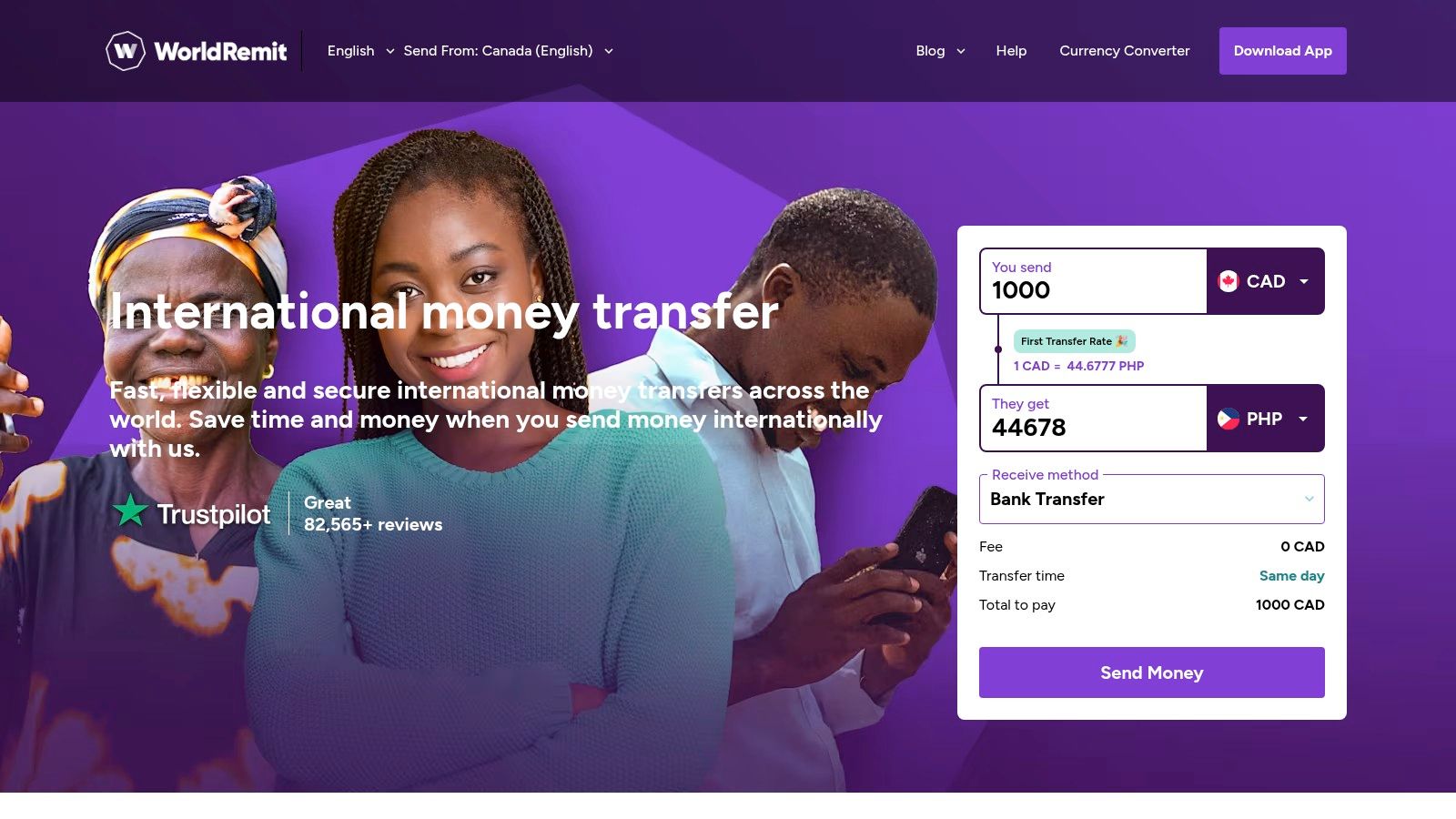
WorldRemit earns its place because it is practical. Not fancy. Practical. If your recipient does not have a bank account, or prefers mobile money or cash pickup, WorldRemit can solve a problem that cheaper bank-to-bank apps do not address.
For many households, that matters more than sleek design or broad marketing claims.
Best when the recipient isn't bank-first
WorldRemit is useful when:
- Your recipient needs cash pickup
- Mobile wallet delivery is common in their country
- You want tracking and notifications without a complicated interface
That makes it a strong backup option even if it isn't your primary app. Many Canadians end up keeping one “digital transfer” app and one “recipient flexibility” app. WorldRemit fits well in the second slot.
Its weak points are familiar. Costs can vary by route, and credit card funding may trigger extra charges from the card issuer. You need to check the full send summary carefully before confirming.
The best money transferring app for you may not be the one with the lowest advertised fee. It may be the one your recipient can actually use without friction.
That's especially true in households juggling multiple financial tools. If you're trying to keep those outgoing payments visible in one place, Fintrack's AI Assistant Finny can help you review spending patterns across recurring transfers and day-to-day expenses without building a spreadsheet.
You can review destination coverage on WorldRemit Canada.
7. Xe Money Transfer
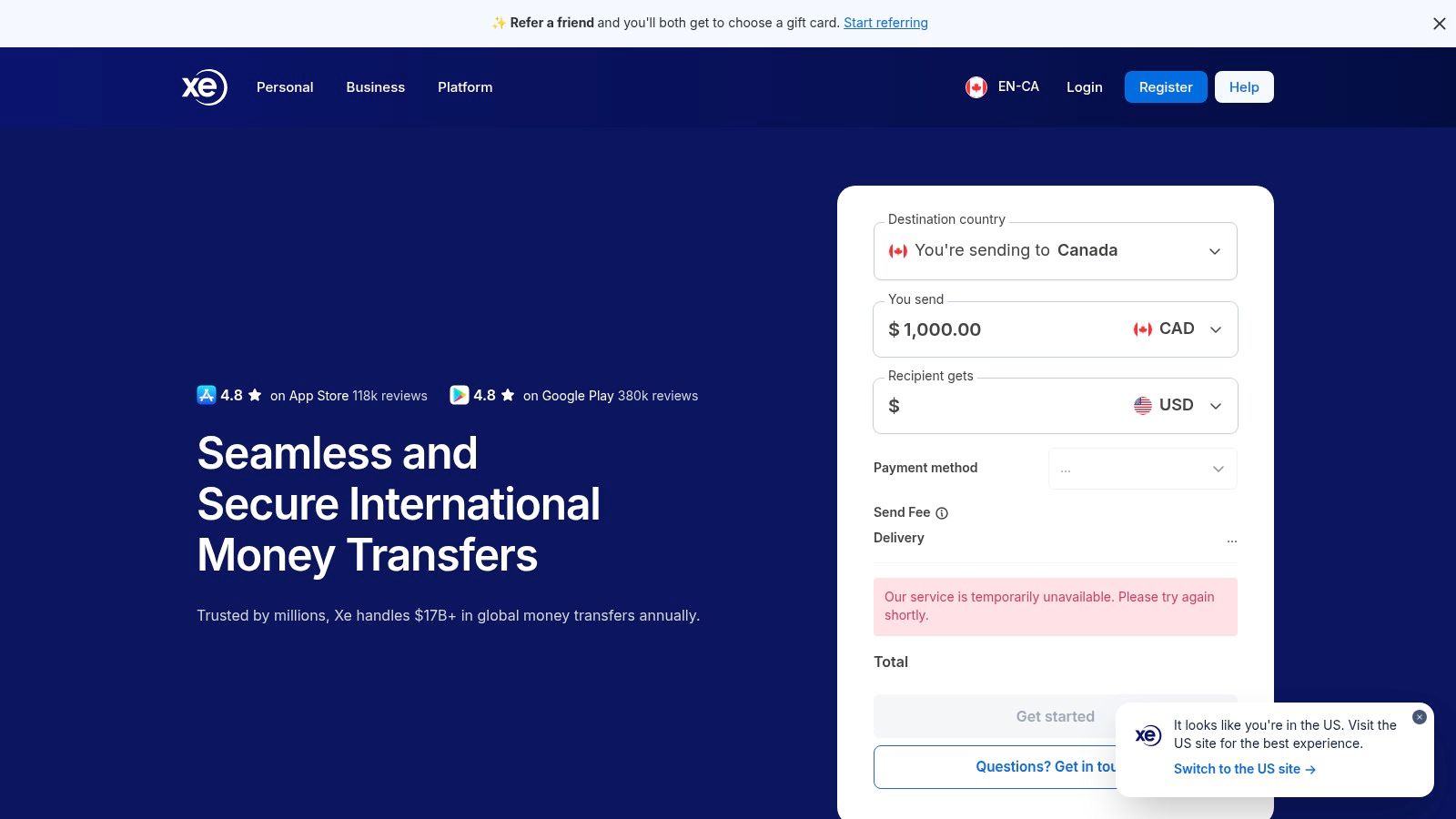
Xe appeals to a different kind of sender. This is often the person who watches exchange rates closely, sends larger amounts, or wants a brand that has long been associated with currency conversion.
If that sounds like you, Xe is worth shortlisting.
Best for rate-conscious senders
Xe tends to make sense when:
- Exchange rate matters more than app social features
- You're sending a larger transfer
- You don't need instant local P2P inside Canada
Its interface is usually less “casual payment app” and more “currency transfer tool.” That's a plus for some people and a turnoff for others. If you want the fastest possible path to splitting brunch with a friend, this isn't the right fit. If you want to move a more meaningful amount across borders and compare rates carefully, it's much more relevant.
A practical tip is to use Xe when you're not in a rush. Some routes can take longer depending on the payment method and destination, so it works best for planned transfers rather than emergencies.
You can explore currencies and routes on Xe Money Transfer Canada.
8. OFX
OFX is the most “grown-up” option on this list. Not because it's better for everyone, but because it's geared more toward larger, planned international transfers than spontaneous everyday sends.
If you're moving a meaningful sum, or making the same kind of overseas transfer on a schedule, OFX deserves a look.
Best for larger or recurring international transfers
OFX is a strong candidate when:
- You want rate tools and alerts
- You value support for planned transfers
- You're sending larger amounts where a small FX difference matters
It's not the right app for a quick local payment. That's not a flaw. It's just not what OFX is built for. The experience is more deliberate, and that can be a good thing when the transfer amount is large enough that rushing would be expensive.
The key trade-off is simple. Even when there isn't a fixed transfer fee, exchange-rate margin still matters. So you still need to compare the quoted recipient amount before locking in the transfer.
For recurring household obligations abroad, some people pair OFX for the transfer itself with a budgeting app for the follow-through. That's where Fintrack's Budget Planning and Tracking can be useful, because recurring overseas payments are easy to underestimate when they sit outside your normal monthly bill list.
You can check features on OFX Canada.
9. Western Union
A common real-world scenario: you need to send money to someone who may want bank deposit, may want cash pickup, and may need to decide at the last minute. Western Union stands out in that situation because it gives the recipient more ways to get the money than many lower-cost apps do.
That flexibility is the reason to use it.
Best for cash pickup and broad payout choice
Western Union makes the most sense when:
- The recipient may need cash pickup
- Bank access is limited, inconsistent, or slow
- You want multiple payout options in one service
- Recipient convenience matters more than getting the tightest exchange rate
This is one of the clearer trade-offs on the list. Western Union often wins on reach and payout choice, but not always on price. The final cost can change based on corridor, amount, payment method, and whether the money is delivered to a bank account or collected in cash.
For that reason, treat Western Union as a practical option for harder-to-serve transfers, not your default cheapest app. If you're sending to someone with a stable bank account and no need for cash, a digital-first provider may give a better recipient amount. If the recipient needs options and reliability first, Western Union becomes much easier to justify.
One tip that saves money on services like this: compare the total recipient amount, not just the upfront fee. A low visible fee can still come with a weaker exchange rate.
You can browse options on Western Union Canada.
10. MoneyGram
Your recipient is heading to a local pickup point after work and wants cash, not a bank deposit. That is the kind of transfer MoneyGram handles well.
MoneyGram earns its place on this list for senders who care less about advanced app features and more about getting money to someone who wants a familiar cash collection process. The app and web flow are usually simple to follow, which matters if you do not send internationally often.
Best for simple remittances with cash pickup in mind
MoneyGram makes the most sense when:
- The recipient already uses local pickup agents
- You want to send digitally but have the money collected in person
- You are prioritizing convenience and familiarity over the lowest possible FX cost
The main trade-off is price clarity versus final value. MoneyGram can be perfectly reasonable for some corridors and noticeably less competitive for others, especially if you compare it against digital-first providers built around bank deposits. Card funding can also raise your cost.
My advice is simple. Use MoneyGram for recipient-led transfers, not as your automatic first choice. If the person receiving the money wants cash and knows the brand, MoneyGram is easy to justify. If they are happy with bank deposit, compare the exact received amount against Wise, Remitly, or Xe before you send.
That is the bigger decision-making point in this list. The best money transferring app depends on the payout method first, then the fee. Once you know the recipient needs pickup, your shortlist gets much smaller.
You can review sending methods on MoneyGram Canada.
Top 10 Money Transfer Apps, Features & Fees
| Service | Core features & UX | Best for / Target audience | Price & speed | Unique selling point |
|---|---|---|---|---|
| Interac e-Transfer | Near‑instant domestic transfers; Autodeposit; integrated in bank apps | Canadians splitting bills or P2P transfers within Canada | Variable bank fees & limits; near‑instant; domestic only | Native, widely trusted across Canadian FIs |
| Wise (formerly TransferWise) | Mid‑market exchange rate; transparent upfront fees; multi‑currency balances & tracking | Cross‑border senders prioritizing low FX costs and transparency | Low FX margins; clear fees; speed varies by corridor | Real mid‑market rate + clear pricing |
| PayPal (Canada) | Digital wallet; buyer/seller protections; links cards & bank accounts | Online buyers/sellers and recipients already on PayPal | Convenient same‑account sends; currency spreads & card fees can be higher; speed varies | Widely accepted with commerce protections |
| Xoom (PayPal) | Bank deposit, cash pickup, mobile wallet; PayPal integration; tracking | PayPal users needing flexible delivery methods to recipients | Multiple delivery options; exchange margins often higher than specialists; generally fast | Multiple payout methods via PayPal ecosystem |
| Remitly | Express vs Economy speed options; real‑time tracking; multiple payout methods | First‑time remitters and senders who value speed choices | Corridor‑specific pricing; Express costs more; fast with Express | Speed‑focused choices and simple corridor pricing |
| WorldRemit | Bank deposit, cash pickup, mobile money; in‑app tracking & notifications | Senders to recipients without bank accounts (cash pickup/mobile money) | Per‑transfer fee + FX margin; quick for many routes; card fees possible | Broad delivery choices for unbanked recipients |
| Xe Money Transfer | FX‑focused transfers to 130+ countries; activity tracking & support | Users making larger transfers where exchange rate matters | Competitive for larger amounts; delivery times vary (sometimes days) | Longstanding FX specialist for better rates on bigger transfers |
| OFX | Global FX to 170+ destinations; rate alerts & dedicated support; app booking | High‑value or recurring international transfers | Often no fixed transfer fee; FX margin applies; not instant | Low cost for large/planned transfers with support and rate tools |
| Western Union | Bank deposit, cash pickup, mobile wallet; vast agent network; app/web sending | Recipients needing cash pickup or with limited banking access | Flexible speed; fees and FX margins can be high depending on corridor | Ubiquitous global cash‑pickup network and agent reach |
| MoneyGram | Online/app sends; bank deposit & global cash pickup; real‑time tracking | Senders requiring wide agent access and cash pickup options | Fees & spreads vary by route; typically fast with agent pickups | Broad agent network with simple, guided send flow |
Making Your Money Move Smarter
The right app can save you money, time, and a lot of avoidable stress. But the biggest mistake people make is trying to pick one universal winner. That usually leads to overpaying on some transfers and using the wrong tool on others.
A better approach is to sort your needs into simple categories. If you're paying someone in Canada, start with Interac e-Transfer. If you're sending internationally and care most about transparent pricing, Wise is usually one of the strongest places to compare. If the recipient needs cash pickup or mobile wallet delivery, Remitly, WorldRemit, Western Union, Xoom, or MoneyGram may be the more practical fit.
That's also why the best money transferring app changes depending on the job:
- Best for domestic Canadian transfers: Interac e-Transfer
- Best for transparent international pricing: Wise
- Best for flexible family remittances: Remitly
- Best for recipients who need cash pickup: Western Union or MoneyGram
- Best if the recipient already uses PayPal: PayPal or Xoom
- Best for larger planned FX transfers: Xe or OFX
One habit matters more than any feature list. Always compare the final amount your recipient receives. The advertised fee is only part of the story. Funding method, exchange rate, delivery type, and transfer speed can all change the overall cost.
For Canadians, that matters in everyday budgeting too. Some transfer apps are great at moving money, but not at helping you understand where your money went afterward. That gap is especially relevant for households under pressure. Research cited in consumer-finance coverage says many California residents live paycheque to paycheque, and that same budgeting strain is familiar to plenty of Canadians trying to manage rent, groceries, subscriptions, and support payments at once consumer finance discussion on transfer apps and budgeting gaps.
Once the transfer is done, tracking it properly is what turns a payment into a useful financial signal. Categorising remittances, shared expenses, or freelance payouts helps you see whether they're occasional, seasonal, or becoming a fixed monthly commitment.
That's where a tool like Fintrack can fit naturally. If you connect your accounts and use its spending views, you can tag outgoing transfers, review them alongside the rest of your monthly spending, and ask Finny questions about trends without manually updating a spreadsheet. For people managing shared finances, recurring overseas support, or lots of small app-based payments, that visibility is often more valuable than shaving a tiny amount off one single transfer.
If you want to turn money transfers into something you can track and manage, try Fintrack. It helps you see outgoing payments in context, categorise them with less manual work, and spot how transfers affect your wider budget, goals, and household cash flow.