
Turning 30 can feel like a major financial milestone. It often comes with the nagging question: how much should you have saved? The most common guideline suggests having one year's salary tucked away. While that number can sound intimidating, it's best to see it as a guidepost, not a strict rule.
The reality is that for most people, this is a tough target. A Federal Reserve survey found that the median savings for adults under 35 is around $20,000. Instead of focusing on a specific number, the most important thing is building a consistent savings habit.
What's a Realistic Savings Goal for a 30-Year-Old?
Everyone's financial journey is different, so there's no single magic number for savings. Benchmarks can be helpful, but they don't always account for student debt, career starts, or the rising cost of living. The key is to understand the common targets so you can create a plan that fits your life.
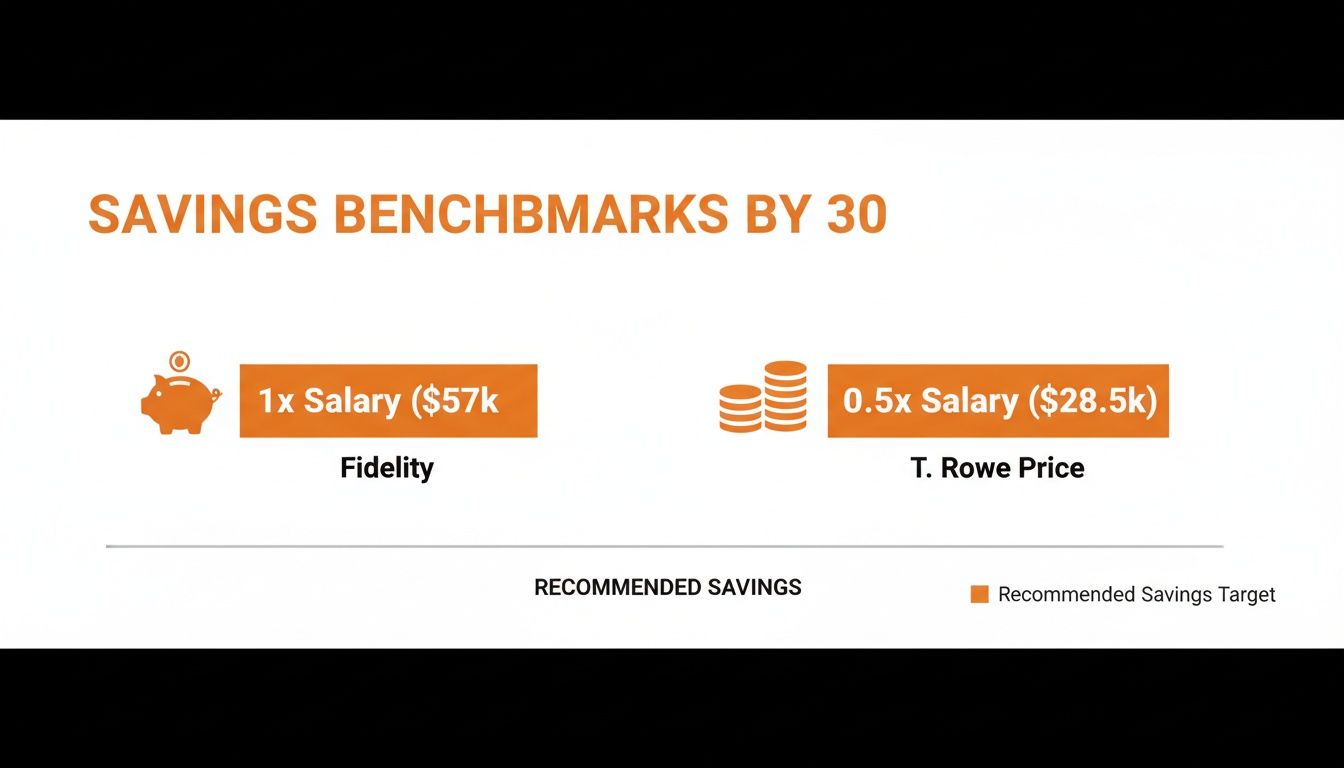
For anyone trying to get a handle on millennial finance, it helps to know what the experts recommend. Fidelity suggests having 1x your annual salary saved by 30, which includes retirement accounts, emergency funds, and other savings. For someone earning a median salary of $60,000, that’s a $60,000 goal.
However, other experts like T. Rowe Price offer a range of 0.5x to 1.5x your salary, depending on when you started saving. The 0.5x target recognizes that your 20s are often a time for paying down debt and investing in your career, which can make aggressive saving difficult.
Breaking Down the Benchmarks
Think of these recommendations as different roadmaps to the same destination: financial security. Some are expressways, while others are scenic routes. Neither is wrong; they just suit different journeys.
Here’s a quick look at how those two popular benchmarks stack up.
Savings Benchmarks by Age 30 (Based on a $60,000 Salary)
| Savings Rule | Target Savings by 30 | Required Monthly Savings (starting at 25) |
|---|---|---|
| Fidelity (1x Salary) | $60,000 | ~$1,000/month |
| T. Rowe Price (0.5x Salary) | $30,000 | ~$500/month |
Seeing the numbers side-by-side shows there’s no single "right" answer—only what's realistic for you. The milestone matters less than the habit of saving consistently.
From Benchmarks to Actionable Steps
So, what should you do with these numbers? Use them as a starting point to build a plan, not as a judgment on your financial health. The most effective way to make progress is to break a large goal into smaller, actionable steps.
A great example comes from a Fintrack user in their mid-20s. Instead of one vague "save more" target, they set up three separate savings goals: a $10,000 Emergency Fund, a Roth IRA Max ($7,000/year), and a $30,000 House Down Payment. This clarity turned a daunting task into a manageable plan.
You can apply the same logic:
- Set Clear Targets: Use a tool like Fintrack’s Strategies & Goals feature to create separate buckets for each goal. This makes your progress tangible.
- Automate Your Progress: Assign a specific monthly contribution to each goal. This makes saving a consistent, automatic action.
- Stay Motivated: Watching the progress bars for each goal fill up provides a visual reward that helps you stay on track.
Why It's Hard To Save And How You Can Beat The Odds
If you saw the "1x your salary" benchmark and felt a knot in your stomach, you're not alone. For most people, hitting that target feels unrealistic, and it’s rarely due to a personal failure. Real-world obstacles like student loan debt and a high cost of living make saving a challenge.
The numbers show a clear gap between expert advice and reality. You can dig deeper into the data on how much you should have saved by 30. But getting stuck on statistics isn’t helpful. What truly matters is building a consistent savings habit.
From Feeling Behind To Moving Forward
The difference between those who struggle to save and those who succeed often comes down to consistency and awareness. It’s not about income level; it’s about having a system.
Successful savers break down large goals into smaller, manageable pieces. You can do the same with a few simple shifts:
- Make it specific: Don’t just "save." Create distinct goals like an "Emergency Fund" or "Down Payment."
- Make it automatic: Treat your savings like a non-negotiable bill. Pay yourself first, every time.
- Make it visible: Use a tool that shows your progress. Seeing the numbers climb, even slowly, is a powerful motivator.
This is where a dedicated system can change everything. For example, using Fintrack’s Budgeting & Planning allows you to set spending caps on categories like dining out or subscriptions. Users often find an extra 10-15% in savings they didn't realize they had. To see how it works, you can learn more about setting up your own budget plan here.
A 5-Step Action Plan to Boost Your Savings
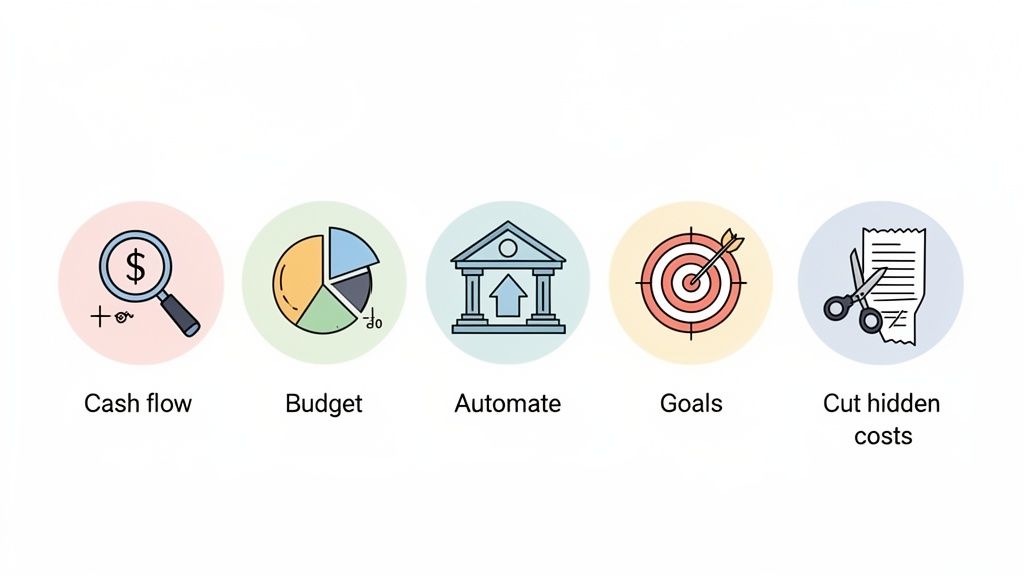
 Knowing the savings benchmarks is one thing; hitting them is another. Real progress comes from a clear, actionable plan. Here’s a simple five-step plan you can start today.
1. Get an Honest Look at Your Cash Flow
You can’t improve what you don’t measure. Before anything else, you need to know exactly where your money is going each month. This isn’t about guilt; it’s about gathering facts.
The easiest way to do this is with a tool that handles the hard work for you. With Fintrack's Transactions with AI, you can link your accounts, and it will automatically categorize your spending. You’ll get a complete, unbiased picture of your financial habits without needing a spreadsheet.
2. Build a Budget That Actually Works
Once you know where your money is going, you can start telling it where to go. A great starting point is the 50/30/20 rule: 50% of your take-home pay for needs, 30% for wants, and 20% for savings and debt repayment.
Use your real spending data to build this budget. Fintrack’s Budget Planning & Tracking can even suggest a personalized budget based on your history. From there, you can set spending caps for categories like “Restaurants” or “Shopping” and track your progress in real time.
3. Pay Yourself First, Always
This is the single most powerful habit for building wealth. Most people try to save whatever is left over at the end of the month, which is often nothing. Instead, treat your savings like your most important bill.
Decide how much you want to save—say, 15% of your income—and set up an automatic transfer from your checking to your savings account for the day you get paid. This simple "pay yourself first" strategy ensures your future is a priority.
4. Set Clear, Motivating Goals
A vague goal like "save more" is hard to track and easy to abandon. It's far more effective to break it down into specific targets with deadlines. This makes your progress feel real and keeps you motivated.
A user in their mid-20s used Fintrack to set up three separate savings goals: a $10,000 Emergency Fund, maxing out their Roth IRA at $7,000 per year, and a $30,000 House Down Payment. Instead of a fuzzy goal, they had specific, trackable targets. The secret wasn't their income—it was the clarity and structure.
You can do the same using the Strategies & Goals feature in Fintrack. Learn more about how to set and track your savings goals to build momentum. For big milestones, guides on targets like how to save 100k can also offer practical advice.
5. Find and Cut Your Hidden Costs
Finally, hunt for hidden savings. Two common budget-killers are forgotten subscriptions and unused benefits.
- Cancel "Zombie" Subscriptions: Use a tool that automatically finds all your recurring payments. You will likely find a few services you forgot you were paying for.
- Use Your Perks: Your employer or credit cards may offer cashback, credits, or other rewards. Fintrack's Benefits Wallet helps you track these perks so they don't go to waste.
By following these five steps, you’ll stop wondering "how much should I have saved by 30" and start actively building the answer yourself.
The Three Savings Buckets You Need
Knowing the savings targets is a great start, but what you do with that money is what builds a secure financial future. Letting cash pile up in a single savings account isn't the most effective strategy.
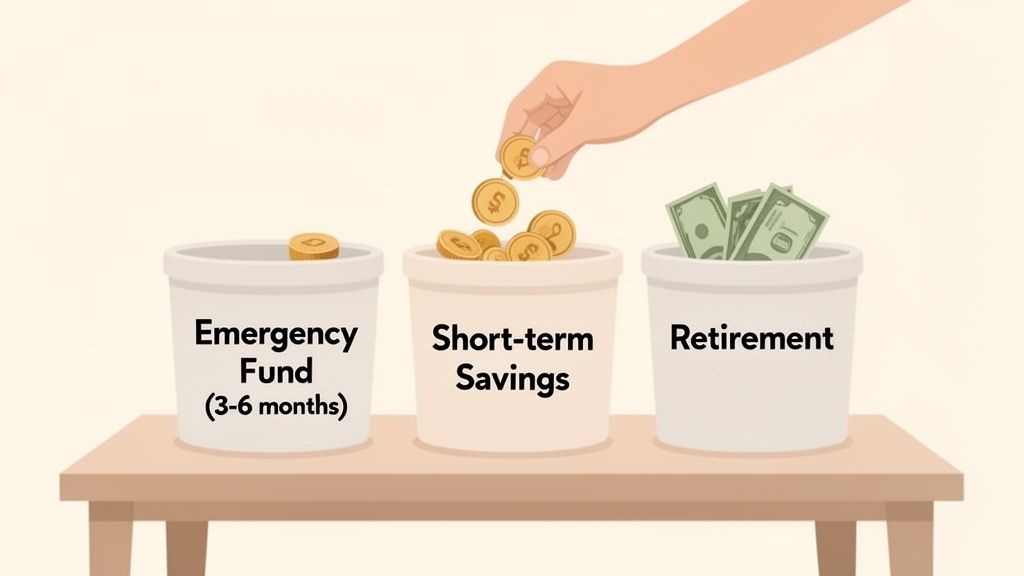
A better approach is to give your money specific jobs by sorting it into different "buckets." For your finances, this means three core parts: an emergency fund, short-term savings, and long-term retirement investments.
Bucket 1: Your Emergency Fund
This is your non-negotiable financial safety net. It’s the money that helps you handle a sudden job loss or an unexpected expense without going into debt.
Your goal is to save 3-6 months of essential living expenses—what you need for rent, utilities, groceries, and transportation. A high-yield savings account is the perfect place for this fund because it needs to be safe and accessible. Fill this bucket first; it's your top priority.
Bucket 2: Short-Term Savings Goals
Once your emergency fund is healthy, you can start saving for goals you want to achieve in the next one to five years. This could be a down payment on a home, a wedding, or a new car.
Since you'll need this money relatively soon, you don't want to risk it in the stock market. A separate high-yield savings account or a certificate of deposit (CD) is a smart choice.
Bucket 3: Long-Term Retirement Investing
This is where you build serious, long-term wealth. This bucket is for your future self and is funded through retirement accounts like a 401(k) or a Roth IRA. The money in this bucket is invested, giving it decades to grow through the power of compounding.
From Buckets to Bank Account
This three-bucket strategy is what separates people who just save from those who actively build wealth. You can explore these savings insights by age to see how benchmarks change over time.
Creating these buckets doesn't have to be complicated. With a tool like Fintrack, you can use the Strategies & Goals feature to set up a digital "envelope" for each one. Label them "Emergency Fund," "House Down Payment," and "Retirement," and decide how much to contribute automatically.
And don't forget to look for ways to speed things up. Fintrack's Benefits Wallet helps you uncover and use hidden perks like cashback offers that you can apply directly to your savings goals.
The Power Of Paying Yourself First
If there is one piece of advice that truly works for building wealth, it’s this: pay yourself first. Most people wait until the end of the month and save whatever is left over. The problem is, there’s often nothing left.
Paying yourself first flips that script. You treat your savings like any other important bill. This small mental shift makes all the difference, turning saving from a hopeful intention into a consistent, powerful habit.
Make Automation Your Secret Weapon
The best way to make this happen is to automate it. Set up automatic transfers from your checking account to your savings and investment accounts. The money is put to work before you can be tempted to spend it.
A simple, automatic transfer of $500 per month might seem small. But with compounding, that $500 a month could grow into nearly $200,000 over the next decade, assuming average market returns.
A Practical Guide To Paying Yourself First
You can set this up in just a few minutes and change your financial future. Here’s how:
- Define Your Savings "Bill": Decide how much you're going to "pay" yourself with every paycheck, whether it's a percentage (like 15%) or a fixed amount.
- Set Up Recurring Transfers: Go into your online banking and schedule an automatic transfer for the day after you get paid.
- Use Technology to Stay on Track: A tool like Fintrack helps you stick to the plan. You can set up a savings Goal with a monthly funding commitment, which essentially creates a "bill" for your future self.
- Budget What's Left: After your savings are automatically moved, you can confidently plan your spending for everything else, knowing your future is taken care of.
With an app like Fintrack, the process is even smoother. The AI assistant, Finny, can monitor your spending. You can ask, "Am I on track to hit my savings goal?" and get a data-backed answer. Finny can also alert you if you're on pace to overspend, giving you a chance to adjust before the month ends.
Your Savings Questions Answered
Even with a solid plan, a few questions always come up. Here are answers to some of the most common ones.
Is It Too Late to Start Saving at 30?
No, it is absolutely not too late. While starting in your twenties gives you a longer runway for compounding, starting at 30 is still incredibly powerful. The most important thing is that you start.
Someone who begins saving $500 a month at 30 can still build a significant nest egg by retirement. Don’t let feeling "behind" stop you. The best thing you can do for your financial future is to start today.
How Should I Prioritize My Savings Buckets?
It can feel like you're juggling too many priorities at once. Here is a simple, tiered approach:
- Tier 1: Your Emergency Fund. Before anything else, build your financial safety net of 3-6 months of essential living expenses in a high-yield savings account.
- Tier 2: The 401(k) Match. If your employer offers to match your 401(k) contributions, contribute enough to get the full match. It’s free money and an instant, guaranteed return.
- Tier 3: Roth IRA and More 401(k). With your emergency fund and employer match secured, focus on other retirement accounts. A Roth IRA offers tax-free growth and flexibility, while contributing more to your 401(k) further boosts your long-term savings.
I Have Zero Savings. What Are the First Three Steps?
Starting from scratch can feel overwhelming. Forget the big goal for a moment and just focus on these first few steps:
- Step 1: Open a Separate Savings Account. Right now, open a high-yield savings account that’s separate from your daily checking account. This creates a psychological barrier that makes it easier to leave the money untouched.
- Step 2: Automate a Small Amount. Set up an automatic transfer for a painless amount—even just $25 per week. The goal is to build the habit of paying yourself first.
- Step 3: Track One Spending Category. Don't try to budget your entire life overnight. Pick one area where you think your money might be leaking (like takeout or subscriptions) and see what the real number is. This builds awareness without stress.
Fintrack is perfect for this. You can create a specific savings Goal, automate your first small transfers, and use its AI-powered transaction tracking to get a clear picture of that one spending category. It’s a simple way to take those crucial first steps.
Ready to stop guessing and start building your financial future with confidence? Fintrack helps turn these strategies into simple, automated actions. Set your goals, see your progress in real-time, and get the insights you need to hit your targets faster.