
You're already juggling the hard part, the money itself. One partner pays the hydro bill, the other covers groceries, a credit card sneaks in a subscription, and suddenly nobody's sure what was spent, what was shared, or what still needs attention. The best budgeting app for couples isn't the fanciest one, it's the one that helps both of you see the same numbers without turning every purchase into a discussion.
In Canada, this problem is usually about coordination, not access. Household data show that 99.6% of households held a transaction account in 2023, 95.2% held at least one credit card, and 72.8% held at least one debt account, so most couples are already managing several financial relationships at once, even before you add bills, savings, and shared goals. The same survey series shows 33.9% of households used a budgeting tool in 2023, which leaves plenty of room for apps that make joint tracking simpler and less annoying. For Canadian couples, that means the question is how to share money well, not whether you can connect to the banking system at all. Canadian household budgeting and account data
If you're deciding together, start with one question, do you want full transparency or selected sharing? Then look for the app that matches your relationship, not just your transactions. A good joint system should reduce back-and-forth, make bill timing obvious, and give you both a way to stay informed without feeling watched.
personalized reward strategy guides
1. Fintrack
Fintrack is a strong place to start if you want a single shared picture of the household without living in spreadsheets. It's built around an AI assistant called Finny, which lets you ask plain-language questions about spending, trends, and habits, and a Benefits Wallet that helps surface hidden value like cashback, unused credits, loyalty points, discounts, and expiring offers before they disappear. For couples, that mix matters because one person doesn't have to become the permanent money manager just to keep the household on track.
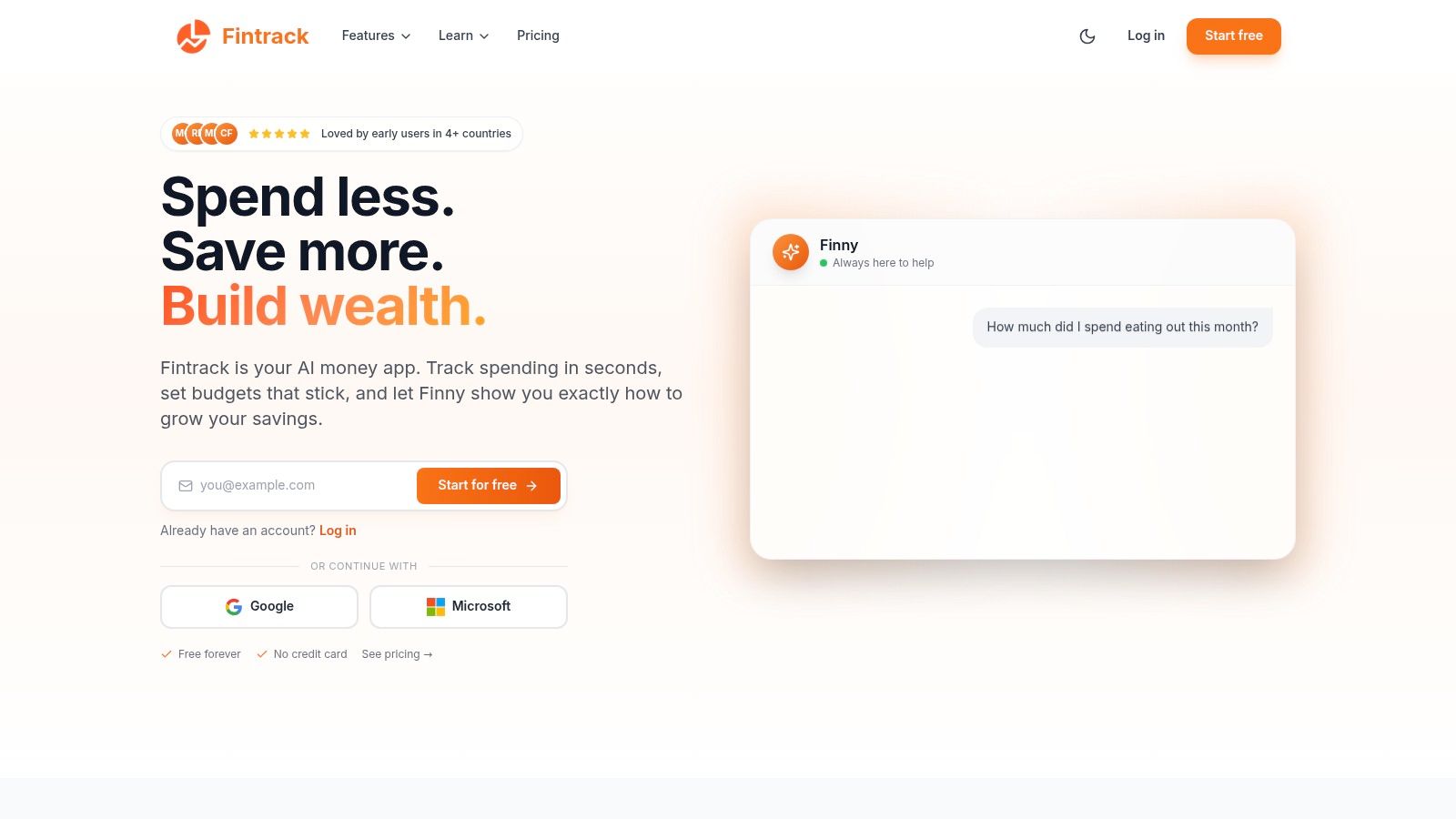
Fintrack also fits the way couples live. It consolidates income, expenses, budgets, and goals into one dashboard, auto-categorizes transactions, detects subscriptions, and sends real-time spending alerts, which is useful when one partner is the planner and the other is the spender. That kind of shared visibility helps you spot duplicates, recurring charges, and surprise activity without building a manual system from scratch.
Why it works for couples
The biggest advantage is balance. You get enough structure to stay coordinated, but not so much complexity that both of you stop using it after a week. Fintrack is especially helpful if you want to talk about money in plain language, because asking “What did we spend on takeout?” is easier than digging through receipts or category codes.
Practical rule: if one partner hates budget meetings, choose a tool that answers the question fast and makes the next step obvious.
It's also a good fit for households that care about both spending control and saved value. The app's Benefits Wallet is useful when a couple has subscriptions, rewards, or credits scattered across accounts, because forgotten value is easy to miss when each partner assumes the other is watching it.
Best fit
Fintrack makes the most sense if you want shared household planning, AI-guided money review, and a cleaner way to keep both partners aligned. It's also a smart choice if you want to reduce friction around recurring charges and goals without forcing every account into a single shared login. Learn more on the Fintrack budget planner for couples, and if you want broader context, the Household Plans feature is the natural next step.
2. YNAB
YNAB is the strongest pick for couples who want a method as much as an app. It's built around zero-based budgeting, so every dollar gets assigned a job, which is useful when two people need a clear rule for where money should go before it gets spent.
The couple-specific piece is YNAB Together, which lets you share one subscription across people with separate logins. That's a meaningful difference from apps that depend on password sharing, because each partner can see what matters without handing over the keys to everything.
Where it helps most
YNAB works well when the problem is decision-making, not account aggregation. If one of you tends to spend early and the other wants tighter control, the app's structure can keep the conversation focused on categories, priorities, and goals instead of blame.
- Separate logins: Good for couples who want shared budgeting without shared passwords.
- Recent Moves log: Useful when one partner wants to see changes the other made.
- Goal tracking: Helps keep savings targets visible.
- Reporting: Gives a clearer view of shared progress over time.
The trade-off is effort. YNAB asks you to learn its system and keep using it consistently, which is great if you want discipline and not so great if you want something that feels automatic on day one. If your relationship does better with structure than with flexibility, that friction can be worth it.
For couples comparing options, it's worth reading the YNAB alternatives guide on Fintrack, especially if you want something a little lighter or more AI-driven.
3. Honeydue
Honeydue is one of the most obvious choices if you want something built specifically for two people. It's designed around shared balances, transactions, and bills, with selective sharing so you don't have to expose every single account to your partner just to stay coordinated.
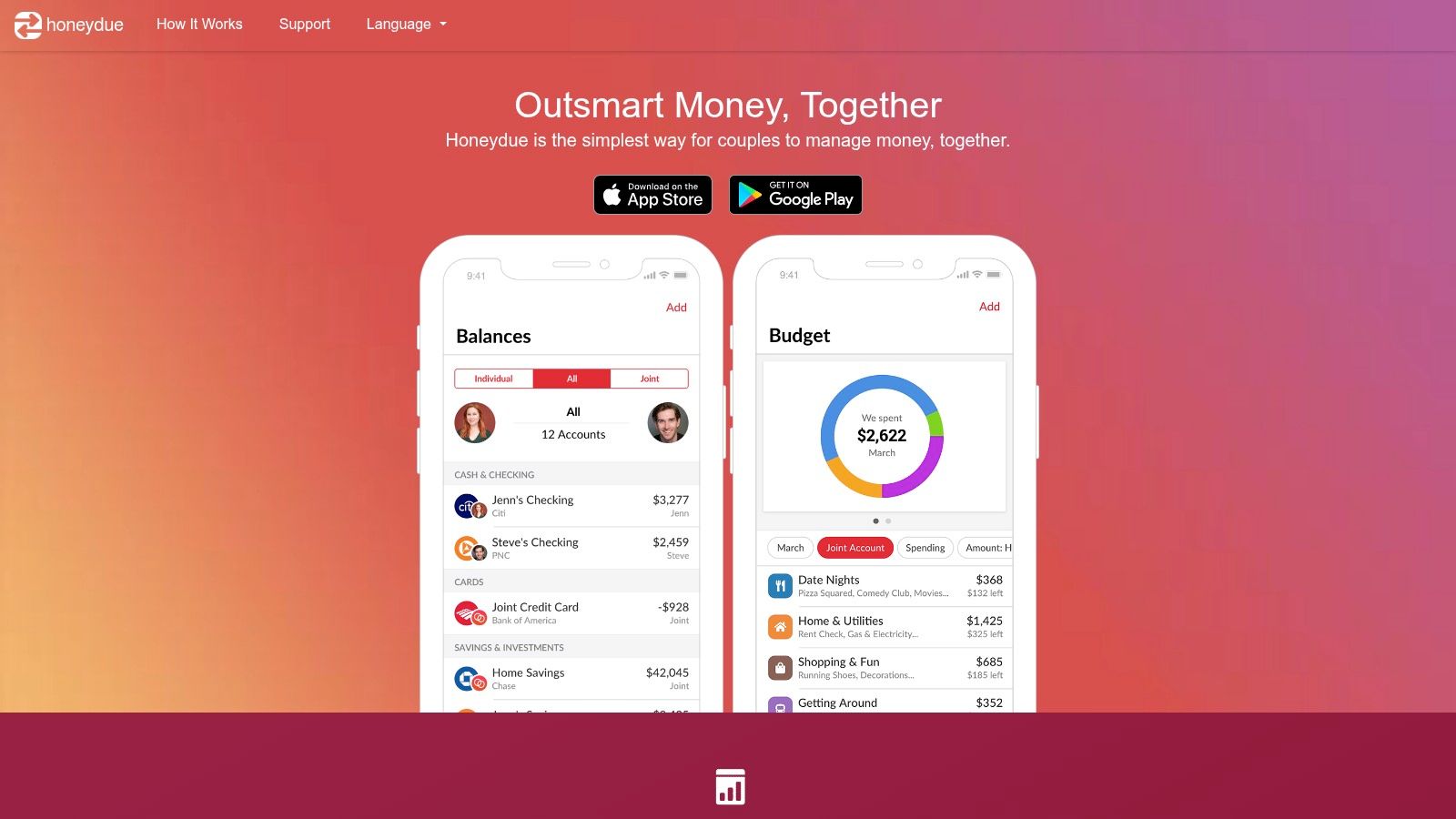
That selective approach is the main reason many couples like it. You can keep the joint picture visible while still leaving some personal finances private, which helps when one partner wants transparency and the other wants boundaries. It also includes in-app messaging, so a bill reminder or a shared purchase doesn't have to turn into a separate text thread.
What it's good at
Honeydue is quick to set up and easy to understand. It works well for couples who want a simple, relationship-first app that handles coordination without feeling corporate or overly technical.
The bank support is broad, including Canadian institutions on Android, though linking quality can still vary by platform and institution. The optional Joint Cash card is U.S. only, so Canadian couples should ignore that part and focus on the shared budgeting features instead.
Good fit, bad fit: it's a good fit for basic shared budgeting and bill reminders, but not the best choice if you want advanced forecasting or deep long-term planning.
If your main issue is staying aligned on day-to-day spending, Honeydue does the job well. If you want more analysis or a better household-wide dashboard, you may outgrow it faster than you expect.
For a deeper comparison of shared-budget tools, the expense tracker for couples guide is a useful follow-up.
4. Emma
Emma is a strong option for couples who mostly want to find recurring waste fast. It aggregates accounts, analyses subscriptions, flags fees, and supports many banks in the U.S. and Canada through Plaid, which makes it appealing if you want one shared view of what's going out every month.
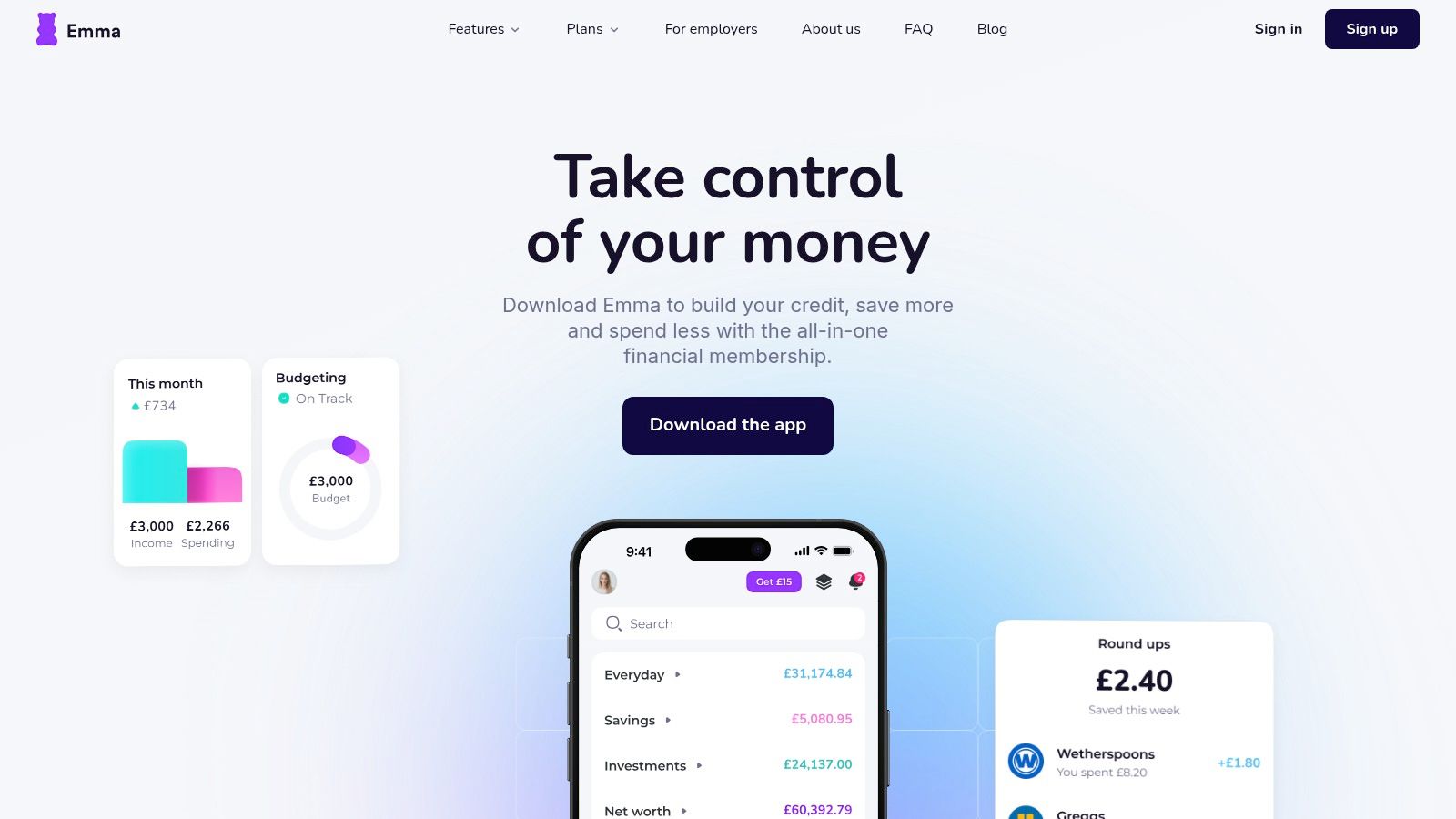
What makes Emma practical is its focus. Couples often don't need a complex strategy tool first, they need to catch the charges they forgot about, identify fee leaks, and agree on which subscriptions deserve to stay. Emma is good at exposing those patterns without much setup overhead.
Best use case
It suits households where one partner wants broad account aggregation and the other wants a clean way to review subscriptions and merchant details. Custom categories, rules, and transaction editing also help if your spending doesn't fit neat defaults.
The main trade-off is collaboration depth. Many couples end up sharing one login or using a shared aggregated view, which is simpler than a true permission-based household structure. That's fine for some pairs, but less ideal if you want separate roles or tighter privacy boundaries.
If you're comparing apps specifically for recurring charges and joint awareness, Emma is worth testing first. It's especially useful when you already know there's waste somewhere, but you don't know where the leak is.
5. Spendee
Spendee is the app to look at when you want a clean shared wallet instead of a heavy finance system. Its Shared Wallets are built for couples, roommates, or families, so it's a natural fit for joint day-to-day spending that needs structure but not complexity.
The nice thing about Spendee is flexibility. It can work with bank sync on Premium, but it also works as a shared manual system, which matters if one partner prefers to log purchases directly rather than connect every account. That makes adoption easier for couples with different comfort levels around automation.
Where it stands out
- Shared Wallets: Good for collaborative household spending.
- Manual-friendly setup: Useful if bank linking feels too invasive.
- Cross-device sync: Helps both partners stay on the same page.
- Unlimited budgets on paid tiers: Gives room for more than one planning setup.
The trade-off is that bank coverage and pricing can vary by country, so Canadian couples should verify support before committing. Spendee is less about deep analysis and more about simple coordination, which is exactly why some people stick with it.
If your household wants a visible shared budget that's easy to adopt, Spendee is a sensible middle ground. It's not the most powerful app in this list, but it may be one of the easiest for both people to keep using.
6. PocketSmith
PocketSmith is the choice for couples who want to plan ahead instead of just reacting to what already happened. Its forecasting-first design makes it especially useful if you're trying to understand future cash flow, not just this month's spending.
The collaboration model is also more flexible than many budgeting tools. It supports Family Groups and Shared or Advisor Access, which means couples can fine-tune how much visibility each person gets. That's helpful if one partner wants full access and the other wants a read-only view.
Why forecasting matters
A lot of couples only look backward. They check what was spent, then try to explain the numbers after the fact. PocketSmith pushes the conversation into the future, which is better when you're managing rent changes, irregular income, debt payments, or a savings target that depends on timing.
Its Canadian-specific bank feeds and manual import options make it particularly practical for users here, and the multi-currency support is a bonus for couples with cross-border lives or travel-heavy spending. The downside is setup time. This is not a casual app, and it asks you to spend time configuring the system before it starts helping.
If your biggest money fights happen because one of you is always surprised by what's coming next, forecasting is more valuable than prettier charts.
For couples deciding between planning tools, the PocketSmith alternatives article is a useful comparison point.
7. Goodbudget
Goodbudget fits couples who already like the envelope method and want a simple system they can keep up with together. It is not trying to do everything for you, and that limitation is part of why it works for some households.
The app lets both partners sign in on multiple devices with the same account, so shared categories, spending limits, and purchase tracking stay in one place. For Canadian users, that manual setup can be a strength, because automatic bank sync is not available in Canada, which means you are not building your budget around a feature you cannot use.
Why couples choose it
Goodbudget is a solid fit for couples who want to assign money before they spend it and keep that plan visible to both people. If your relationship works better with agreed envelopes than with lots of automatic account feeds, the app gives you that structure without extra complexity.
- Envelope budgets: Useful for spending with a clear plan.
- Manual entry supported everywhere: Gives you control without relying on bank linking.
- Web and mobile sync: Keeps both partners working from the same numbers.
- Household sharing: Makes setup straightforward for couples.
The trade-off is just as clear. You get less automation, less account aggregation, and less convenience than heavier apps. For some couples, that feels restrictive. For others, especially when bank syncing creates more confusion than clarity, it keeps the budget easier to trust.
The question is whether you and your partner will use a hands-on system week after week. If one of you prefers to check things off manually and the other wants everything pulled in automatically, that mismatch matters more than the feature list.
For a deeper comparison of envelope-style tools, the Goodbudget alternatives guide is worth reviewing.
If you prefer a low-tech approach that still stays organized, Goodbudget is a respectable pick. For some households, less automation is what makes the system sustainable.
8. Wallet by BudgetBakers
Wallet by BudgetBakers is a smart option for couples who want selective sharing, not all-or-nothing transparency. You can choose which accounts to share, which makes it easier to build a joint system without exposing every financial detail.
That flexibility is useful for international or multi-currency couples too. The app supports multiple currencies, manual workflows, and CSV import, so it can adapt to different banking setups and different habits around data entry.
What makes it different
Wallet is less about a single couple workflow and more about fine-grained control. If one partner wants household visibility and the other wants to keep certain accounts private, this app gives you room to do that without awkward workarounds.
It also comes with a more formal security posture, including GDPR and ISO 27001-oriented positioning, which may matter if you care about how shared financial data is handled. The trade-off is that pricing and features can vary by region and app store, and some users report occasional sync or UI issues, so a trial is the sensible way to test it.
For couples who split money in a hybrid way, Wallet is a practical middle path. You get enough structure to coordinate, but not so much exposure that the app becomes a source of tension.
9. Buddy
Buddy is the most straightforward choice for couples on Apple devices who want shared budgeting to feel quick and visible. It's built around one live budget, real-time sync, and split tracking, so both people can keep up without a lot of setup.
That makes it a good fit for everyday coordination. If one of you enters a shared purchase, the other can see it fast, and the split-tracking piece helps settle things fairly after the fact.
Best for Apple households
Buddy's iPhone, iPad, and Apple Watch support gives it a polished, focused feel. It's especially strong for couples who live inside the Apple ecosystem and don't want to deal with a more complex cross-platform tool.
The downside is just as clear. It's iOS-only, so it's not a fit if one partner uses Android. Bank linking and category automation are also simpler than in more advanced apps, which means Buddy is about ease of use more than deep analysis.
Short version: if both of you are on iPhone and want a shared budget that stays visible all day, Buddy is a strong fit.
If you value speed and shared visibility more than advanced features, Buddy is easy to recommend.
10. Wally
Wally is a good choice for privacy-minded couples who want shared budgeting spaces without forcing bank connections. It supports creating shared budget spaces for family, roommates, or couples, with role-based invites and offline manual entry.
That combination is useful when you want to stay coordinated but not overexposed. Some couples don't want every account linked, especially if they're still figuring out how much should be shared versus kept separate.
When manual control wins
Wally gives you the structure of a shared system with the control of a manual one. That makes it practical for couples who prefer to enter expenses themselves and keep a tighter grip on what gets connected.
- Shared budget spaces: Useful for joint visibility.
- Role-based invites: Lets you control who sees what.
- Offline manual entry: Helpful when you don't want bank syncing.
- Family-style layout: Works for couples who want shared wallets without a heavy setup.
The trade-off is limited automation. If you want auto-categorization, bank aggregation, and a lot of insight with less effort, another app will probably suit you better. But if privacy and manual control matter most, Wally is worth a serious look.
Which app fits which relationship dynamic
If you want total transparency, Fintrack, YNAB, and Honeydue are the strongest places to start because they make shared visibility central rather than awkward. If you want to keep some finances separate, Wallet by BudgetBakers, Wally, and Fintrack's household approach are better matches because they let you share selectively.
If you're mostly trying to stop subscription waste and recurring leaks, Fintrack and Emma stand out. If you want structured budgeting discipline, YNAB and Goodbudget are the clearest fits. If your money problems are really about forecasting and future planning, PocketSmith is the most focused option here.
A simple way to decide together is to ask three questions. Do we want to see everything, or only the parts we manage together? Do we want automation, or do we prefer manual control? Do we need a budget app, or do we need a better shared money conversation?
The answer usually points to the right app faster than feature lists do.
Top 10 Couples Budgeting Apps Comparison
| App | Key features | UX & quality | Value / USP | Best for | Price & security |
|---|---|---|---|---|---|
| Fintrack | AI conversational assistant (Finny), Benefits Wallet, account consolidation, subscription detection, real-time alerts | Intuitive web + mobile dashboard, instant natural-language answers | Reclaims hidden rewards and gives actionable AI insights to stop waste and hit goals faster | Individuals, couples, subscription-heavy users, rewards maximizers | Free starter (no card), bank-level encryption, SOC 2, GDPR-ready |
| YNAB (You Need A Budget) | Zero-based budgeting, YNAB Together multi-user, goal tracking, detailed reports | Structured methodology; steeper learning curve but high long-term discipline | Enforces cash-flow control and behavioral change; true multi-user without password sharing | Couples wanting tight cash-flow control and budgeting discipline | Paid subscription (higher price) |
| Honeydue | Couples-first balances, bills, in-app chat, bank links (varies), optional Joint Cash card (US) | Quick setup, simple shared view and messaging | Fast couple coordination with bill reminders and selective sharing | Couples wanting an easy, quick shared money app | Free with optional card; bank linking quality varies by platform |
| Emma | Plaid-powered aggregation, subscription tracking, custom categories | Modern UI, easy setup for supported banks | Spot recurring charges, fees and merchant insights to cut waste | Couples identifying subscriptions and fee leaks | Freemium; strong US/Canada Plaid coverage |
| Spendee | Shared Wallets, optional bank sync (Premium), unlimited budgets on paid tiers | Clean visual design; easy adoption, supports manual entry | Flexible shared wallets that work with manual or synced workflows | Couples, roommates, families wanting collaborative wallets | Freemium; Premium required for bank sync, regional support varies |
| PocketSmith | Long-range forecasting, Family Groups, Canadian bank feeds, multi-currency | Advanced analytics; more setup time but powerful planning | Robust cash-flow projections and scenario planning | Couples who want forecasting and advisor/partner access | Tiered paid plans; excellent Canadian coverage |
| Goodbudget | Envelope-style budgets, household sharing, web + mobile sync, manual CSV import | Very simple, manual-first workflow | Intentional envelope method without bank linking | Couples preferring manual budgeting or CSV workflows | Free + paid tiers; auto-sync limited in Canada |
| Wallet by BudgetBakers | Shared accounts/wallets, multi-currency, CSV import, selective sharing | Versatile UI; fine-grained sharing controls | Good for international/multi-currency households with selective sharing | International couples or travelers needing multi-currency support | Multiple plans (monthly/yearly/lifetime); GDPR/ISO claims |
| Buddy – Budget Planner (iOS) | One-tap shared budget, split tracking, real-time Apple device sync | Polished iOS-native experience, very simple for two people | Fast shared budgeting and split settlement for Apple users | iOS-only couples wanting instant shared budgets | iOS-only app; App Store pricing; limited automation vs power apps |
| Wally | Shared budget spaces, role-based invites, wallet-style budgeting, offline/manual entry | Privacy-focused, easy manual setup | Shared visibility without bank links; role-based access control | Privacy-minded couples who avoid bank linking | Freemium; features and pricing vary by app store |
Start the Money Conversation and Pick Your Tool
Choosing an app from this list is less about the software and more about what it enables, a productive, ongoing conversation about your shared financial life. The best budgeting app for couples is the one you'll both commit to using. Discuss what matters most, total transparency, ease of use, or long-term forecasting, then start a free trial of your top contender and use it for one full billing cycle before you decide.
If you're still comparing, don't default to the app with the most features. Pick the one that matches your actual relationship dynamics, because a tool that creates more friction will get abandoned, no matter how polished it looks. For some couples, that means a joint dashboard with lots of visibility. For others, it means selective sharing, manual control, and fewer moving parts.
The most useful habit is a short money check-in that both of you can repeat. Keep it focused on shared bills, upcoming expenses, savings progress, and anything that needs a decision, not every individual transaction. That approach keeps the app useful and keeps the conversation calm.
If you want a system that gives your household one clear place to review spending, goals, and hidden value, Fintrack's Household Plans are a practical next step. It's a clean way to bring both partners into the same financial picture without making the process feel like a chore.
A CTA for Fintrack.