
Some bills are annoying. A credit card bill with a large balance is different. You make a payment that feels meaningful, then the next statement lands and the balance still looks stubbornly high.
That is usually the moment people ask, how do i transfer balance on credit card debt without making things worse. It is a fair question, especially in Canada, where the details matter. Fees, promo windows, issuer rules, and payment timing can decide whether a balance transfer helps or just reshuffles the problem.
A balance transfer is not debt elimination. It is debt relocation with a purpose. You move a balance from a high-interest card to a card with a lower promotional rate, often 0% for a limited period, then use that window to pay down the principal faster. Done well, it can create breathing room. Done carelessly, it can add fees and leave you with another expensive card balance later.
That Sinking Feeling When the Credit Card Bill Arrives
A lot of people land here the same way. One expensive month becomes three. Then a repair, a trip, a school cost, or just day-to-day inflation pushes the balance higher than planned. After that, interest starts eating part of every payment.
The frustrating part is psychological as much as financial. You are paying, but progress feels invisible. That can make people avoid the problem altogether, which usually makes the next statement worse.
Balance transfers can help because they change the math. Instead of watching interest absorb part of every payment, you create a temporary runway to attack the balance itself. That does not solve overspending by itself, but it can stop the interest drag long enough to let a real payoff plan work.
I often explain this to clients as moving boxes before a renovation. You are not done with the mess just because the boxes moved to a different room. But if you move them into the right place, you finally have room to work.
For people who are still sorting out the bigger picture of debt, this guide on understanding personal debts is useful because it helps separate short-term pressure from long-term patterns. That distinction matters before you apply for anything new.
A balance transfer also works best when it sits inside a broader cash-flow plan. If your monthly budget keeps getting knocked off track by irregular expenses, building a small buffer can help. This article on a sinking fund is a practical place to start.
A balance transfer works best when the problem is high interest, not when the problem is that the debt keeps growing every month.
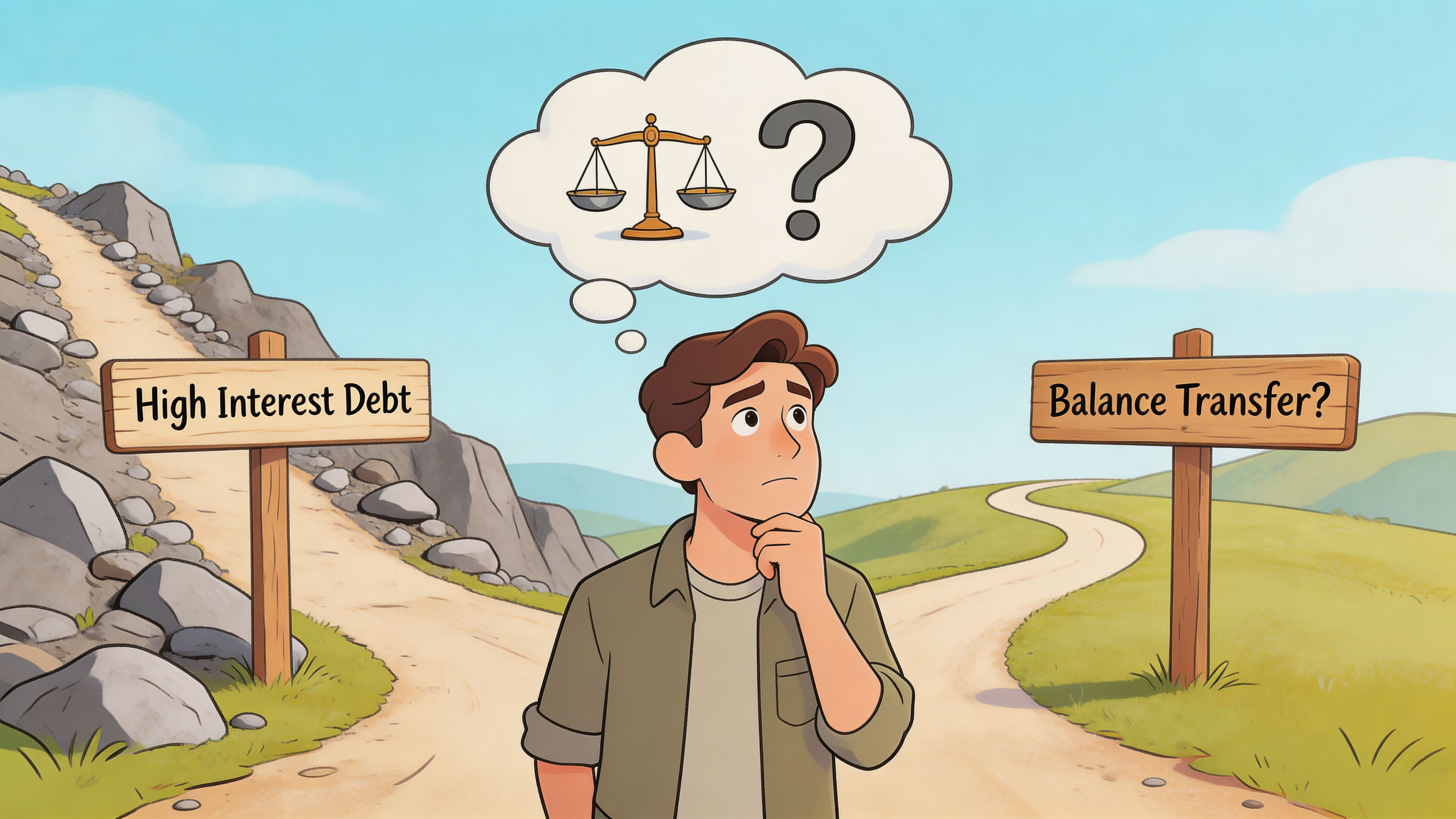
Is a Balance Transfer Right for Your Situation
Some people should absolutely consider a balance transfer. Others are better off choosing a different debt strategy. The key is being honest about both your credit profile and your repayment habits.
When it tends to work well
A balance transfer makes sense when all three of these are true:
- Your credit is strong enough to qualify for a good offer. Canadian consumers with excellent credit, roughly 670 to 739, transfer an average of $5,000 to $5,500 and account for 72% of balance transfer activity, with the strongest offers reaching promo periods of up to 21 months according to Finder’s balance transfer statistics.
- You can stop adding to the debt. If you keep spending on the old card or start using the new one for purchases, the transfer often loses its value.
- You can clear the balance during the promo period, or at least make a big dent in it. The transfer fee only makes sense if the interest savings outweigh it.
This strategy is often strongest for someone with one or two cards carrying expensive balances, stable income, and a clear monthly surplus they can direct to repayment.
When it may not be the best move
A balance transfer is a weak option if your income is too tight to support regular payoff payments, or if your credit is already under stress and approvals are uncertain.
It also may not fit if your debt is more serious than a card-rate problem. In that case, broader debt solutions may be more appropriate. This overview of Three Options For Dealing With Unmanageable Credit Card Debt is worth reading before you open another account.
A quick decision filter
Use this simple checklist:
| Question | Good sign | Warning sign |
|---|---|---|
| Credit profile | Strong recent payment history | Missed payments or maxed cards |
| Repayment plan | You know what you can pay monthly | You are hoping to “figure it out later” |
| Spending habits | Old balance came from a temporary issue | The balance keeps rising month after month |
| Goal | Pay off debt faster | Buy more time without changing habits |
One practical point. Do not treat the longest promo period as automatically best. A shorter offer with cleaner terms can beat a longer one if you can realistically finish repayment within that window.
For readers comparing financial products more broadly, this breakdown of PenFed is a useful example of how to look past headline offers and focus on the full cost structure.
The best balance transfer offer is not the one with the flashiest ad. It is the one you can realistically finish.
How to Prepare for Your Balance Transfer
Preparation is where people either save money or create extra hassle. If you rush the application, you may get approved for the wrong card, miss the transfer window, or underestimate the payoff amount.
Start with your credit and your target amount
Check your credit report with Equifax or TransUnion Canada before you apply. You are looking for two things. First, whether your score is likely strong enough for a competitive offer. Second, whether there are any errors or old issues that could slow approval.
Then decide exactly how much you want to transfer. Do not guess. Pull your latest card statement and write down the current balance, then think carefully about whether you are transferring all of it or only the portion you can tackle within the promo period.
Compare the parts people skip
Many focus only on the promotional APR. That is too narrow.
Look at these details:
- Balance transfer fee: This affects the true cost immediately.
- Length of the promotional period: You need enough time to clear the debt.
- Regular rate after the offer ends: This becomes important if you do not finish in time.
- Transfer deadline: Many issuers require you to complete the transfer within a set window after account opening.
- Issuer restrictions: Some banks do not allow transfers from affiliated cards.
Digital transfers are usually smoother. In Canada, balance transfer requests made through a bank’s digital app have a 78% completion rate, compared with 62% for paper cheques, and 41% of users incur fees by missing the 60- to 120-day transfer window, according to U.S. Bank’s balance transfer guidance.
That is why I prefer app-based or online requests whenever possible. Less paperwork. Fewer delays. Easier tracking.
Build your own pre-application checklist
Before you submit anything, have this ready:
Your current card details Account number, current balance, and issuer name.
Your repayment ceiling The amount you can pay monthly without falling behind elsewhere.
A transfer deadline note Put the issuer’s window in your calendar the same day you open the card.
A plain budget review Look at fixed bills, groceries, transport, and subscriptions. If the monthly payment will squeeze essentials, the transfer may not be the right move yet.
For anyone who needs that budget review in one place, a tool for budget planning can make the monthly payment test easier before you apply.
The transfer itself is easy. The setup work is what protects you from paying a fee for a plan you cannot finish.
Your Step-by-Step Guide to Requesting a Transfer
Once the card is approved and the offer is confirmed, the process is mostly administrative. The trick is doing the boring steps in the right order.
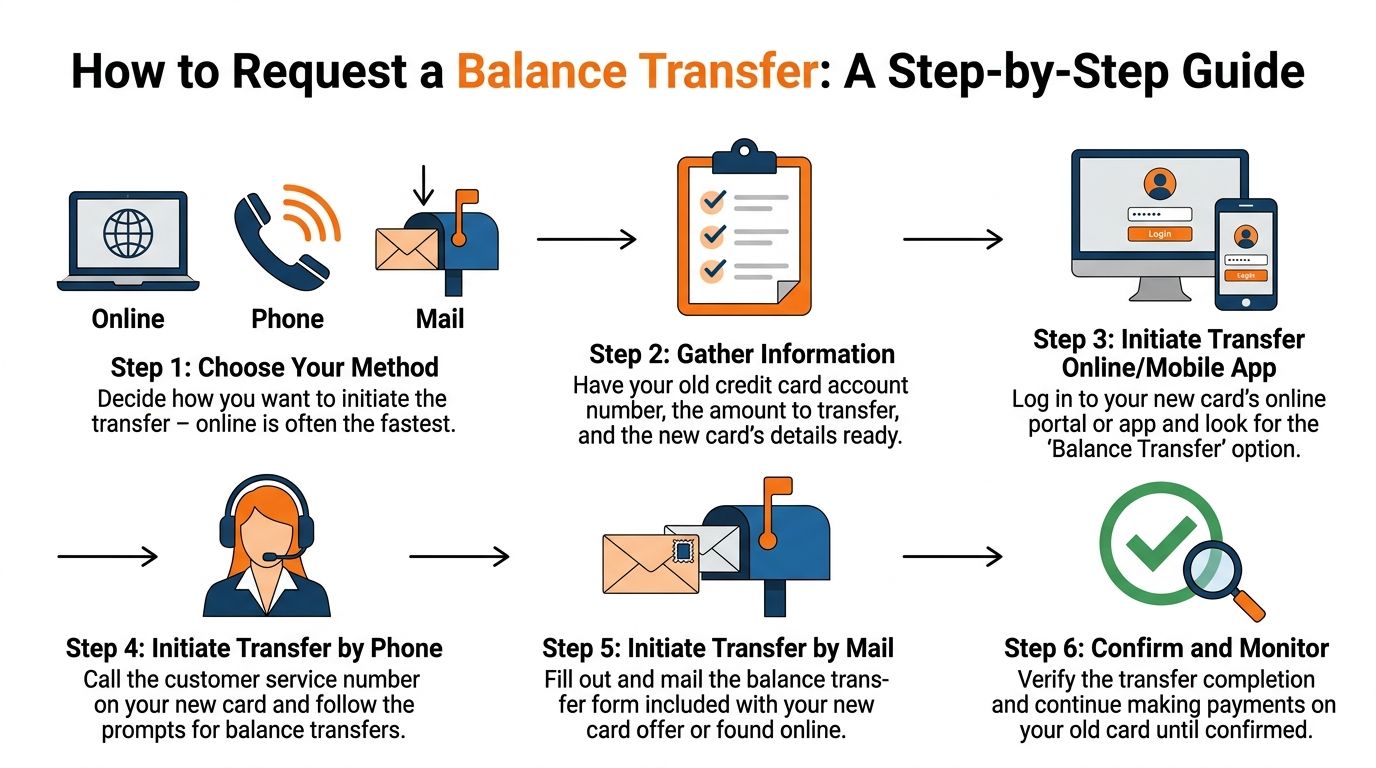
Step 1 and 2
Choose your method first. Most issuers let you request a transfer online, through the mobile app, by phone, or in some cases with a balance transfer cheque.
Then gather what you need:
- Old card account number
- Name of the old issuer
- Amount to transfer
- New card details
- The promo terms from your approval documents
Keep the amount realistic. If the available credit on the new card is tighter than expected, the bank may not allow the full transfer amount.
Step 3 and 4
If the app or website offers a transfer feature, that is usually the cleanest route. Log in, find the balance transfer section, enter the old account details, and confirm the amount.
If you prefer to call, use the customer service number on the new card. This can help if you have questions about eligible accounts or timing.
A successful Canadian balance transfer usually starts after approval with a credit score of 660+, and the transfer can take 7 to 21 business days. During that waiting period, you should keep making minimum payments on the old card so you do not trigger late-payment reporting, as described in Citi’s balance transfer instructions.
That waiting period is where people get tripped up. They assume the transfer is instant, stop paying the old card, and then get hit with a late fee or credit damage because the old issuer has not been paid yet.
Step 5 and 6
If your issuer sends convenience cheques, read the terms carefully before using them. They can be useful, but they also create more room for mistakes if the payment is delayed or misapplied.
After you submit the request:
- Check the old card account until the transferred amount posts
- Check the new card account to confirm the balance and fee were applied correctly
- Keep records of the request date, amount, and any confirmation number
- Leave reminders in your calendar for the end of the promo period
Here is the simple sequence I recommend:
| Stage | What to do | Why it matters |
|---|---|---|
| Approval | Confirm promo terms in writing | Prevents confusion later |
| Submission | Enter exact old card details | Avoids rejected or delayed transfers |
| Waiting period | Keep paying the old card minimum | Protects your payment history |
| Posting | Verify both accounts | Catches errors early |
| After transfer | Lock in a payoff plan | Turns the offer into real savings |
If you like having one place to sanity-check timelines and next actions, an AI Assistant can help you keep track of due dates, balances, and the “did this post yet?” questions that come up during the transfer.
Managing Your Transfer to Maximize Savings
The transfer itself does not create the win. Your repayment behaviour does.
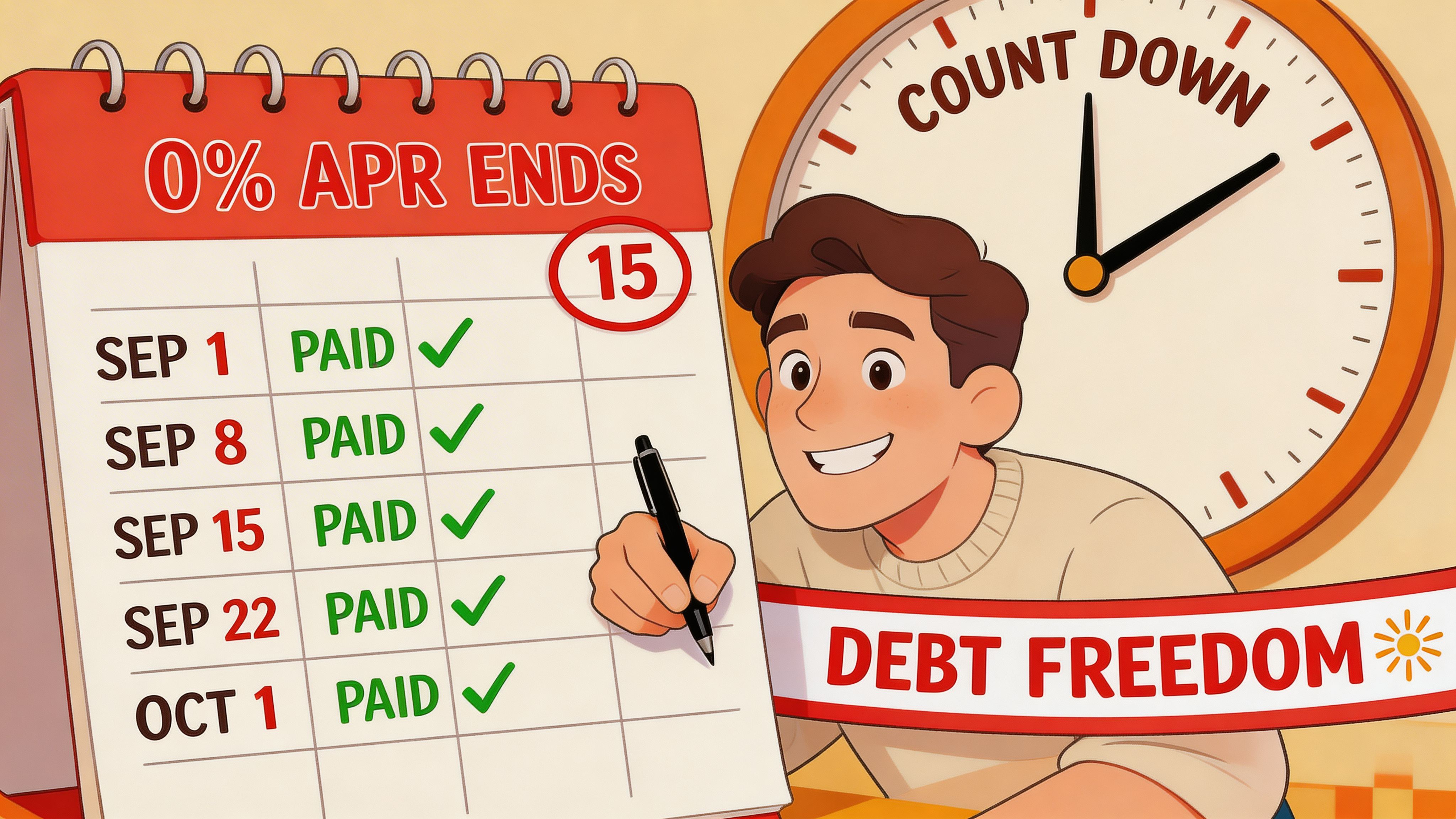
Do the payment math immediately
In Canada, balance transfer fees usually range from 3% to 5%. On a $5,000 transfer, that adds $150 to $250 to the new balance. Bankrate’s example shows that a $5,000 transfer with a 5% fee ($250) and 0% intro APR over 15 months works out to $350 monthly payments, with total repayment of $5,250, compared with $5,728 on the original card at a higher rate, saving nearly $500 according to Bankrate’s balance transfer guide.
That example captures the right mindset. You do not ask, “Can I get approved?” first. You ask, “Can I pay this off on schedule?” first.
Use a simple payoff rule
Take the transferred balance plus the fee, then divide by the number of promo months.
Example:
| Item | Amount |
|---|---|
| Original balance | $5,000 |
| Transfer fee at 5% | $250 |
| New balance | $5,250 |
| Promo period | 15 months |
| Monthly target | $350 |
Do not aim for the minimum payment if your goal is to be done before the offer expires. Minimums keep the account current. They do not guarantee payoff.
Protect the savings you just created
Three habits matter more than everything else:
Automate the monthly payment Remove the chance of forgetting.
Stop using the transfer card for new purchases Mixing old debt and new spending makes the plan messier than it needs to be.
Review the account monthly Check the remaining balance, not just whether a payment went through.
This is also a good place to tighten spending visibility. If recurring expenses or impulse spending are what pushed the balance up in the first place, tracking those patterns matters. Tools that categorize expenses automatically can help you spot where repayment money keeps leaking out.
A balance transfer gives you a quieter room to work in. It does not do the work for you.
Common Pitfalls and How to Avoid Them
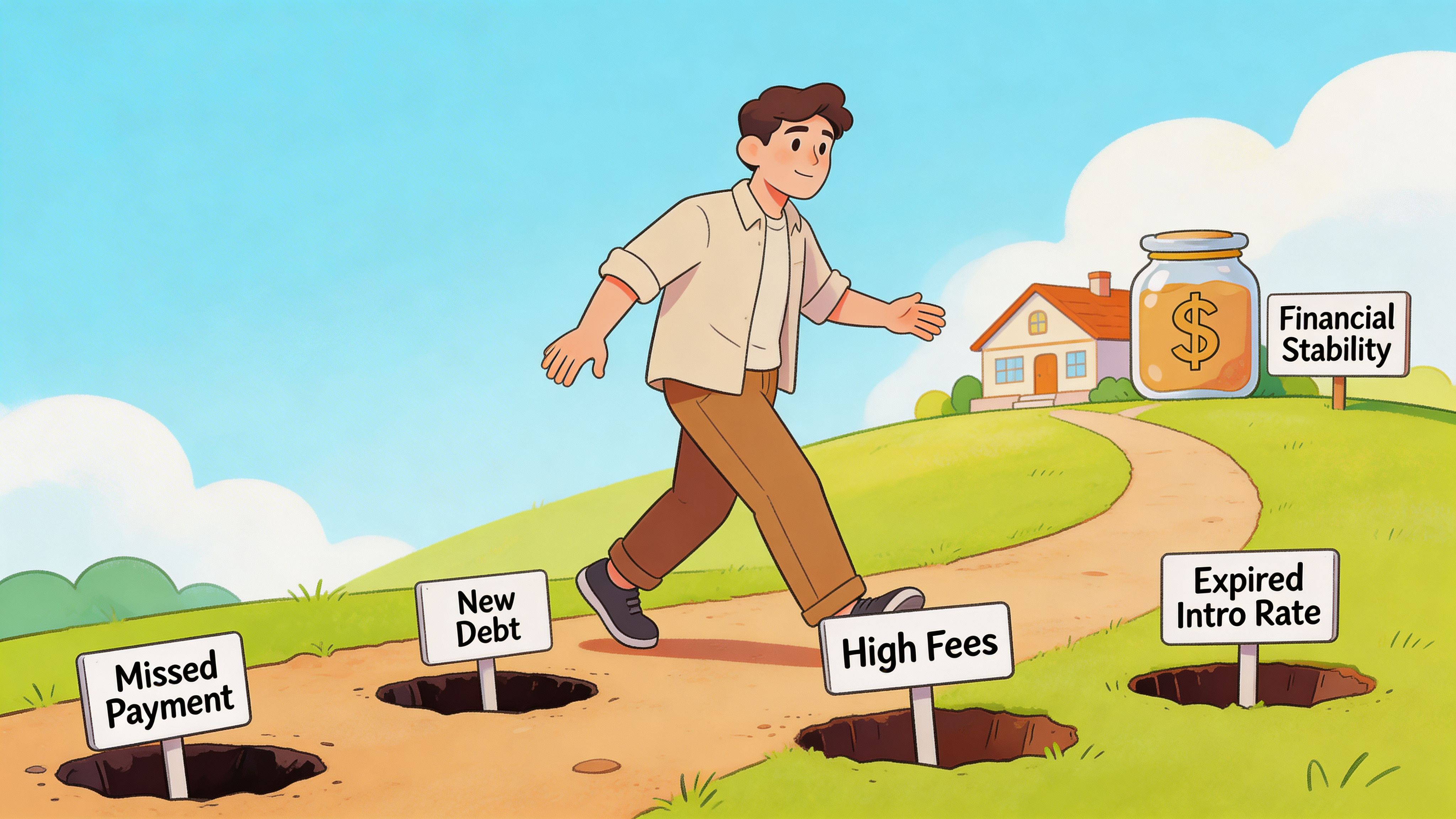
People often think the main risk is choosing the wrong interest rate. In practice, the bigger risks are procedural. A missed rule, a missed date, or a transfer to the wrong issuer can erase the benefit quickly.
The Canadian rule many people miss
A key issue for Canadians is that transfers between cards from affiliated issuers are often prohibited. FCAC data from 2025 showed 28% of credit card complaints involved unclear fees during transfers, and failed transfers linked to affiliation rules can lower credit scores by 20 to 50 points, according to NerdWallet’s overview of balance transfer steps.
That means you should verify the issuer policy before you apply, not after. If your old and new cards are tied to the same banking group or affiliate network, the transfer may be denied.
Other mistakes that cost people money
Some traps are less dramatic but still expensive:
Missing a payment during the transfer window People assume the old card is “handled” before it completes.
Treating the new card like fresh spending room This is one of the fastest ways to undo the benefit.
Ignoring the end date of the promo offer The danger is not the transfer itself. It is drifting through the promo period without a finish line.
Choosing based on marketing instead of terms A big “0%” headline can distract from the fee, deadline, or restrictions.
A practical safeguard list
Before and after the transfer, check these items:
Issuer compatibility Make sure the transfer is allowed between those two cards.
Deadline clarity Write down the last date to request the transfer.
Payment continuity Leave the old card on minimum payments until the balance shows as moved.
No new swipes rule Put the new card away if the goal is debt payoff.
The most expensive balance transfer mistake is not the fee. It is making a transfer that never had a realistic payoff plan behind it.
Turning a Smart Move into a Financial Win
A balance transfer can be one of the cleaner ways to cut interest and regain control. But it only works when the transfer is paired with a payment plan, calendar discipline, and fewer chances to overspend.
The practical formula is simple. Check that you qualify. Read the terms closely. Confirm the transfer is allowed between issuers. Keep paying the old card until the balance moves. Then pay the new balance down on a schedule that finishes before the promo period ends.
Handled that way, this is not just moving debt around. It is using a temporary advantage to create permanent progress.
If you want help staying on top of balances, due dates, spending categories, and payoff goals in one place, Fintrack can make that easier without turning your finances into a spreadsheet project.