You're at the checkout, the cashier asks for your points card, and you draw a blank. Later that night you open an airline app you haven't touched in months and find a balance sitting there, ageing. That gap between earning and using rewards is where a loyalty points app earns its keep.
Where Your Rewards Are Actually Hiding
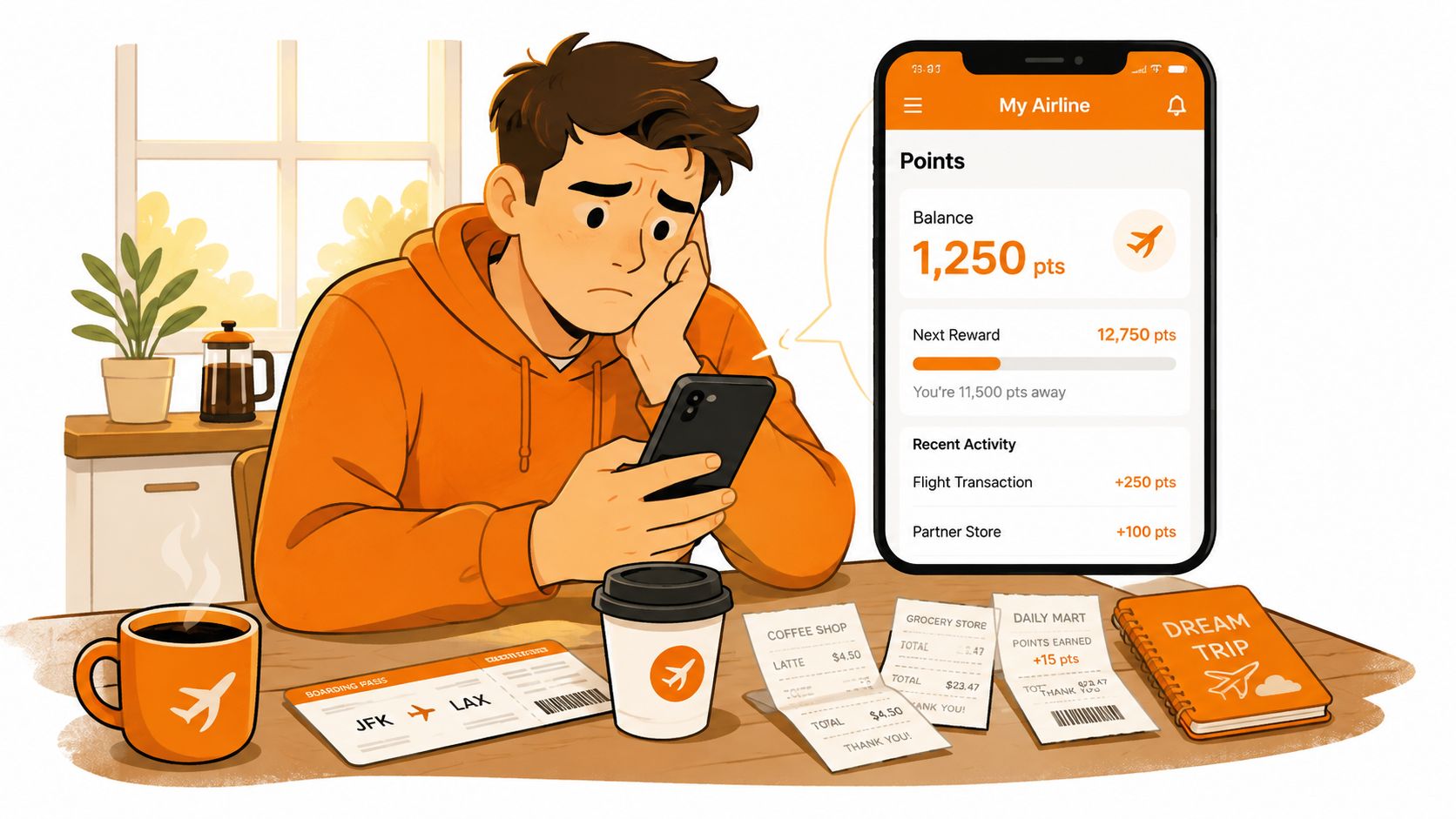
Say you log into an airline app while pricing a trip and discover you're close to a flight you thought you'd pay cash for. Or you check a grocery account and find a large balance with an expiry warning attached. You didn't feel richer while earning those points, but you would definitely feel the loss if they vanished unused.
That's the pattern for most households. Points don't hide in one dramatic place. They sit in small, scattered balances across grocery stores, pharmacies, coffee shops, gas stations, hotels, and credit cards. Each one feels too minor to manage on its own, so you don't.
Why earning was never the hard part
Earning happens automatically. You shop, you tap, you move on. Using the value takes effort. You need to remember the password, check the balance, read the minimum redemption rule, and work out whether the reward fits a purchase you were already planning.
That effort explains why rewards pile up in places you'd never think to look. Niche programs count too. Even golf apparel loyalty perks from a specialty retailer can sit forgotten for a season if you only shop there twice a year.
- Dormant travel accounts: Miles from a trip you took for work, in an app you rarely open.
- Everyday store balances: Grocery and pharmacy points that grow slowly and never trigger a redemption habit.
- Card-linked rewards: Cashback or points buried behind a banking login you use for other tasks.
A useful reframe: Treat every balance like money in a jacket pocket. It only helps your budget when you know it's there and spend it on purpose.
Looking at your spending patterns helps here, much like the thinking behind reviewing where your money actually goes each month. Once you see which stores you use weekly, you can tell which programs deserve attention and which are just clutter. The rest of this guide walks through how these apps work, why balances pile up, and how to turn them into real value before they expire.
What a Loyalty Points App Actually Does
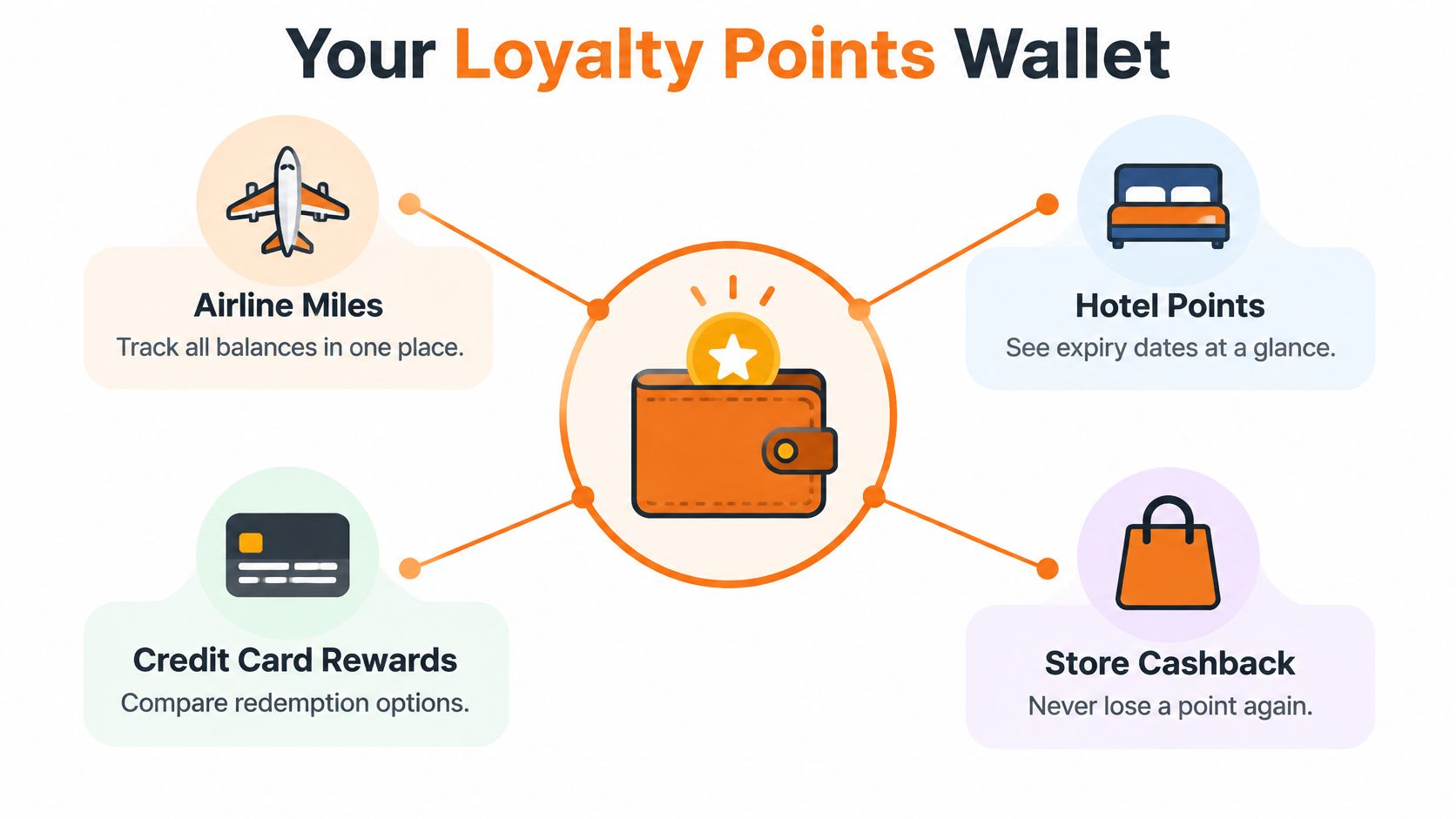
Think of a Loyalty Points App as a filing cabinet with a reminder system. Instead of keeping a separate drawer for every store, airline, and card, you keep one organised view. You still own each account with each retailer, but you stop relying on memory to manage them.
That analogy matters because people often picture something more magical. The app doesn't create points or change a retailer's rules. It collects information, organises it, and puts the most useful item in front of you at the right time.
The three jobs under the hood
First, the app gathers balances. That might mean linking accounts, entering balances manually, or recording them from statements. Manual entry sounds old-fashioned, but it's simple, it works when a program has no clean connection, and you control exactly what's recorded.
Second, it tracks the rules. Every program has its own minimum redemption amount, expiry clock, and restrictions. A good tracker stores those details beside the balance, so a number never appears without the conditions that make it usable or unusable.
Third, it ranks what needs action. A balance close to expiry or close to a useful threshold should surface before a large but inactive one. That ranking is the difference between a list and a tool.
Three kinds of apps people confuse
- Issuer apps: Run by one retailer or airline. Accurate for that program, blind to everything else.
- Aggregator apps: Pull many programs into one dashboard, focused mainly on points.
- Budgeting apps with a benefits feature: Place points beside cashback, credits, and subscriptions, so you judge rewards against your actual spending.
Points also show up in unexpected corners of life, such as rewards for frequent parcel senders, which is exactly why a single view helps. If cashback is your main interest, comparing your options through a guide to choosing a cashback app that fits your spending can clarify which format suits you. Either way, the goal stays the same. Treat points as financial value with an expiry date, not as marketing confetti.
The Tracking Problem and Why Balances Pile Up
This isn't a personal organisation failure. It's a volume problem. The 2025 LoyalT study reported an average of 22 programs per person but regular use of only nine, or 41% in its Canadian loyalty research release. When most of your memberships sit idle, some balances will drift toward expiry.
Participation is nearly universal, too. A 2024 Deloitte Canada summary reported that more than 90% of Canadians were enrolled in loyalty programs in its retail loyalty overview. Almost everyone is earning. Far fewer people have a system for using what they've earned.
| Metric | Value | Implication |
|---|---|---|
| Average programs per person | 22 programs | Too many logins to check manually |
| Programs used regularly | Nine, or 41% | Most accounts sit dormant |
| Canadians enrolled in loyalty programs | More than 90% | Earning is normal, tracking is not |
Why a flat list doesn't solve it
A list of 22 balances just moves the mess onto one screen. You still don't know which balance you can redeem today, which one expires soon, or which one needs a small top-up purchase to become useful. Raw numbers without context create homework, and homework gets postponed.
A smarter app sorts by actionable value instead. It weighs the balance, what that balance can buy, how soon it expires, and whether you shop there often enough to use it. A modest balance expiring soon at your weekly grocery store should outrank a bigger balance at a hotel chain you haven't visited in years.
Normalising very different rules
Programs don't share a common language. One uses points, another uses miles, a third uses dollars off. Minimum thresholds, blackout dates, partner restrictions, and tier multipliers all differ. The app's job is to translate those rules into a common view you can compare, while keeping each program's original terms available when you need the fine print.
A balance you can't redeem yet isn't savings. It's a maybe, and your dashboard should label it that way.
That translation is what makes prioritisation honest. Once every program is expressed in plain terms, such as value available now and value at risk soon, you can act on the right account first instead of checking them in alphabetical order.
How to Actually Redeem Value Before It Disappears
Redeeming well is mostly timing and fit. You're matching a balance you already have to spending you already planned, before a clock runs out. Follow this order and you'll avoid the two common errors, which are redeeming too early for poor value and waiting so long that the balance expires.
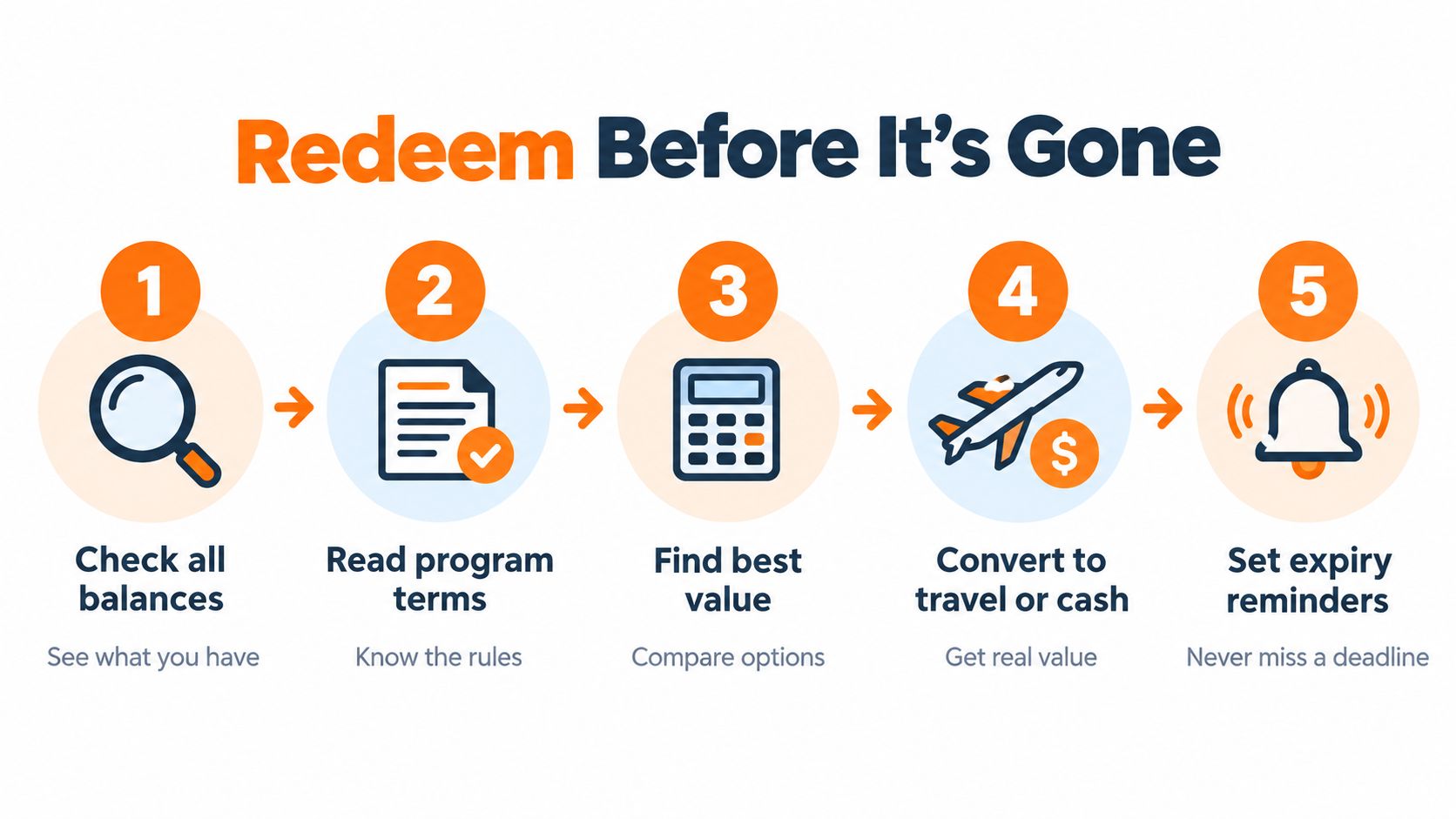
A five-step redemption routine
- Check every balance in one place. Start with the full picture, not whichever app you opened by chance. Note which balances are redeemable today.
- Read the minimum threshold. Many programs won't let you redeem below a set amount. If you're just short, decide whether a planned purchase closes the gap naturally.
- Match the reward to planned spending. Use grocery points on a shop you were doing anyway. Don't invent a purchase to justify a redemption.
- Compare redemption options. The same balance may be worth more as travel, merchandise, or a statement credit. Spend two minutes checking before you convert.
- Set the expiry reminder before you close the app. Future you shouldn't have to rediscover this balance by accident.
A small worked example
Say you've accumulated a grocery balance over a few months of ordinary shopping. Instead of letting it sit while you pay cash for a planned top-up shop, you apply it to that shop. The saving is modest, but it's real, and it came from spending you'd already budgeted for. Retailers explain their own mechanics differently, so a walkthrough like how to redeem points at McLaren Vale Cellars shows why reading each program's steps matters before you assume a balance works like cash.
Card rewards deserve the same comparison habit, and comparing credit card rewards side by side helps you see which card's points deserve your everyday spending. The routine stays boring by design. Boring routines are the ones that recover value month after month.
Timing rule: Redeem against spending already in your budget. A reward that makes you spend extra isn't a saving, it's a discount on something you didn't need.
The Privacy and Behaviour Trade-Off Few People Talk About
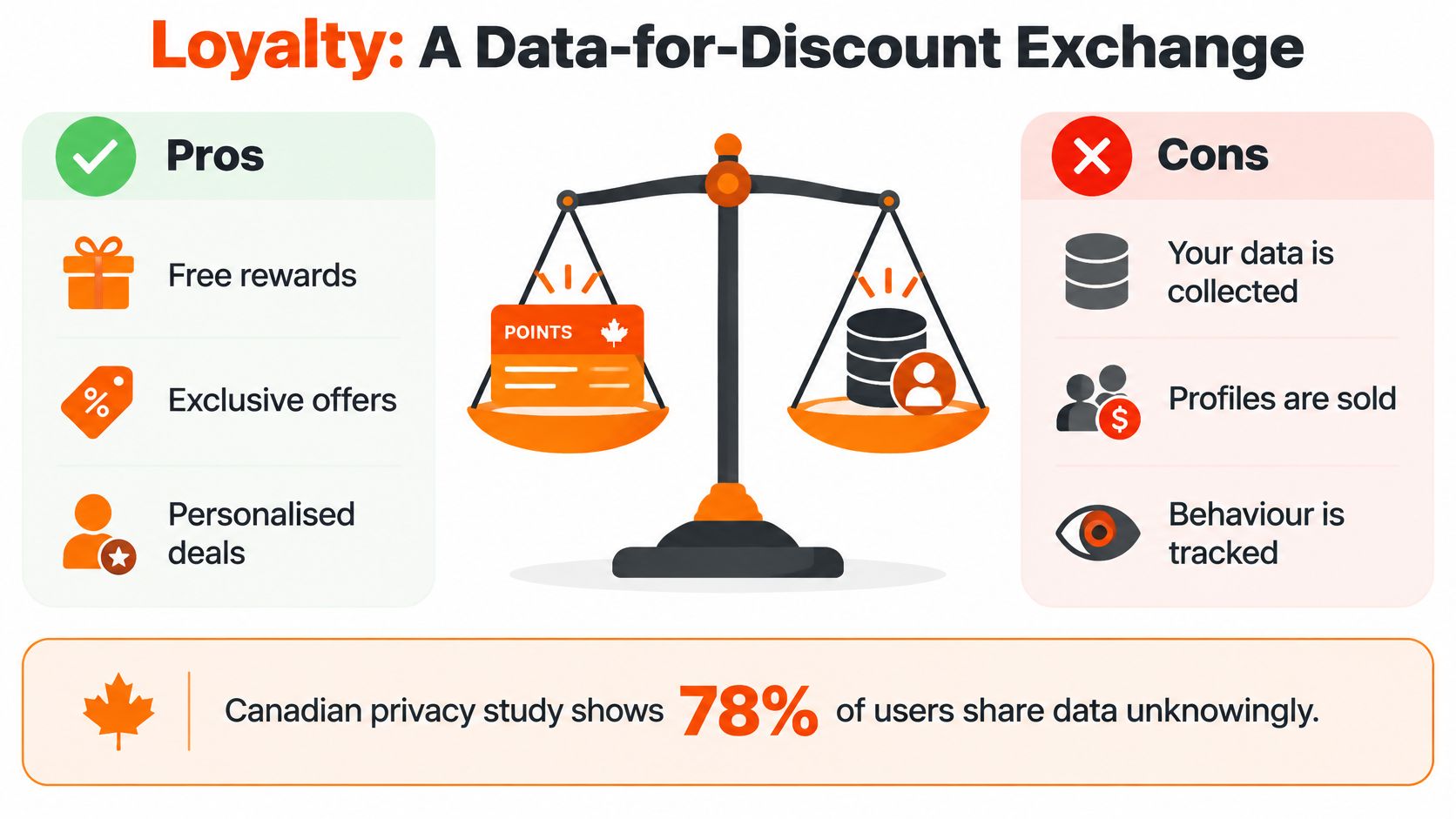
Here's the part most points guides skip. A loyalty program isn't a gift. It's an exchange. You receive discounts or rewards, and the retailer receives a detailed record of what you buy, how often, and at what price. That exchange can be fair, but you should make it with your eyes open.
Many people haven't. A Canadian privacy study found that 54% of loyalty-program participants were unaware that programs may collect, use, and disclose purchase-habit information for secondary marketing in a government-hosted analysis of loyalty and privacy. If you didn't know your purchase history was part of the deal, you never really agreed to the deal.
Consent depends on visible value
People aren't opposed to sharing data. Another 2025 Canadian loyalty report found 64% would share data in exchange for preferred benefits in KPMG Canada's connected commerce insights. The pattern is conditional. When the benefit is clear and tangible, sharing feels reasonable. When the benefit is vague, the same sharing feels like a bad bargain.
That gives you a practical test for every program you belong to. Ask what you've received in the past year, in dollars you can point to. Then ask what the retailer knows about you in return. If you can't name the benefit, the trade probably favours the retailer.
Building a net value view
- Value received: Discounts and rewards you redeemed, not offers you ignored.
- Behaviour changed: Purchases you made only because of a points promotion or a member price.
- Data shared: Purchase history, location habits, and contact details tied to the account.
Understanding how financial data aggregation works and what it collects makes this judgement easier, because you'll know what any app can and can't see. The aim isn't to quit every program. It's to keep the ones where the exchange is clearly worth it, and to stop feeding purchase data to programs that return almost nothing. Fewer, better memberships also make tracking far simpler.
Common Pitfalls That Quietly Wipe Out Your Points
Points rarely disappear in one dramatic event. They leak away through rules you never read. The biggest source of confusion is that expiry isn't one rule. It's several different rules wearing the same name, and programs mix them freely.
Inactivity expiry versus rolling expiry
Inactivity expiry wipes or endangers your whole account when you don't earn or redeem for a set period. Rolling expiry removes points based on when each batch was earned, even if your account stays active. One purchase may reset an inactivity clock while doing nothing for older points under a rolling rule.
The windows vary a lot in Canada. MyMcDonald's Rewards points expire after six months, while Tim Hortons Tims Rewards points expire after 12 months in a Canadian comparison of program expiry rules. A single generic reminder can't capture differences like that.
Legal protections have edges
Where you live changes what a program may do. Ontario's rules on reward points state that rules effective January 1, 2018 generally prohibit loyalty points from expiring solely because a set amount of time has passed since they were earned, with limited exceptions for inactive accounts, vouchers, and very small balances. So an Ontario balance usually isn't lost just because it's old, but an inactive account or a voucher-style reward can still cost you.
Quebec works differently again, which is why a tracker needs to store each program's rule separately rather than assuming one national standard. If points vanish and you believe the rule wasn't followed, keep your statements. Records are what support a reinstatement request.
A red flag checklist for any program
- Short earning windows: Points that expire within months of being earned need active management.
- Voucher-style rewards: Converted rewards may carry different protections than raw points, so check before converting.
- Spending to stay alive: Buying something you don't need just to reset a clock usually costs more than the points are worth.
- Unappealing redemption options: If nothing in the catalogue fits your real spending, the balance has little practical value.
Run your current memberships against that list once. You'll likely find one or two programs that demand attention they don't repay.
Pulling It All Together With a Benefits Wallet
Points don't exist in isolation. The same household juggling expiring grocery points is also juggling unused credits, cashback balances, and subscriptions renewing in the background. A Benefits Wallet approach puts all of that hidden value in one priority layer, sorted by what expires soonest and what's worth the most.
That view changes the questions you ask. Instead of wondering what a single balance is worth, you ask what you stand to lose this month across everything. You also see where a reward is steering your spending, which connects loyalty decisions back to your budget rather than treating them as free extras.
Fintrack takes this approach with a benefits view that sits beside your expenses and budgets, and it works without a bank connection, with manual entry for balances you record yourself. You can see how that works in practice on the Benefits Wallet feature page. Manual entry suits loyalty programs well, since many balances live in retailer apps that don't connect cleanly to anything else.
Start smaller than you think. Pick one dormant account today, check its balance and expiry rule, and decide whether it earns its place. Redeem it, set a reminder, or close it and stop sharing data for nothing. One deliberate decision like that is worth more than joining three new programs.
If scattered points, credits, and expiring offers keep slipping past you, Fintrack can help you record those balances manually, see them beside your budget, and act before the value disappears. Start by adding your most-used loyalty program, then build the habit of checking what's at risk before each month ends.