Your budget looks fine on Sunday night. By Wednesday, a bank feed hasn't updated, a utility payment posts twice, and the number you trusted no longer matches your account. You're left guessing whether you can spend, save, or pay the next bill on time.
That moment is where personal budgeting programs separate. Some ask you to plan every dollar before you spend it. Others automate tracking, forecast balances months ahead, or reduce everything to one safe-to-spend number. The right choice depends on how much manual work you'll do, whether your Canadian bank connects reliably, and whether you're budgeting alone or with a household.
The need is real, not theoretical. In Canada, only about 55% of adults report having a household budget, and the share falls to 50% among adults aged 18 to 34. A tool that requires hours of setup won't close that gap. The seven options below are ranked by budgeting style and implementation effort, not by feature count alone.
1. Fintrack
A budget question shouldn't require a spreadsheet or a long report. Fintrack's conversational assistant, Finny, answers natural-language questions about spending, trends, and savings. Its web and mobile dashboards bring income, expenses, budgets, and goals together, with manual tracking available for people who prefer not to connect a bank account.
Canadian banking research found that customers offered at least three personal-finance-management tools reported satisfaction 114 points higher on a 1,000-point scale than customers who weren't offered those tools, based on 8,242 respondents. Fintrack puts several money-management tools in one place, though the research does not show that combining tools causes higher satisfaction.
What Sets It Apart
- Finny in plain language: Ask how much you spent eating out or why a category is over budget. Finny provides an answer and suggests next steps.
- Benefits Wallet: Tracks cashback, unused credits, loyalty points, discounts, and expiring offers so you can check for value you've already earned.
- Subscriptions and alerts: Flags recurring costs, unusual spending, and possible duplicate charges.
- Household planning: Shared budgets and goals help partners and families coordinate their finances.
- Manual entry: Log expenses without connecting a bank. That flexibility helps if your Canadian institution doesn't sync reliably or you'd rather keep account access private.
Fintrack advertises a free-forever plan with no credit card required and says it uses bank-level encryption, SOC 2-compliant infrastructure, and GDPR-ready practices. If you want more hands-on control, this comparison of an Actual Budget app for manual budgeters explains the trade-off between entering transactions yourself and relying on automation.
Practical rule: Choose a tool you'll open each week. A question you ask Finny is more useful than a detailed report you never build.
Check the paid-plan prices and feature limits before counting on advanced tools, since Fintrack doesn't clearly specify them. Benefits and subscription detection also depend on the information the app can access or you enter yourself. Fintrack suits people who want AI-assisted answers, automatic and manual tracking, rewards, and household planning in one app. If you mainly want a simple, fixed budgeting method, compare its setup and ongoing effort with more focused alternatives.
2. YNAB
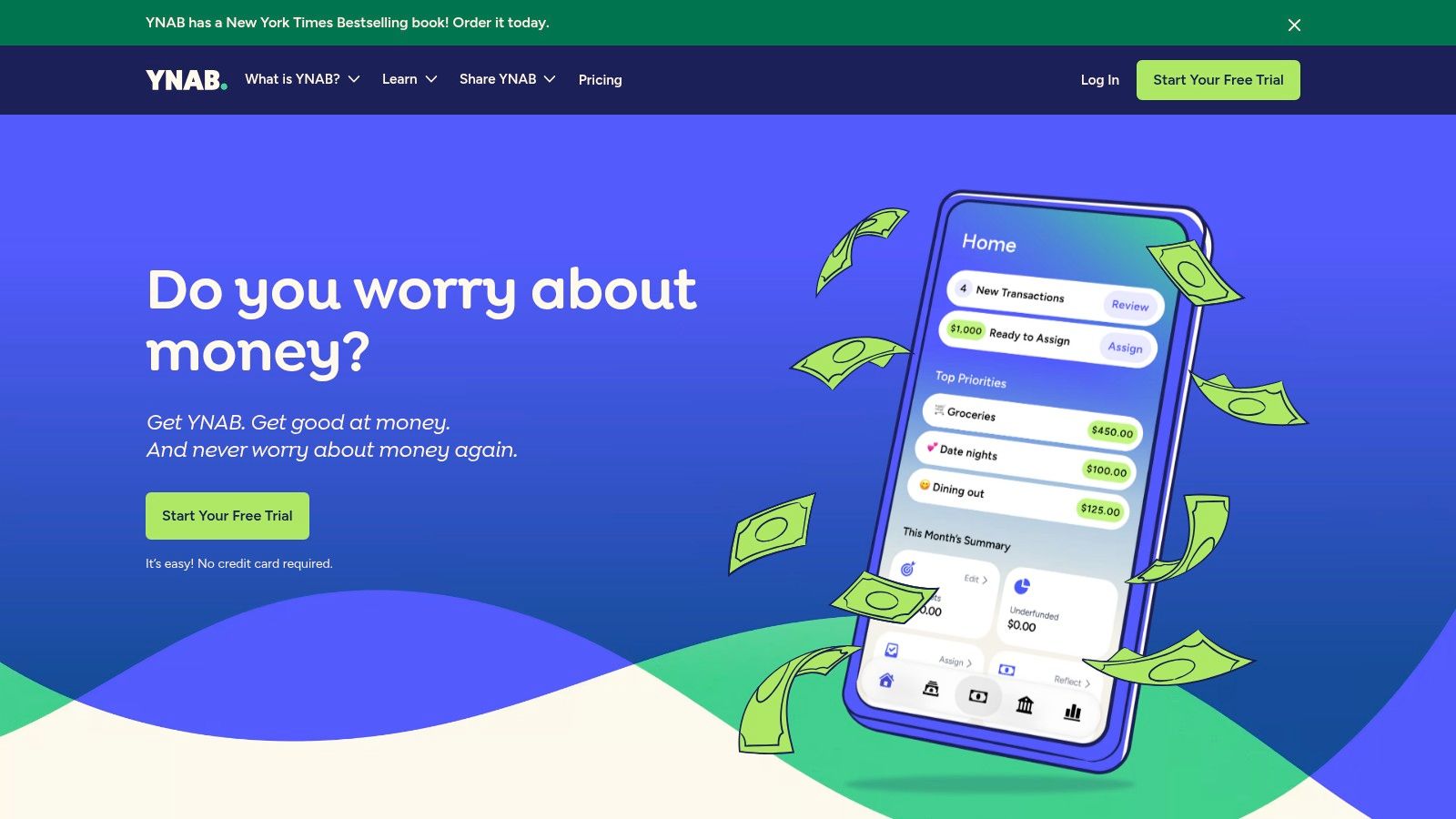
YNAB is the pick for deliberate, hands-on control. Its zero-based budgeting method asks you to assign every dollar a job before you spend it, then adjust categories as real life changes your plan. That discipline works well if overspending is your main problem and you're willing to check in regularly.
YNAB includes savings targets and debt-management tools, which pair well with a concrete buffer goal. The Financial Consumer Agency of Canada recommends an emergency fund of three to six months of living expenses, based on necessities like housing, utilities, food, and required debt payments rather than total income. YNAB's targets make that kind of goal easy to fund category by category.
Where It Fits and Where It Doesn't
- Best for: People who want to plan before spending and actively manage debt payoff or savings goals.
- Shared access: A subscription can be shared with up to six people, which helps couples or households.
- Pricing to weigh: After a 34-day free trial, it costs US$14.99 per month or US$109 per year, so test it seriously during the trial.
- Canadian caution: Confirm your bank is supported for imports, because connections only work with certain institutions.
- Currency limit: A single spending plan uses only one currency at a time, which frustrates cross-border households.
YNAB demands more attention than an automatic tracker, and that effort is the product, not a flaw. If you'll do the work, few tools build spending awareness faster. If you won't, look at the YNAB alternatives that ask less of you each week before you subscribe.
3. Monarch Money
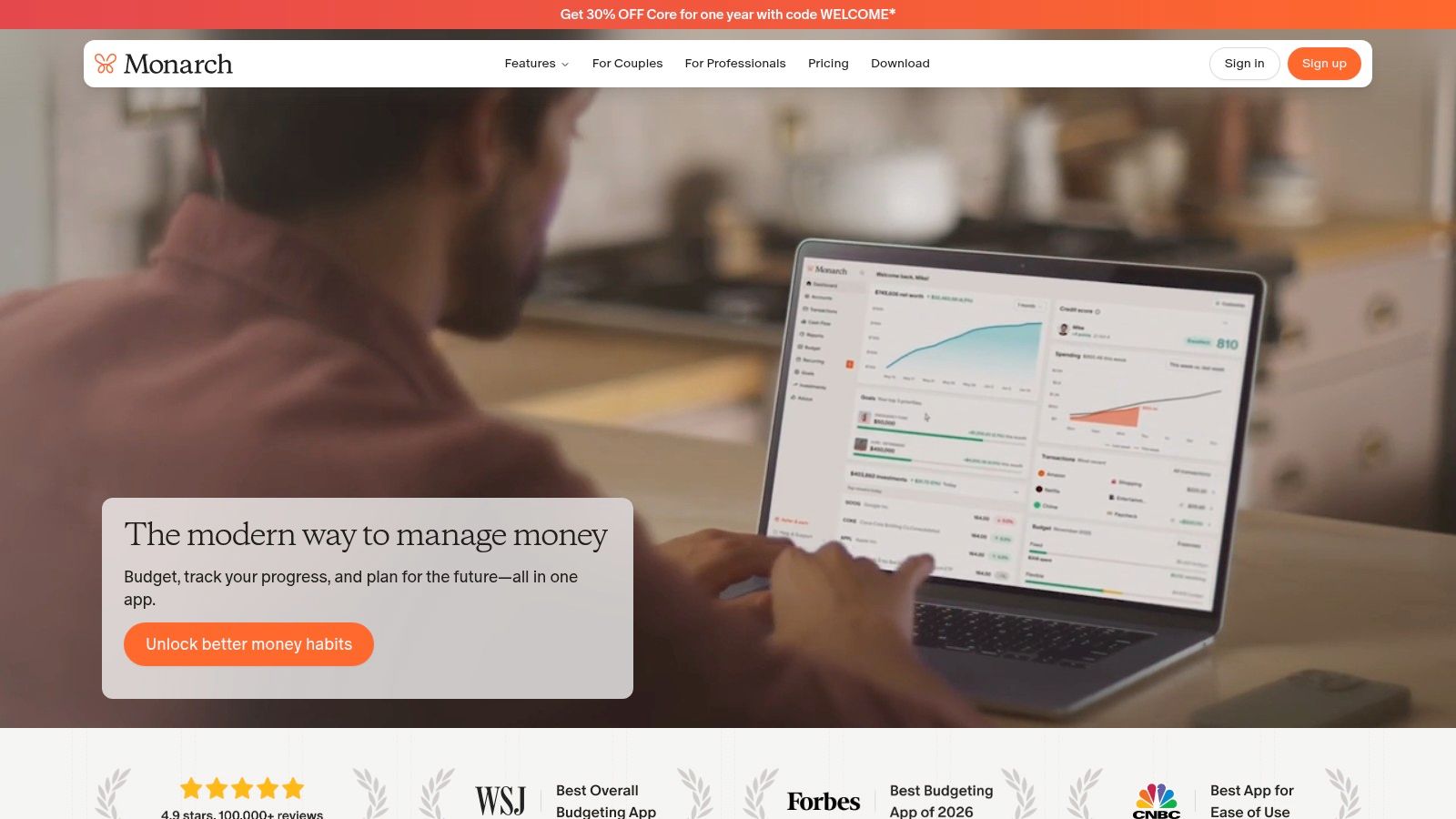
Choose Monarch Money when you want one dashboard for your whole financial picture, not just this month's spending. It combines budgeting with account balances, investments, goals, recurring bills, and net worth, and lets you choose category-based or flexible budgeting. The customizable dashboard is its main appeal.
Household collaboration is where Monarch earns its place. Shared money rarely splits evenly, and a single blended score can hide who carries the burden. Reporting on California data found 2.8 million households where housing exceeded 50% of income, with median renter costs around $2,104 per month. When fixed costs run that high, partners need shared visibility into upcoming obligations, not just a total.
Monarch is available in Canada on web and mobile, with custom reports for households that want detail. It offers a 7-day trial, then a listed annual price of US$99.99, with no permanent free plan.
- Strength: A broad view of spending, investments, and net worth in one place.
- Strength: Collaboration features built for partners and households.
- Trade-off: The feature range takes more setup than a basic tracker.
- Trade-off: Canadian bank connection support varies by institution and data provider, so verify yours during the short trial.
If the trial feels like more system than you need, compare the Monarch Money alternatives with simpler setup before committing to a year.
4. Lunch Money
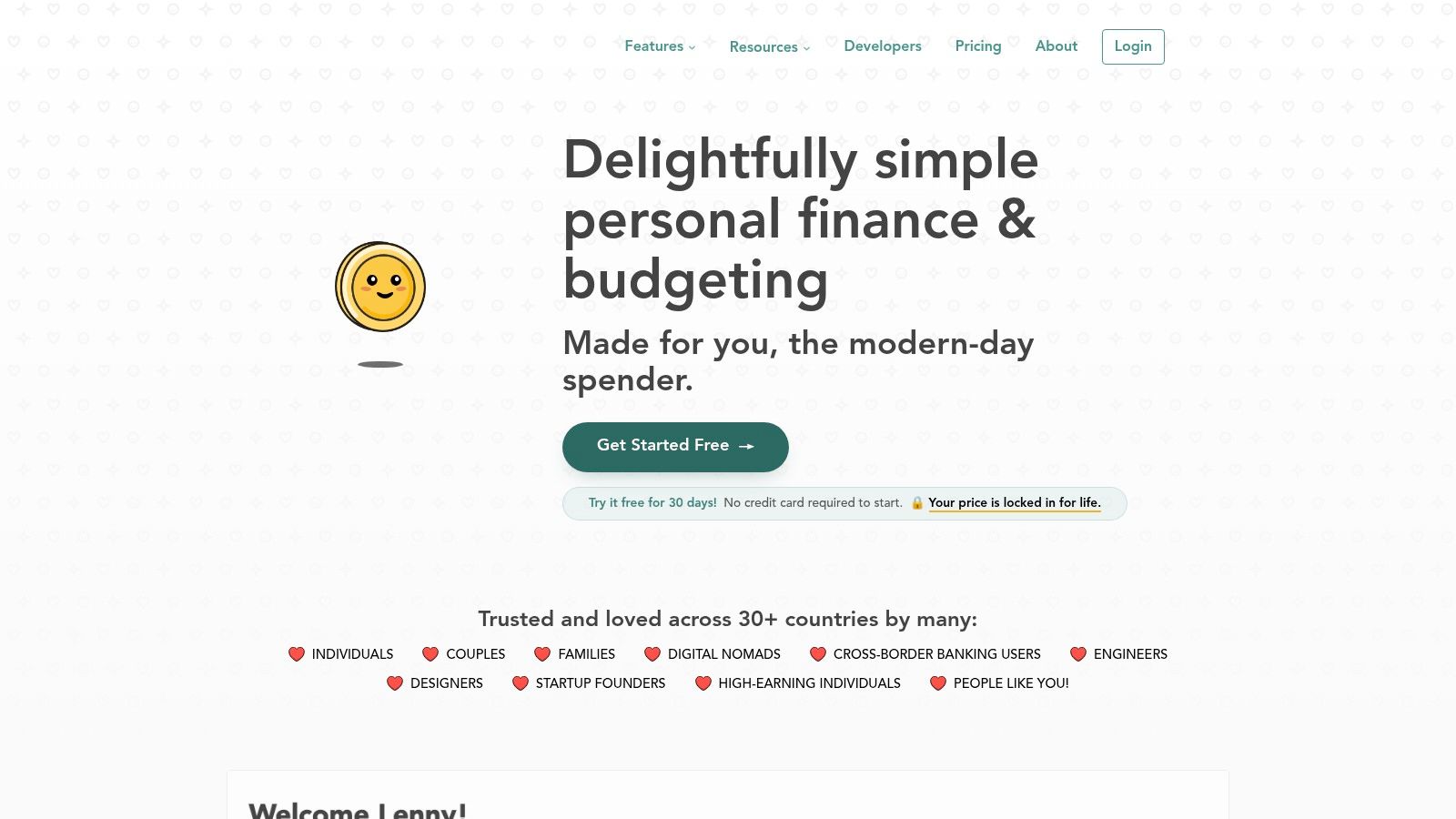
Canadians who juggle accounts in two currencies should look at Lunch Money first. It's Canadian-built and web-first, with multi-currency tracking in CAD and USD, custom budgeting periods, categorization rules, recurring-expense tracking, analytics, and net-worth views. The flexibility suits freelancers, cross-border workers, and anyone whose month doesn't start on the first.
Its category benchmarks also reflect Canadian reality. Statistics Canada reported average household spending of $76,750 in 2023, with shelter at 32.1% of consumption, transportation at 15.8%, and food at 15.7%. When shelter alone takes roughly a third, a budget that separates large fixed costs from flexible spending gives you a truer picture, and Lunch Money's custom categories make that split easy.
The Practical Details
Lunch Money offers a 30-day free trial with no credit card required, and paid plans are available in CAD, USD, or EUR, which removes conversion guesswork for Canadian subscribers. Canadian bank syncing works through integrations, though connection issues can occur. Manual statement imports give you a reliable fallback when a feed breaks.
The trade-offs are clear. It's primarily a desktop web app rather than a full native mobile experience, so quick checks on your phone feel limited. The rules, analytics, and interface depth may also be more than a beginner needs. If you're comfortable at a desk and want flexible, multi-currency control with Canadian pricing, it's a strong, honest choice.
5. PocketGuard
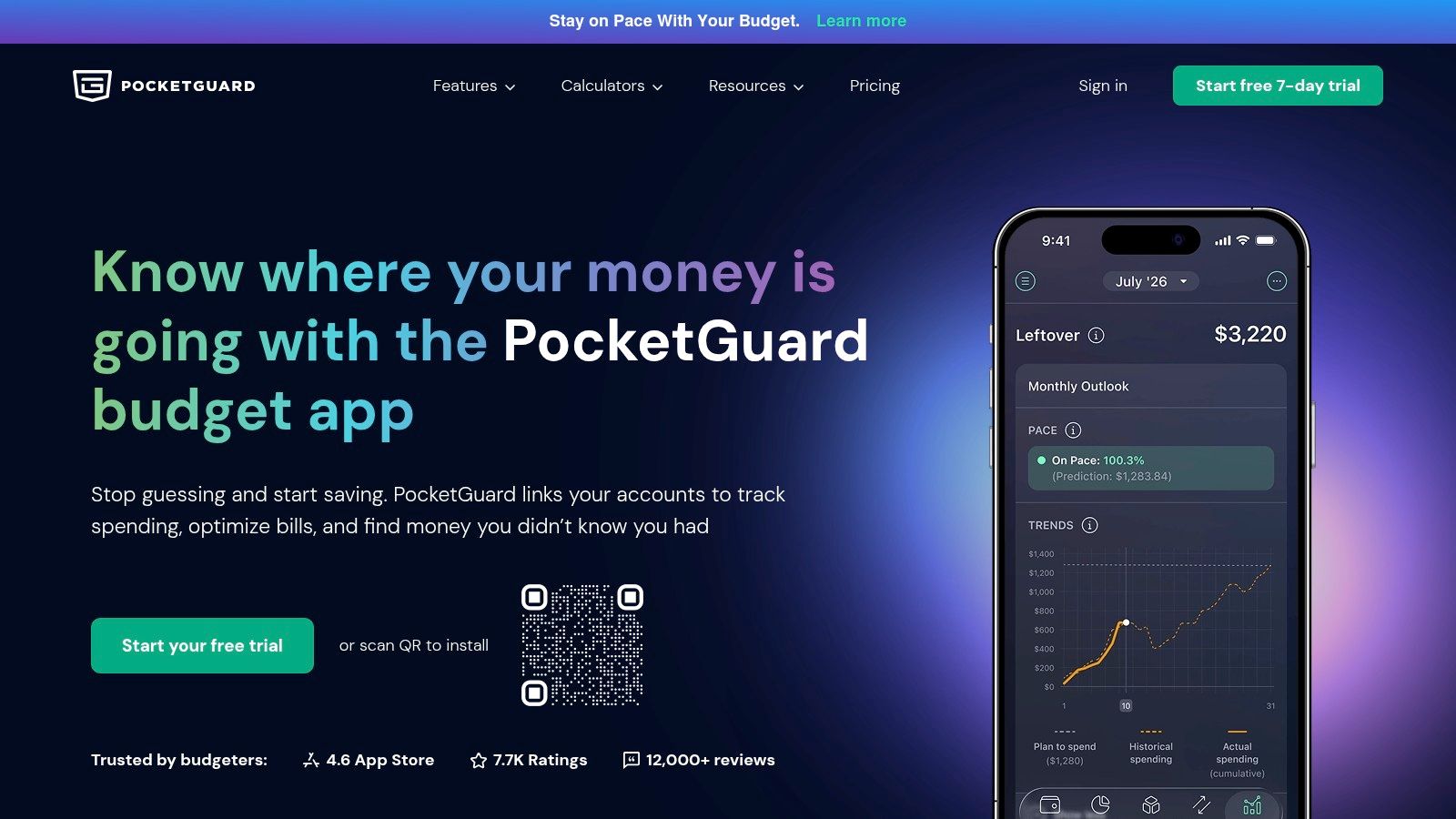
Sometimes you don't want a report. You want one number before you tap your card. PocketGuard builds its whole experience around that moment with its Leftover figure, an estimate of what's safe to spend after bills, necessities, goals, and debt are accounted for.
That simplicity helps, but it has limits when the problem is structural rather than discretionary. A California survey found 41% of adults described their finances as barely adequate or financially stressed, and about one in five said a $1,000 emergency would be very difficult or nearly impossible to pay. When income doesn't cover fixed costs, a safe-to-spend number tells you you're short without explaining what to renegotiate, delay, or change first.
PocketGuard supports Canada on web, iOS, and Android, with category budgets, rollover budgeting, subscription tracking, savings goals, and debt-payoff planning. After a 7-day trial, listed pricing is US$74.99 per year, US$12.99 per month, or US$149.99 for lifetime access.
- Strength: Everyday spending decisions are easy to scan at a glance.
- Strength: Bills, goals, and debt planning sit alongside daily tracking.
- Trade-off: The headline figure may feel too simplified for detailed planners.
- Trade-off: Test Canadian bank connections during the trial, since reliability depends on your institution.
If the single-number approach feels thin after a week, the PocketGuard alternatives with deeper planning tools are worth a look.
6. PocketSmith
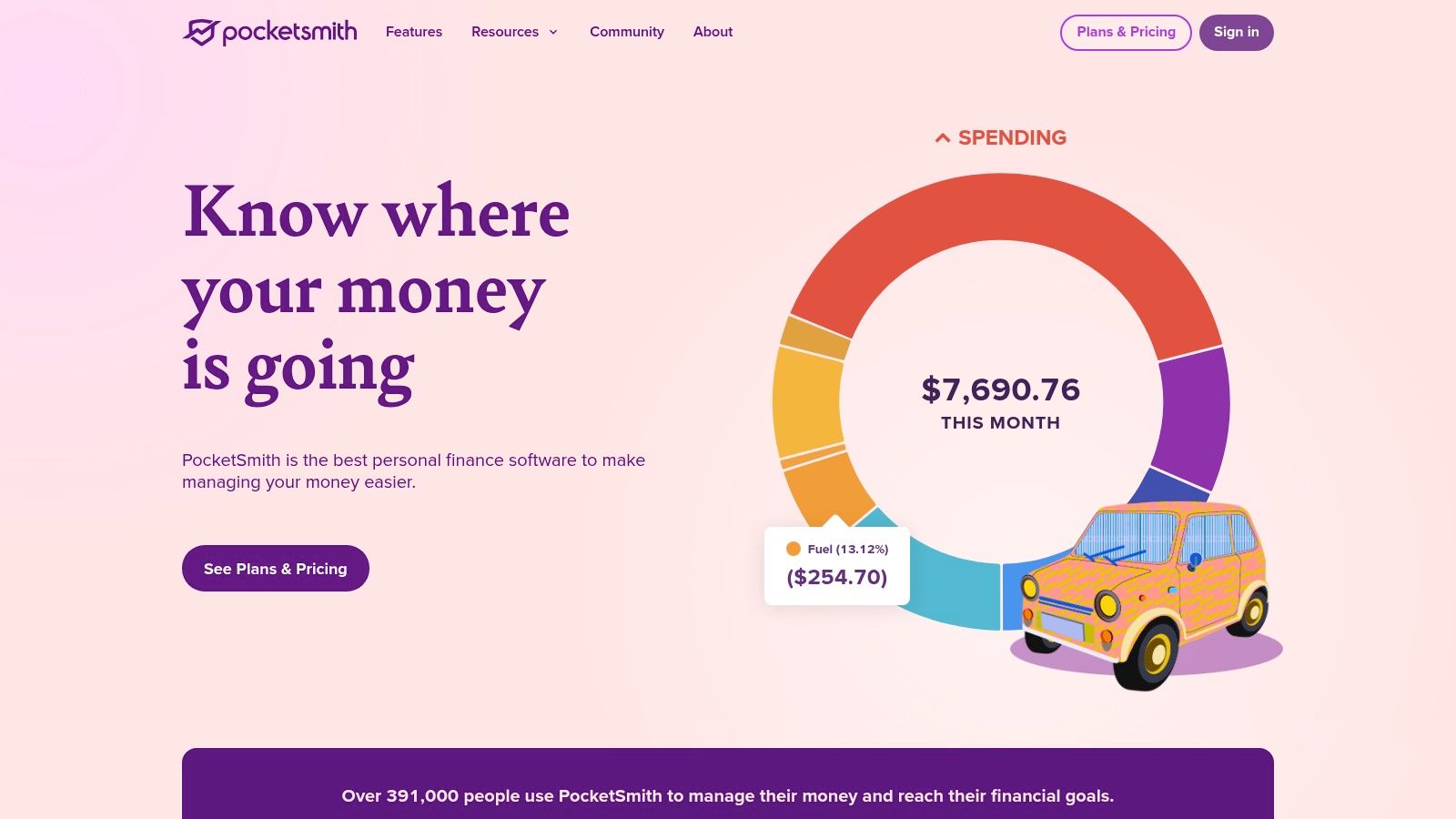
Most budgeting tools look backward. PocketSmith looks forward. Its calendar-based view maps upcoming income, bills, and projected balances, so you can see a tight week coming before it arrives and move money in time. For households with irregular income or lumpy expenses, that forecast is the feature that matters most.
The case for forecasting is clearest where wealth and liquidity don't match. A Public Policy Institute of California analysis estimated median household net worth at $288,000, compared with $180,000 in the rest of the United States, yet about 21% of households couldn't afford monthly bills and only 58% had reserves covering three months of expenses. Owning assets doesn't pay next month's rent. A calendar forecast separates net worth from accessible cash.
A forecast turns a surprise shortfall into a decision you make weeks earlier, while you still have options.
PocketSmith is available to Canadians, supports multiple currencies with balances viewable in CAD, and offers a free plan, paid plans, and a 14-day money-back guarantee. Some Canadian bank feeds have ongoing issues, but manual entry and OFX, QIF, or CSV imports give you workable alternatives.
The learning curve is real. Forecasting and accounting-style detail take time to set up, and it's unnecessary if you only want simple monthly limits. Readers who want the forecasting idea without the complexity should check the PocketSmith alternatives built for simpler planning.
7. Goodbudget
Goodbudget digitizes the cash envelope method your grandparents may have used. You allocate money to virtual envelopes for spending and savings categories, then record purchases against each one. When an envelope empties, you stop or consciously move money from another. That friction is the point.
Manual entry, which Goodbudget relies on, builds transaction awareness that automatic feeds never will. Logging each purchase forces a small pause, and for people whose overspending is habitual rather than structural, that pause changes behaviour. Shared budgets sync across devices, so households can coordinate envelopes together, and debt tracking plus budget reports round out the basics.
The free plan lets you try envelope budgeting without a subscription, though it limits envelopes, accounts, devices, and transaction history. The paid plan is listed at US$10 per month or US$80 per year.
Know Before You Commit
- Manual workload: Entering every transaction gets laborious, especially with multiple cards and accounts.
- Bank sync limits: Automatic syncing covers US banks only, so Canadians should expect to enter or import transactions by hand.
- Best fit: Beginners and households who want a simple, shared system and don't mind the daily logging habit.
Goodbudget won't forecast your balance or analyze your spending for you. It gives you a clear, honest method and asks you to work it. For the right person, that simplicity is exactly why it sticks.
Personal Budgeting Programs: Top 7 Comparison Matrix
| Product | Implementation Complexity | Resource Requirements | Expected Outcomes | Ideal Use Cases | Key Advantages |
|---|---|---|---|---|---|
| Fintrack | Low to moderate; connect accounts or track expenses manually | Web and mobile; free-forever plan; account connection optional | Consolidated finances, spending insights, alerts, and reward discovery | Users seeking AI-guided budgeting, household planning, or manual tracking | Conversational assistant, benefits wallet, subscription detection, and real-time alerts |
| YNAB | High; requires regular hands-on planning | Web and mobile; 34-day trial, then US$14.99/month or US$109/year; supported bank for imports | More deliberate spending, savings, and debt payoff | Users who want to actively assign income to budget categories | Structured zero-based budgeting and shared access for up to six people |
| Monarch Money | Moderate to high; broad feature set may need setup | Web and mobile; 7-day trial, then US$99.99/year; bank support varies | Unified view of budgets, accounts, investments, goals, and net worth | Households wanting customizable financial tracking and collaboration | Flexible budgeting, custom dashboards, and household collaboration |
| Lunch Money | Moderate; flexible tools may take setup | Web-first; 30-day trial; paid plans available in CAD, USD, or EUR; bank sync or manual imports | Multi-currency transaction tracking, budgeting, and analytics | Users wanting detailed, customizable budgeting, especially across currencies | CAD support, categorization rules, flexible periods, and import alternatives |
| PocketGuard | Low to moderate; emphasizes a simplified spending view | Web, iOS, and Android; 7-day trial; paid plans listed from US$12.99/month | Estimates money available after planned necessities | Users seeking a quick guide to everyday spending, bills, and goals | “Leftover” estimate combines spending, bills, savings goals, and debt planning |
| PocketSmith | Moderate to high; forecasting features take time to learn | Web; free and paid plans; supports bank feeds and manual or file imports | Forecasts future balances, income, and bills | Users planning cash flow, irregular expenses, or multiple currencies | Calendar-based forecasting, flexible budgets, and multiple import options |
| Goodbudget | Moderate; transactions are generally entered manually in Canada | Web and mobile; free plan; paid plan listed at US$10/month or US$80/year | Tracks spending against virtual envelopes and shared budgets | Users who prefer envelope budgeting and are comfortable with manual entry | Free tier, shared budgets, and hands-on transaction awareness |
Choose a Budgeting System You Will Actually Use
Match the tool to your budgeting style, not to the longest feature list. Choose YNAB or Goodbudget for deliberate, hands-on control. Choose PocketSmith for cash-flow forecasting, Lunch Money for flexible Canadian multi-currency tracking, Monarch Money for a broad household dashboard, and PocketGuard for a quick safe-to-spend view.
Cost structure should shape that choice too. The California Real Cost Measure found 35% of households, about 3.8 million, didn't earn enough to meet basic living costs, even though about 97% had at least one working adult, and housing took at least 30% of income for 40% of households. When essentials dominate, generic percentage rules mislead. Pick a program that lets you set realistic essential-cost thresholds for your household size and local costs, and that distinguishes fixed obligations from spending you can change. Higher earners face the same discipline in a different form, which is why budgeting guidance for high earners still starts with knowing your true fixed-cost base.
Before you pay for anything, run a simple test during the trial. Connect or import one month of transactions, set three category limits, and check whether the tool answers your real question, whether that's what you can spend today, what your balance looks like next month, or who owes what in a shared home. If it can't answer in under a minute, it isn't your tool.
Fintrack fits readers who want those answers without choosing between automation and control. Its budget planning tools with category limits and AI guidance combine automatic and manual tracking, subscription detection, rewards through the Benefits Wallet, and conversational answers from Finny. You can go deeper with savings goals and strategies that link targets to your budget, coordinate shared money through household plans for partners and families, or review how AI transaction tracking categorizes your spending before you decide.
Start with one program, give it a full billing cycle, and judge it on a single measure. Do you know, at any point in the month, what you can safely spend and what's coming due? If yes, you've found your system.
If you want one place to set category budgets, track spending with or without a bank connection, and ask plain-language questions about your money, Fintrack brings budgeting, subscription detection, rewards, and household planning together in a single dashboard. Start with the free plan, add your first budget categories, and see your month clearly before the next bill arrives.