
Some months end with a strange mix of disbelief and dread. You got paid, you covered the obvious bills, you didn't make any huge purchase, and yet your account balance looks thinner than expected.
That feeling is one of the main reasons people ask why budgeting is important. Not because they love spreadsheets, but because they're tired of uncertainty.
Budgeting isn't avoided out of laziness. Instead, it's avoided because the old version of budgeting felt punishing, fiddly, and easy to quit. If you've ever tried to track every coffee for a week and then given up, that's normal. The problem usually isn't you. It's the method.
A good budget isn't about saying no to everything. It's about knowing what your money needs to do before it disappears.
The End-of-Month Mystery Where Did the Money Go
You start the month feeling reasonably organised. Rent or mortgage is on the calendar. A few subscriptions come out. Groceries, fuel, takeout, one birthday gift, a couple of “I'll just grab this quickly” purchases. Nothing feels outrageous in the moment.
Then the month ends, and the total tells a different story.
That's the end-of-month mystery. Money rarely vanishes in one dramatic event. It leaks out through small, ordinary decisions that never got put in context. A budget fixes that by giving each dollar a job before your habits assign one for you.
For people who mix personal and business spending, the confusion gets worse fast. If that's you, Allied Tax Advisors' advice for small businesses is worth reading because blurred expense lines make it much harder to understand what your household spends each month.
Small purchases become big blind spots
Most overspending doesn't feel like overspending while it's happening. It feels like convenience. It feels like stress relief. It feels like “I'll deal with it later.”
A clear list of common monthly expenses helps because it turns vague money drain into visible categories. Once people see the full picture, budgeting stops feeling like punishment and starts feeling like relief.
You can't manage money you only notice after it's gone.
Clarity changes the emotional tone
Without a budget, every purchase carries a quiet question. Can I afford this? Am I forgetting something? Did I already spend too much this week?
With a budget, that mental noise drops. You're not guessing anymore. You're checking a plan.
That's why budgeting matters so much in practice. It replaces vague guilt with useful information.
What Budgeting Really Is and What It Is Not
Budgeting sounds heavier than it is. People hear the word and picture colour-coded spreadsheets, strict rules, and a month of saying no.
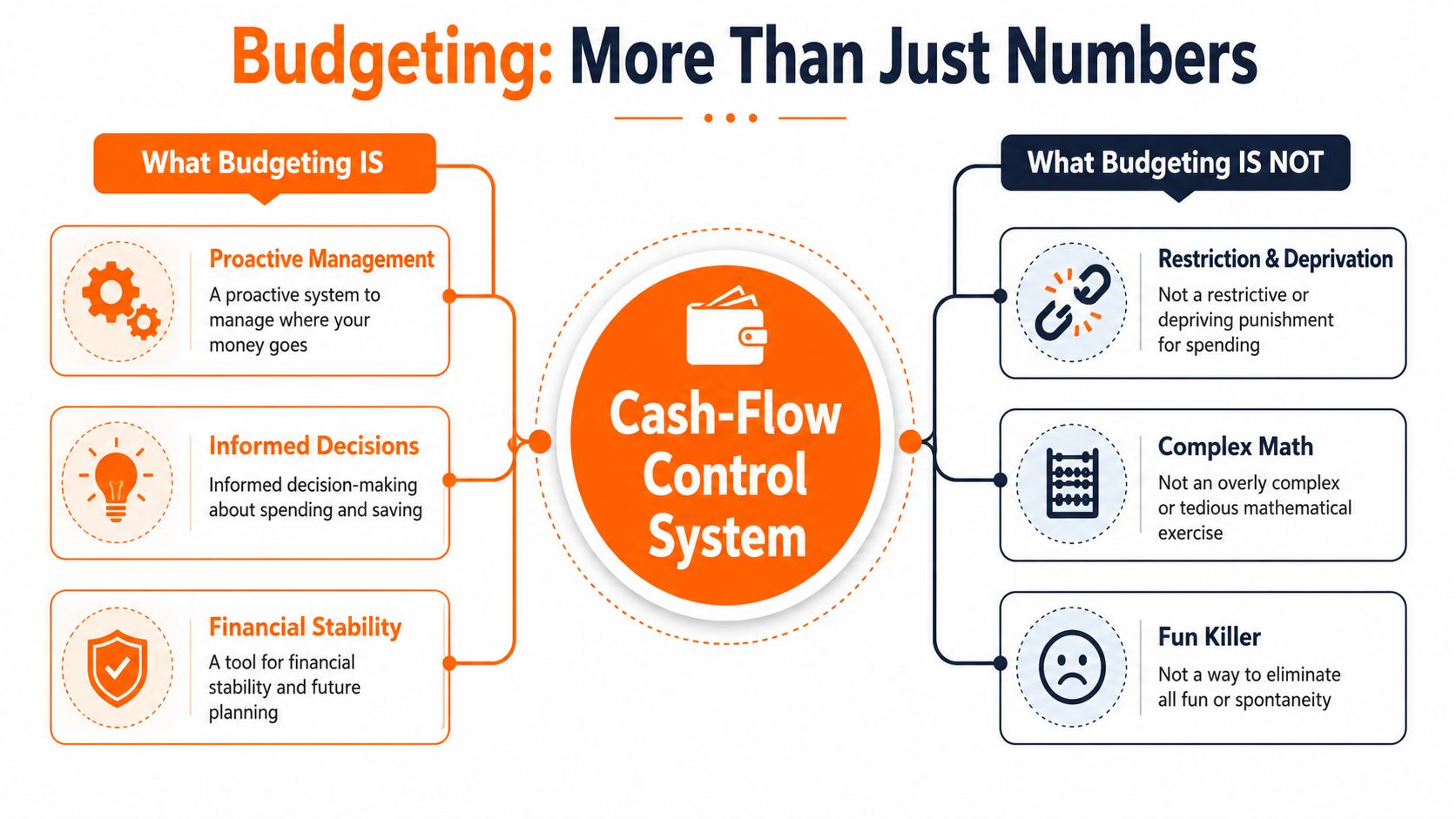
In reality, a budget is much simpler. A budget is a cash-flow control system. By estimating income and expenses over a set period, it helps you spot surplus or deficit timing before it happens, which matters if you want to avoid cash shortfalls and keep day-to-day life running smoothly, as described in this budgeting and forecasting explanation.
What budgeting is
A useful budget does a few practical things:
- Shows timing problems early: You can see that bills land before your next paycheque instead of discovering it at the checkout.
- Protects essentials first: Rent, food, transport, debt payments, and savings get handled on purpose.
- Creates better choices: When money is assigned in advance, trade-offs become clearer and less emotional.
If you want the broader foundation behind that thinking, this guide to planning your personal finances is a good next read.
What budgeting is not
Budgeting is not a punishment for being “bad with money.” Plenty of capable, responsible people struggle with money because life is busy and spending is easy to ignore.
It's also not a vow of financial misery. A real budget includes fun. If dinners out, hobbies, or travel matter to you, the answer isn't to pretend those wants don't exist. The answer is to include them honestly.
Practical rule: If your budget has no room for real life, it isn't a good budget.
The myths that make people quit
Here are the three myths that trip people up most:
| Myth | What actually works |
|---|---|
| “I need perfect discipline.” | You need a repeatable system, not perfection. |
| “I have to track everything manually forever.” | Start simple. Consistency matters more than detail. |
| “Budgeting means I can't enjoy my money.” | Budgeting helps you enjoy spending without the aftershock. |
The best budget is the one you can keep using after a stressful week, an expensive month, or a setback.
Why Is Budgeting Important for Your Financial Security
Financial security sounds abstract until your income changes, a bill jumps, or one emergency lands at the wrong time. Then it becomes very concrete.
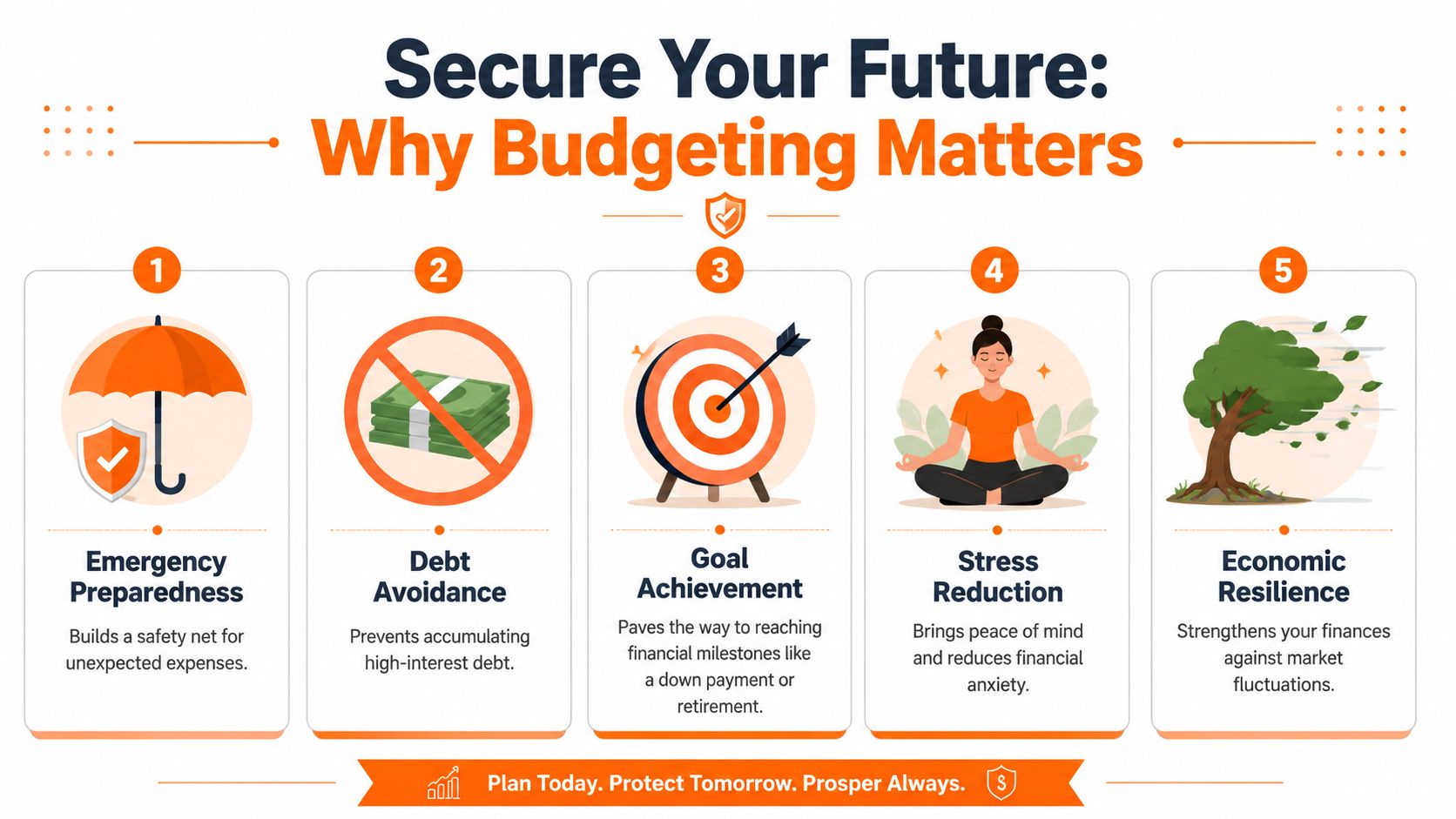
That's where the answer to why is budgeting important gets sharper. A budget is not just a savings tool. It's a buffer between your life and financial disruption.
California is a useful example of that pressure. As of May 2025, the state's unemployment rate was 5.3%, compared with the U.S. rate of 4.2%, and California had 1,048,000 unemployed residents, according to the labour data cited in this budgeting analysis. When work hours change or income stops, a budget helps households match spending to paycheques, protect essentials, and avoid falling behind.
High costs leave less room for mistakes
The pressure isn't only about employment. It's also about fixed costs.
For fiscal year 2024 to 2025, California's budget was about $297.9 billion, and the California Housing Partnership has reported a shortage of roughly 1.2 million affordable rental homes for very low-income households, as noted in this discussion of why budgeting matters. The household lesson is straightforward. When housing is expensive and supply is tight, people don't have much slack. Rent, food, transport, debt, and savings all compete for the same paycheque.
A budget works like a shock absorber
One of the most useful ways to think about budgeting is as a shock absorber for expensive, unstable conditions. In California, the average weekly UI benefit was only about $487 in 2024, while living costs remained high, which is why the core question often becomes how to budget when one rent increase or job loss can wipe out a month's cash flow, as explained in this Experian article on budgeting importance.
That idea matters far beyond one state. Many households live with some form of volatility:
- Variable income: Gig work, freelance work, commission, or irregular shifts
- Uneven expenses: Car repairs, school costs, seasonal bills, medical needs
- Housing pressure: Rent increases that crowd out everything else
- Thin margin: A single bad month can spill into debt
When money is tight, budgeting matters more, not less.
Security comes from prioritisation
A budget can't make prices low. It can't stop layoffs. It can't guarantee a calm month.
What it can do is help you decide the order in which money gets used. That's a big difference. People with a plan usually recover faster because they already know what gets paid first, what can wait, and what has to be cut temporarily.
If you want to turn that protection into action, learning how to build an emergency fund is one of the most practical next steps.
Beyond Security The Peace of Mind a Budget Brings
Security is the obvious benefit. The quieter benefit is mental relief.
When there's no budget, every money choice starts from zero. Should I buy this? Can I book that? Did I already spend too much on groceries? Those repeated decisions create friction, especially when you're already tired or stressed.
Better decisions with less mental clutter
Budgeting improves decision quality because it turns past spending patterns into forecasts that help you reallocate money toward better uses and away from waste. Comparing actual spending with your plan helps identify savings, adjust for changing conditions, and keep essentials first, as explained in Acterys' budgeting overview.
In plain language, budgeting helps you stop making the same money decision over and over again.
Instead of debating every purchase in the moment, you work from a plan. That lowers decision fatigue. It also reduces the emotional swing between “I deserve this” and “why did I do that again?”
Less guesswork at home
Money tension often grows in silence. One person thinks things are fine. The other feels uneasy. Neither has the full picture.
A budget gives households a shared reference point. You don't need to rely on memory, assumptions, or blame. You can look at the categories, the upcoming bills, and the available room.
That's one reason budgeting tends to support overall financial wellness, not just expense control. If you're interested in that broader picture, this article on choosing a financial wellness app connects tracking habits with day-to-day peace of mind.
A budget doesn't remove every money problem. It removes a lot of avoidable uncertainty.
Progress feels better than restriction
People stick with budgeting when they can see progress. Not perfection. Progress.
That could mean catching a subscription you forgot about, noticing takeout has crept up, or realising you finally have a small cushion before payday. Those wins matter because they change your relationship with money from reactive to intentional.
A budget is one of the few financial habits that can make you feel calmer before your bank balance gets dramatically bigger. That's not a small benefit. It's often the reason people keep going.
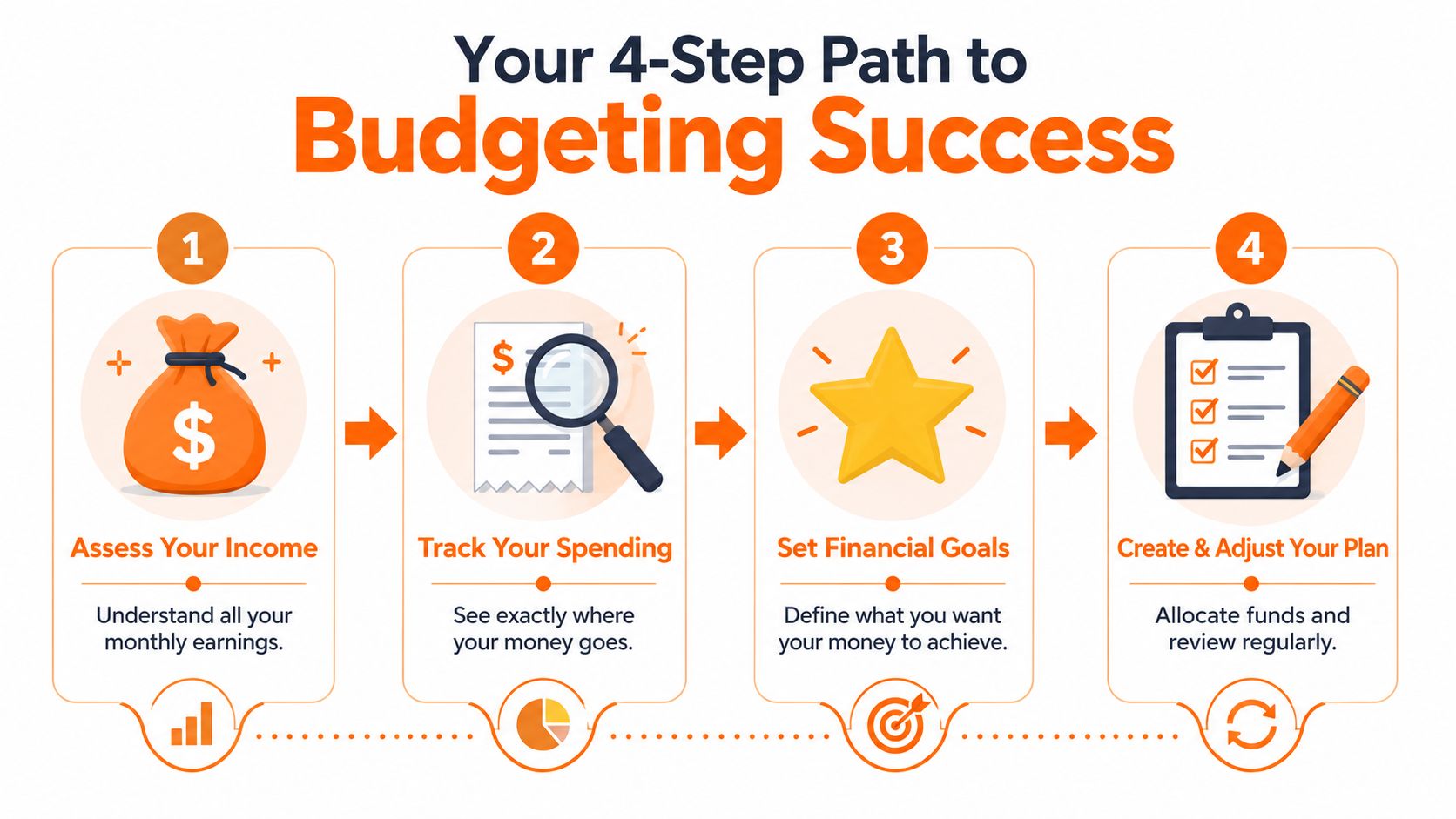
How to Start Budgeting Today A Simple 4-Step Guide
Starting matters more than choosing the perfect method. If budgeting has always felt intimidating, keep it small and practical. You can build from there.
Step 1 See where your money is going
Don't begin by cutting things. Begin by looking.
Pull up the last month or two of spending and sort it into broad buckets such as housing, groceries, transport, debt payments, subscriptions, eating out, and everything else. If your income varies, use a conservative monthly estimate rather than your best month.
You're looking for patterns, not reasons to feel guilty.
Step 2 Give your money jobs
Once you can see the categories, decide what each part of your income needs to do before the next pay cycle. Essentials come first. Then debt payments, then savings, then flexible spending.
Some people like simple frameworks because they reduce friction. A percentage-based approach can work if your income is stable. Others prefer category caps. If your income changes often, a priority-based budget usually works better than rigid targets.
Here's a simple comparison:
| Budget style | Best for | Watch out for |
|---|---|---|
| Category budgeting | People who want clear spending limits | Too many categories can feel fussy |
| Percentage budgeting | Stable income and simple planning | Can feel unrealistic in high-cost months |
| Priority budgeting | Variable income or tight cash flow | Needs honest ranking of essentials |
Step 3 Build a plan you can actually follow
Many budgets fail because they're too ambitious.
If you know you spend on takeout, gifts, or weekends out, include those categories. If you leave them out, they don't disappear. They just become “unexpected” every month.
A workable starter budget often includes:
- Core bills: Housing, utilities, insurance, transport, phone
- Daily living: Groceries, household items, school or work basics
- Flexible wants: Eating out, entertainment, hobbies, personal spending
- Future protection: Savings, sinking funds, debt reduction
Small win: A simple budget you review beats a detailed budget you avoid.
Step 4 Review and adjust every pay cycle
A budget is a living plan. It should change when life changes.
If groceries are consistently higher than expected, raise the category and trim something less important. If your income is uneven, make a “bare minimum” version of your budget for leaner months and a “full” version for stronger ones.
What doesn't work is treating the first draft like a final exam. The review process is where budgeting becomes useful.
A few habits make that review easier:
- Check upcoming bills early so timing doesn't catch you off guard.
- Move money with intention when one category runs hot.
- Keep notes on surprise expenses so they can become planned expenses later.
- Review after real life happens instead of quitting after one messy month.
Budgeting gets easier when you stop trying to be flawless and start trying to be aware.
Making Budgeting Effortless With the Right Tools
Many individuals don't quit budgeting because the idea is bad. They quit because the admin is annoying.
Manual entry gets old. Receipts pile up. Categories become inconsistent. A spreadsheet that felt motivating on Sunday starts feeling like homework by Wednesday. Good intentions fade when the system takes too much effort to maintain.
That's why tools matter. The right app removes the parts people hate most, which makes the habit easier to keep.
What modern budgeting tools solve
A good tool should make four things easier:
- Visibility: You should be able to tell where your money is going without rebuilding the month from scratch.
- Consistency: Categories, recurring payments, and trends should stay organised.
- Quick answers: You should be able to check spending without opening five different accounts.
- Course correction: Alerts and reviews should help you adjust before a small slip becomes a stressful month.
For people rebuilding after a financial setback, simplicity matters even more. If that's your situation, this guide on budgeting after bankruptcy offers a grounded starting point.
Why easier systems work better
The more steps a budget requires, the more likely people are to stop using it when life gets busy. That's especially true for households, freelancers, and anyone juggling many recurring expenses.
A cleaner setup reduces friction. You can track spending, spot duplicate charges, notice subscriptions you've forgotten, and keep your budget current without turning money management into a second job.
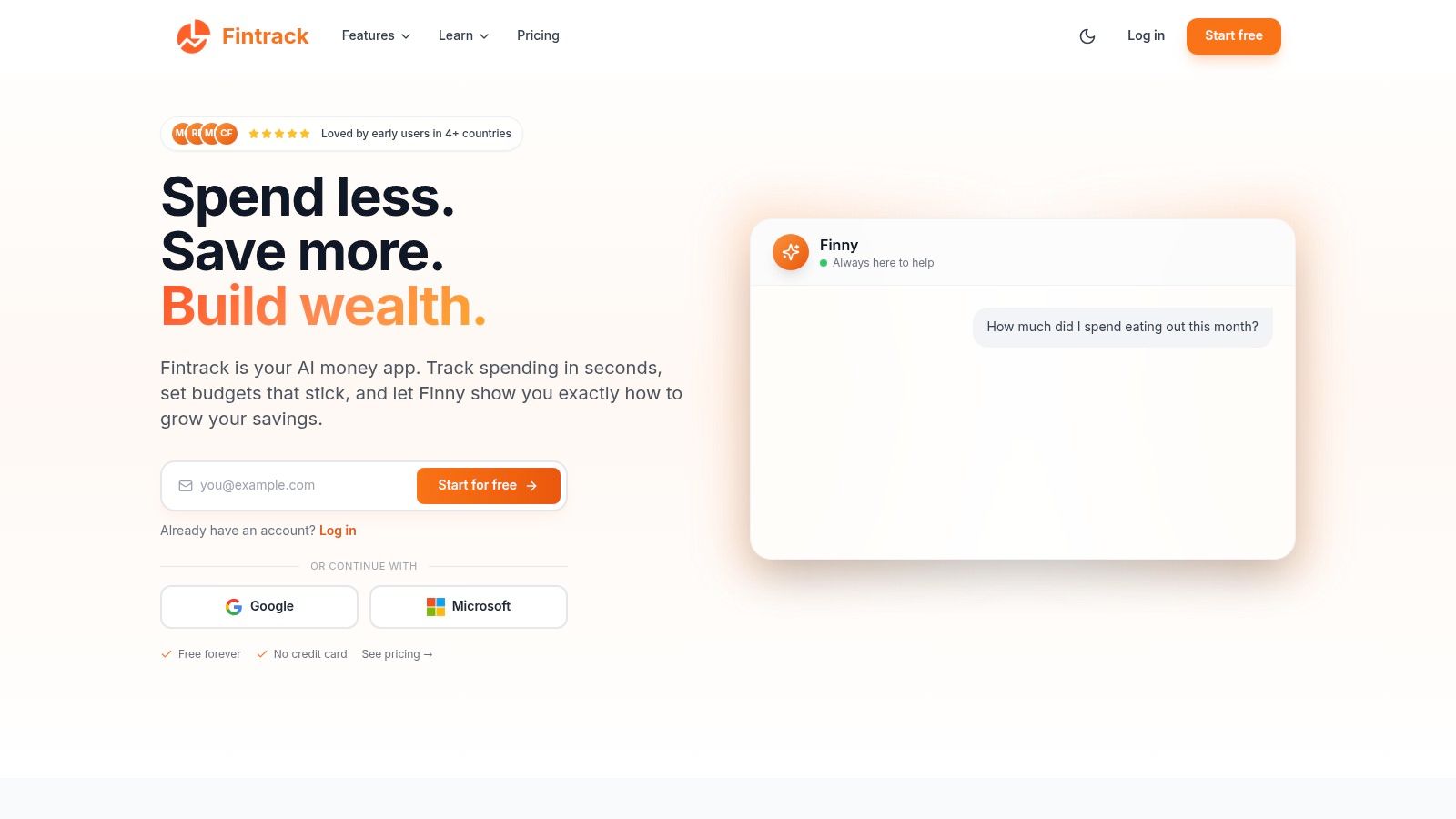
One practical example is using an AI expense tracker to reduce the grunt work of sorting transactions and checking patterns. That kind of tool doesn't replace budgeting principles. It makes them easier to apply consistently.
The best budgeting system is the one you'll still use after a busy week, an expensive month, and a frustrating surprise bill.
Modern budgeting should feel lighter than it used to. Less manual sorting. Less guessing. More visibility, faster decisions, and fewer abandoned spreadsheets.
If you want a simpler way to put this into practice, Fintrack is a practical next step. It helps you track spending, organise categories, and stay on top of your budget without needing a complicated spreadsheet or constant manual updates.