
You’re looking at a stock quote, and the yield jumps out first.
It might be a bank, a utility, or a U.S. dividend payer sitting in your watchlist. The number looks attractive, and the natural question is simple. What would I earn from this?
That’s where a lot of investors stop too early. They see the posted yield, assume it’s a clean income number, and move on. In practice, you need to know how to calculate the dividend yield yourself, because the listed figure can miss context that matters, especially if you’re a Canadian investor holding foreign stocks.
What a High Dividend Yield Really Means for Your Portfolio
A high yield gets attention fast. If you spend any time reviewing screeners or reading lists of high-yield dividend stock picks, you’ll notice that the yield often becomes the headline number.
That’s useful, but it can also be misleading. A high dividend yield can mean strong income potential. It can also mean the share price has fallen, which pushes the yield higher on paper even if the business is under pressure.
Think of yield as the stock’s income rate
The easiest way to understand dividend yield is to treat it like an interest rate on your stock investment. It tells you how much annual dividend income you’re getting relative to the current share price.
That’s why yield is so popular with income investors. It gives you a quick way to compare one dividend-paying stock with another.
A high yield isn’t automatically good. Sometimes it reflects a bargain. Sometimes it reflects trouble.
What a high yield does and does not tell you
A posted yield can help you answer one question quickly. How much income might this stock generate at today’s price?
It doesn’t answer several other important questions:
- Whether the dividend is sustainable: A company can pay a dividend today and still struggle to maintain it.
- Whether the yield is distorted: A special dividend or a sharp drop in the share price can make the number look better than the ongoing reality.
- What you keep: For Canadians holding U.S. dividend stocks, withholding tax can reduce the yield you receive in cash.
If you already save through registered accounts, it also helps to understand how account type changes the after-tax result. That’s one reason investors who contribute through workplace plans often benefit from learning the basics around RRSP matching and how it fits into your savings plan.
The Core Formula to Calculate the Dividend Yield
A stock can show a 5% yield on your screen, but that does not mean you will collect 5% in cash. Canadian investors run into this all the time with U.S. dividend stocks, where foreign withholding tax can reduce what lands in the account. So start with the basic formula, then remember it is only the gross yield.
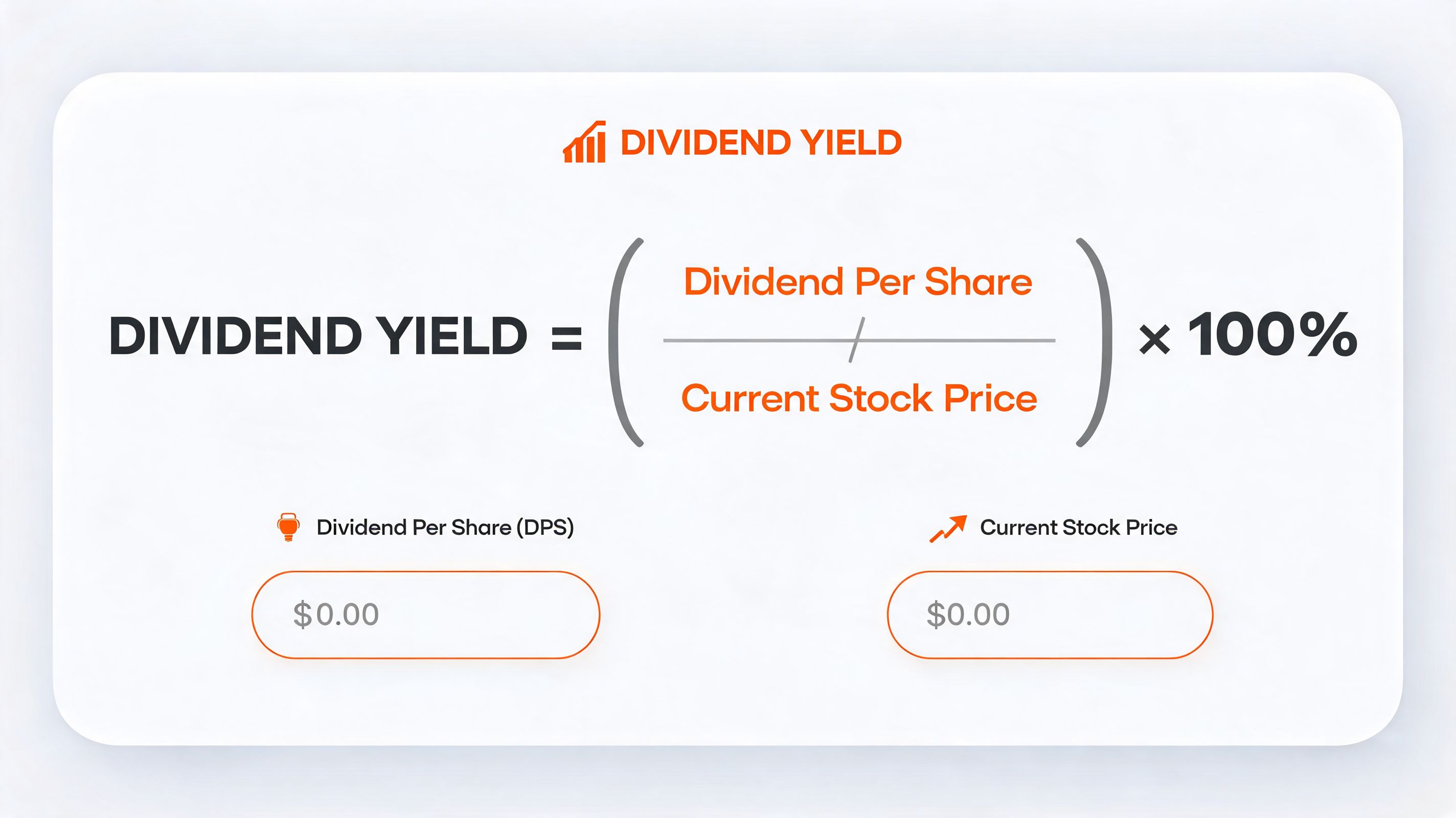
Formula: Dividend Yield = Annual Dividend Per Share ÷ Current Share Price × 100%
That is the standard method used to calculate dividend yield, as outlined in Wall Street Prep’s guide to dividend yield calculation.
Step 1: Find the annual dividend per share
Use the dividend the company is expected to pay over a full year.
If it pays quarterly, multiply the regular quarterly dividend by four. If it pays monthly, multiply by twelve. However, many investors often get sloppy. They pull the latest payment from their broker screen and treat it as the annual number.
One more check matters here. Make sure you are using the regular dividend, not a special one-time payout that can make the yield look richer than it really is.
Step 2: Use the current share price
The share price goes in the denominator. That means yield changes whenever the stock price moves, even if the dividend does not.
A quick example makes it clear. If a company pays $2 per share annually and the stock trades at $50, the yield is 4%. If the same stock drops to $40 and the dividend stays at $2, the yield rises to 5%.
That higher yield can mean better income value. It can also mean the market is pricing in risk. Both possibilities show up in real portfolios.
Step 3: Convert it into a percentage
Divide the annual dividend per share by the current share price, then multiply by 100.
In practical terms, this calculation is useful for:
- Estimating gross income: A $10,000 position in a stock yielding 4% would produce about $400 a year before taxes.
- Comparing stocks quickly: It gives you a fast way to line up income potential across holdings.
- Spotting tax drag: For Canadians buying U.S. dividend stocks, the posted yield is not always the amount you keep after withholding tax.
If you hold U.S. dividend payers in a taxable account or TFSA, that last point matters. The quoted yield may look attractive, but your net cash yield can come in lower. In an RRSP, the tax treatment can be different, which is why account type should be part of the calculation, not an afterthought.
Quick checks before you trust the number
- Annualize the dividend correctly: Use the full-year regular payout.
- Use today’s market price: Yield is based on the current stock price, not your purchase price.
- Watch for special dividends: One-off payments can distort the headline yield.
- Separate gross yield from net yield: Canadian investors in foreign dividend stocks should factor in withholding tax and account type.
If you want help pulling these numbers together without checking multiple apps and statements, an AI assistant that helps track portfolio income alongside your broader finances can save time and cut down on manual errors.
Trailing Yield vs Forward Yield vs Yield on Cost
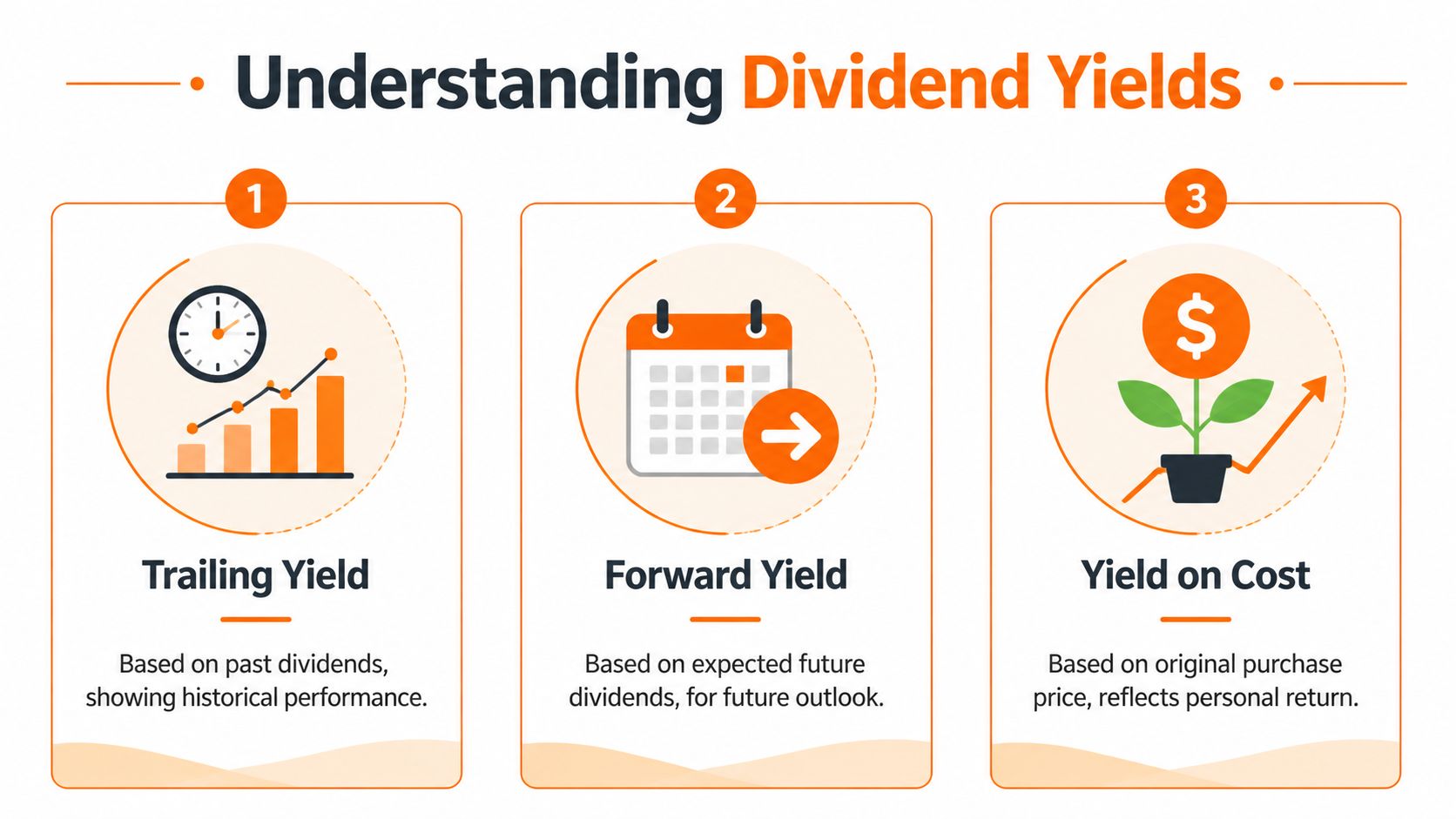
A stock can show a 5% yield on your screen and still mean three different things. The gap usually comes down to whether you are looking at what the company paid, what it may pay next, or what your own purchase price was.
Trailing yield
Trailing yield uses the dividends paid over the last 12 months and divides that total by the current share price.
It is the cleanest starting point because the cash was paid. If a company distributed $2 per share over the past year and the stock now trades at $40, the trailing yield is 5%.
That said, trailing yield can be stale. A dividend cut, freeze, or recent increase can make the last 12 months less useful than they look.
Forward yield
Forward yield uses the dividend rate expected over the next year, based on the current declared payout or management guidance.
This is often the more practical number for income planning. If a company just raised its quarterly dividend, forward yield reflects that change right away, while trailing yield will lag until a full year passes.
The trade-off is simple. Forward yield depends on something that has not happened yet. For cyclical businesses, REITs under pressure, or companies with uneven cash flow, that matters.
Yield on cost
Yield on cost uses your original purchase price instead of the current market price.
Say you bought a bank stock years ago at $50 and it now pays $3 annually. Your yield on cost is 6%, even if the stock currently trades at $75 and the market yield is 4%. That is useful for tracking how well a holding has grown your income over time.
It is less useful for buy decisions today. The market does not care what you paid.
How to use each one
Each yield answers a different question.
| Yield type | Best use | Main weakness |
|---|---|---|
| Trailing yield | Checking the income the stock actually produced recently | Can reflect an outdated dividend rate |
| Forward yield | Estimating the next 12 months of income | Assumes the payout holds |
| Yield on cost | Measuring how your income has grown on an existing position | Not useful for comparing a stock you might buy now |
For most purchase decisions, I focus on trailing yield and forward yield together. Trailing shows the recent record. Forward shows where the payout stands now. Yield on cost is mainly a personal scorecard.
Canadian investors should add one more layer, especially with U.S. dividend stocks. Your trailing or forward yield may be quoted on a gross basis, but the cash that lands in your account can be lower after U.S. withholding tax, depending on whether you hold the shares in a taxable account, TFSA, or RRSP. That does not change the published yield figure. It does change the income you keep.
Common Pitfalls That Can Distort Yield Calculations
A stock can show a strong yield on your screen and still produce disappointing income in real life. That gap usually comes from small calculation mistakes, stale data, or taxes that the headline number ignores.
Special dividends can make a stock look better than it is
Trailing yield often includes every dividend paid over the last 12 months. If one of those payments was a special dividend, the yield can look much higher than the company’s normal income pattern supports.
Check the dividend history before you trust the number. If the company paid an extra one-time distribution, strip it out and recalculate yield based on the regular payout only.
Stock splits can distort older dividend data
Split-adjusted data is usually handled properly by major brokerages and finance sites, but not always. If you pull an older dividend amount and divide it by today’s share price without confirming the figures were adjusted for a split, the result can be wrong.
This comes up more often when investors use older articles, company press releases, or spreadsheet records they built themselves.
Canadian investors should focus on net yield, not just quoted yield
This matters a lot if you own U.S. dividend stocks.
For Canadian residents, U.S. dividends are often subject to withholding tax, and the account type matters. In many cases, that tax reduces the cash you receive. A published yield may still say 3%, but your real cash yield can be lower after the withholding is taken off. Wealthsimple’s guide to dividend yield for Canadians gives a useful overview of how this works.
That trade-off gets missed in a lot of basic dividend articles. Canadian investors should pay attention to where the holding sits. A U.S. dividend stock in an RRSP can be treated differently than the same stock in a TFSA or taxable account. If your goal is portfolio income you can spend, gross yield is only the starting point.
A simple check helps. Look at the dividend quoted by the company or your broker, then compare it with the actual cash deposited in your account.
A high yield can also be a warning sign
Sometimes yield rises because the dividend is generous. Sometimes it rises because the share price has fallen and the market expects trouble.
That is why yield should always be checked against dividend coverage. A payout ratio can help, but the broader question is more practical. Is the business earning enough to keep paying this dividend without stretching its balance sheet?
I usually treat an unusually high yield as a prompt to investigate, not a reason to buy faster.
When you review dividend income alongside the bills and transfers that income is meant to support, it helps to use tools that categorise household spending automatically. That makes it easier to judge whether your portfolio is producing dependable cash flow or just an attractive headline number.
How to Track Your Dividend Income Automatically
Manual calculation is useful because it teaches you what the number means. Manual tracking gets old fast.
Once you own several dividend-paying holdings, spreadsheets start to become maintenance work. You have to update payments, check changes, and keep your account activity organised.
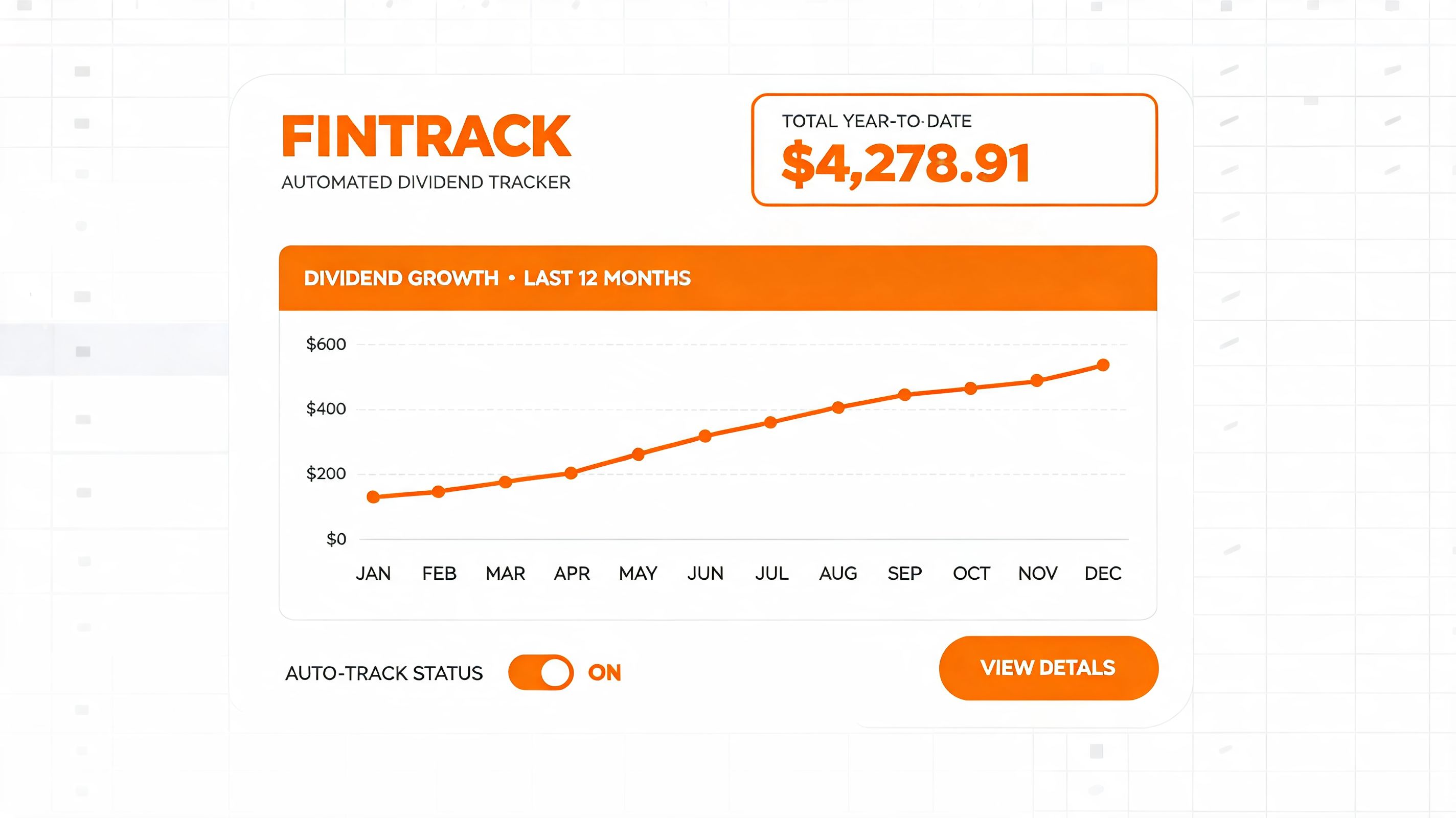
What automation actually helps with
The biggest benefit isn’t just speed. It’s consistency.
A good tracking setup helps you:
- See dividend deposits clearly: You can spot what arrived, when it arrived, and which account received it.
- Review income trends: That makes it easier to tell whether your portfolio income is becoming steadier or more uneven.
- Connect income to spending decisions: Dividend income matters more when you can view it beside the bills, subscriptions, and transfers it supports.
If you’re comparing options, this overview of tools that help investors manage your investments effectively is a useful place to see how different tracking setups work in practice.
Keep the process simple
The best system is the one you’ll keep updated.
That usually means:
- connecting the accounts you use most,
- letting transactions flow in automatically,
- tagging dividend deposits correctly,
- reviewing the results on a regular schedule instead of trying to rebuild the history later.
The more accounts you have, the less realistic manual tracking becomes.
For readers who want dividend deposits and other account activity organised with less admin, AI-powered transaction tracking is the most relevant next step.
Putting Dividend Yield into Perspective
A practical investor does not buy a stock because the yield looks attractive on a screening page. The yield is a starting clue. The crucial question is whether that income will hold up, grow, and arrive in your account in a form you can effectively use.
That distinction matters even more for Canadian investors. A 5% yield on a U.S. stock can look competitive beside a Canadian dividend payer, but foreign withholding tax can trim the cash you receive, especially if the shares sit in the wrong account type. In practice, the better choice is often the company with the lower posted yield and the cleaner path to dependable after-tax income.
I treat dividend yield as part of an income framework, not as a verdict on its own. A good yield supports the job the holding is meant to do in the portfolio. It should fit your cash flow needs, your tax situation, and the business risk you are willing to accept. Chasing the highest number usually leads investors toward weaker balance sheets, stretched payout ratios, or companies the market no longer trusts.
Context is what turns a quoted yield into a useful decision.
That is also why dividend investing works better when it is tied to the rest of your finances. If you review investment income alongside spending, taxes, and account structure, your decisions get sharper. A guide to personal finance planning that connects investing to your broader money decisions can help you do that with more discipline.
The goal is simple. Use dividend yield to compare income opportunities, then judge whether the income is durable, tax-aware, and suited to your plan. That is how yield becomes a useful tool instead of a tempting headline.
If you want a simpler way to connect dividend income with the rest of your money, Fintrack can help you see account activity, spending, and cash flow in one place so the numbers are easier to act on.