
Meta description: Learn the delinquent account meaning, what happens after a missed payment, and the practical steps to fix it in the U.S. and Canada.
You open your banking app, email, or paper mail and see the words past due. Your stomach drops. Maybe you meant to pay it and forgot. Maybe cash was tight and you chose groceries, rent, or fuel first. Maybe you saw the balance, closed the tab, and hoped to deal with it later.
That reaction is normal.
A delinquent account sounds like a label that means you've done something irreversible. It usually isn't. In most cases, it means a payment was missed and the clock has started. What matters next is how quickly you deal with it, how you talk to the lender, and how you stop one missed payment from becoming a larger mess.
If you're searching for the delinquent account meaning, you probably don't want a dictionary definition. You want to know what it means for your credit, your options, and what to do today. That's the practical side, and that's where the focus should be.
That Sinking Feeling When a Bill Is Past Due
A common version of this looks like this: a credit card payment was due on Friday, you notice on Tuesday, and now there's an alert saying the account is overdue. You don't know whether to pay immediately, call first, or brace for damage that's already done.
Another version is harder. You already knew the bill was coming, but there wasn't enough money. In that moment, people often freeze. They avoid the phone call, stop opening statements, and tell themselves they'll sort it out after the next paycheque.
That instinct makes sense emotionally, but it usually makes the situation worse. A missed payment is still easier to fix at the start than after more notices, more fees, or a transfer to collections.
Practical rule: Shame delays action. Action reduces damage.
If you're under pressure across several bills, broad debt triage advice can help you sort the urgent from the less urgent. A useful plain-language resource is BDJ Express Law's debt guide, especially if you need help thinking through what to pay first when everything feels late at once.
One of the most effective ways to calm the chaos is to get every due date into one place. Even a simple monthly bill tracker can help you see which account is only slightly behind and which one needs immediate attention.
What panic gets wrong
Panic tells you that one late bill means your finances are ruined. That's rarely true.
A delinquent account is serious, but it's also a process. Consequences build over time. Some accounts can be brought current quickly. Some lenders will work with you if you contact them before the account gets worse. The first move is clarity, not self-blame.
What helps right away
Start with three questions:
- Which account is late: Credit card, loan, utility, rent, tax bill, or something else.
- How late it is: A few days feels very different from several months, and lenders treat those situations differently.
- Whether the account is secured: Mortgage and auto loans can put property at risk. Those usually move to the top of the list.
Once you know that, you can respond instead of spiralling.
What a Delinquent Account Actually Means
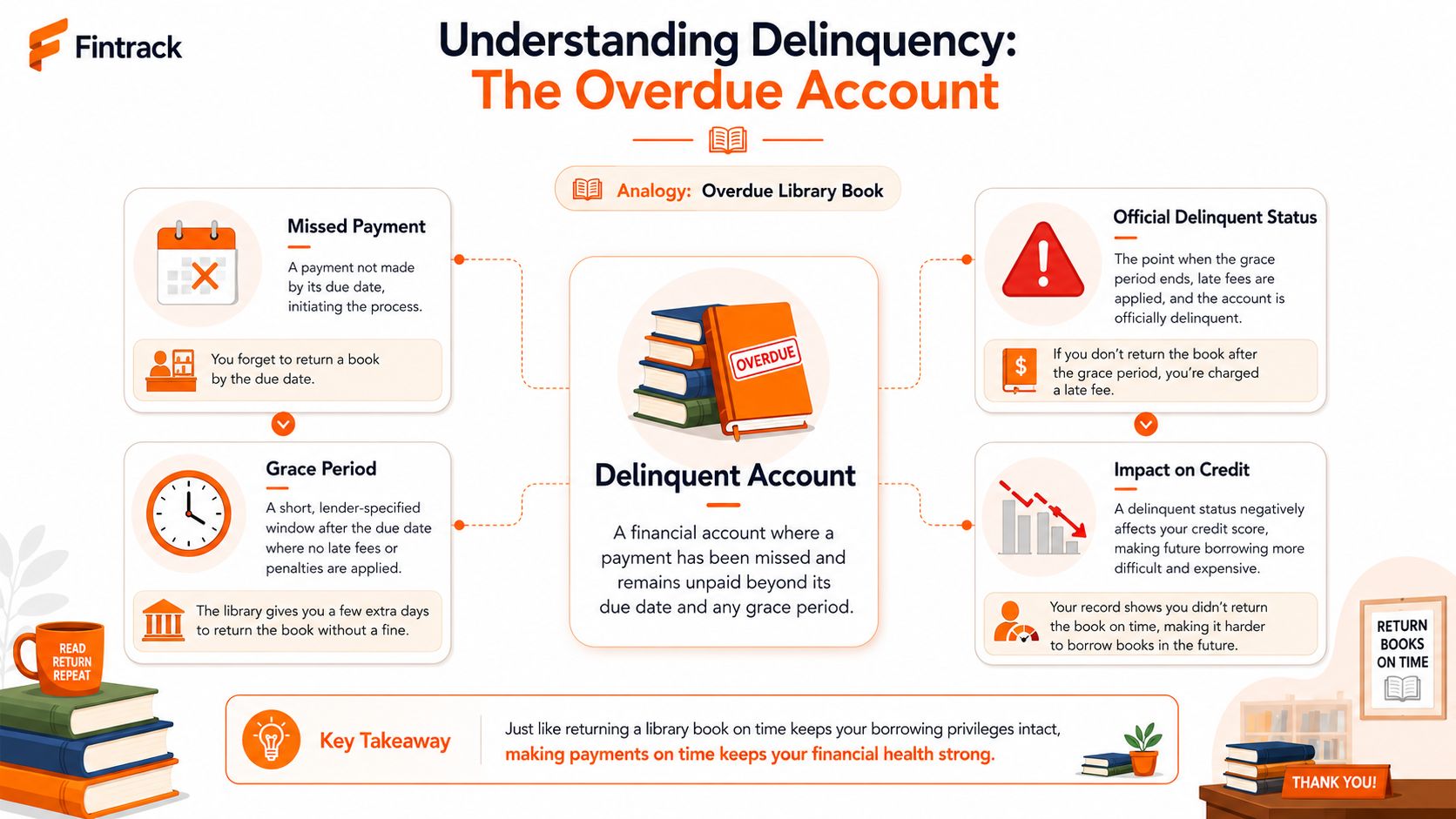
A delinquent account starts with one missed due date. If the payment is still unpaid after that date, the account is delinquent.
That sounds simple, but the timing matters more than many people realize. The account can be delinquent with the lender before it shows up as a reported late payment on your credit file. In the U.S., creditors often wait until an account is at least 30 days late before reporting it to the credit bureaus, as explained by the Consumer Financial Protection Bureau's guidance on credit reports and late payments. Canadian lenders follow similar reporting patterns in practice, but policies can vary by creditor and bureau.
The basic definition
The practical definition is straightforward. You owed money by a set date, and the account was not brought current on time.
That can apply to more than credit cards and loans. It can also show up with mortgages, auto loans, rent, medical bills, taxes, utilities, and other recurring obligations. The meaning stays the same across those categories. The consequences do not.
Rent is a good example. A late rent payment may not work like a credit card late fee, because lease terms and state law can change what happens next. If housing is part of the problem, start with understanding Texas tenant late rent laws to see how fast a missed payment can turn into notices, fees, or eviction risk.
Why the term causes so much confusion
People often hear "delinquent" and assume the debt has already gone to collections or become impossible to fix. That is not what the word tells you.
It tells you only one thing. The agreed payment schedule has been broken.
Everything else depends on context. A credit card that is a few days late, an auto loan that is several weeks behind, and a medical bill that has already been sent out for collection all create different risks. If you are worried about the last scenario, this guide on removing collection items from your credit report explains what changes once an account leaves the original creditor.
An account can be delinquent long before it becomes a full-blown crisis.
What the label does not tell you
"Delinquent" is a starting label, not a full diagnosis. To decide what to do, focus on the details below.
| What you need to know | Why it matters |
|---|---|
| How many days late you are | A short delay can often be fixed with less fallout than a longer one |
| Whether the lender has reported it yet | Credit impact often depends on when reporting starts |
| Whether fees or penalty rates have kicked in | The balance can grow faster once penalties apply |
| Whether the account is secured | A mortgage or car loan can put property at risk |
| Whether hardship options are still open | Lenders usually offer more flexibility earlier in the process |
This is the point where people regain some control. Do not stop at the word delinquent. Find out the age of the missed payment, the account type, and what the lender has already done. Those facts shape your next best move.
Delinquent vs Default vs Charge-Off
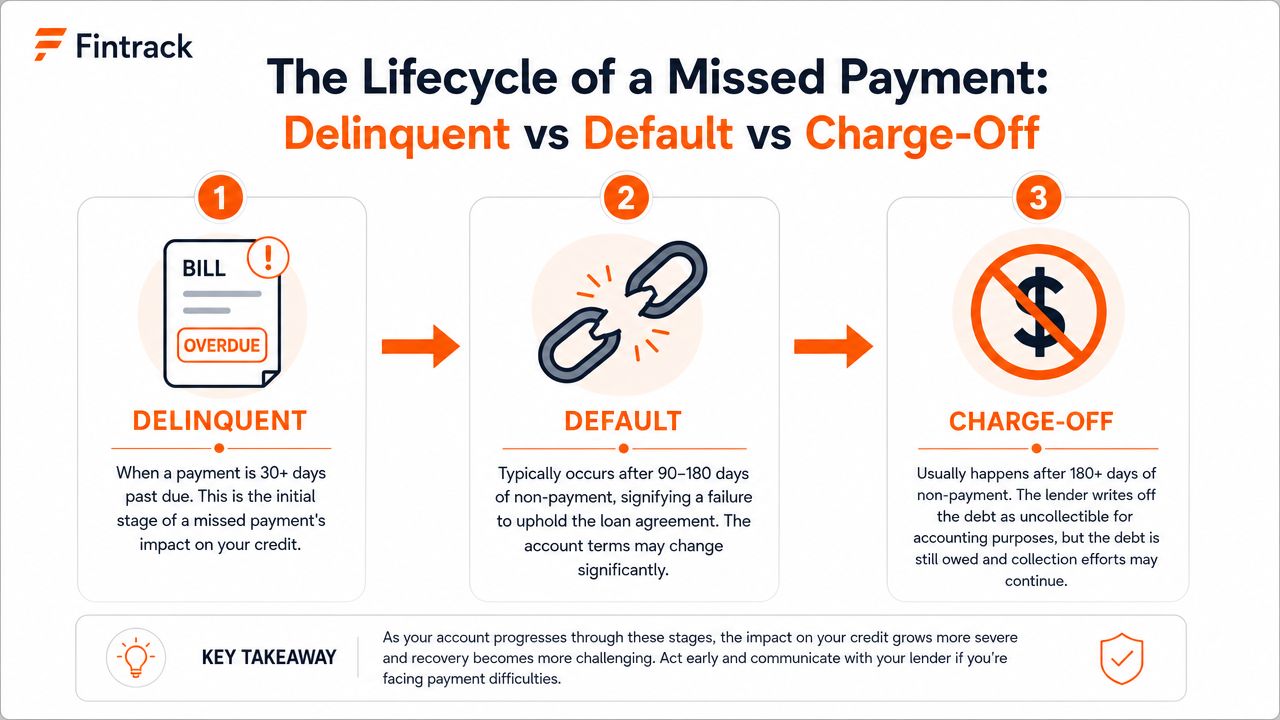
These three terms get lumped together, but they're not the same thing. They describe a progression.
At the beginning, you have delinquency. Later, if the non-payment continues, the account may move into default. After that, a lender may charge off the debt for accounting purposes. The debt can still be collected even after that happens.
A side-by-side view
| Stage | What it means | What usually changes |
|---|---|---|
| Delinquent | You missed a payment and haven't caught up | Reminders, late fees, internal collections activity |
| Default | The lender treats the agreement as seriously broken after ongoing non-payment | Stronger collection action, fewer options, legal risk may rise |
| Charge-off | The lender writes the debt off as a loss in its books | Collection efforts can continue, sometimes through a collector or debt buyer |
Delinquent
This is the earliest stage. You missed the due date, and the account is behind.
In practice, people have the most room to fix things cleanly at this point. The lender may still be willing to reverse a fee, accept a catch-up payment, or set a short-term arrangement. You haven't improved the situation by waiting.
Default
Default is more serious. Under the guidance tied to the GSA SmartPay training materials, while delinquency begins with a single missed payment, default typically occurs after 90 to 120 days of continuous non-payment, and that's the point where creditors may trigger more severe consequences such as wage garnishment and asset seizure under applicable laws, as noted in the SmartPay training reference.
That's the point where many borrowers realise they're no longer dealing with a simple late payment. They're dealing with a broken loan agreement.
The best time to negotiate is before the lender sees you as someone who has stopped paying altogether.
Charge-off
A charge-off often creates confusion because people assume it means the debt disappeared. It didn't.
A charge-off means the lender has decided, for accounting reasons, to treat the balance as a loss. You may still owe it. The lender may still collect, or it may place or sell the debt to a third party.
If your account has already gone beyond delinquency and into collections, this guide on how to remove collection items from a credit report can help you understand the next layer of cleanup.
What works and what doesn't
What works:
- Acting during delinquency: You usually have more options early.
- Calling before promises are broken repeatedly: Lenders respond better when you contact them before the account becomes significantly past due.
- Focusing on the stage, not the label: A one-payment miss and a long-running unpaid balance are very different situations.
What doesn't work:
- Assuming a charge-off erased the debt
- Ignoring letters because the account already “looks bad”
- Making vague verbal arrangements and not getting details confirmed
The Delinquency Timeline What Happens and When
You miss a due date, tell yourself you will fix it next week, and then a letter shows up, your phone starts ringing, or your credit score drops. That sequence is common. What matters now is knowing where the account sits on the timeline, because your options usually shrink as the days late add up.
The early window
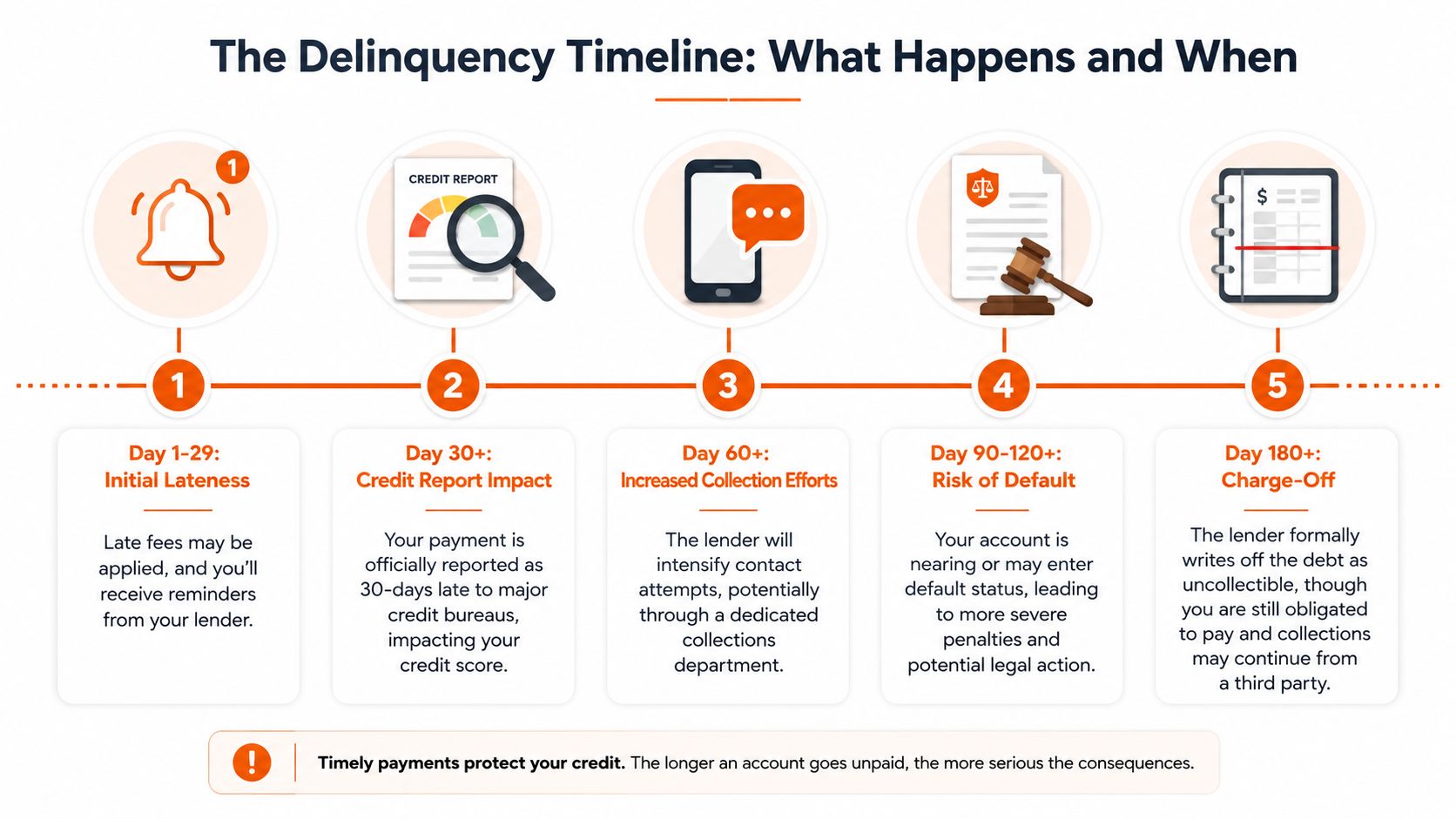
Day 1 to 29 is often the best chance to contain the problem. At this stage, the account is late, but many lenders still treat it as a customer service issue rather than a collections issue. You might see a late fee, a reminder email, or a past-due notice.
A lot can still be fixed here. If the missed payment came from bad timing, a banking delay, or simple overload, catching up fast may keep the account from becoming a larger credit problem.
If the account is a credit card, payment timing matters more than many borrowers realize. This guide to credit card payment timing and strategy can help if revolving debt is what pushed you behind.
When the credit impact usually starts
In the U.S., an account can be delinquent as soon as you miss the due date, but many lenders do not report the late payment to the credit bureaus until it is 30 days past due. The Consumer Financial Protection Bureau's overview of payment history explains why that mark matters so much for your credit record.
Once a late payment is reported, it can stay with you for years. In the U.S., the Fair Credit Reporting Act generally allows negative information tied to delinquency to remain on a credit report for seven years. In Canada, Equifax Canada says many negative items stay on a credit report for up to six years, depending on the province and the type of account, according to Equifax Canada.
That difference matters. A reader in Texas and a reader in Ontario may both be 45 days late, but the reporting rules and cleanup timeline are not identical.
The middle stage
By around 60 to 90 days delinquent, many creditors shift from routine reminders to stronger recovery efforts. You may see more frequent calls, formal demand letters, account restrictions, or transfer to an internal collections team.
This is usually the point where stress rises fast. The account has aged enough that the lender may no longer assume a quick catch-up is coming. If you need a payment arrangement, ask for it before the file moves any further inside the collections process.
Secured debt carries extra risk. With a mortgage, for example, the timeline can move from missed payments to legal action under state rules, which is why a state-specific resource like missed payments before Georgia foreclosure is useful for seeing how escalation can work in practice.
A quick reference
- 1 to 29 days late: Late fees and reminders are common. You may still be able to resolve the issue directly with limited fallout.
- About 30 days late: Credit bureau reporting often begins in the U.S.
- About 60 to 90 days late: Collection pressure usually increases, and hardship options may narrow.
- 90+ days late: The account is in a much more serious stage and needs immediate attention.
If you do one thing today, confirm the exact number of days past due. That number tells you what the creditor is likely to do next, and how much room you still have to fix it.
Your Action Plan for a Delinquent Account
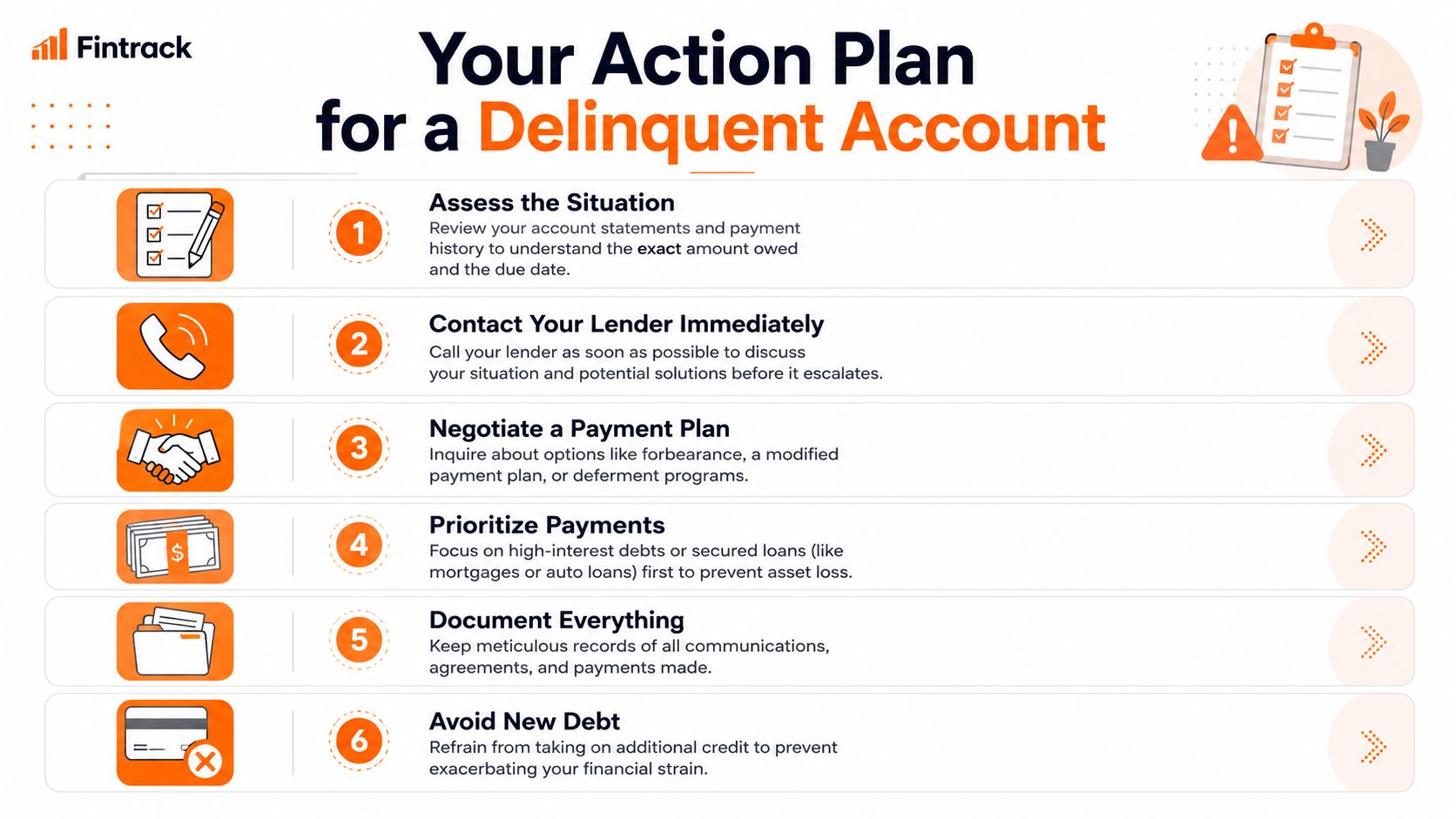
Once you know an account is delinquent, the next move should be practical, not emotional. Don't wait to “feel ready.” Start with facts, then make contact.
Step 1 and Step 2
Check the account details before you call
Pull up the latest statement or online account page. Confirm the amount due, the due date, whether you missed one payment or more than one, and whether any fee was added.
Write down the essentials. When people call while flustered, they often agree to something they can't afford.
Contact the creditor immediately
Call the lender, card issuer, servicer, landlord, or agency responsible for the account. If phone support isn't available, use the secure message centre or written contact method the account provides.
Keep the conversation short and direct. Explain that the account is past due, say whether the problem is temporary or ongoing, and ask what options exist to bring it current.
What to say: “My account is past due. I want to avoid further escalation. What options do you have to bring it current or set up a workable arrangement?”
Step 3 and Step 4
- Ask for a realistic solution, not an ideal one
The best arrangement is the one you can keep. Depending on the account, that might mean paying the missed amount in full, asking for a fee waiver, or setting a short payment plan.
If one debt must wait, prioritise the debts that can put shelter, transport, or essential access at risk.
Get every agreement in writing
If a representative says a fee will be waived, a payment date will be extended, or the account will be noted in a certain way, ask for written confirmation. Save emails, screenshots, chat transcripts, letters, and payment receipts.
Verbal reassurance is not enough when a dispute appears later.
Step 5 and Step 6
Make the payment you agreed to, then verify it posted
Don't assume a scheduled transfer worked. Check the account after payment and confirm the balance changed the way you expected.
Stop the next delinquency before it starts
If this happened because cash flow was too tight, solve that problem too. If it happened because life got busy, set systems that reduce the chance of another miss.
When tax debt is the problem in Canada
Tax debt needs quick attention because waiting can narrow your options. In Canada, the CRA will typically send one verbal and one written legal warning before initiating legal collection actions, and that warning remains valid for 180 days, according to the Canada Revenue Agency's legal warning guidance.
That creates a window to contact them and work on payment arrangements. Don't treat that warning as routine paperwork. Treat it as a live deadline.
If you're juggling expensive card debt
Sometimes the issue isn't one bad month. It's that minimum payments have become too heavy. In that case, it may help to review options like how to transfer a balance on a credit card, but only if the new arrangement is simpler and cheaper for you to manage. Moving debt without fixing spending pressure usually delays the same problem.
How to Prevent Delinquent Accounts for Good
The long-term fix isn't willpower. It's a system.
Most missed payments happen for one of two reasons. There wasn't enough money in the account, or the bill got lost in the noise of normal life. Good prevention handles both.
Build a payment system you can trust
A reliable setup usually includes a mix of habits and automation:
- Automate fixed bills: If the amount is stable and your cash flow supports it, automatic payments reduce the odds of a simple miss.
- Use reminders for variable bills: Credit cards and utilities can change month to month, so calendar alerts help you review the amount before paying.
- Keep one bill list: Due dates spread across email, apps, and paper mail are easy to miss.
- Review upcoming payments weekly: A short money check-in beats a monthly surprise.
Protect yourself from lean months
Even strong systems break when there isn't enough room in the budget. That's why prevention also means building a buffer.
An emergency fund won't solve every problem, but it can stop one rough month from turning into rolling delinquency. If you're starting from scratch, this guide on how to build an emergency fund is a practical place to begin.
The safest bill is the one you planned for before it arrived.
What actually works over time
The people who avoid repeat delinquency usually do three things consistently:
- They know their due dates before the week gets busy
- They leave breathing room in the chequing account
- They spot overspending early enough to adjust
The best next step is to make your cash flow visible in one place so bills don't sneak up on you. Fintrack can help you do that with a clearer view of income, expenses, and upcoming obligations, and its budget planning tools are a practical way to build a payment routine that's easier to stick to.