
A lot of people find out about a collection item at the worst possible moment. They apply for a car loan, try to renew a line of credit, or start talking to a mortgage broker, and suddenly an old account they barely remember is sitting on their credit report.
That surprise is stressful, but it's also common. In Canada, a collection entry usually means an unpaid account was passed from the original creditor to a collection agency or reported as being in collections. Once it appears on your file, it can make lenders, landlords, and other decision-makers pause.
If you're searching for how to remove collection items from credit report records in Canada, the answer is usually less dramatic than the internet makes it sound. The cleanest removal path is almost always based on proof. If the item is inaccurate, duplicated, stale, or can't be verified, you may be able to get it deleted. If it's accurate, the realistic goal is often to resolve it properly and make sure it's reported correctly.
The Unexpected Collection on Your Credit Report
A common version of this story goes like this. Someone applies for financing, expecting a routine approval, and the lender says there's a collection account on file. It might be an old cellphone bill, a utility balance, or a small account that got lost during a move.
What makes this so frustrating is that the person often doesn't even know the item is there until they're already mid-application. By then, they're not just dealing with the debt. They're dealing with delays, questions, and the feeling that one old account is now following them around.

A collection item is a debt entry that has moved into collections and is now being reported on your credit file. That reporting matters because your credit report isn't just a list of debts. It's a record other people use to judge how reliably you handle money.
Why this catches Canadians off guard
Many people assume that if they pay an old debt, the record disappears immediately. That's not usually how it works in practice. In Canada, payment often changes the status of the account, but it doesn't automatically erase a valid collection entry from your file.
That's why the first move shouldn't be panic payment. The first move should be to slow down and verify the details.
A collection entry can be real, partially wrong, duplicated, or older than it should be. Those are very different situations, and they need different responses.
If you're trying to get your finances organised before dealing with credit issues, a good broader starting point is this guide to planning your personal finances. It helps put the collection problem in context, especially if you're also juggling payments, savings goals, and rising monthly costs.
What actually works
When I look at collection files, the biggest mistake people make is chasing a “quick delete” before they've checked whether the entry is even being reported properly.
A more useful framework is this:
- If the item is wrong, dispute it with the bureau.
- If the item is duplicated, challenge the duplicate listing.
- If the item can't be verified, push for removal through the formal dispute process.
- If the item is valid, negotiate carefully and get everything in writing.
That's the practical road map. The next step is getting the actual reports in front of you.
Get Your Official Canadian Credit Reports
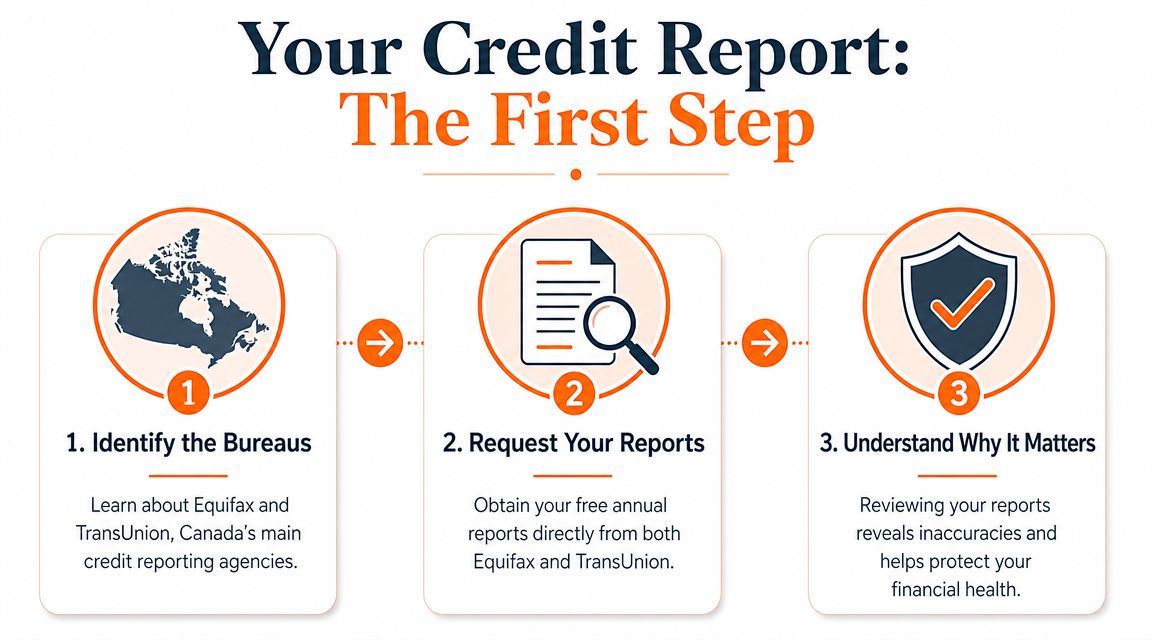
Before you call a collector, argue with a lender, or send money anywhere, get your credit reports from both Equifax Canada and TransUnion Canada.
The significance of that part is often underestimated. A collection may appear on one bureau and not the other. If you only check one report, you can miss the very item that's causing the problem.
Why you need both reports
Canadian lenders and collection agencies don't all report the same way to both bureaus. One creditor may furnish data to Equifax Canada, another may report to TransUnion Canada, and some may appear on both.
So your first task is simple. Get both files and compare them line by line.
If you want a broader money view while you're reviewing credit files, this article on building a personal finance dashboard is useful. Credit clean-up goes faster when you can also see your bills, account activity, and cash flow in one place.
What to have ready
Pulling your reports is easier if you gather a few basics first:
- Government ID. You may need to confirm your identity.
- Current address and past addresses. Older accounts are often tied to previous residences.
- SIN only if required by the bureau process. Don't offer extra information unless it's part of the official request.
- A list of old creditors. This helps you recognise accounts that may show up under unfamiliar collector names.
What to look for right away
Don't start by obsessing over the score. Start with the report data.
Focus on:
- Collection accounts
- Names of creditors and collectors
- Balances
- Dates
- Address history
- Any account you don't recognise
Practical rule: Don't rely on memory. Work from the bureau reports, not from what you think happened years ago.
A lot of people are surprised by how messy these files can be. Accounts get sold, agency names change, and old records can appear in ways that aren't obvious at first glance. Once you have both reports, you can move from guessing to checking.
How to Scrutinize the Collection Entry
A collection account should be reviewed like a file, not a story. The goal is to pin down what Equifax Canada and TransUnion Canada are reporting, line by line, and decide whether the entry is accurate, stale, duplicated, or incomplete.
For Canadians, the date fields matter more than many people realize. A collection can stay on your credit report for years, but it does not stay there forever, and the reporting period is not the same thing as the time a creditor or collector may have to sue. That distinction causes a lot of confusion.
The fields that matter most
Write out each collection entry from both bureaus and compare the details side by side.
| Field | Why it matters |
|---|---|
| Collector name | Confirms who is reporting the debt now |
| Original creditor | Helps you match the item to your own records |
| Balance | Differences can support a targeted dispute |
| Date of last activity | Often affects whether the item is still reportable |
| Ownership details | Wrong owner information can point to a mixed or resold file |
If one bureau shows more detail than the other, note that. Missing or vague information does not automatically get an account removed, but it can help you identify where the reporting starts to break down.
What to look for
The strongest dispute points are factual, specific, and easy to document.
Check for:
- Wrong consumer. Similar names, old shared addresses, and mixed files still happen in Canada.
- Wrong balance. The amount may not match the final bill, settlement amount, or account history.
- Duplicate collection entries. One debt can end up listed more than once after it is sold or reassigned.
- Date errors. A collection may be reported with a date that keeps it on file longer than it should be.
- Collector or creditor mismatch. The agency reporting the debt may not line up with the account trail.
A narrow challenge works better than a general complaint. “TransUnion shows a different balance from Equifax, and the original creditor name is wrong” gives the bureau something concrete to investigate.
Pay close attention to dates
In Canada, many consumers use “date of last activity” loosely, but the exact way a bureau records the timeline can affect whether the item should still be showing. I tell clients to compare every date on the report against their own records, including statements, final bills, settlement letters, and bank history.
If you need to trace old payments, it helps to review your past credit card payment history and billing records before you decide whether the reporting is wrong or just incomplete.
People also mix up credit reporting rules with limitation periods. They are separate issues. If you want a simple example from outside Canada of how legal deadlines and credit reporting can differ, this overview of 2026 Utah medical debt deadlines shows why those timelines should never be treated as the same rule.
Build your own comparison notes
A practical review usually ends up looking like an audit sheet. Put Equifax on one side, TransUnion on the other, and mark every difference:
- Name spelling
- Account or reference number
- Reported balance
- Collector listed
- Original creditor listed
- Date details
- Status or remark codes
This step is where many valid disputes are found. Accurate collections are often hard to remove in Canada, and pay-for-delete is not a reliable strategy here. Real progress usually starts with finding a specific reporting defect, then documenting it clearly.
The Formal Dispute Process for Inaccuracies
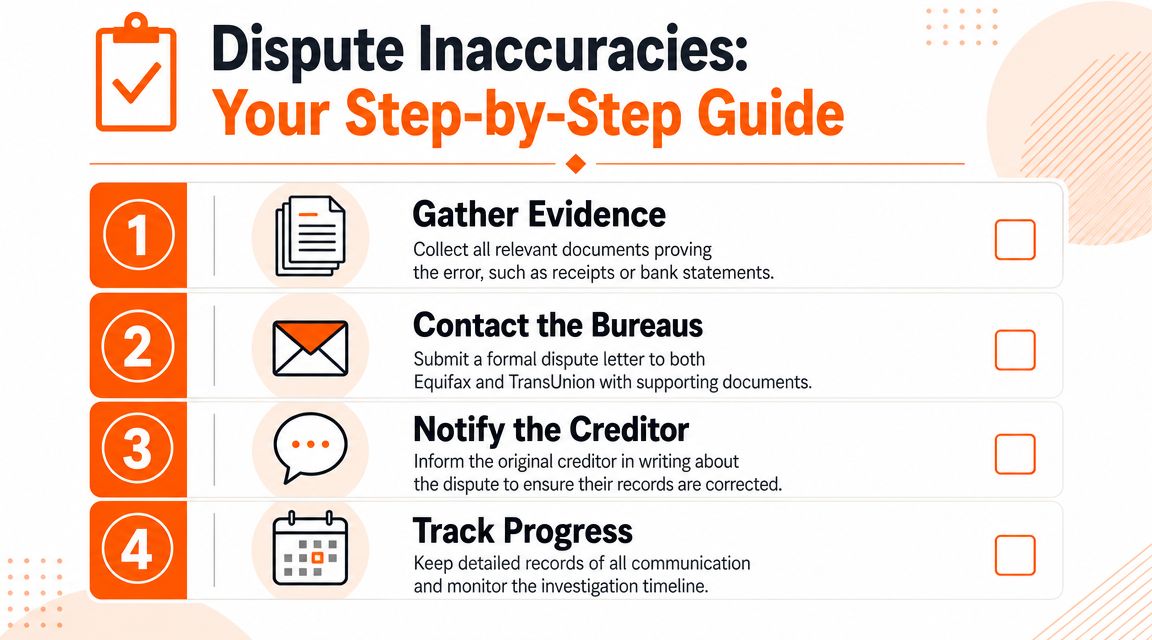
If you've found a real error, the most effective route is a formal bureau dispute. Not a phone rant. Not a general complaint. A written, documented dispute that points to the exact field that's wrong.
People improve their odds by being precise. In Canada, removal odds depend strongly on whether the file has a factual defect versus being merely paid. Accurate collections are usually retained, while inaccurate or stale items are the ones most likely to be deleted after investigation. Your operational checklist is critical: identify the bureau, confirm the collector's license, compare the name, balance, and dates across reports, and then submit a narrow dispute challenging only the incorrect data, as outlined in this practical Canadian guide from Loan With Jen.
Build a dispute package, not just a complaint
A strong dispute package usually includes:
- A short cover letter that identifies the account and the exact error
- A copy of the relevant credit report page with the item marked
- Supporting documents such as statements, payment records, settlement letters, or identity documents
- A copy of your ID and proof of address if the bureau asks for them
- Your contact details so the bureau can send the result
Keep the package narrow. If the amount is wrong, dispute the amount. If the dates don't match, dispute the dates. If the debt isn't yours, say that clearly and attach proof.
Send disputes in writing
Online systems can be convenient, but written disputes give you a better paper trail. Mail is often the cleaner choice when the issue is detailed or the file is messy.
Use a method that gives you proof of delivery. Then save copies of everything.
A simple tracking system helps:
- Create one folder per bureau
- Save scans of every letter
- Keep screenshots of online submissions if you use them
- Write down the date sent and what documents were enclosed
- Store all replies together
If you're already trying to get tighter control over bill dates and payment records, a good side resource is this guide to using a monthly bill tracker. It can help you surface the paperwork that often becomes useful in a dispute.
A simple dispute letter template
You don't need legal language. You need clear language.
I am writing to dispute a collection item on my credit report. The account is reported under [collector name], with the balance shown as [amount if shown on your report]. I believe this entry is inaccurate because [brief reason, such as wrong balance, duplicate listing, wrong identity details, or stale reporting]. Please investigate and correct or remove the item. I have enclosed copies of documents supporting my dispute.
That's enough. Keep it factual.
When to contact the collector too
The bureau is the reporting gatekeeper, so that's where the formal dispute belongs. But it can still help to notify the collection agency or original creditor in writing that the reported information is wrong and that you've disputed it with the bureau.
That second letter should also be brief. Ask them to correct their records and stop reporting inaccurate information. Keep a copy.
What to expect after filing
A dispute isn't magic. It triggers an investigation. The result can be that the item is updated, deleted, or left as-is if the bureau says it was verified.
Possible outcomes usually fall into these buckets:
| Outcome | What it means for you |
|---|---|
| Deleted | The bureau removed the collection item |
| Updated | Some account details changed |
| Verified | The bureau says the furnisher confirmed the information |
| Partial correction | One field changed, but the item remained |
If the bureau verifies the item and you still believe it's wrong, you may need to resubmit with better documentation or escalate through the bureau's complaint channels. The key is that each new step should add evidence, not just frustration.
Negotiating When the Debt Is Valid
Sometimes the review shows that the collection is valid. The name is right, the amount is roughly right, and there's no obvious reporting defect to challenge. At that point, the strategy changes.
You're no longer trying to prove the account shouldn't be there. You're trying to resolve it in the least damaging and most controlled way possible.
What paying does and does not do
Many Canadians often get bad advice. They're told to just pay the collection and it will disappear. In reality, payment usually updates the status of the account. It doesn't usually remove a legitimate collection entry from the report by itself.
That's why “pay for delete” should be treated cautiously in Canada. It can be discussed, but it's not something you should assume will be offered or honoured as a routine outcome.
If a collector promises anything about deletion, get it in writing before you send payment. If it isn't written down, treat it as if it was never promised.
A practical negotiation approach
When the debt is valid, the safest process is usually:
Confirm the debt details first
Make sure you know who owns the account and what amount is being claimed.Decide your goal
You may want to settle the balance, stop collection activity, or clean up the file before a lending application.Make offers in writing when possible
Written communication creates a record and reduces misunderstandings.Ask exactly how the account will be reported after payment
Don't leave that vague.Keep proof of payment permanently
If the reporting is updated incorrectly later, you'll need your receipts and letters.
Settlement can still help
Even if settlement doesn't erase the tradeline, it can still matter. A resolved account may be viewed differently than an unresolved one when a lender reviews the full file manually. It may also reduce ongoing collection pressure.
That doesn't mean every settlement offer is wise. If money is tight, think about whether a lump-sum offer, a payment arrangement, or a broader debt strategy makes the most sense.
If you're weighing old debt against high-interest revolving balances, this guide on how to transfer a balance on a credit card can help you think through the trade-offs. The right move depends on cash flow, interest costs, and what problem is most urgent.
What not to do
A few mistakes come up repeatedly:
- Don't pay first and negotiate later
- Don't rely on phone promises
- Don't assume a “settled” account means “deleted”
- Don't send money without knowing who legally owns the debt
- Don't use broad dispute language on a debt you know is valid
Negotiation works best when you treat it like paperwork, not pressure. Clear terms. Written proof. Copies of everything.
Monitor Your Report and Rebuild Your Credit
A common Canadian credit clean-up mistake is stopping right after a dispute is approved or a settlement is paid. Then, a month or two later, the collection still shows on one bureau, shows the wrong balance, or reappears under a different collection agency name.
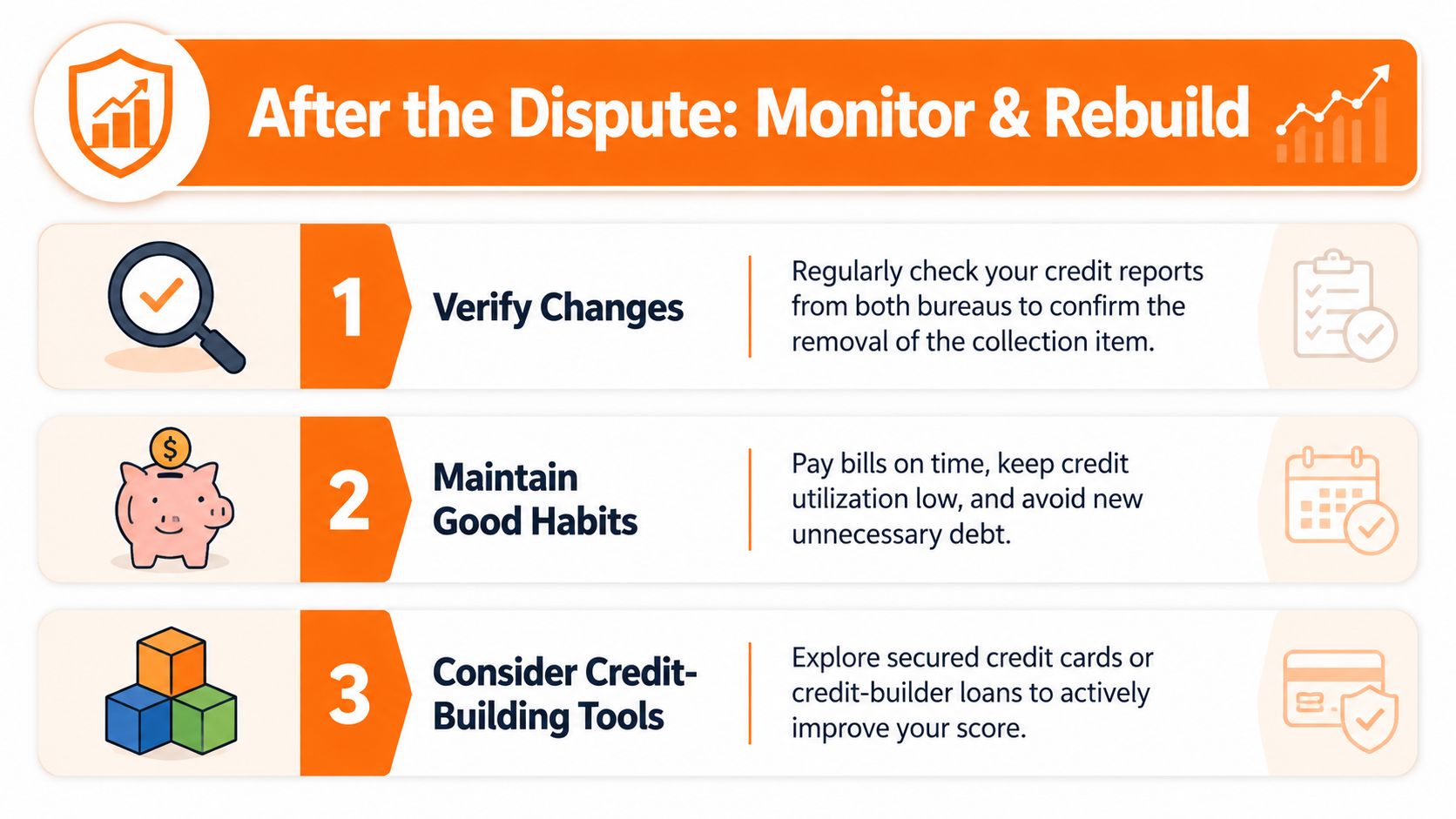
Check your Equifax Canada and TransUnion Canada reports again after the update window you were given. Don't rely on the score alone. In collection cases, the details on the tradeline matter more than the headline number.
What to verify on the updated report
Read the entry line by line. You want to confirm that the bureau processed the change correctly and that the furnisher reported the same information to both bureaus.
Check for:
- Deletion, if the dispute was accepted
- A zero balance or the correct settled amount, if you paid
- An updated status such as paid or settled, if that was the agreement
- No duplicate listing under a creditor and a collection agency for the same debt
- A matching result on both Equifax Canada and TransUnion Canada
- The right date information, especially if the account is old and nearing the 6-year reporting limit
Small errors matter here. A balance that should be zero, a status that still says unpaid, or a duplicate collection entry can keep dragging the file down and can create problems when a lender reviews it manually.
If something is still wrong, go back to the paperwork. Compare the updated report with your dispute result, settlement letter, and payment proof, then raise a targeted follow-up dispute with the bureau that is reporting the error.
Rebuild your credit with boring habits
Once the reporting is correct, the next job is consistency.
In practice, credit rebuilding usually comes from a few plain habits done for long enough. Pay every bill on time. Keep account balances manageable. Open mail and email from creditors promptly. Save records so you can prove what happened if an old account resurfaces.
A practical checklist:
- Set up automatic payments for at least the minimum due
- Review account statements each month
- Keep your mailing address current with lenders
- Store settlement letters, receipts, and dispute results permanently
- Watch for unfamiliar accounts, balances, or personal information errors
One collection item does not lock your report in place forever. In Canada, time helps, accurate reporting helps, and clean recent history helps. If the debt is valid, paying it may resolve the account without removing the history right away. If the debt is inaccurate, correcting it can take persistence. Either way, the process works better when you keep checking the file instead of assuming the system fixed everything on its own.
If you want a simpler way to stay on top of bills, spending, and the bigger picture after cleaning up your report, Fintrack is a practical next step. You can use it to organise your budget, monitor cash flow, and get a clearer view of where your money is going so missed payments are less likely to turn into future collection problems.