
A routine doctor visit turns into bloodwork, a prescription, and a follow-up scan. A week later, the bill lands in your inbox while rent, groceries, and your credit card payment are all due. That's the moment many people realise healthcare costs don't just affect health. They can throw off an entire month's cash flow.
That's where health savings accounts benefits become practical, not theoretical. A well-used HSA can act like a buffer between your budget and the next medical surprise. Instead of scrambling for cash, you've got money set aside for qualified expenses, plus meaningful tax advantages if you use the account well.
The best part is that an HSA can play two roles at once. It can help with today's pharmacy bill or urgent care visit, and it can also become a long-term account for future healthcare costs and retirement planning. Often, only the immediate benefit is recognized. Its full potential is realized through understanding its complete lifecycle.
What if a Medical Bill Didn't Derail Your Budget?
You wake up with a pain that won't go away, head to urgent care, and spend the rest of the day juggling insurance forms, pharmacy pickups, and the sinking feeling that this is going to be expensive. By evening, you're not just thinking about recovery. You're doing mental maths about which bill gets paid later this month.
That stress is common because medical costs rarely show up at a convenient time. They appear in the middle of everything else. If you're also trying to build savings, manage debt, or stay on top of household spending, one unplanned charge can feel bigger than it should.
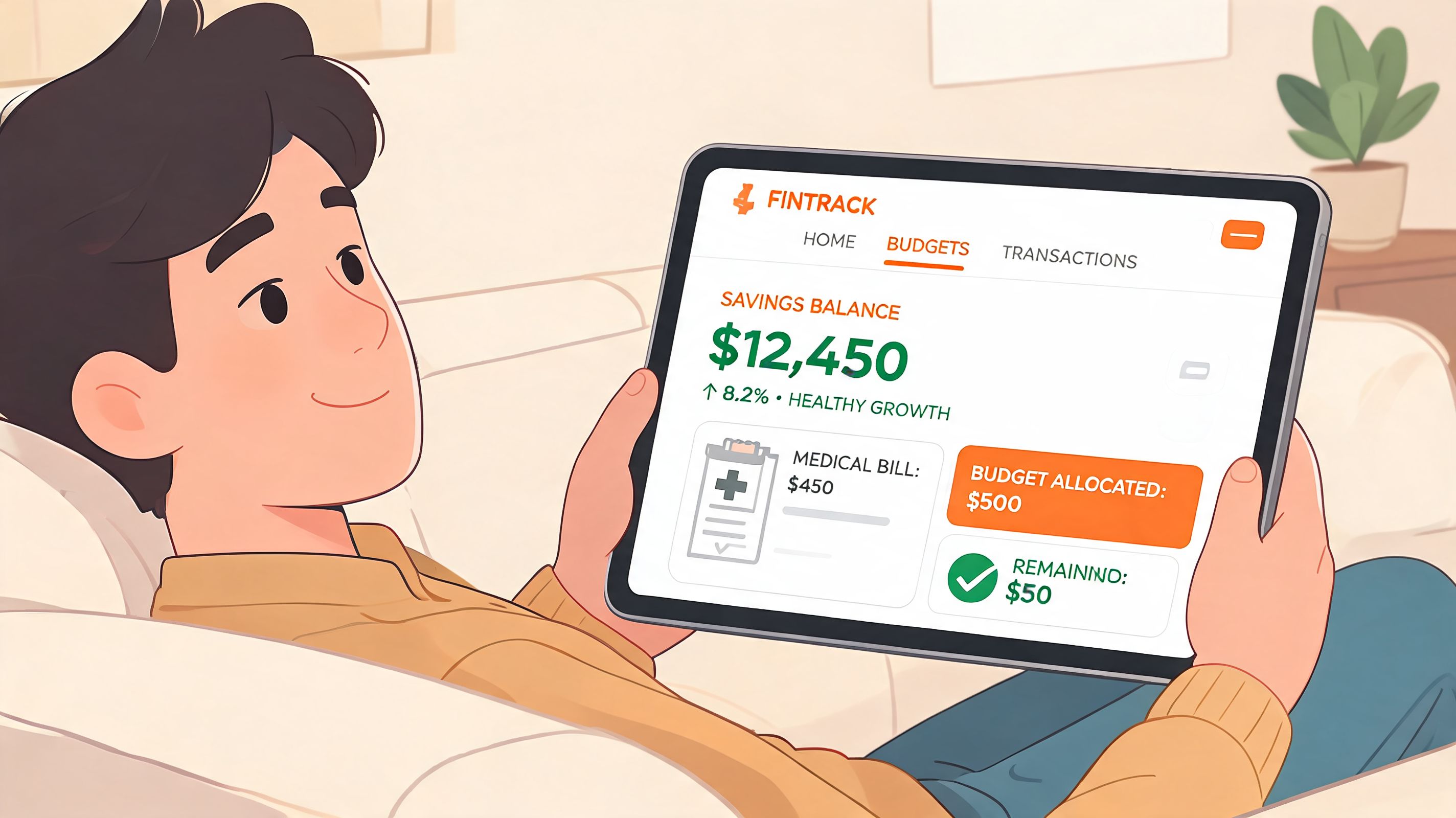
An HSA changes that experience. Instead of treating healthcare as a budget ambush, you treat it like a category you've prepared for. The account sits there waiting, much like an emergency fund built specifically for eligible medical expenses. If you already understand the value of setting aside money for surprises, the logic is similar to keeping a dedicated buffer for medical shocks alongside your emergency fund.
Before and after an HSA
Without an HSA, a medical bill often triggers a chain reaction:
- You dip into chequing and hope the timing works.
- You use a credit card and promise yourself you'll pay it off quickly.
- You postpone care because the cost feels hard to absorb.
With an HSA, the same situation feels more controlled:
- You pay from a designated account that exists for this purpose.
- You keep your regular budget intact for housing, food, and other essentials.
- You make decisions based on care needs, not just this month's bank balance.
Medical costs are stressful enough. Your payment method shouldn't add to that stress.
That's the first big benefit people notice. An HSA brings order to something that usually feels chaotic. It won't make healthcare cheap, but it can make it more manageable.
Why this matters beyond one bill
The shift is emotional as much as financial. When you know you've got a separate pool for qualified expenses, you stop seeing every doctor visit as a threat to the rest of your plan. That peace of mind matters.
And for many people, that's the doorway into the bigger health savings accounts benefits. It starts with avoiding short-term budget damage. Then it grows into smarter tax planning and, eventually, a long-term savings strategy.
Understanding the Powerful Triple Tax Advantage
An HSA offers three separate tax benefits, which is why it stands out from ordinary savings accounts used for healthcare spending. If you qualify, it can help at three different moments in the account's life: when money goes in, while it stays in the account, and when you use it for eligible medical costs.
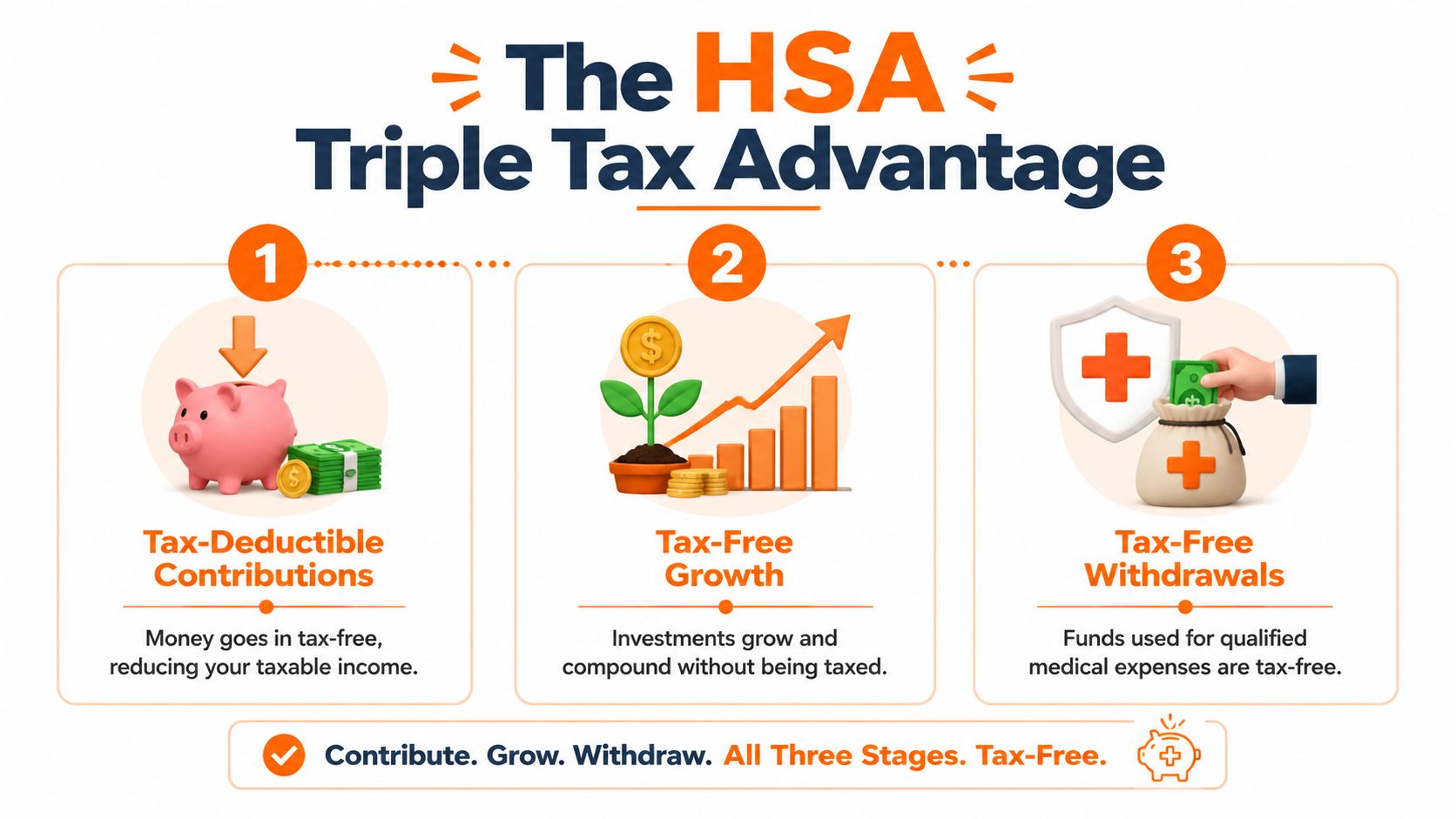
That timing matters.
A regular checking or savings account usually helps you set money aside. An HSA can do more than that. It can lower taxes now, reduce tax drag while the money grows, and let you spend on qualified care without another tax hit later. That combination is rare, and it explains why some people start by using an HSA for prescriptions or doctor visits, then gradually treat it as part of a longer-term retirement plan.
The three parts that make HSAs special
Contributions can lower taxable income
Money you contribute to an HSA can reduce your federal taxable income. If the contribution comes through payroll, you may also avoid some payroll taxes. That first benefit is the part people notice on a pay stub or tax return.Growth inside the account is not taxed each year
Some HSAs function like a cash account at first. Others let you invest once your balance reaches a certain threshold. In either case, the main idea is the same. Interest, dividends, and investment gains can stay in the account without creating an annual tax bill, which is the basic benefit behind how tax deferral works.Qualified withdrawals are tax-free
If you use HSA funds for eligible medical expenses, you do not pay federal tax on those withdrawals. That gives you a clean path from saving to spending, as long as you keep good records.
A helpful way to remember this is to follow one dollar through the account. It may go in with a tax break. It may grow without yearly taxes slowing it down. It may come out tax-free for qualified care. Few accounts offer all three.
Why this matters over the full life of the account
Early on, an HSA often works like a medical spending tool. You contribute, keep cash available, and use it for near-term expenses.
Later, the same account can take on a second job. If you can cover smaller medical bills from regular cash flow and leave the HSA invested, the account has more time to compound. That is where the lifecycle of an HSA becomes powerful. It can start as a shock absorber for this year's healthcare costs and mature into a pool of tax-advantaged money you may use years from now.
Practical rule: The more intentionally you track contributions, receipts, and withdrawals, the easier it is to use an HSA well both now and later.
Where people get confused
Federal tax treatment is what usually gets the attention, but state tax treatment is not always identical. Some states follow the federal rules closely. Others handle HSA deductions or earnings differently. Check your own state rules before assuming every tax benefit applies in exactly the same way.
Payroll contributions can also blur what is happening. Because the money leaves your paycheck automatically, it is easy to focus only on the account balance and miss the tax savings happening in the background. A simple monthly review helps. Look at how much went in, whether it stayed in cash or moved into investments, and whether you saved the receipt for any qualified expense you paid.
If you want a plain-language primer before diving deeper, Pounds Health Insurance has a helpful explanation that can help you discover health savings accounts in more everyday terms.
A simple way to remember it
| Stage | What happens |
|---|---|
| On the way in | Contributions may reduce taxable income |
| While it stays saved or invested | Growth can compound without annual federal tax |
| On the way out for qualified care | Withdrawals can be tax-free |
That three-step path is the core HSA advantage. It supports current medical spending, but it also rewards careful tracking and patient investing over time.
HSA Eligibility and 2026 Contribution Rules
An HSA starts with a gatekeeping rule. Before it can work like a spending account now or a retirement tool later, you have to qualify in the first place.
The main question is simple. Do you have an HSA-qualified high-deductible health plan, or HDHP? If the answer is no, the account is off the table. If the answer is yes, then the next rules decide whether you can contribute for the full year or only part of it.
Quick eligibility checklist
You can generally contribute to an HSA when all of these are true:
- You have an HSA-qualified HDHP through an employer plan or the individual market.
- You are not enrolled in Medicare.
- You do not have other disqualifying coverage that blocks HSA eligibility.
- You track timing carefully if your coverage changes during the year.
That timing point trips people up. HSA eligibility works a bit like a month-by-month switch. If you become eligible in June, your contribution room may not be the same as someone who was eligible since January. If you lose eligibility midyear, you may need to adjust payroll deductions so you do not overcontribute.
If you want a plain-English reference for plan basics and eligible product categories, DME Superstore's FSA/HSA guide is a helpful companion.
2026 limits to know
For 2026, the IRS set the HSA contribution limits at $4,400 for self-only coverage and $8,750 for family coverage in IRS Revenue Procedure 2025-19.
Those numbers are your annual cap from all sources combined. Your payroll deductions count. Employer contributions count too. If your employer puts money in, that reduces how much extra you can add on your own.
If you are age 55 or older, the usual catch-up contribution rule can also apply. Check your HSA provider or tax professional before setting your final amount so your payroll election matches your actual room.
A practical way to use the limit is to decide what job you want the HSA to do this year. If you expect to spend from it right away, steady paycheck contributions may fit best. If you want to build it into a longer-term medical reserve, you may want to fund it earlier and keep better records from day one. A good list of HSA-eligible expenses and receipts to track makes that easier.
A key nuance for California residents
California does not follow the federal HSA tax treatment. The state generally does not give you a California tax deduction for HSA contributions, and HSA earnings are also treated differently for California tax purposes. The California Franchise Tax Board's Health Savings Accounts page explains the state rules directly.
That does not erase the federal benefit. It changes the math.
If you live in California, it helps to picture your HSA as one account wearing two tax hats. Federal rules may reward contributions, growth, and qualified withdrawals. California may not. That means your tracking system matters more, especially if you invest part of the balance and plan to keep the account for many years.
A practical contribution approach
Keep the setup simple and review it like you would any other automatic savings plan:
- Confirm your health plan is HSA-qualified in the plan documents.
- Check how much your employer contributes, if anything, before choosing your own payroll amount.
- Set a contribution pace that fits your cash flow so you can keep it up all year.
- Review eligibility after life changes such as a new job, marriage, divorce, or Medicare enrollment.
- Save records as you go, not at tax time, so the account can serve both current spending and long-term planning.
Consistency matters here. An HSA often begins as a simple bill-paying account, then grows into a medical backup fund, and for some households, becomes another retirement bucket. That full lifecycle works best when eligibility, contributions, and recordkeeping stay clean from the start.
What You Can Buy With Your HSA Funds
An HSA becomes easier to value once you stop thinking of it as an abstract tax account and start thinking of it as a payment tool for real life. You go to the dentist, fill a prescription, replace broken glasses, or deal with an unexpected urgent care bill. Those are the moments when the account becomes useful.
Research from the Employee Benefit Research Institute on HSA balances, distributions, and investing activity through 2022 found that more than 50% of accountholders withdrew funds in a given year, and the average withdrawal was $1,868. That tells you many people use HSAs for immediate out-of-pocket costs, not just long-range savings.
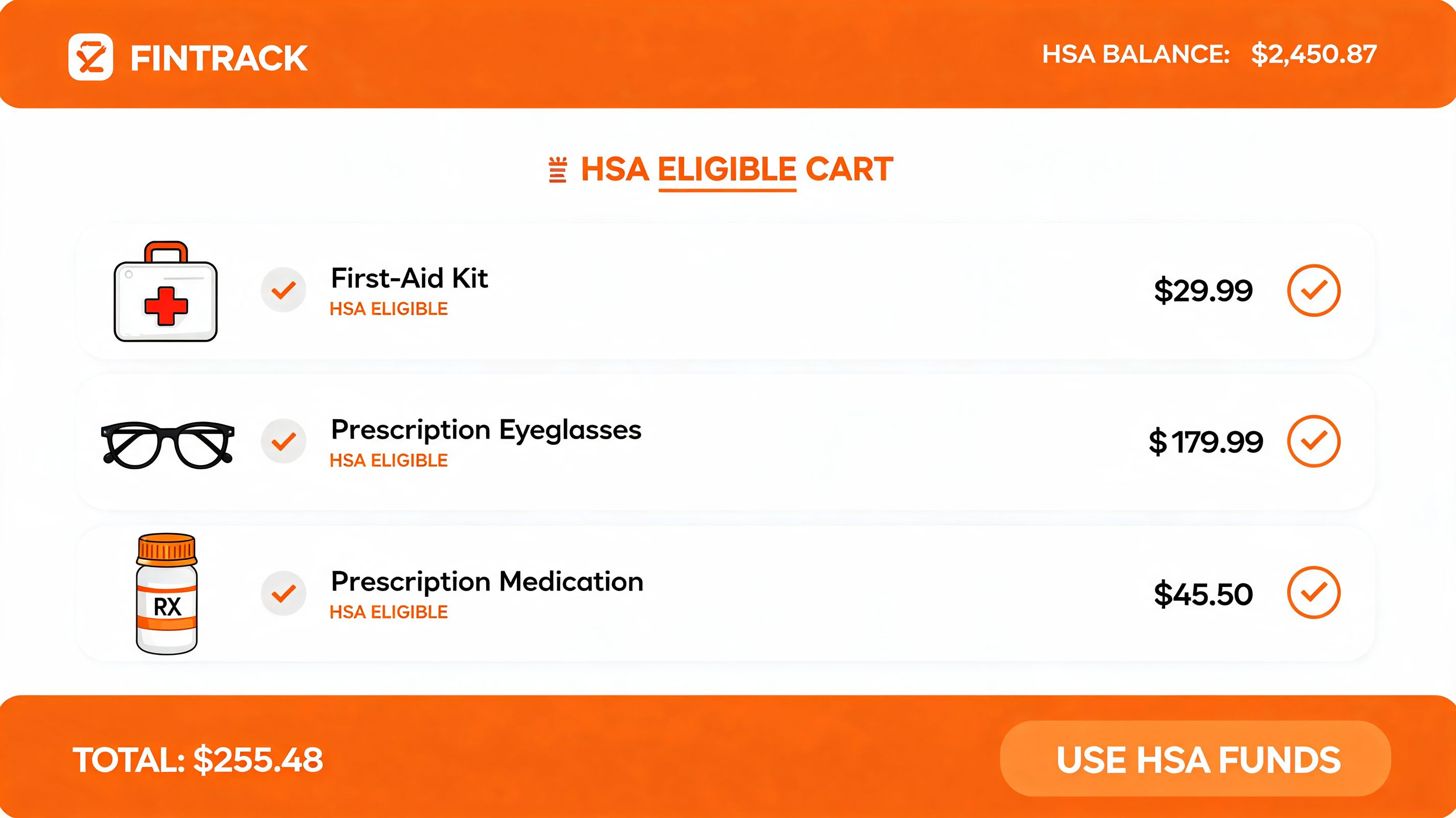
Common expenses people often pay from an HSA
These are the kinds of costs many people expect:
- Doctor visits and clinic bills for routine or unexpected care
- Prescription medications picked up at the pharmacy
- Dental care such as cleanings, fillings, or other eligible treatment
- Vision care including eye exams and eyeglasses
Expenses that sometimes surprise people
A few categories catch people off guard because they don't always think of them as “medical” in the traditional sense:
- Certain specialist treatments that qualify under HSA rules
- Medical devices and supplies when they're eligible
- Follow-up care after a procedure that creates several smaller charges instead of one large bill
If you want a broader spending framework that helps separate medical, household, and discretionary purchases, this guide with a list of expenses to track in your budget can help you keep categories clean.
Keep the receipt even if you're sure the expense qualifies. Good records matter more than memory.
A simple year-in-the-life example
Say you start the year with a routine dental appointment. A few months later, you need new prescription glasses. Then autumn brings an unplanned trip to urgent care and a pharmacy refill. None of those costs is unusual on its own, but together they can put pressure on your monthly budget.
That's the practical strength of an HSA. It gives you one place to pay for a string of qualified healthcare expenses without mixing them into rent, groceries, and every other category competing for the same chequing balance.
What happens if you use HSA money for the wrong thing
This part is important. HSA money is not meant for ordinary, non-medical spending before the rules allow it. If you take funds for a non-qualified expense, you can face income tax plus a 20% penalty before age-based exceptions apply. That's why it's worth checking eligibility before you swipe the card or request reimbursement.
When in doubt, pause. It's better to confirm an expense than fix a tax mistake later.
Turning Your HSA into a Retirement Powerhouse
Say you pay a $300 doctor bill from your regular checking account today, save the receipt, and leave your HSA invested instead. Years later, you can reimburse yourself for that old qualified expense if you kept the records. That is the shift that turns an HSA from a simple spending account into a longer-term planning tool.
Many account holders stop at the first use case, which is understandable. They treat the HSA like a medical wallet. But the account has a second life. If your budget can absorb some current healthcare costs, the HSA can also work like a retirement account reserved for future medical expenses.
The practical idea is simple. Keep enough cash in the HSA for expected near-term care. Once you are above the provider's required cash minimum, consider investing the rest in broad, low-cost funds if that option is available. Cash handles this year's needs. Investments are there for the bills your older self is more likely to face.
That split approach helps reduce a common point of confusion. People often assume they must either spend the HSA now or invest all of it. You do not have to choose one extreme. A blended setup is often more realistic.
Why the long-term approach can matter
Healthcare spending often rises with age. An HSA gives you a way to set aside money specifically for that category while keeping the tax advantages discussed earlier. Used carefully, it can fill a gap that other retirement accounts do not target as directly.
There is also a timing benefit. Qualified expenses paid out of pocket today can potentially be reimbursed later, which means the money inside the HSA may have more time to grow before you pull it out. That only works if you keep clear records. If you want a good model for organizing that paperwork, these digital workflows for tax season are a helpful reference.
A well-run HSA can serve two jobs at once. It can cover current medical costs when needed and build a dedicated pool for retirement healthcare later.
How to place an HSA beside your other retirement accounts
An HSA is not a replacement for a workplace plan or an IRA. It is another bucket with a different job. Your 401(k) or similar plan helps fund general retirement living costs. Your HSA is better viewed as a healthcare reserve with unusually favorable tax treatment when used for qualified medical expenses.
If you already understand why account structure matters in retirement planning, the comparison is easier. Employer matching teaches the same broad lesson. Put money in the account that gives the best advantage for that purpose. This explanation of how RRSP matching works in employer retirement plans is Canadian, but the logic carries over well.
Here is a simple way to decide how aggressive to be:
| If your situation is... | A reasonable HSA approach |
|---|---|
| You expect regular medical bills this year | Hold a larger cash cushion inside the HSA |
| You can cover current care from regular income | Keep your near-term cushion, then invest the rest |
| You are focused on retirement planning | Treat the HSA as part of your future healthcare strategy and review it each year |
One caution before you invest
Money that may be needed soon should usually stay in cash. Investments can fall right when you need to pay a bill. A good rule of thumb is to match the money's job to its time horizon. Near-term dollars stay stable. Long-term dollars can take more market risk.
That is the full lifecycle of a strong HSA strategy. Start by using it for current care. Then, as your cash flow improves and your records improve, let part of the account grow into a retirement-focused healthcare fund.
Simple Ways to Track Your HSA Contributions and Receipts
The biggest HSA mistake isn't always contribution-related. Often, it's poor record-keeping. People save the receipt in a drawer, lose the invoice email, forget what was reimbursed, and then spend tax season trying to reconstruct a year of medical spending from memory.
A simple system solves most of that. You don't need a spreadsheet marathon. You need a repeatable routine.
A three-step system that works
Track contributions as they happen
Check payroll deductions and any direct contributions you make yourself. You want one reliable record that shows what went in and when.Save proof of every qualified expense
Keep receipts, invoices, explanation-of-benefits documents, and pharmacy confirmations. If you reimburse yourself later, you'll want a paper trail.Match reimbursements to the original expense
The mistake isn't just losing receipts. It's losing the connection between the receipt and the withdrawal.
What to keep in your records
A clean HSA file should usually include:
- Date of service so you know when the care happened
- Provider or merchant name so the charge is identifiable
- Amount paid to match the receipt with the card charge or reimbursement
- Short note on what it was for in case the description isn't obvious
For anyone trying to build a more organised habit before filing season, Smart Receipts has a practical guide on digital workflows for tax season that fits well with HSA documentation.
Use tools, not a shoebox
The old method was a folder or envelope full of paper receipts. It works until it doesn't. A digital workflow is easier to search, easier to back up, and much easier to review when you need to confirm whether a past expense was already reimbursed.
If you want transaction-level visibility, an AI expense tracker for recurring and one-off spending can help you spot medical charges quickly and keep them separate from the rest of your budget.
Good HSA records don't need to be complicated. They need to be consistent.
A short monthly review routine
At the end of each month, take five minutes and ask:
- Did my HSA contribution land correctly?
- Did I pay any medical expense that should be saved or tagged?
- Did I reimburse myself for anything, and do I have the receipt attached?
That small habit can save a surprising amount of time later. More significantly, it helps you use the account confidently instead of guessing.
HSA FAQs What Happens with Medicare or Job Changes?
You build your HSA one stage at a time. Early on, it may act like a medical checking account. Later, it can become a receipt-backed reserve and even a retirement health fund. The rules get more important when your coverage changes, because that is when contributions can stop even though the account itself stays with you.
What happens when you enroll in Medicare
Once you enroll in Medicare, you generally cannot keep contributing to an HSA. The IRS explains this directly in Publication 969 on Health Savings Accounts and Other Tax-Favored Health Plans.
The money already in the account remains yours. You can still use it tax-free for qualified medical expenses, including many costs that come up in retirement. If you take money out for a non-medical reason after age 65, the extra penalty no longer applies, but you will usually owe ordinary income tax on that withdrawal.
A practical tip matters here. Medicare enrollment can be retroactive in some cases, so people who plan to work past 65 often stop HSA contributions a bit early and confirm the timing with payroll or a tax professional. That helps avoid an excess contribution you later have to fix.
What if you change jobs
A job change does not erase your HSA. The account is portable, which means it stays yours even if your employer, health plan, or payroll system changes.
What can change is your ability to add new money. If your next health plan is HSA-eligible, you may keep contributing as long as you meet the rules. If the new plan is not HSA-eligible, your balance can still be spent on qualified expenses, but new contributions usually need to stop.
This is a good time to do a quick handoff check:
- confirm your final payroll contribution from the old employer
- check whether any employer contribution is still pending
- review your new plan's deductible and HSA eligibility
- keep records of any medical expenses you paid out of pocket during the transition
That short review helps the account keep serving the same long-term purpose, even while your benefits are changing around it.
What if you have another health account
Other health accounts can interfere with HSA eligibility. A general-purpose health FSA is a common example. If you or your spouse has one that can reimburse your expenses before you meet the HSA rules, that can make you ineligible to contribute.
The safe approach is simple. Read the benefits summary before you elect coverage, and verify how each account works together. Contribute after you confirm the setup, not before.
The HSA usually stays straightforward. Coverage changes are the point where a quick eligibility check can save you from tax cleanup later.
Over time, that discipline pays off. You can start with small medical purchases, keep better records as balances grow, and then use the account more deliberately in retirement. The full benefit of an HSA comes from handling each life stage correctly, not just opening the account and hoping for the best.
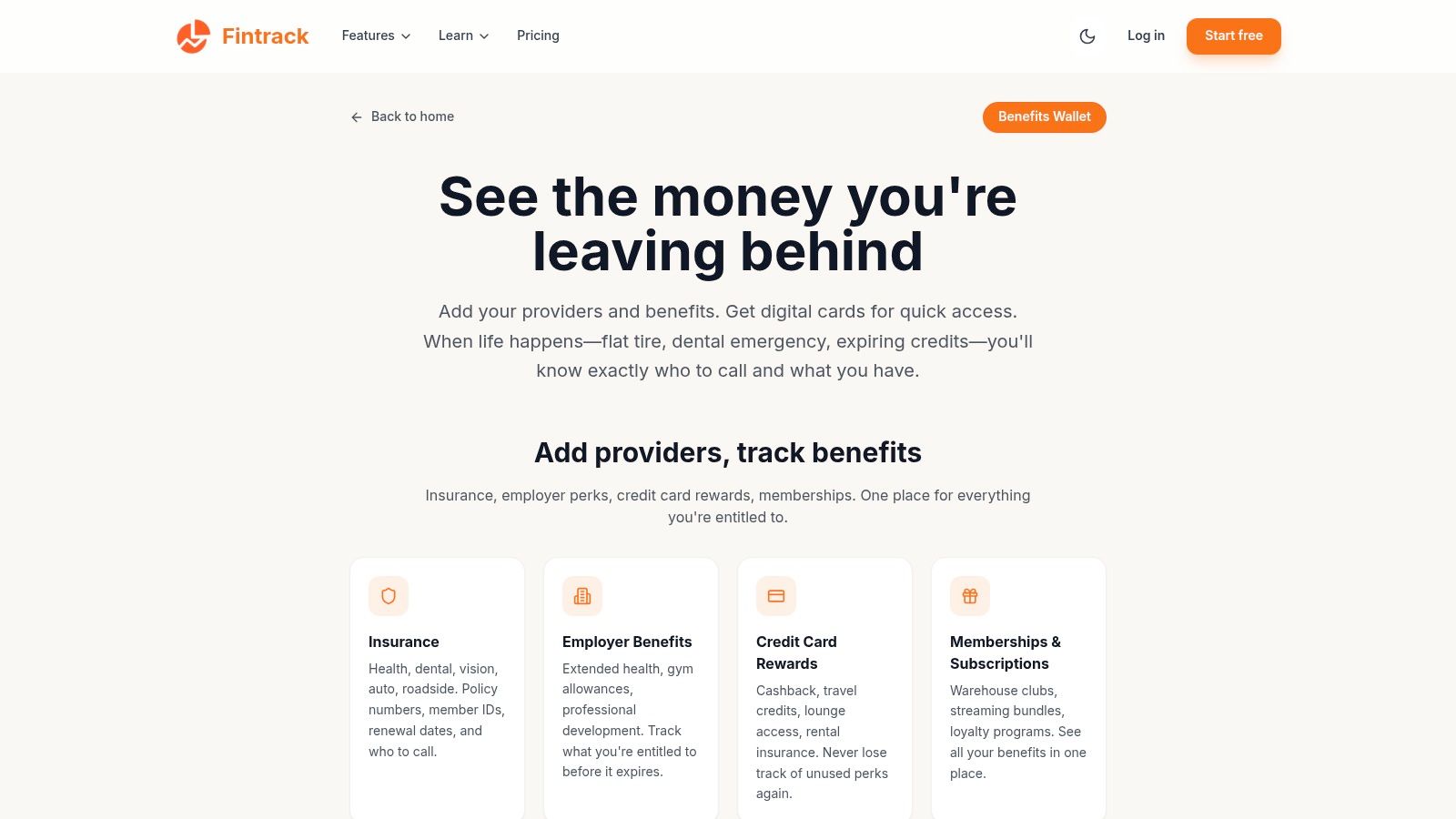
If you want an easier way to stay on top of medical spending, contributions, and reimbursement records, Fintrack can help you organize the moving parts in one place. Its Benefits Wallet and spending tools fit especially well if you want a cleaner system for tracking eligible expenses without relying on scattered notes and receipt piles.