
Meta description: Learn how to stop overspending with a practical system for tracking expenses, spotting triggers, cutting waste, and building a spending plan you can stick with.
A coffee on the way to work. A quick tap for lunch because the day got hectic. A sale item you bought because it was “only a few dollars more” to get free shipping. None of those decisions feels dramatic in the moment.
Then the month ends, and your account balance tells a different story.
That's how overspending usually happens. Not through one reckless decision, but through a string of small, ordinary ones that feel justified at the time. If you're trying to figure out how to stop overspending, the fix usually isn't guilt or a punishing budget. It's a better system.
For many people, the stress is shared. According to a TD Bank report on 2026 spending intentions, 51% of Canadians surveyed plan to reduce their spending in 2026, with many focusing on high-interest debt and cutting subscriptions that no longer add value. That tells you something important. You're not behind. You're dealing with a common problem in a very expensive environment.
It All Starts with One Small Purchase
It often starts with something so small you barely register it.
You grab a coffee because you're running late. Later, you order takeout because you're tired. In the evening, you scroll on your phone, see a flash sale, and buy something “useful” before the discount disappears. By itself, each purchase seems harmless. Together, they create that end-of-month feeling of confusion and regret.
I've seen this pattern in almost every kind of spender. Some people spend when they're stressed. Others spend when they're bored, celebrating, or trying to make life feel easier. The common thread isn't irresponsibility. It's that the purchase solves a feeling in the moment, while the cost shows up later.
Why small purchases matter so much
Small spending is sneaky because it doesn't trigger the same internal alarm as a large purchase. Individuals typically pause before booking a holiday or buying a new laptop. Fewer people pause before tapping a card for a snack, adding one more item to an online basket, or paying for convenience.
Practical rule: If a purchase feels too small to matter, that's exactly when it's worth noticing.
That doesn't mean every coffee or treat is a mistake. It means unplanned spending deserves more attention than it typically receives. If coffee runs are one of your weak spots, practical swaps like making drinks at home can help. This guide on how to brew coffee for less is a good example of cutting a recurring habit without feeling deprived.
Control starts with awareness, not shame
If you've been asking how to stop overspending, start by dropping the idea that you need perfect discipline. You don't. You need to notice the pattern sooner.
That shift matters because shame makes people avoid their numbers. Avoidance leads to more guesswork, more emotional spending, and more stress. A calm, honest look at your habits works better than a harsh reset that lasts three days.
First Understand Why You Overspend
Overspending usually isn't a maths problem first. It's a behaviour problem first.
People often assume they spend too much because they “need more self-control”. In practice, spending habits are tied to moods, routines, social cues, and convenience. If you don't know what sets off the purchase, you'll keep treating the symptom instead of the cause.
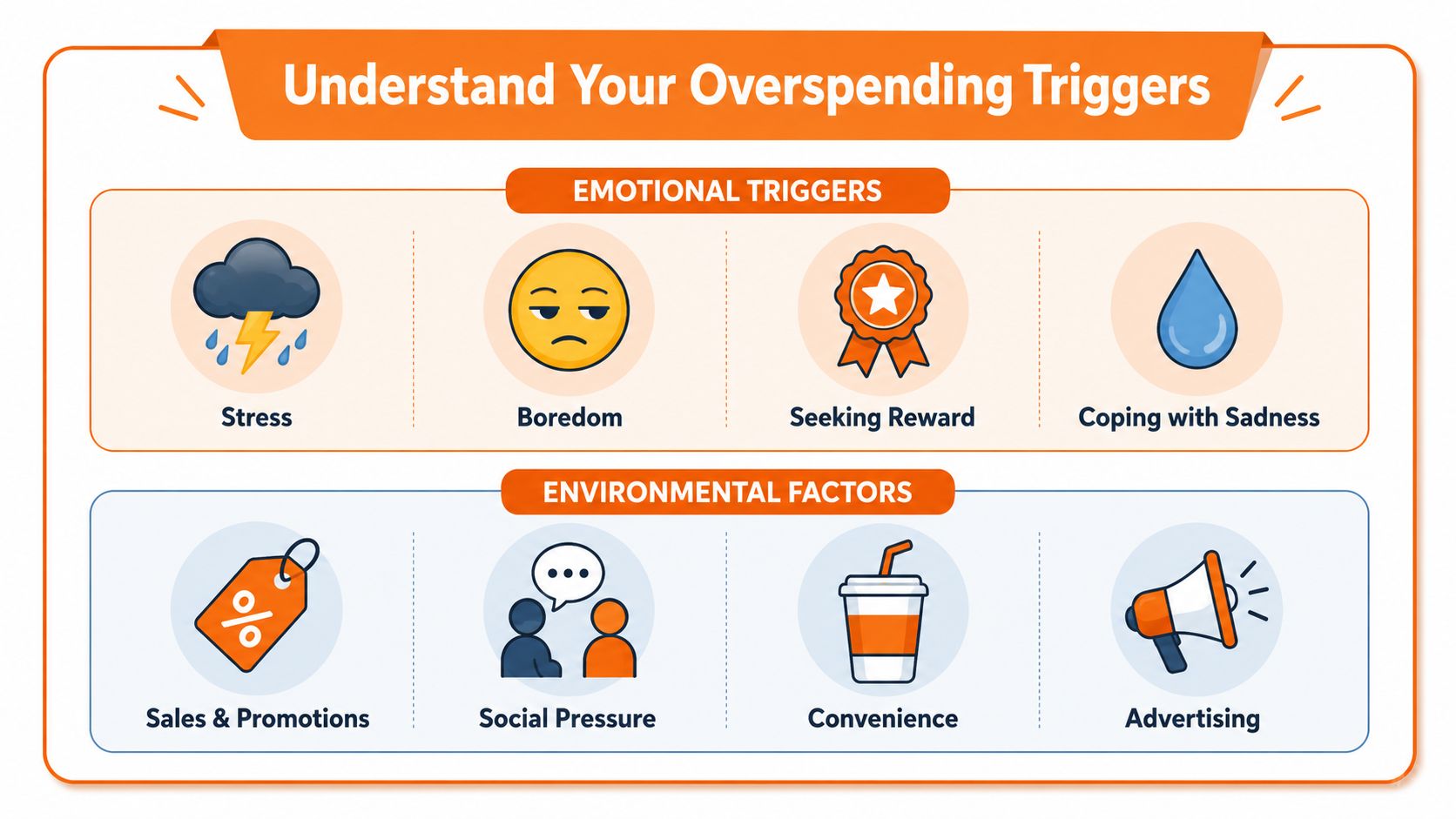
The two trigger buckets to watch
Some triggers come from inside you. Others come from around you.
According to CNBC's coverage of financial therapist Vickery's guidance, ignoring emotional triggers is tied to 65% of overspending episodes, and self-awareness increases recovery speed by 40% when people identify triggers and adjust spending patterns to fit their lives in this report on curbing overspending. That lines up with what many people discover once they start paying attention. The spending itself is often the last step in a chain.
Here's a useful way to sort your own patterns:
- Emotional triggers: stress after work, boredom at night, wanting a reward, feeling low, celebrating good news
- Environmental triggers: sale emails, shopping apps on your phone, social pressure, food delivery shortcuts, influencer content, one-click checkout
A quick self-check
Use this checklist without judging yourself:
- When do you spend most often? Late at night, weekends, payday, after difficult workdays
- What are you usually feeling? Flat, anxious, excited, lonely, rushed
- Where does the spending happen? In-store, on social media, on food apps, during errands
- What story do you tell yourself? “I deserve it”, “It's on sale”, “It's only a little purchase”, “I'll make up for it later”
The goal isn't to become a different person. It's to spot the moment before autopilot takes over.
If you're not sure where to begin, reading about why budgeting is important can help frame budgeting as awareness, not restriction.
What doesn't work well
Rigid rules can backfire when they ignore your real life. A spending plan that assumes you'll never eat out, never shop when tired, and never respond to stress isn't realistic.
What works better is identifying your personal pattern. If stress drives online shopping, the fix isn't “be better”. The fix is changing what happens between the stress and the checkout page.
Track Every Dollar to See the Full Picture
If you want to know how to stop overspending, track your money closely enough that nothing hides.
Overspending isn't always limited to obvious categories. The leaks are usually scattered. A coffee here, app delivery there, a forgotten subscription, a low-cost digital purchase that barely registers. These aren't always large enough to feel urgent, but they can subtly shape the whole month.
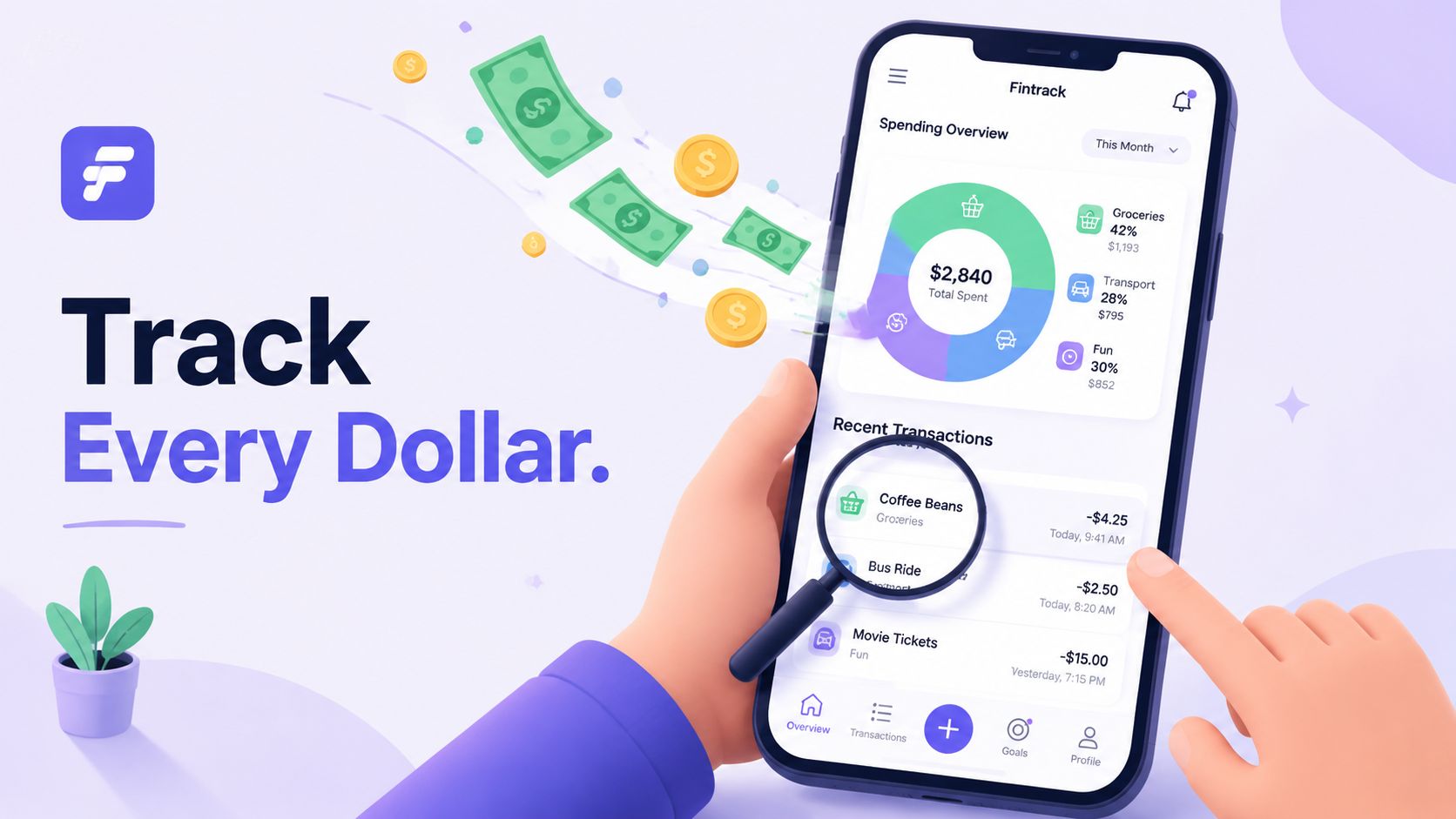
The hidden problem with small spending
One reason small purchases are hard to control is that people mentally separate them from “real” spending. But those tiny transactions still come out of the same account.
A 2025 study found that 68% of California consumers underestimate their weekly micro-spending by over $40, as noted in this discussion of micro-spending blind spots. That gap explains why so many people feel careful and still end up over budget.
Track the small purchases first. Large bills are usually obvious. The leaks aren't.
Pick a tracking method you'll actually keep using
The best system is the one you won't abandon after four days. Here are the usual options:
| Method | Best for | Trade-off |
|---|---|---|
| Notebook | People who like writing things down | Easy to forget when you're busy |
| Spreadsheet | People who want full control | Takes effort to maintain |
| App with manual entry | People who want convenience without linking bank accounts | Requires a daily habit |
| App with categorisation tools | People who want faster visibility into spending patterns | You still need to review and correct categories |
For readers in Canada, manual entry matters more than many articles admit. Some people don't want to connect bank accounts, and some institutions don't make syncing simple. That's why bank-free tracking can be a practical option, not a compromise.
One option is Fintrack's transaction tracking tools, which help categorise expenses and support manual entry. If you're new to this habit, it also helps to understand what expense tracking is and why it works better than rough estimates.
What to track for the next month
Don't overcomplicate the first pass. Capture:
- Every purchase amount
- The category
- Whether it was planned
- What was happening right before you spent
That last part is where the core insight lives. “Groceries” is useful. “Groceries bought while hungry and rushed” is more useful. “Late-night online order after stressful day” is even better.
This isn't about catching yourself out. It's about making your spending visible enough that you can change it.
Create a Spending Plan You Can Stick With
A budget that feels like punishment won't last. A spending plan has a better chance because it gives your money a job without pretending you're a robot.
Once you've tracked your money for a while, patterns start to show up. That's when you can build a plan around your actual life instead of your ideal life. You don't need a perfect template. You need numbers that reflect how you live and what you're trying to change.
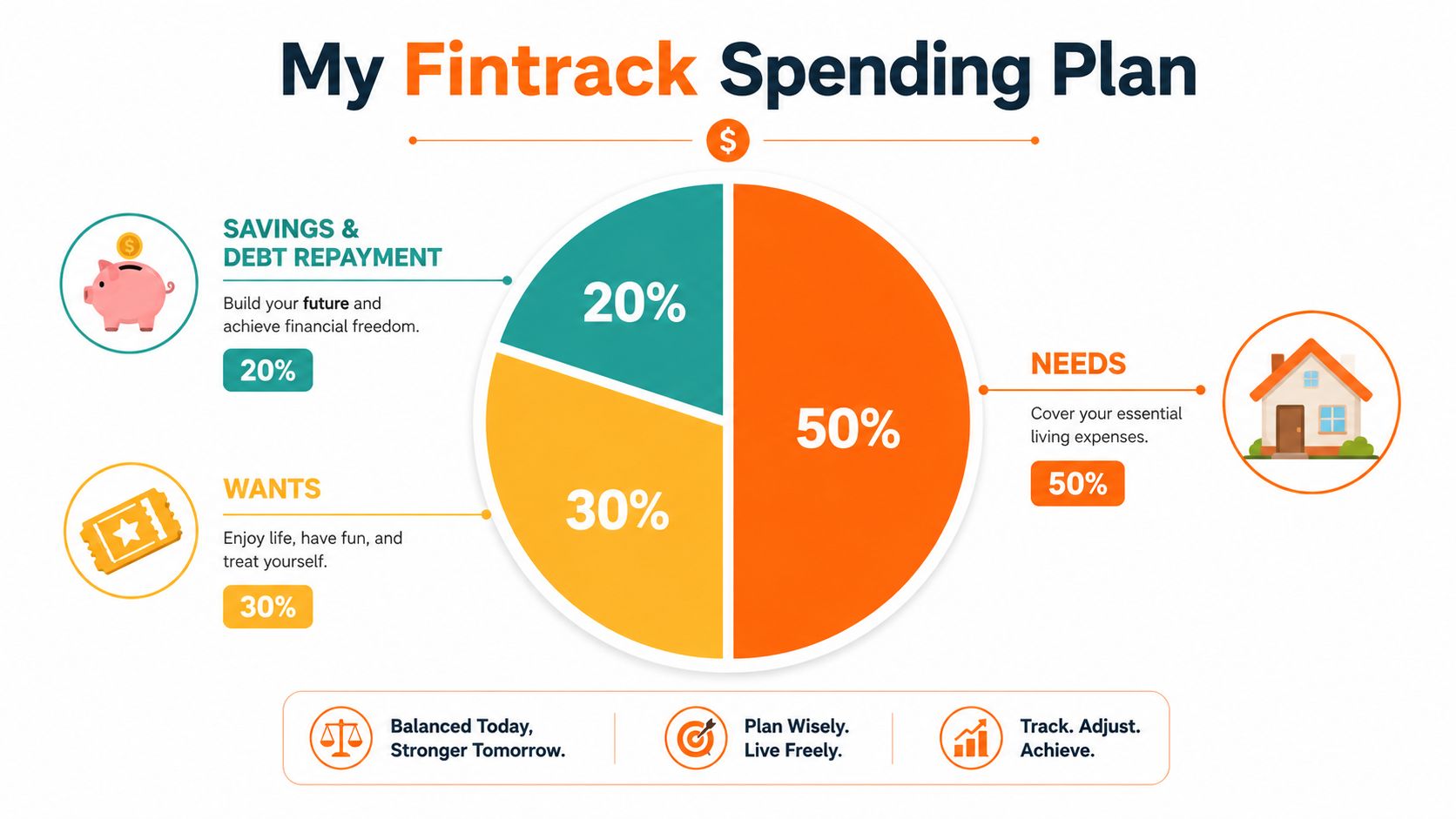
Use 50 30 20 as a starting point
The 50/30/20 rule is simple:
- 50% for needs such as housing, groceries, transport, utilities
- 30% for wants such as dining out, shopping, hobbies, entertainment
- 20% for savings and debt repayment
This isn't a law. It's a reference point.
The useful part is the “wants” category. According to the U.S. Bureau of Labor Statistics consumer expenditure release for Los Angeles, discretionary spending on wants in California often exceeds the recommended 30% of income under the 50/30/20 rule. That's where many households lose breathing room.
Build around your real weak spots
A spending plan works better when it reflects trade-offs instead of fantasy. If takeout is your stress valve, don't set that category to zero and expect success. Give it a limit and decide what matters more than the extra orders.
Try this approach:
- Protect essentials first: rent, groceries, transport, minimum debt payments
- Choose your priority wants: maybe dinners out matter more than clothing, or hobbies matter more than impulse online shopping
- Assign savings early: don't wait to “see what's left”
- Trim low-value spending: focus on purchases you barely remember enjoying
If style spending is one of your common leak points, the answer doesn't always have to be “buy nothing”. Sometimes it's learning to buy more selectively. Practical guides like tips for luxury looks for less can help you keep the aesthetic without the constant overspend.
A good spending plan leaves room for real life. A bad one only works on paper.
Keep the plan flexible
Rigid budgets often fail because life moves. Groceries run high one month. Social spending spikes during holidays. Transport costs change. If you treat every variation as failure, you'll stop using the system.
A simple method like the pay yourself first approach can keep the plan grounded. Save or pay debt first, then spend the rest with clearer limits. That way, even imperfect months still move you forward.
Put Guardrails in Place for Impulse Spending
Awareness helps. A spending plan helps. But when the impulse hits, you need friction.
Most overspending happens in fast moments. You're tired, the card is already saved, the email says the sale ends tonight, and buying feels easier than thinking. Guardrails work because they slow the sequence down just enough for your better judgment to catch up.
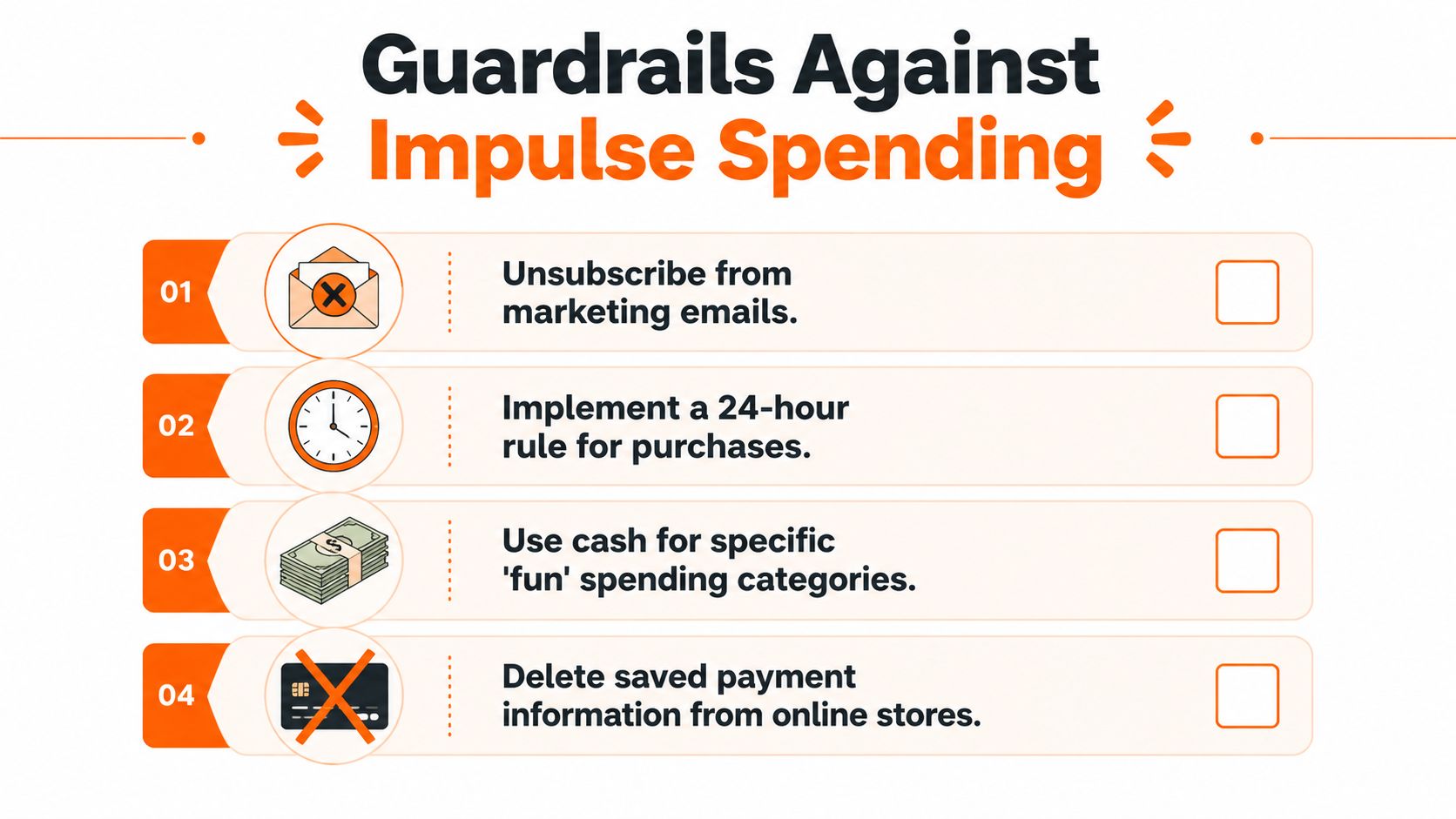
Four guardrails that work in real life
The strongest guardrails are simple and slightly annoying. That's the point.
Use a waiting rule for non-essential purchases
A California Health Care Foundation affordability resource notes that a 24-hour cooling-off period before purchases over $25 can reduce impulse spending by up to 40% among California consumers who often use credit cards and digital payment platforms. The pause gives you time to decide whether the urge is still there tomorrow.Delete saved payment details
If every purchase takes one tap, your guardrail is too weak. Make yourself enter the card manually.Unsubscribe from tempting promos
Sales emails create urgency for things you weren't planning to buy. If you don't see the offer, you don't need to resist it.Use cash for one problem category
Not for everything. Just one category where you tend to lose control, such as dining out or weekend spending.
Catch recurring waste early
Impulse spending isn't only about sudden purchases. It also shows up in recurring charges you stopped noticing.
Review subscriptions, trial conversions, app renewals, and memberships. If something still fits your life, keep it. If it drains money every month, unnoticed, cut it. Tools built for subscription management can make those charges easier to spot before they pile up.
If tech purchases are one of your impulse categories, a better rule is to redirect the urge toward lower-cost alternatives instead of buying new by default. For example, if you're considering a replacement phone, researching where to buy refurbished iPhones UK shows how a slower, comparison-based process can reduce reactive spending.
Use a reset when the urge feels physical
Some spending urges are emotional, but they also feel physical. Restless. Pressurised. Immediate.
In those moments, try the 5-4-3-2-1 grounding method. Name five things you see, four sounds you hear, three sensations you feel, two scents you notice, and one taste. It sounds basic, but the pause interrupts the rush.
That matters because impulse spending feeds on speed. Slow the moment down, and the purchase often loses its pull.
Make Your Financial Review a Monthly Habit
The people who get spending under control aren't the ones who never slip. They're the ones who come back to the plan quickly.
That monthly review matters more than people think. Without it, overspending turns into a blur. With it, a bad month becomes information. You stop asking, “Why am I like this?” and start asking, “What happened, and what should I change?”
What to review each month
Block off a short money check-in and look at:
- Categories that went over
- Purchases you regret
- Spending that improved your life
- Subscriptions or repeat charges you missed
- One adjustment for next month
The point isn't to judge every line item. It's to keep your finances close enough that nothing drifts for months without your noticing.
According to the Financial Planning Association's discussion of overspending and the stages-of-change model, success is measured by a person's ability to recommit to financial goals after relapses, not by avoiding relapses entirely. That's a much healthier standard.
Missing the plan once isn't the problem. Quitting the review is.
A practical tool like a monthly bill tracker can make that check-in easier because it gives you a stable list of recurring obligations to compare against your actual spending.
Consistency is the win. Small course corrections, made regularly, do more than one dramatic reset ever will.
If you want one place to apply this system, Fintrack can help you see your spending clearly, catch patterns earlier, and turn monthly reviews into a habit instead of a scramble.