
Meta description: Learn what expense tracking is, why it matters, and how to start. See simple methods, habit-based tips, and ways to catch hidden recurring costs.
You check your account near the end of the month and feel that familiar question rise up: Where did all my money go? You know you paid rent or mortgage, bought groceries, filled the car, and tapped your card a dozen times without thinking much about it. But the full picture is blurry.
That's where expense tracking helps. It's not about judging every coffee or turning your life into a spreadsheet. It's about making your money visible so you can make calmer, smarter choices with it.
For many people, the hardest part isn't spending. It's remembering, sorting, and understanding spending patterns after the fact. Once you can see what happened, planning gets much easier.
What Is Expense Tracking Exactly
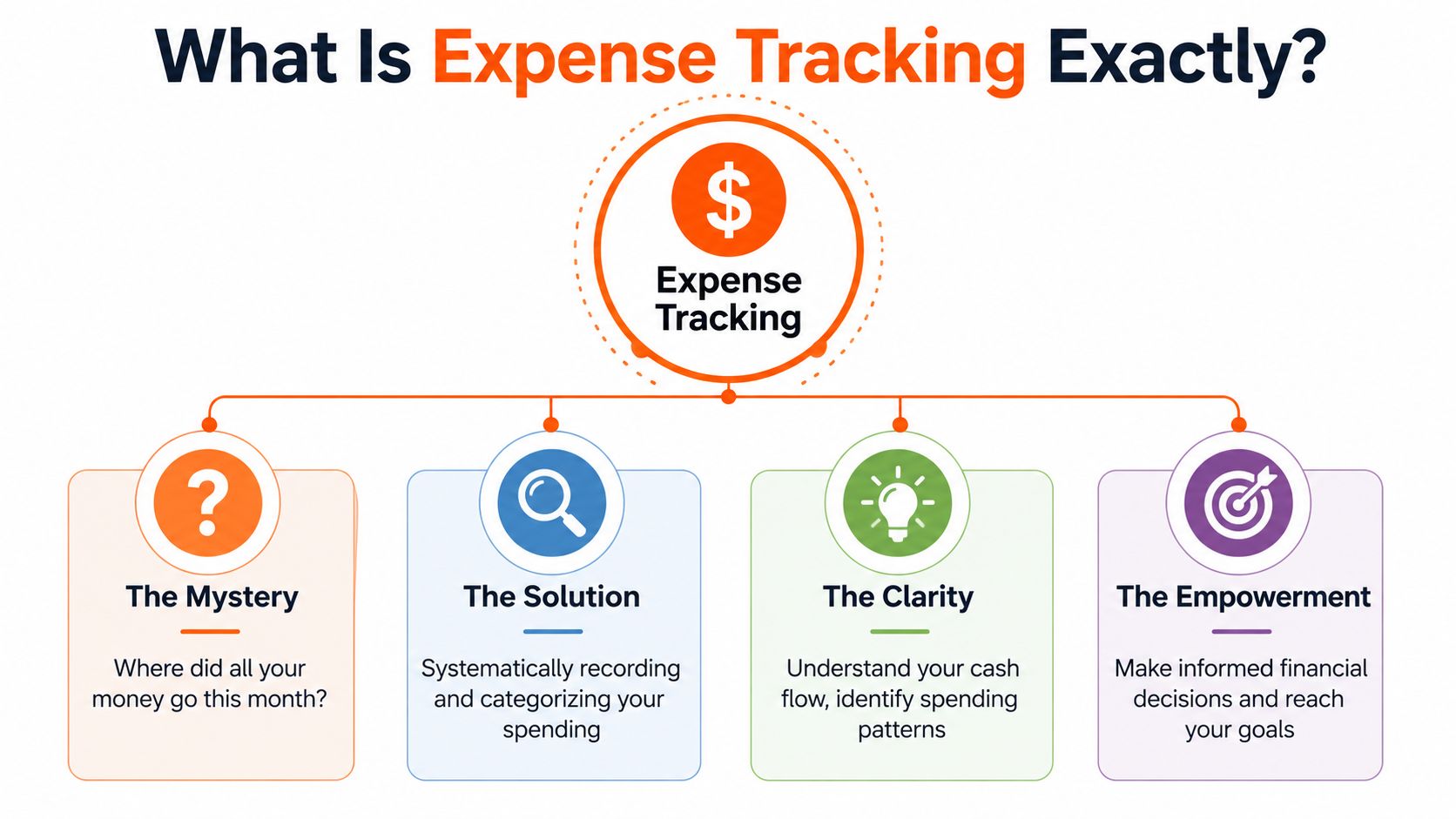
Expense tracking is the habit of recording where your money goes. That includes everyday purchases, bills, subscriptions, debt payments, cash spending, and one-off costs. In simple terms, it means keeping a reliable record of your outflows so you can understand them instead of guessing.
Expense tracking operates much like a fitness tracker for your money. A step counter doesn't shame you for how much you walked. It shows you what happened so you can adjust. Expense tracking works the same way. It turns vague feelings into useful information.
What gets tracked
At the most basic level, a good tracking system captures three things:
- The amount you spent
- The category it belongs to, such as groceries, transport, or housing
- The timing of the purchase, so you can spot patterns
Many people also track the merchant, payment method, notes, and whether the purchase was planned.
Why it matters in real life
For households, money moves quickly. In Canada, the average household spent about CAD 78,000 per year in 2019, with the top three categories being housing at 28%, transportation at 15%, and food at 12% according to the consumer spending reference. Without tracking, it's hard to see where tens of thousands of dollars go each year.
Expense tracking gives names to your spending. Once your money has labels, it stops feeling random.
If you want a simple way to see how tracking fits into the bigger picture, a good next read is this guide to a personal finance dashboard. And if you're also sorting out tax records or bookkeeping questions, this visual from Blue Sage Tax advisory can help you think about how financial information gets organised.

What expense tracking is not
People often confuse expense tracking with budgeting. They're related, but not the same.
| Tool | Main job |
|---|---|
| Expense tracking | Shows where your money went |
| Budgeting | Decides where you want your money to go |
You usually track first, then budget better. If you don't know what's already happening, any plan you make will be based on guesswork.
The Real Benefits of Knowing Where Your Money Goes
The biggest benefit of expense tracking isn't mathematical. It's emotional. When you stop guessing, money feels less chaotic.
A lot of financial stress comes from uncertainty. You sense that spending is drifting, but you can't point to the cause. Tracking replaces that fog with facts. You can see what's fixed, what changes week to week, and what gradually keeps piling up.
It helps you make clearer decisions
Once spending is visible, decisions get easier. You can tell the difference between a one-time splurge and a pattern. You can also see whether your spending matches what you care about.
Maybe you say travel matters most, but your extra money keeps disappearing into food delivery and random online orders. Tracking doesn't scold you. It shows the trade-off.
Practical rule: Don't ask, “Can I afford this?” Ask, “What does this spending push back or replace?”
There's another useful idea borrowed from business. Combining time and expense tracking helps reveal the true cost of activities and supports better resource allocation. In personal finance, that means understanding the financial impact of life choices and making more informed decisions, as explained in this time and expense tracking guide.
It reveals money leaks you don't notice day to day
Some spending feels too small to matter in the moment. But patterns matter more than single purchases. Tracking helps you catch things like:
- Recurring charges you forgot about
- Convenience spending that shows up when you're tired or rushed
- Weekend habits that look harmless individually but become a routine
- Duplicate spending such as buying groceries, then ordering takeout because there's no plan
If you want to connect this to the bigger idea of planning, this article on why budgeting is important is a useful follow-up.
It builds confidence, not restriction
Many people avoid tracking because they think it means giving up freedom. Usually the opposite happens. Clarity gives you more control over your choices.
You stop relying on memory. You stop making financial decisions based on guilt or panic. And you start directing money toward the things that matter most to you.
Common Ways People Track Expenses
There isn't one perfect method. The best system is the one you'll keep using. Some people want a low-tech routine. Others want automation.
Pen and paper
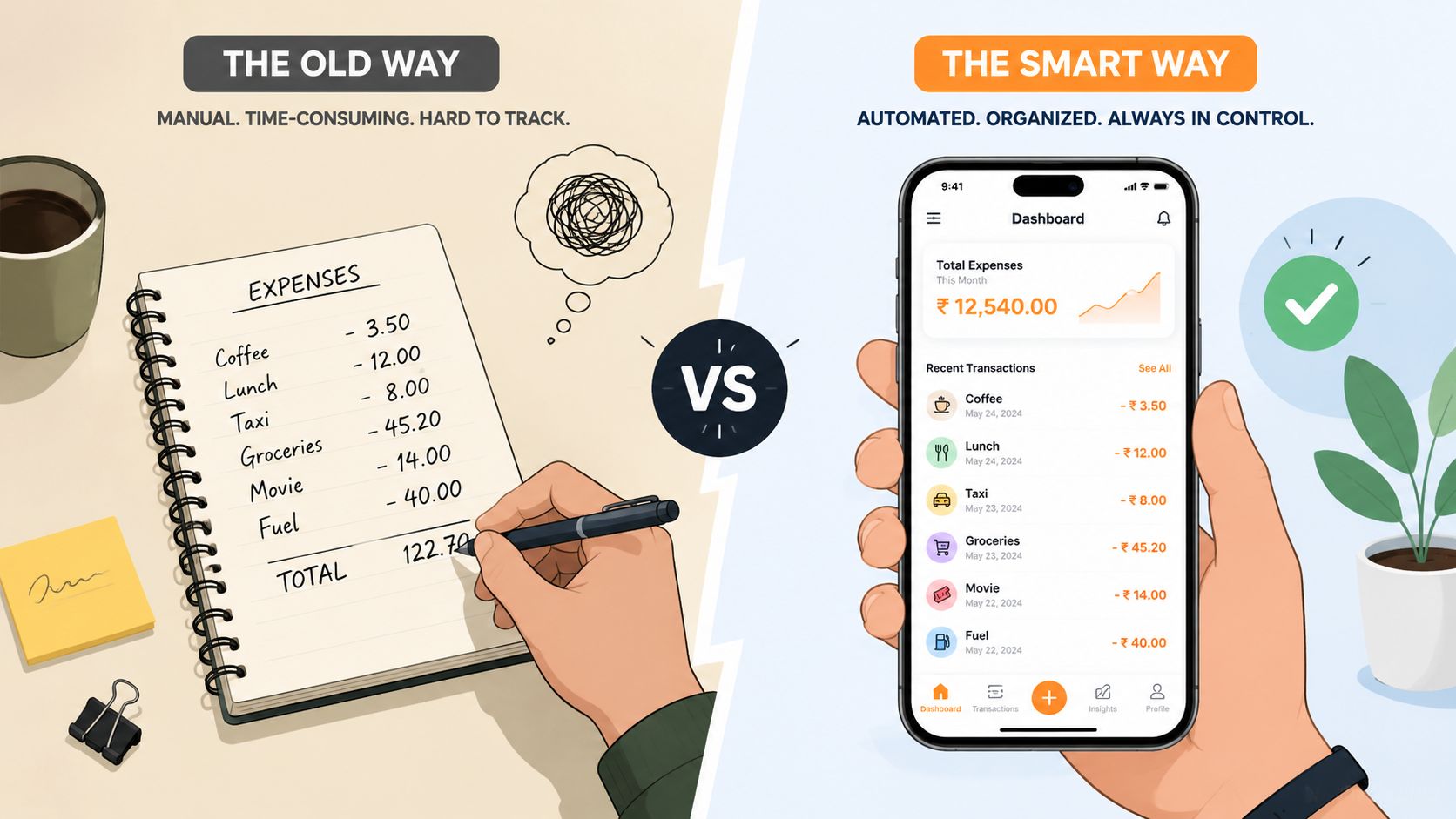
A notebook is the simplest possible tool. You write down each purchase as it happens or later on.
This works well if you want maximum awareness and minimal technology. It can make spending feel more intentional because every expense passes through your hands. The downside is that it takes discipline, and reviewing patterns later can be slow.
Spreadsheets
Spreadsheets sit in the middle. They're more flexible than paper and more manual than an app.
You can create your own categories, monthly tabs, formulas, and summaries. If your bank exports data in CSV format, a spreadsheet can be a solid option. If you need help preparing statement files before importing them into a sheet, a practical resource is this guide for secure data conversion.
The trade-off is maintenance. Someone has to set up the file, clean the data, and keep categories consistent.
Apps and digital trackers
Apps reduce a lot of that admin work. Effective expense tracking involves recording every transaction, grouping them into categories, and analysing trends. Digital tools that automatically extract details from receipts significantly reduce the risk of lost receipts and improve categorisation accuracy, as described in this expense tracking overview.
That matters if you're tired of saving receipts in random places or trying to rebuild a month from memory.
A quick comparison
| Method | Best for | Main drawback |
|---|---|---|
| Notebook | People who want simplicity and privacy | Harder to summarise and review |
| Spreadsheet | People who like control and custom setup | Takes time to maintain |
| App | People who want speed and pattern detection | Depends on the tool and setup |
The right method is the one that lowers friction enough for you to stay consistent.
For people who prefer privacy or want full control, a manual expense tracker can be a practical middle ground. It keeps the intentional feel of manual logging without forcing you into a paper-based process.
Go Beyond Categories to Understand Your Habits
Basic categories are helpful, but they only answer part of the question. They tell you what you spent on. They don't always tell you why.
That missing context is where real behaviour change happens. If all you know is that you spent money on dining out, shopping, or entertainment, you still might not understand the pattern behind it.

Add context to your spending
Try tagging purchases with simple context notes such as:
- Mood such as stressed, bored, excited, or tired
- Situation such as commuting, social event, late-night scrolling, or reward
- Location such as work, home, airport, or shopping centre
- Company such as alone, partner, friends, or children
These tags don't need to be complicated. A few consistent labels are enough.
For example, two takeout orders may belong in the same category, but one might happen after a long workday and another during a planned get-together. Same category. Different cause.
Why this matters more than most guides admit
A 2025 CIBC report found that 39% of Canadians reported impulse or retail therapy spending after a stressful event. That's a strong reminder that tracking should surface emotional patterns, not just dollar amounts.
If you notice that most unplanned spending happens when you're overwhelmed, the solution may not be “cut shopping.” It may be “build easier routines for stressful days.”
A spending habit rarely starts with money. It usually starts with a trigger.
Don't ignore hidden and deferred costs
Another blind spot is spending that doesn't feel urgent because it's delayed, automatic, or easy to overlook. This includes subscriptions, free trials, annual renewals, unused credits, and loyalty perks that expire unnoticed.
A more useful tracking habit asks questions like:
- What renews automatically each month
- What did I sign up for but stop using
- Which purchases were emotional
- Which costs looked small but repeated often
Tools can help with this layer too. A feature that can categorize expenses automatically is useful because once the basics are sorted, you have more room to notice the patterns underneath them.
How to Start Expense Tracking Today
Starting matters more than choosing a perfect system. If you keep the process small, it's much easier to stick with it.
Step 1 Choose a tool you won't resist
Pick the method that feels manageable right now. A notebook works. A spreadsheet works. An app works.
If you want less manual cleanup, automation can help. Automated expense tracking systems can reduce manual data-entry errors by 60 to 80% compared to spreadsheets because categorisation and policy rules are applied at the point of capture, according to this expense tracking glossary.
For readers in Canada, bank syncing can be inconsistent across tools, and some people prefer not to connect accounts. Fintrack is one option that supports manual entry, imports, and transaction tracking without requiring a bank connection.
Step 2 Start smaller than you think
You do not need to rebuild your entire financial life this weekend. Start with one of these:
- Track one week of all spending
- Track one category such as dining out or transport
- Track every recurring charge you can find
- Track cash spending if that's the category you usually forget
A short trial gives you a quick win and helps you learn what your system is missing.
Step 3 Make logging easy and regular
Consistency beats intensity. Choose one routine and attach it to something you already do.
For example:
- After each purchase if you like real-time awareness
- Every evening with your receipts
- Every Sunday as a weekly money reset
If you tend to lose receipts, this guide on how to organize receipts can make the habit much simpler.
Small habit: If logging feels annoying, your system is too complicated. Remove steps before you remove the goal.
Step 4 Review, then adjust
Tracking isn't finished when the numbers are recorded. True value comes from review.
Ask yourself:
- What surprised me?
- Which expenses were expected?
- Which ones were emotional, rushed, or avoidable?
- What recurring charges should I question?
- What change would make next week easier?
You're not looking for perfection. You're looking for one useful insight you can act on.
From Tracking Your Past to Designing Your Future
Expense tracking starts as a record of yesterday's choices, but its real value shows up in tomorrow's decisions. When you know where your money goes, you can stop reacting and start choosing.
That's why the question “What is expense tracking?” matters so much. It isn't just a financial admin task. It's a way to understand your habits, spot hidden obligations, and connect daily spending to the life you're trying to build.
Some people discover they need firmer boundaries around stress spending. Others realise that subscriptions, convenience purchases, or unplanned social spending are pulling money away from goals they care about more. Neither insight is a failure. Both are useful.
Keep the process simple. Record what you spend. Add enough context to learn from it. Review it regularly. Then make one small adjustment at a time.
Over time, expense tracking becomes less about looking backwards and more about building confidence. You're no longer asking where the money went. You know. And that knowledge gives you options.
If you want a practical next step, explore Fintrack to apply this with one place for transaction tracking, manual entry, and clearer spending review without needing to start from a blank sheet.