
You're standing at the dealership, or maybe scrolling listings late at night, and the car itself is no longer the hard part. You've already narrowed it down. The main question is the money question: should you lease or buy?
That's where a lot of people get stuck. The lease offer looks easier to live with each month. The purchase option feels more responsible long term. Both can be true.
The shortest honest answer to lease or buy car which is better is this: leasing can help your monthly cash flow now, while buying usually gives you more control and better long-range value if you keep the car for years. The right choice depends less on the dealership pitch and more on how long you'll keep the car, how much you drive, and whether you care more about lower payments today or fewer payments later.
The Big Decision at the Dealership
You sit down with the finance manager, and the conversation shifts fast. One option gives you a lower monthly number. The other gives you ownership. Most buyers feel that pull immediately.
That monthly payment difference is real. In the new-vehicle market, about 24% of transactions involve leasing, and the average auto lease payment is about $659 per month compared with $682 for an auto loan, according to an NGPF summary citing Experian data. Leasing can be slightly cheaper each month, but the majority of drivers still buy.
That gap explains why leasing gets attention. A lower payment can make a nicer car feel reachable. But a lower payment doesn't answer the bigger question of total cost, especially if you'll still need a car five, six, or eight years from now.
Here's the part people often miss. The dealership usually sells the monthly number first because it's easy to compare. Your real life doesn't work that way. Your commute, your parking situation, your family plans, and your tolerance for ongoing car payments matter more than the headline offer.
What makes this decision hard
A lease can feel clean and simple:
- Lower payment appeal: You may get immediate breathing room in your monthly budget.
- Newer vehicle cycle: You can move into a new car more often.
- Short horizon fit: It can work well if you know you won't keep the vehicle long.
Buying solves a different problem:
- Ownership path: You're working toward a point where the car is yours.
- Long-term flexibility: You can keep it, sell it, or trade it in later.
- Better fit for heavy use: Long commutes and changing life plans are easier to absorb.
Practical rule: If you only compare the monthly payment, you're not deciding between lease and buy. You're deciding between this month and the next several years.
If you're also considering used vehicles instead of a brand-new car, it helps to review some expert tips for used car shoppers before you decide how to pay. The lease versus buy question gets easier once you know whether a new or used car makes more sense for your situation.
Leasing vs Buying The Core Financial Differences
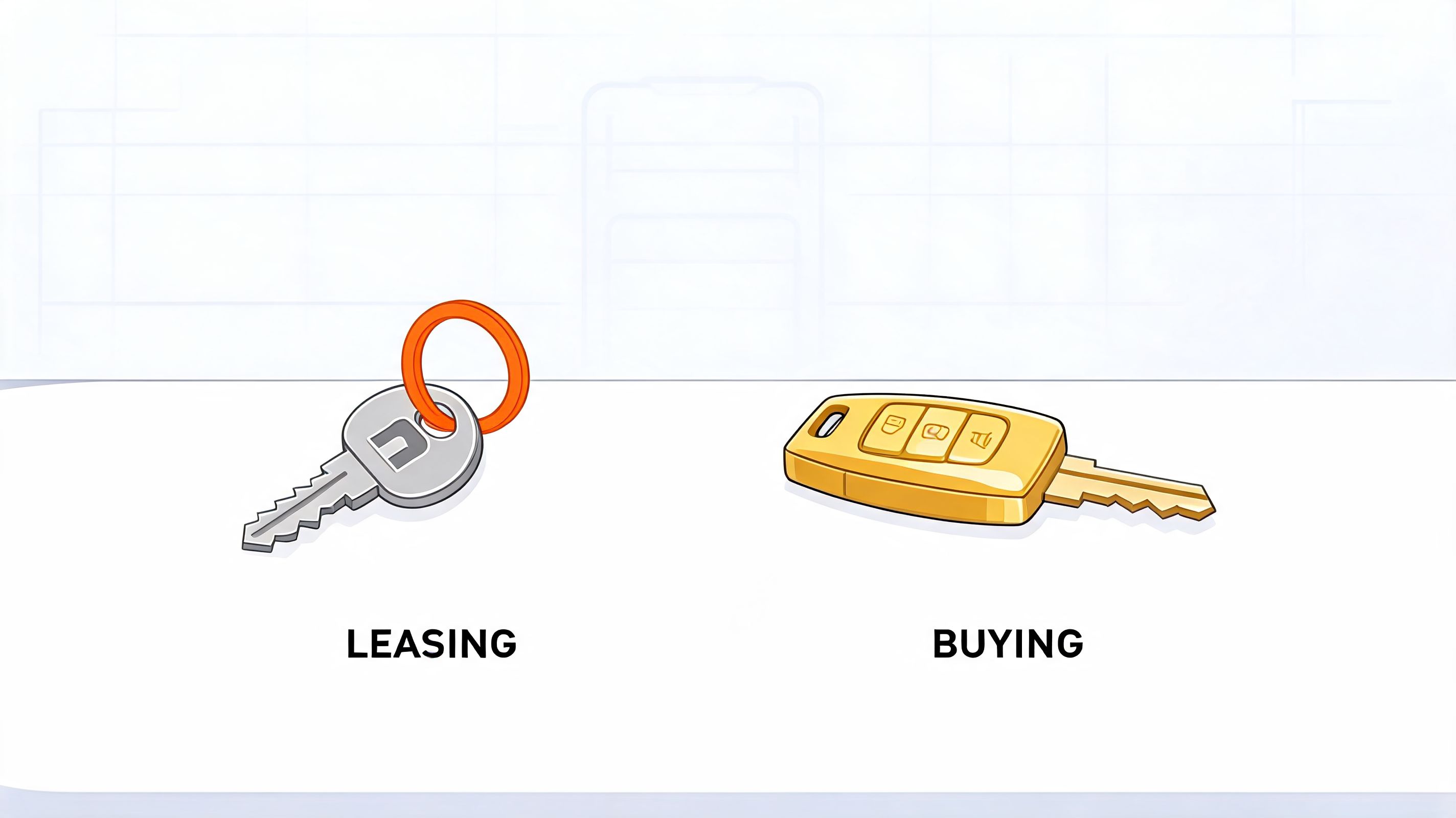
The easiest way to understand this is to think of leasing like renting and buying like owning.
With a lease, you're paying for the part of the car you use during a limited term. With a purchase, you're paying for the whole vehicle over time because the goal is to own it.
What your payment is really buying
A lease payment is built around depreciation and finance charges. You're not paying off the full price of the car. You're paying for the expected value the car loses while you drive it, plus the lender's charges and applicable taxes and fees.
A loan payment works differently. You're amortising the full vehicle cost over the loan term, which is why the monthly payment is often higher. But each payment moves you closer to ownership.
That's why two similar-looking offers can lead to very different outcomes. One is a short-term access plan. The other is an ownership plan.
Why leasing often looks cheaper at first glance
Leasing wins the showroom comparison because the monthly number is often lower. That can be useful if your budget is tight or if keeping monthly fixed bills lower matters more than long-term cost.
Buying asks for more patience. You usually accept a higher monthly payment now in exchange for a period later when the loan is finished and you still have a usable car.
A simple way to organise this in your budget is to separate the car into fixed costs and flexible ones. Your payment is fixed. Fuel, parking, tolls, and some maintenance are not. If you want a refresher on that distinction, this guide on what counts as a fixed expense is a useful companion.
| Question | Leasing | Buying |
|---|---|---|
| What are you paying for? | Use of the car for a set term | Full vehicle cost over time |
| Who owns the car at the end? | The leasing company, unless you buy it | You |
| Why is the payment often lower? | You're paying for depreciation, not the whole car | You're paying toward ownership |
| Best fit for | Drivers who want a newer car every few years | Drivers who value flexibility and long-term control |
If you're comparing markets or reading advice from other countries, be careful. Terms, consumer protections, and fee structures can differ. For example, people looking at international comparisons may find it helpful to review understanding UK car leasing rules, but your local contract terms still matter more than any general advice.
A Detailed Cost Breakdown Side by Side
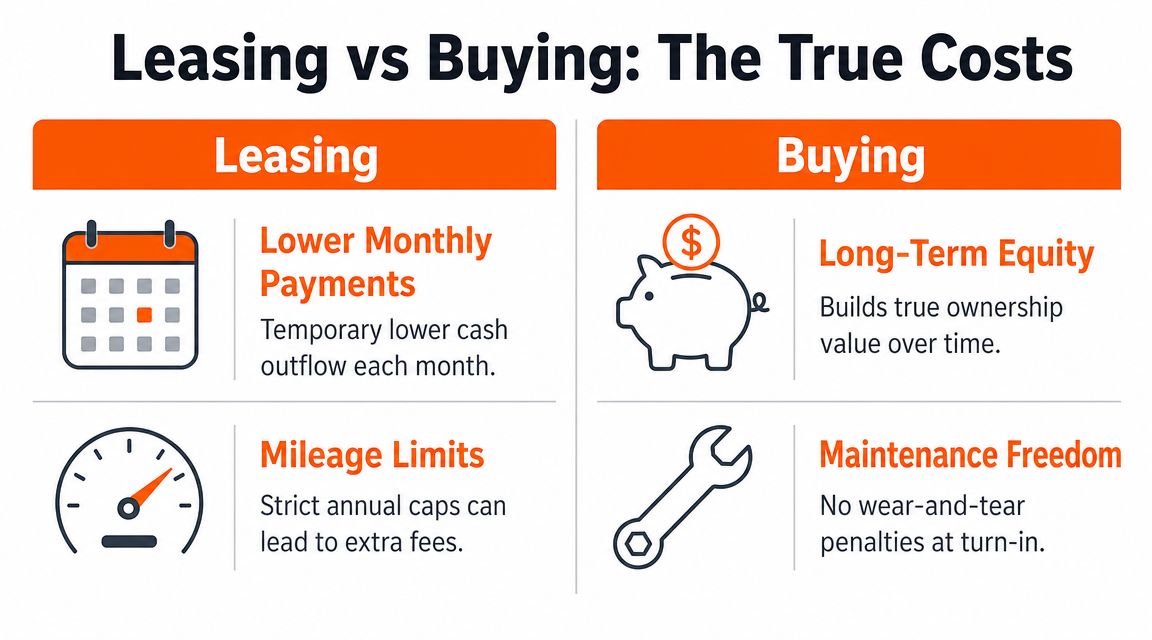
The cleanest way to compare lease versus buy is to ignore the showroom script and break the decision into three stages: upfront costs, ongoing costs, and end-of-term costs.
That framework keeps you from overweighting one attractive number and missing the rest.
Upfront costs
At signing, both options can come with taxes, registration, and dealer or lender-related charges. The exact structure varies by deal, but the key difference is what those opening costs are setting up.
With a lease, upfront costs launch a temporary arrangement. With a purchase, they launch a path to ownership.
If you're trying to estimate the full burden, start by listing every car-related category, not just the payment. A simple list of common expenses can help you build that worksheet without forgetting irregular costs.
Ongoing costs
Leases tend to look strong. In one lease-versus-buy analysis, the lease payment was $426.21 per month versus $780.07 per month for financing, a difference of $353.86 per month, and total cash outlay over 39 months was $16,622.19 for the lease versus $18,910.09 for the purchase, based on this financial analysis of leasing versus purchasing a vehicle.
That sounds like a clear win for leasing until you look at what the buyer had at the end.
The purchase built $11,512.48 in equity over the same period, according to the same analysis. That's the point many monthly-payment comparisons hide. The buyer spent more cash during the term, but they didn't end in the same place.
Lower cash outflow and lower total cost are not the same thing.
End-of-term costs
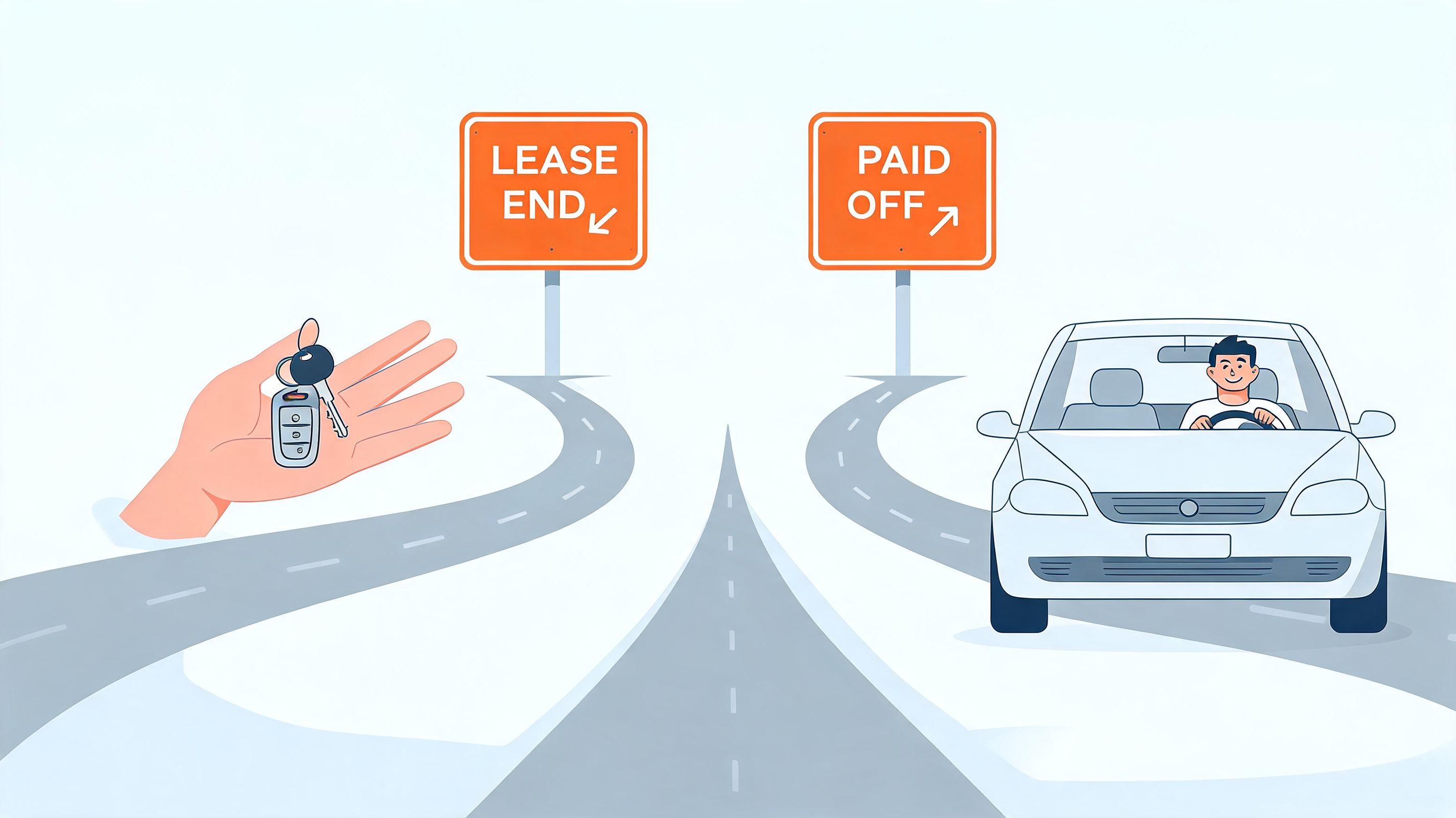
At the end of a purchase loan, your path opens up. You can keep the car and stop making payments once the loan is paid off. You can sell it. You can trade it in. That flexibility has real financial value, even though it doesn't show up neatly on the monthly quote sheet.
At the end of a lease, your options are narrower. You usually return the car, move into another lease, or buy the vehicle if that works for the contract terms and the car's value.
What this means over five to eight years
At this point, the decision becomes clearer.
Over a short term, leasing can preserve cash flow. Over a longer stretch, buying often gets stronger because the ownership path changes your later years. Once a loan ends, you may have a period with no car payment at all while still driving the same vehicle. A lease doesn't usually create that break because the cycle resets.
Here's a practical side-by-side view:
| Cost lens | Lease | Buy |
|---|---|---|
| First few years | Often easier on monthly cash flow | Usually higher monthly strain |
| Mid-range horizon | Risk of repeating payments on the next vehicle | Closer to payoff and ownership |
| Long horizon | Limited unless you buy out the car | Can produce payment-free years |
| Asset at the end | Usually none unless purchased | Vehicle equity or resale value |
For higher-mileage drivers, that long-horizon view matters even more. A slightly cheaper payment today can become an expensive choice if it pushes you into recurring lease cycles and extra charges.
Beyond the Monthly Payment Factors That Tip the Scale
Some people could make either option work financially, but one of them would make daily life annoying. That matters.
A lease works best when your habits line up with its rules. Buying works best when you want freedom and don't want your driving life squeezed into a contract.
Mileage changes everything
This is the biggest lifestyle factor in the whole decision.
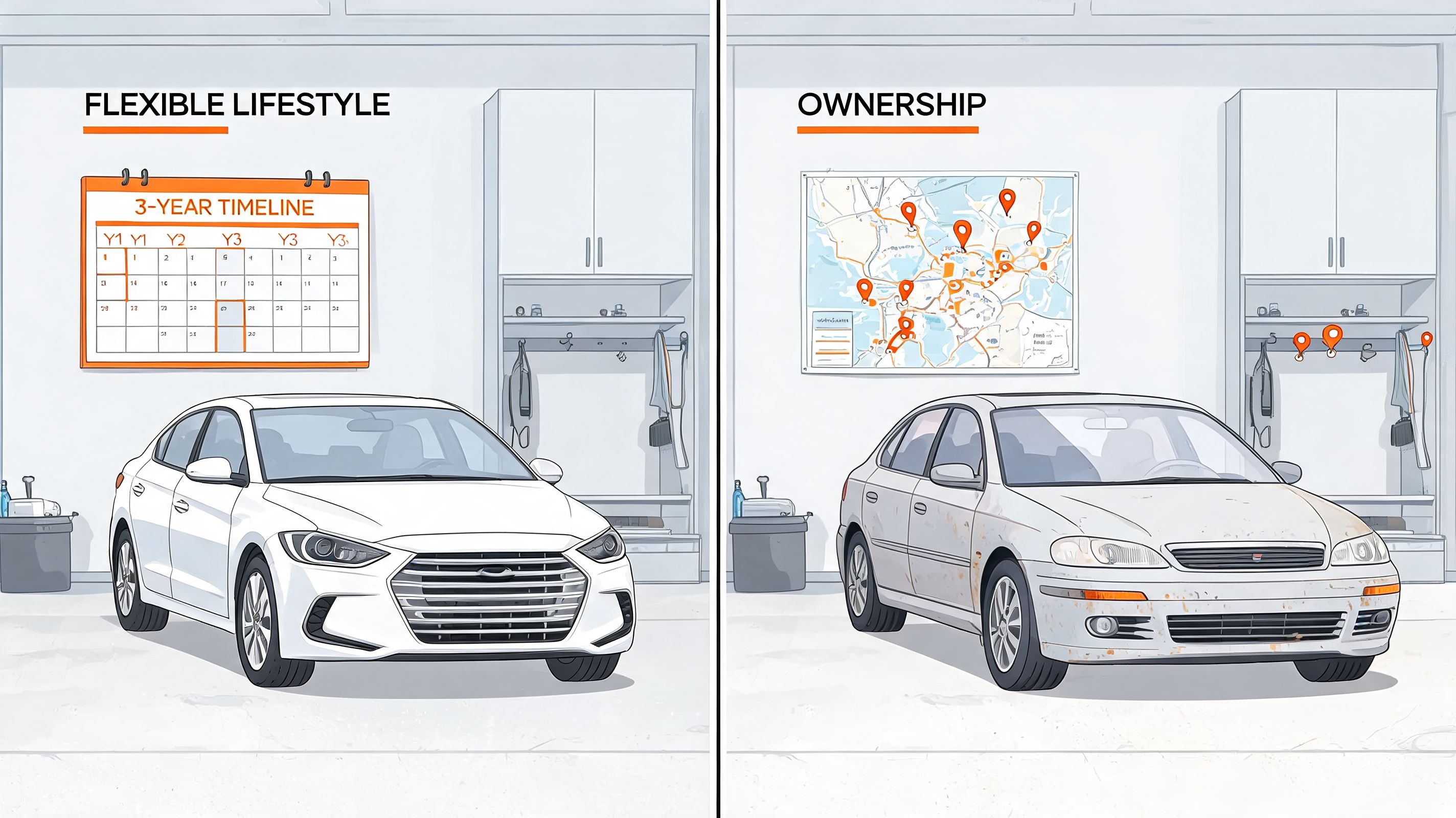
Leases typically limit you to 10,000 to 15,000 miles per year, and Edmunds notes that buying is often the better long-term value if you expect to keep the car for several years or have a longer commute. If your driving is predictable and light, a lease may fit. If your routine includes regional travel, commuting sprawl, or family logistics that keep growing, mileage caps can become a constant source of friction.
That's why the answer to lease or buy car which is better often comes down to one very unglamorous question: how far do you drive?
Freedom has financial value
Ownership gives you room to adapt. You can take the road trip, change jobs, move farther from the office, or keep the car long after the loan is gone.
A lease asks for more discipline. You need to monitor use, maintain the car carefully, and think ahead about return conditions.
Consider these non-payment factors side by side:
- Commute flexibility: Buying handles changing routines better.
- Customisation: Owners can usually modify their vehicle more freely than lessees.
- Wear tolerance: Families with kids, pets, or active lifestyles may prefer the lower stress of ownership.
- Upgrade preference: Drivers who love getting a new car every few years may still prefer leasing.
If you're budgeting for a car, remember that many ownership costs change month to month. Fuel, repairs, tyres, and parking don't behave like a flat subscription. This overview of variable expenses is useful if you want to test whether your budget can absorb the less predictable side of owning.
A lease works best when your life is stable. Buying works better when your life might change.
Tax and Business Considerations
If you use your vehicle for work, the lease-versus-buy choice can affect your record-keeping and your tax conversations. It's still a personal finance decision first, but business use can tilt the maths.
The simplest distinction is this: leasing often lines up with deducting the business-use share of lease-related costs, while buying may involve depreciation or other methods depending on how the vehicle is used and how your accountant handles it. The details vary, so this is one area where guessing gets expensive.
Questions worth asking before you decide
Bring these to your accountant or tax preparer before signing anything:
How much of my driving is business use? If business use is occasional, the tax benefit may be smaller than you think.
Would leasing simplify my records, or would buying be better over time?
Some business owners prefer the cleaner monthly structure of a lease. Others care more about long-term ownership.What happens if my work use changes later?
A contract that looks efficient now may become awkward if your driving pattern shifts.
Keep the tax angle in its place
Tax treatment can help break a tie, but it usually shouldn't make the decision on its own. A car that doesn't fit your budget or usage pattern is still the wrong car strategy, even if the deduction looks attractive on paper.
For the majority of drivers, the smarter sequence is: decide what works operationally, then ask how to handle it properly on the tax side.
If you're trying to understand how tax timing affects larger money choices, this plain-English guide to tax deferral can help frame the broader concept. Then take your specific vehicle questions to a professional who can look at your actual situation.
The End of the Road Your Options at Term End
The most important part of a lease often shows up when the lease is over.
That's when the lower payment either still looks smart or starts to look incomplete.
What lease-end can look like
Many comparisons skip the final bill. That's a mistake because lease contracts can include charges that don't appear meaningful during the sales conversation.
As noted by OWI's discussion of leasing versus buying, many lease-versus-buy comparisons ignore end-of-lease surprises such as disposition fees, excess-wear charges, and penalties for exceeding mileage caps. Those costs can wipe out the benefit of a lower payment.
That doesn't mean every lease ends badly. It means you should treat the return process as part of the original cost, not as an afterthought.
What ownership looks like at the end
Buying creates a very different finish line.
When the loan is paid off, the payment obligation ends. You still have maintenance, insurance, and running costs, but the core financing burden can disappear while the car remains useful. That's often the turning point that makes buying more attractive over a five-to-eight-year window.
The strongest financial years of owning a car often begin after the loan is gone.
A simple term-end comparison
| At term end | Lease | Buy |
|---|---|---|
| Main next step | Return it, replace it, or buy it out | Keep it, sell it, or trade it |
| Risk of surprise charges | Higher | Lower in the same sense, though repair and resale realities still matter |
| Ongoing payment cycle | Often continues with the next vehicle | Can stop after payoff |
| Control | Limited by contract terms | Full owner control |
If you know you like changing cars often and can stay within the contract, lease-end may feel manageable. If you want your car costs to fall later rather than repeat, ownership usually gives you the cleaner outcome.
Your Decision Checklist Lease or Buy
The best choice isn't the one with the nicer brochure. It's the one that fits your next several years.
If you're still weighing lease or buy car which is better, use this checklist and answer truthfully, not optimistically.
Buying is usually the better fit if
- You drive a lot: Your commute is long, your schedule changes often, or you don't want to track annual mileage closely.
- You keep cars for years: You like extracting value from a vehicle after the loan is done.
- You want flexibility: You may move, change jobs, or keep the car longer than originally planned.
- You care about equity: You'd rather end a payment period with something you can keep or sell.
Leasing may fit better if
- You prioritise monthly cash flow: Lower payments matter more than long-term ownership.
- Your driving is predictable: You're confident your annual mileage stays within lease terms.
- You like newer cars often: You prefer rotating into newer models every few years.
- You don't want long-term ownership: You value temporary use more than keeping the vehicle.
The crossover question that matters most
Consumer Reports notes that for drivers who plan to hold a vehicle well beyond the loan term or regularly exceed lease mileage limits, buying often wins financially. The true challenge is finding the crossover point where freedom from payments and mileage caps outweighs the higher monthly cost early on.
That's the question to answer before you sign:
- How many years will I realistically keep this car?
- How many miles will I drive each year?
- Do I want a lower payment now, or fewer payments later?
- Will I feel restricted by lease terms?
- If my life changes, which option gives me more room?
If you want a broader framework for making trade-offs like this, start with a simple system for planning your personal finances. A car decision gets much easier when it sits inside a real plan instead of being treated as a one-off purchase.
If you want to test the impact before committing, Fintrack is a practical way to model both options against your real budget. You can map the monthly payment, add recurring transport costs, and see how a lease or purchase would affect the rest of your spending over time.