
It's Sunday night, and you've got twenty browser tabs open about building a budget, paying down debt, or saving for a down payment. One recommends a credit card, another explains investing, and a third assumes you already know how Canadian registered accounts work. You wanted a useful next step, not another reading project.
The best personal finance articles answer your question and help you change something in your spending plan. This shortlist brings together Canadian sources for everyday budgeting, investment education, newcomer questions, and current consumer-finance news. Each comes with a concrete budgeting action you can try this week.
You don't need to follow every publication. Choose a general resource and add a specialist when you have a specific decision to make. If you're looking for market reporting rather than household guidance, you can also explore leading investment news outlets.
Read commercial disclosures, check when an article was updated, and verify changing rules with the relevant government agency or regulator. A clear explanation is useful, but it isn't a substitute for the terms that apply to your account.
1. MoneySense
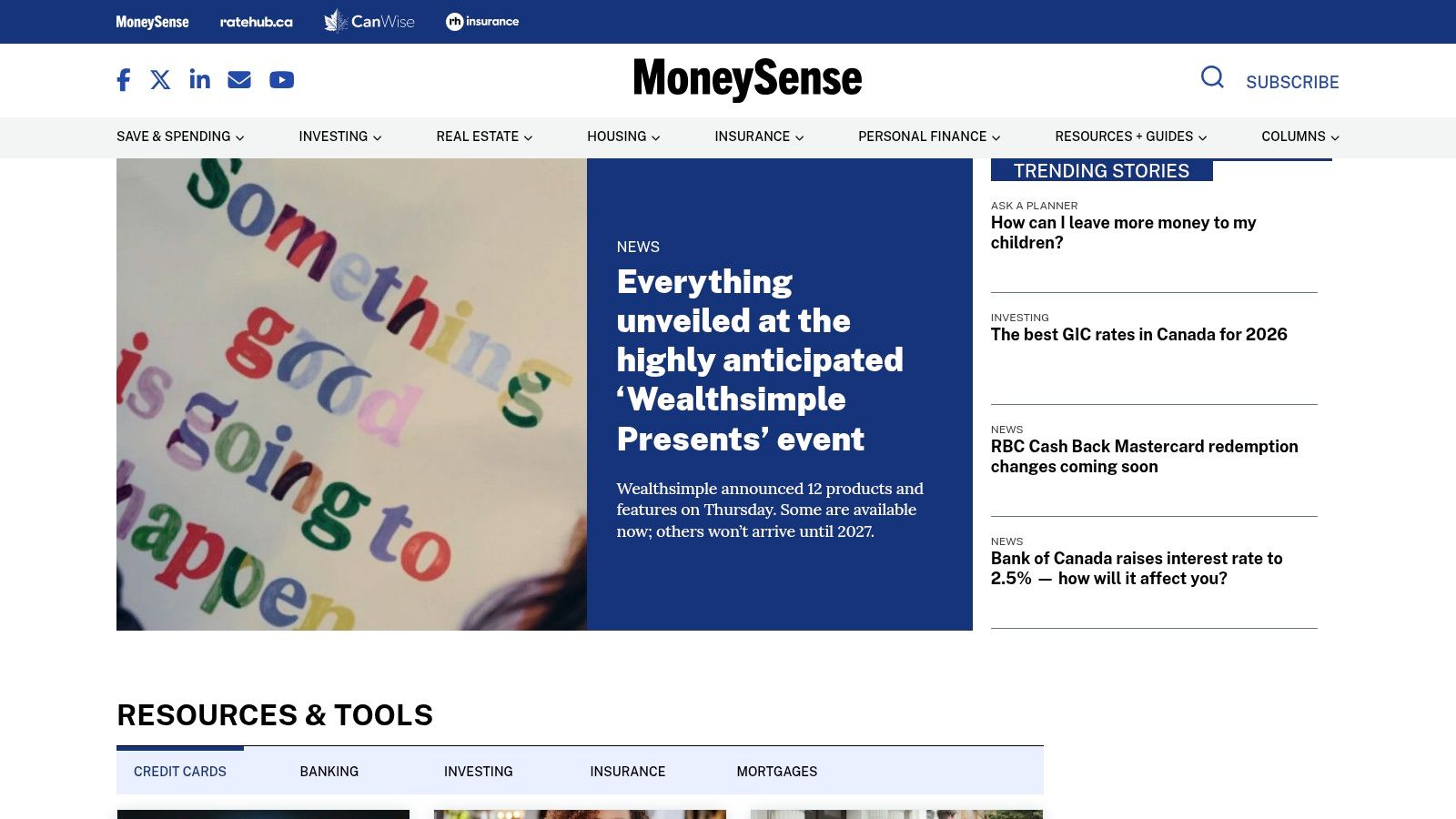
Best for connecting everyday money decisions with longer-term planning. MoneySense covers budgeting, saving, credit cards, banking, investing, mortgages, taxes, and retirement. Its articles are free to read, with Canadian accounts and financial products central to the coverage.
The mix is its main strength. You can start with an explanation of emergency savings, move to an Ask a Planner answer, and use a calculator to explore how a decision might fit your finances.
Use the explainers before the rankings
MoneySense combines educational articles with product comparisons and Canadian rankings. That's useful when you're ready to shop, but a ranked account or credit card won't tell you how much room you have in your budget.
- What works: Broad coverage, expert-answer formats, and calculators help connect a narrow question to your wider financial plan.
- What needs care: Sponsored content and affiliate links are disclosed. Read those disclosures before treating a recommendation as your default choice.
- When to verify: Check current fees, eligibility, and account conditions directly with the provider before applying.
Your budgeting action this week: Create separate goals for emergency savings and predictable irregular expenses. A car repair allowance or annual insurance bill belongs in a planned reserve, rather than being treated as a surprise every time.
Use a guide to building an emergency fund in Canada to define what the emergency category should cover. Then enter a contribution that fits after essential bills and minimum debt payments, rather than choosing an impressive target you can't maintain.
Practical rule: An emergency fund needs a clear purpose, not just a savings account with a hopeful name.
2. Financial Consumer Agency of Canada (FCAC)
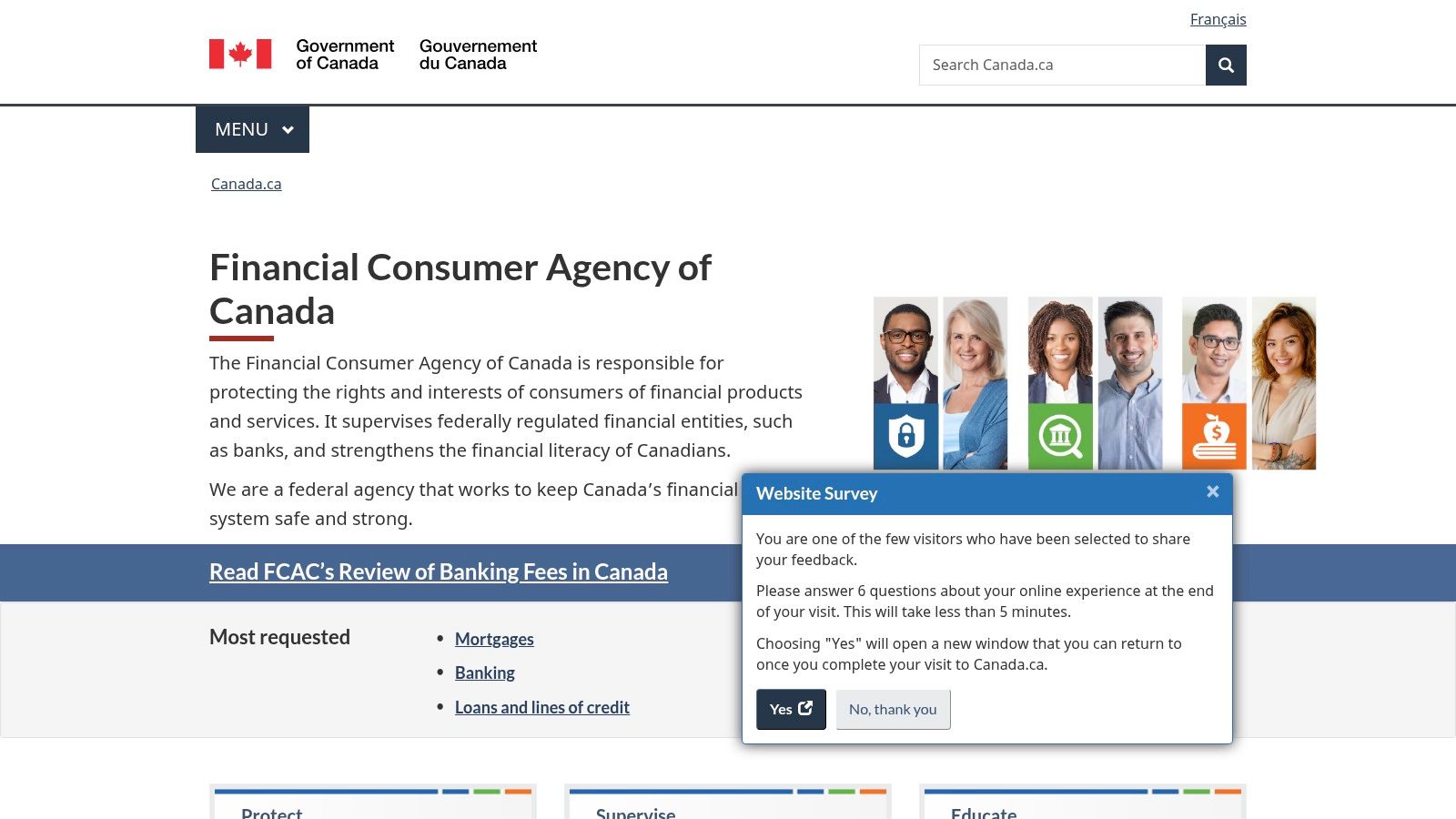
Start with the Financial Consumer Agency of Canada when you want foundational guidance without a product-shopping angle. Its free resources cover budgeting, debt, banking, credit, and financial consumer rights.
The Budget Planner is especially useful if you're facing an empty spreadsheet. It helps you create and save a personalized budget, with prompts, comparisons, and suggested next steps rather than a blank grid.
Personal finance articles for building your first workable budget
FCAC reports that 46% of Canadians have a budget, according to its financial literacy progress report. That finding supports a practical focus on getting a usable system started, rather than searching indefinitely for the perfect method.
The writing is instructional rather than magazine-like. You may need to move between topic pages, but the absence of affiliate-shopping recommendations makes it a useful reference when a commercial comparison leaves you uncertain.
Your budgeting action this week: Use the planner to draft your categories, then compare them with actual transactions in your budgeting app. Separate fixed commitments, flexible essentials, discretionary spending, and planned savings.
- Check the merchant: A description you don't recognize isn't automatically fraud. Compare receipts and account records first.
- Check the repetition: Review similar amounts and merchant names for accidental duplicate entries or charges.
- Check the correction: Record refunds separately so your spending totals remain understandable.
A practical guide to reviewing duplicate charges can help with that transaction review. Don't lower a category limit until you know whether the underlying total reflects real spending, a duplicate entry, or a payment awaiting a refund.
3. NerdWallet Canada
Use NerdWallet Canada when your question is specific. “How does a credit score work?” and “What should I compare in a bank account?” are better starting points than browsing financial products without a defined need.
NerdWallet Canada publishes free explainers on budgeting, saving, debt, credit scores, taxes, and banking, alongside product reviews and comparisons. Its editorial standards describe fact-checking and correction practices, and it says business partners don't control editorial recommendations.
Compare the total cost, not the headline perk
The site's topic-based organization makes it easy to move from a basic explanation to a shopping decision. Its product coverage can help you consider who an account or card suits, rather than treating every recommendation as universal.
The trade-off is that education and commercial comparisons sit close together. Read the partnership disclosures, then separate the article's explanation from the decision to apply for a product.
A product can be well reviewed and still be wrong for your spending habits.
Your budgeting action this week: Review a credit card using the spending you already record. Compare the categories where you spend with the rewards structure, and include the annual fee as a planned expense.
A useful credit card rewards comparison starts with your existing purchases, not purchases you might make to earn a bonus. Keep rewards separate from income available for essential bills until you understand how and when you can redeem them.
If you carry a balance, put repayment costs ahead of reward optimization. Before applying, verify the current interest rate, fee, eligibility requirements, and promotion conditions on the issuer's own pages.
4. Get Smarter About Money
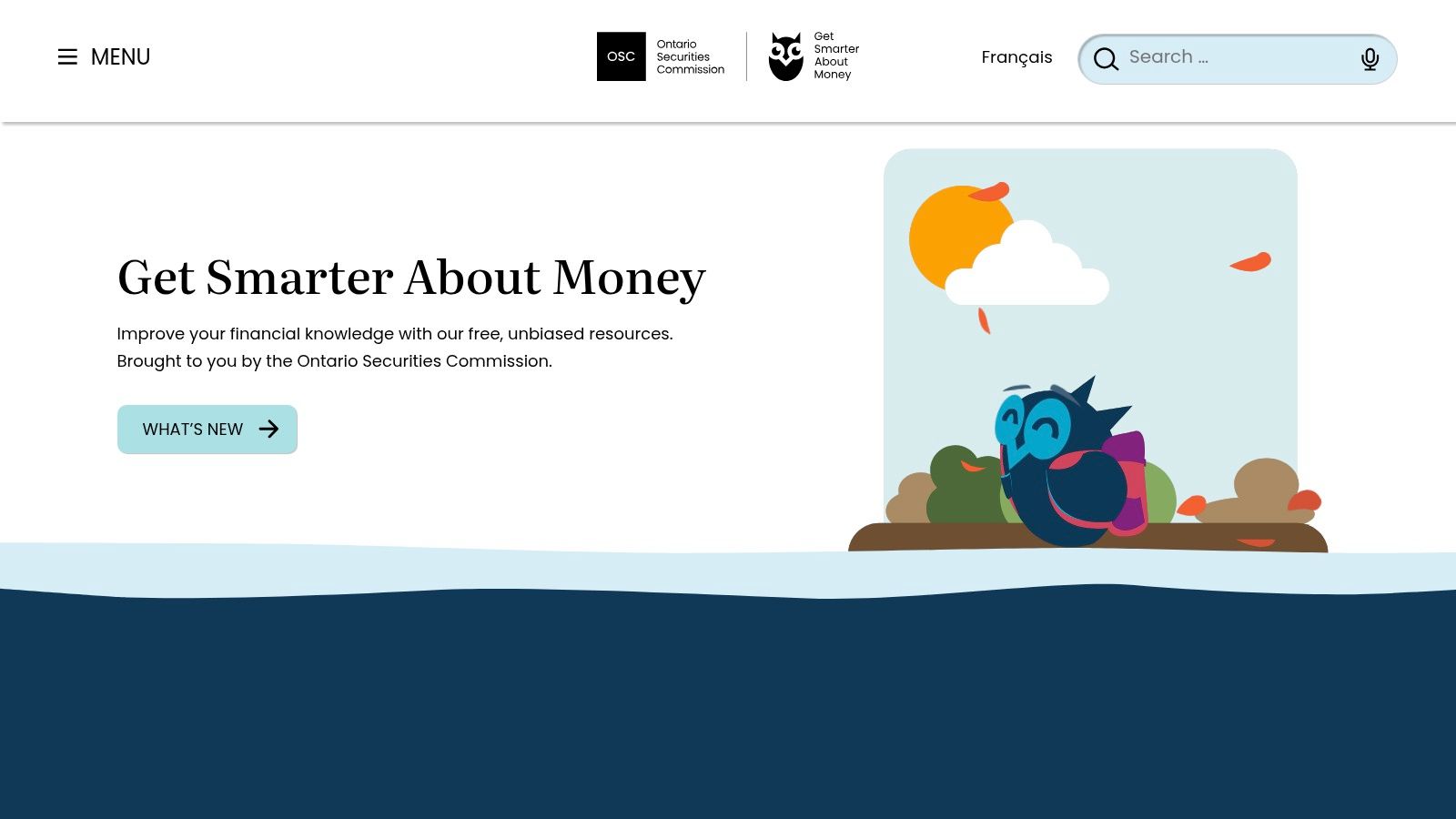
Best for investment education without a product marketplace. Get Smarter About Money is run by the Ontario Securities Commission and offers free material on saving, investing, financial goals, emergencies, and fraud prevention.
Its courses, calculators, quizzes, and learning paths suit readers who want more than a short article. The text-to-voice reader also provides an alternative to reading on screen.
This isn't my first choice for routine expense categorization. Its stronger role is helping you understand financial decisions before you commit money, particularly when an investment pitch sounds simpler than the risks involved.
Give the goal a place in your budget
Your budgeting action this week: Turn a broad ambition into a named savings goal. Record what the money is for, when you expect to need it, and whether the target or deadline can change.
- Near-term purpose: Keep upcoming essential expenses distinct from money intended for long-term investing.
- Contribution plan: Add a recurring budget allocation that fits your current cash flow.
- Review trigger: Revisit the plan when your income, deadline, or essential costs change.
A guide to setting financial goals can help you translate the intention into something trackable. For a separate investment-planning perspective, portfolio planning with The Coin Course offers a place to explore allocation concepts, but don't treat an educational example as a personalized portfolio.
The Ontario regulatory context is useful, though province-specific questions elsewhere may need another official source. Verify registration and applicable rules with the relevant securities regulator before acting on an investment recommendation.
5. Wealthsimple Learn
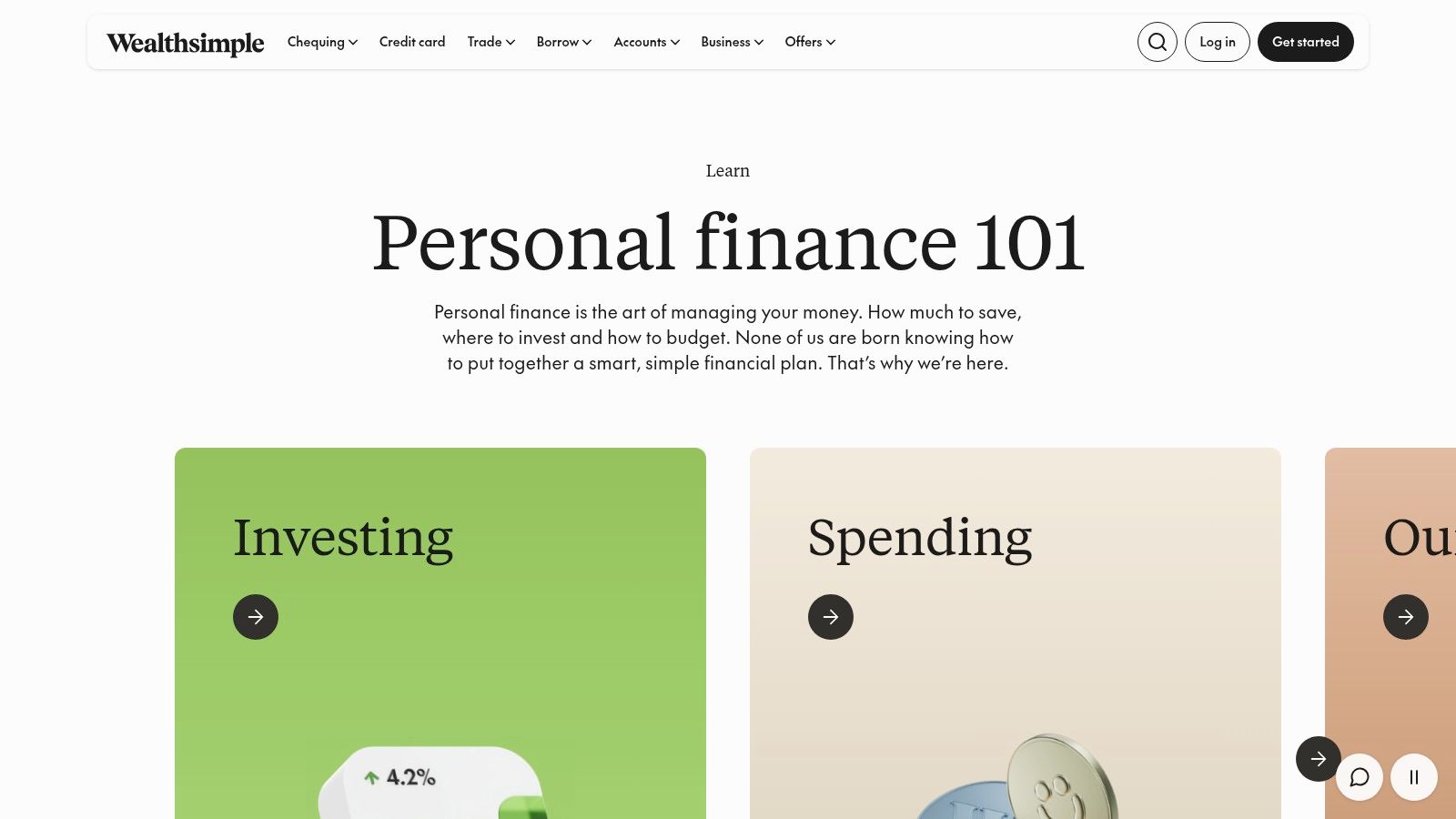
You've encountered a financial term in a podcast, benefits package, or banking app, and you want a readable explanation before going further. That's a good use for Wealthsimple Learn.
Its free library covers spending, saving, credit cards, taxes, borrowing, retirement, home buying, and investing. Topic-based collections and introductory explainers make it approachable when you're learning unfamiliar concepts.
The commercial context matters: Wealthsimple also provides financial services. General education can still be useful, but distinguish an explanation of an account type from a suggestion to use the company's version of that account.
Turn a concept into a cash-flow decision
Your budgeting action this week: Add a planned long-term savings contribution to your budget, then test whether it leaves enough for bills, debt payments, and irregular expenses. Don't record an intended transfer as completed until the money has moved.
That distinction prevents a common planning mistake: treating money assigned to a goal as though it's already safely set aside. Keep the planned amount, actual transfer, and remaining amount easy to compare.
- Use it for: Plain-language introductions and a manageable route into broader financial topics.
- Watch for: Differences in depth between a short explainer and a complex decision.
- Verify elsewhere: Current tax rules and registered-account details belong with the Canada Revenue Agency or another applicable official source.
For planning beyond the introductory article, connect your reading to a long-term investment plan. Decide what you can consistently contribute before spending hours comparing investments.
The useful outcome isn't knowing every account acronym. It's understanding why you're setting money aside and what commitments that contribution must coexist with.
6. Savvy New Canadians
Moving to Canada creates money questions that established residents may never think to explain. Banking arrangements, credit history, benefit applications, and unfamiliar account terminology can all require separate reading.
Savvy New Canadians is particularly useful for that newcomer perspective. It combines guides and financial checklists with articles on saving, banking, credit cards, investing, retirement, and side hustles.
The site says its content is reviewed by fact-checkers and regularly updates articles. Still, it's an independent publisher, not a government agency, so verify high-impact details before building them into your plans.
Budget around confirmed money
Your budgeting action this week: Create a category for settlement costs and another for ongoing household expenses. Keep expected reimbursements or benefits separate from confirmed cash available to spend.
Say you're waiting for an employer reimbursement while paying for transport and household essentials. Record the purchase when it happens, note the expected reimbursement separately, and update your available balance when payment arrives.
Newcomer safeguard: Don't commit an expected benefit or reimbursement to rent before you've confirmed eligibility and payment timing.
The practical breadth is helpful, especially for questions you didn't know to ask. Product reviews may involve commercial relationships, though, so check disclosures and compare the provider's current terms.
- Tax and benefit questions: Confirm eligibility, application requirements, and payment information with the administering government body.
- Banking decisions: Verify newcomer offers, fees, and documentation directly with the institution.
- Side-hustle income: Track receipts and related expenses separately from employment income so you can review the activity clearly.
This source works best as an orientation guide. Use it to identify the question, then follow through to the official answer where the consequences matter.
7. Ratehub.ca Personal Finance
Best for timely consumer-money questions and comparison follow-up. Ratehub.ca's personal-finance blog covers credit scores, banking, identity protection, and changes affecting Canadian households.
Related tools and comparison resources can help when an article prompts a concrete shopping question. It's less suitable if you want a structured budgeting course with a clear starting point and sequence.
Some posts are explicitly sponsored. Look for those labels and distinguish the explanation of an issue from the promoted product's proposed solution.
Make news earn a budget change
A headline about banking doesn't automatically require a new account. First establish whether the change affects a product you hold, an expense you pay, or a decision you're already preparing to make.
Your budgeting action this week: Choose a recurring financial cost, such as an account fee, and record its current terms in your budgeting app's notes. Check the provider's notice or fee schedule before changing the planned amount.
- Identify the exposure: Name the account, service, or household expense affected.
- Check the effective terms: Separate an announced change from a condition already applying to you.
- Record the response: Adjust the category, set a review reminder, or document why no action is needed.
Data-sharing news deserves the same care. The federal government's consumer-driven banking framework describes API-based sharing intended to avoid giving third parties your bank-login credentials, with consumer control over access.
Before connecting any budgeting tool, check how that particular service obtains data and handles consent. A broad policy announcement doesn't establish which connection method an individual app uses.
How the seven sources compare
| Item | Main focus | Best for | Sponsored or affiliate content | Government or regulator backed |
|---|---|---|---|---|
| MoneySense | Canadian personal finance and product comparisons | Broad money guidance, tools, and shopping comparisons | Discloses sponsored content and affiliate links | No |
| Financial Consumer Agency of Canada (FCAC) | Consumer finance, budgeting, debt, and rights | Foundational guidance and a budgeting planner | Non-commercial; no product-sales or affiliate focus | Yes, federal agency |
| NerdWallet Canada | Personal finance education and product reviews | Topic-based explainers and product comparisons | Discloses commercial partnerships | No |
| Get Smarter About Money | Investing, saving, and financial education | Public-interest learning tools and investment basics | No product-marketplace focus | Yes, run by the Ontario Securities Commission |
| Wealthsimple Learn | Beginner personal finance and investing | Plain-language, topic-based learning | Some content is connected to Wealthsimple financial products | No |
| Savvy New Canadians | Canadian personal finance, especially newcomer topics | Newcomer guides and practical Canadian money questions | Product reviews may involve commercial relationships | No |
| Ratehub.ca Personal Finance | Canadian consumer finance news and comparisons | Timely updates and product-related questions | Some posts are sponsored and labelled | No |
Turning Your Reading Into a Working Budget
Choose a source based on the decision in front of you, not the size of its article library. FCAC suits foundational budgeting, MoneySense offers broad Canadian planning coverage, and NerdWallet Canada helps with focused explanations and comparisons.
For investment education, start with Get Smarter About Money or an introductory Wealthsimple Learn guide. Savvy New Canadians provides newcomer context, while Ratehub.ca is useful for current consumer questions that may need a comparison or account review.
Apply a lesson before opening another tab
Pick a manageable change this week, such as setting a dining-out limit or reviewing recurring charges. Open your recent transactions first, so the change reflects your actual spending rather than what you wish you spent.
- Record the starting point: Note the category total, recurring charge, or savings balance you're trying to change.
- Choose the action: Set a realistic limit, cancel an unused service, or schedule a savings transfer.
- Review the result: Compare actual spending with the plan and write down what needs adjusting.
Don't interpret every missed target as a discipline problem. An unrealistic limit, an overlooked annual bill, or a change in income may explain the gap, and each needs a different response.
Read until you can name the next action. Then test that action against your own numbers.
Keep the system easy to maintain
A budgeting app should help you follow through, not become another unfinished project. If you use manual entry, make it part of paying or checking receipts so the budget stays useful without a bank connection.
You can apply this approach with category-based budget planning. Fintrack lets you set category limits and track progress in real time, and you can create a free account in under a minute with no credit card required.
Start small enough that you'll review the result. A corrected recurring charge or a realistic spending limit is more useful than a folder full of advice you haven't applied.
Fintrack brings income, expenses, budgets, and savings goals into one dashboard, with manual entry available without connecting a bank. Visit Fintrack to put a lesson from your reading into a category limit, then track how your actual spending compares.