If you're asking, “Am I spending too much money?”, the answer depends less on individual purchases than on whether your cash flow stays positive, your debt remains manageable, and you can handle emergencies. In California, 42.4% of households, about 5.69 million, were housing-cost-burdened in 2024 because housing consumed at least 30% of income, so high spending can reflect unaffordable essentials rather than careless shopping (California cost-of-living data).
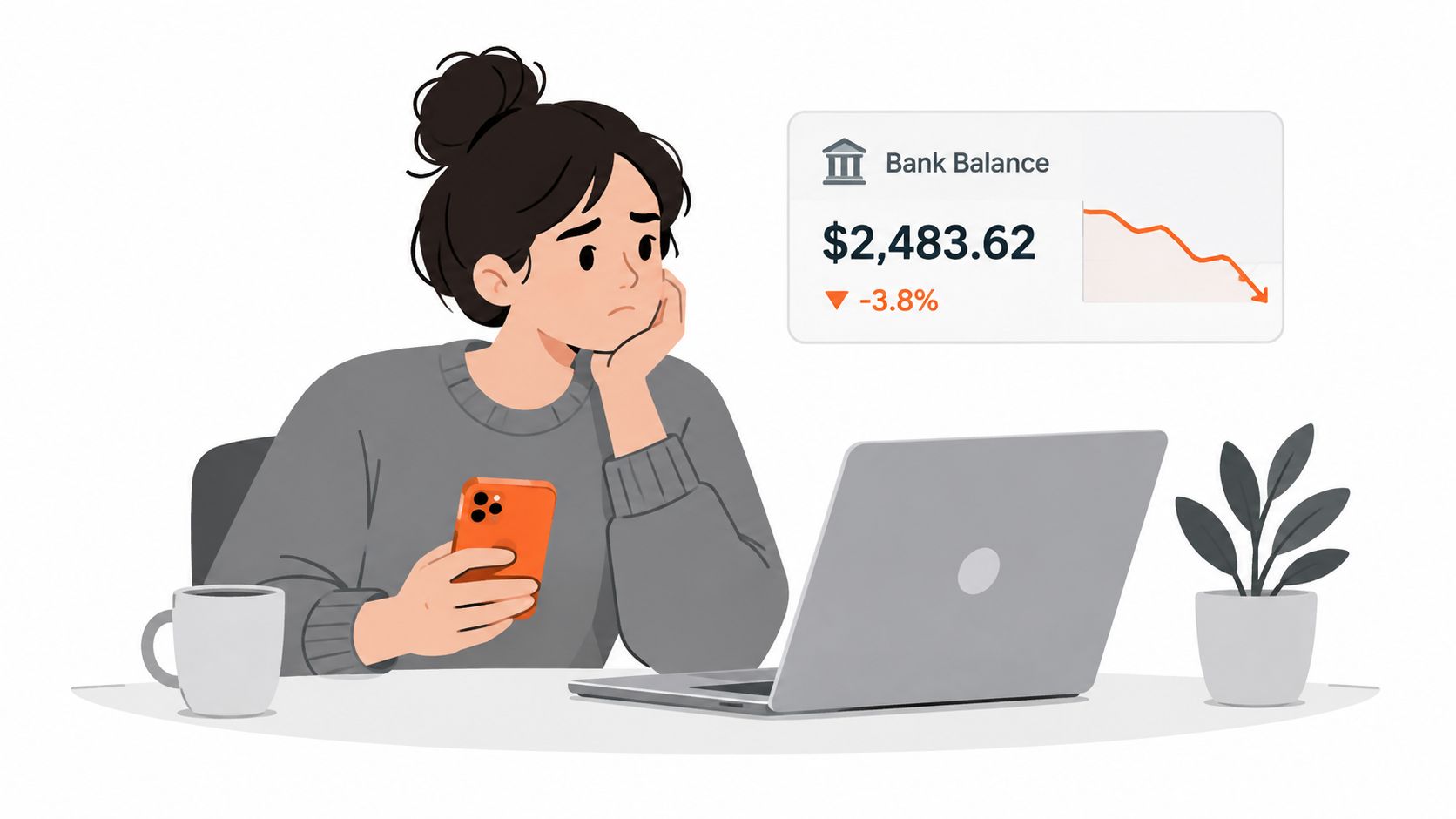
You may be staring at your bank balance after payday, wondering where the money went. The restaurant charge, online order, or subscription is easy to blame, but the larger issue may be rent, commuting, childcare, healthcare, or debt payments. A useful review replaces guilt with evidence: look for patterns, recurring commitments, rising balances, and the amount left after necessities.
Recognizing the Real Signs of Overspending
The question often arrives in a quiet moment. You check your chequing account, open a credit-card statement, and feel that familiar knot in your stomach. Nothing looks catastrophic on its own, yet your balance keeps falling faster than expected.
That feeling deserves attention, but it doesn't prove that every recent purchase was a mistake. A person can spend carefully on food and still struggle because housing consumes too much income. Another person can earn well, pay reasonable fixed costs, and still run short because discretionary purchases absorb the cash that should fund savings or debt repayment.
Look for patterns, not isolated purchases
Start with three questions:
- Does money last until the next paycheque? Regularly using savings or credit to cover ordinary bills suggests a cash-flow problem.
- Are balances moving in the wrong direction? Credit-card balances that rise month after month show that spending exceeds available cash, although essential cost increases may be part of the cause.
- Are important goals being postponed? If required bills are paid but emergency savings, debt reduction, or planned goals receive nothing, flexible spending may be too high for your current income.
The useful distinction is between expensive and financially damaging. A costly medical bill, rent increase, or commute isn't automatically overspending. A smaller recurring charge can be more harmful if it prevents you from building any reserve.
You can also review what falls into discretionary spending without treating it as morally wrong. This guide to discretionary spending helps separate optional purchases from necessities so your review reflects reality rather than shame.
Practical rule: A purchase becomes a problem when it repeatedly crowds out essentials, required debt payments, savings, or a stated goal.
If coffee is the category bothering you, review the full pattern before cutting it blindly. A practical resource on how to slash your coffee budget can help reduce the cost while preserving a routine you actually value. The point isn't to eliminate every pleasure. It's to direct reductions toward the changes that improve monthly cash flow.
Spending Benchmarks and Cash Flow Tests
Generic percentage rules can mislead households facing high local costs. California shows why. Housing costs consume at least 30% of income for a larger share of households than the 33% national average, nearly ten percentage points higher, according to the California affordability benchmark.
For a household earning $6,000 per month before taxes, 30% housing costs equal $1,800. Using the same benchmark, 40% equals $2,400. That difference leaves $600 less for food, transportation, healthcare, debt, savings, and emergencies. A percentage that looks manageable on paper can therefore create serious pressure when income and regional costs do not align.
Use three ratios
Classify the previous 90 days of transactions, then calculate these measures:
- Essential-spending ratio: essentials divided by after-tax income. Include housing, utilities, food, transportation, healthcare, insurance, childcare, and debt minimums.
- Fixed-cost ratio: recurring commitments divided by income. Include rent or mortgage payments, insurance, subscriptions, minimum debt payments, and other obligations that cannot easily change next month.
- Free-cash-flow ratio: income minus all spending and required savings, divided by income.
A persistently negative free-cash-flow ratio is a strong warning. Rising revolving-credit balances or discretionary spending that repeatedly absorbs the remaining cash also signal pressure, even when a headline budget rule appears acceptable. Use this guide to cash-flow management for a fuller way to monitor timing, bills, and available cash.
Regional benchmarks help separate habits from structural costs. United Ways of California's Real Cost Measure builds budgets by county and household composition, using American Community Survey data and regional Cost of Living Index values to adjust food, transportation, and healthcare costs (Real Cost Measure methodology).
| Indicator | Healthy Range | Concerning Sign |
|---|---|---|
| Essential spending | Essentials cover real household needs without consuming every paycheque | Essentials leave no room for savings, debt reduction, or emergencies |
| Fixed commitments | Recurring bills fit comfortably within after-tax income | A rent, loan, insurance, or subscription change would immediately create a shortfall |
| Free cash flow | Positive cash remains after spending and required savings | The ratio stays negative or depends on credit |
| Debt trend | Balances remain stable or decline | Revolving-credit balances rise month after month |
| Resilience | The budget can absorb an unexpected bill | A $1,000 shock would be very difficult or nearly impossible to pay, a situation reported by 19% of California adults, per the Real Cost Measure methodology cited above |
The practical question is whether spending supports required bills, savings, debt reduction, and reasonable resilience. A high ratio may reflect unavoidable local costs, while a negative cash-flow pattern shows that the current setup needs attention.
How to Audit Your Own Transactions
A transaction audit doesn't need to become a weekend spreadsheet project. Set aside about 30 minutes, collect the previous 90 days of account and card activity, and work from actual transactions rather than memory. Your aim is to identify the pattern that your monthly total hides.
Classify before judging
Put each transaction into one category:
- Housing and utilities: Rent or mortgage payments, electricity, water, internet, and other household bills.
- Essentials: Food, transportation, healthcare, insurance, childcare, and debt minimums.
- Discretionary spending: Restaurants, entertainment, shopping, hobbies, and convenience purchases.
- Savings and transfers: Emergency savings, investments, and transfers between your own accounts.
Don't count a credit-card payment as a second expense if you've already recorded the purchases. Likewise, transfers between your own accounts aren't spending, and annual insurance or tax bills should be assigned to the period they cover rather than treated as unexplained monthly leakage.
Find unusual behaviour
Calculate the 3-month median for each category. Then flag transactions more than 1.5 interquartile ranges above that category's normal range. This method helps distinguish a truly unusual purchase from a category that is just expensive every month.
Look separately for:
- Subscriptions: Services you no longer use or forgot to cancel.
- Duplicate charges: Repeated transactions from the same merchant.
- Late fees and overdrafts: Costs created by timing or insufficient cash.
- Post-payday purchases: Spending that spikes immediately after income arrives.
- One-time shocks: Medical, travel, repair, or annual costs that shouldn't be treated like a permanent habit.
The audit becomes useful when it leads to a decision. If one restaurant bill is unusual but your housing cost is consistently high, cutting dining may provide little relief. If several small subscriptions recur and your free cash flow is tight, cancelling one may be more effective than policing every occasional purchase.
For a broader record of what has already left your accounts, review your transaction history before changing the budget. Accuracy matters more than a perfect category label.
When High Costs Are Not Your Fault
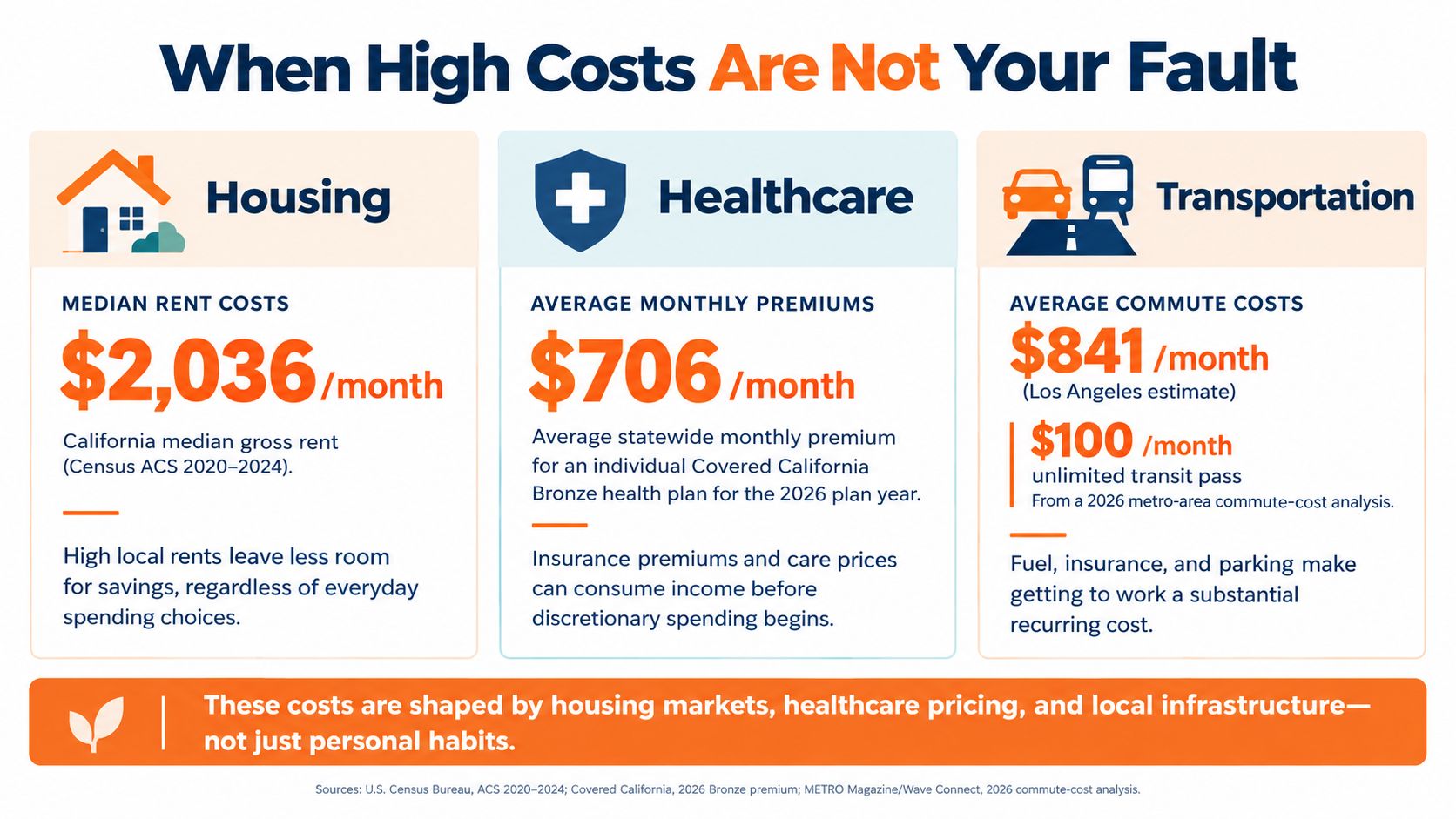
High spending doesn't always mean poor discipline. California's cost structure can make a careful household look overspent when the core issue is that necessities consume most available income.
The Public Policy Institute of California identifies housing as the largest household expense for most Californians and food as the third-largest. For lower-income Californians, food, housing, transportation, and healthcare together consume about 80% of household expenses, leaving roughly 20% for clothing, communications, education, debt payments, savings, and entertainment (California household spending context).
Separate structural costs from choices
The distinction is practical:
- Structural costs include housing, commuting, healthcare, taxes, and childcare. You may be able to change them, but they aren't instantly flexible.
- Controllable costs include subscriptions, shopping, delivery, restaurant frequency, and some entertainment.
- Strategic costs include education, career tools, insurance, and debt repayment. Cutting them without considering the long-term effect can create a false saving.
San Diego County shows why location matters. A single adult needs $67,783 annually to meet basic needs, with housing consuming 42% of the budget, taxes 19%, and transportation 17% (San Diego County cost analysis). A person in that position may not have a meaningful dining problem even if the total budget looks high.
“Am I wasteful?” is often the wrong first question. Ask whether the current income and obligations leave enough flexible cash for your goals.
That doesn't mean every high-cost bill must remain untouched. It means you should investigate the largest recurring constraint first. Moving closer to work, renegotiating insurance, changing housing, increasing income, or reviewing available benefits may matter more than removing a modest personal treat. If debt is part of the pressure, understanding options such as Colorado's small-dollar loans requires careful attention to terms, total cost, and repayment capacity. Borrowing isn't a substitute for fixing negative cash flow.
Building a Plan to Reduce Expenses
Once you know whether the pressure comes from fixed costs, volatile categories, or both, choose the intervention with the greatest effect. Cutting randomly feels productive, but it often leaves the main constraint untouched.
Start with recurring commitments. A $75 monthly cancellation produces $900 annually before tax, while a 10% reduction in occasional dining may produce far less (financial preparedness guidance). Review subscriptions, insurance, mobile plans, memberships, and financing terms before applying extreme limits to food or necessary transportation.
Use a priority order
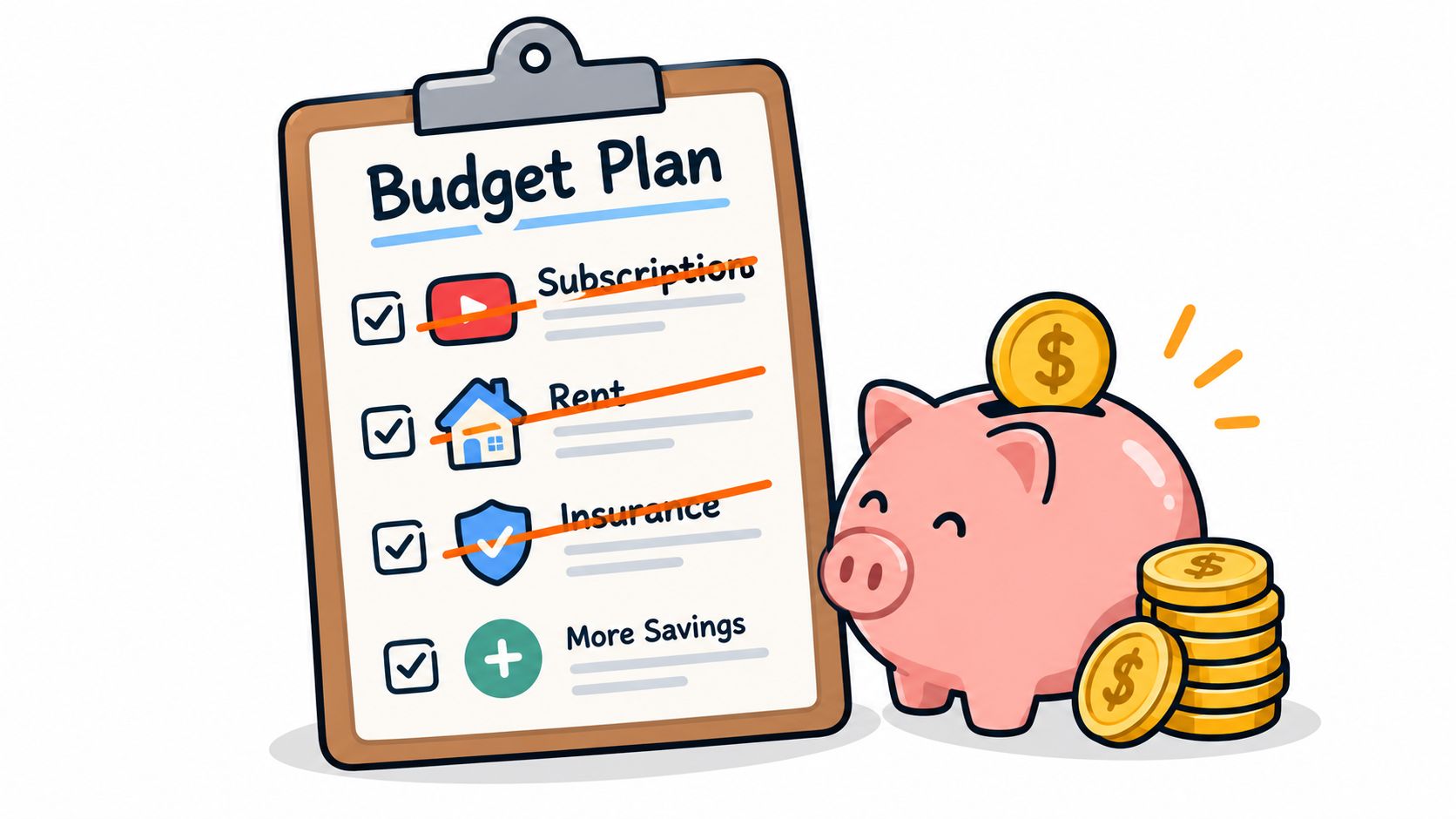
- Protect necessities first. Keep housing, utilities, food, healthcare, insurance, childcare, and minimum debt payments current.
- Reduce the largest recurring constraint. Ask whether you can renegotiate, switch, refinance, relocate, consolidate, or increase income. Don't treat rent, commuting, or childcare as if they can disappear through willpower.
- Remove leakage. Cancel unused subscriptions, correct duplicate charges, prevent overdrafts, and set limits on volatile categories.
- Build resilience. Direct the resulting surplus toward a liquid emergency reserve before optimising small purchases. An RBC poll cited a general emergency-fund target of three to nine months of expenses. For $4,000 in essential monthly costs, that equals $12,000 to $36,000, although the right amount depends on income stability, dependants, insurance, and other resources (RBC emergency-fund guidance).
A useful experiment lasts three consecutive months. Keep the change, then check whether cash flow stays positive, high-cost revolving debt stops growing, and automatic savings take place. If the plan works only when you skip necessary care or rely on another credit card, it isn't a sustainable solution.
Read these cost-cutting strategies with one filter: prioritise changes that reduce recurring costs without damaging health, work, housing stability, or your ability to earn. Sometimes the correct answer isn't another cut. It may be a better-paying role, a renegotiated contract, or a benefits review.
Tracking Spending with Automated Alerts
A one-time audit gives you clarity. Ongoing alerts help you notice when the pattern starts changing again.
Set category limits based on your actual after-tax cash flow, not an aspirational rule. Then create alerts for unusual transactions, duplicate charges, subscription renewals, and a spending pace that suggests you'll exceed a category limit before the period ends.
Fintrack can automatically categorise expenses, show category trends, detect subscriptions and duplicate charges, and provide spending alerts. Its manual-entry option also suits people who don't want to connect a bank account, while the automated insights approach keeps reviews focused on decisions rather than data entry. If buy-now-pay-later accounts are part of your picture, resources on Superior Credit Repair and BNPL can provide additional context, but always include those instalments in your fixed obligations.
Review alerts monthly and after a rent, job, household, or commuting change. The aim isn't to monitor every purchase with anxiety. It's to catch a worsening trend while you still have choices.
Use Fintrack to organise your transactions, compare essential and discretionary cash flow, and set alerts for subscriptions, duplicate charges, and category limits. A short monthly review can show whether your spending is improving your financial resilience, rather than just becoming more restrictive.