
You check your banking app in the morning, glance at your credit score, and see it moved again. Maybe it went up a little, maybe it dropped, and the part that nags at you is simple. You're not sure whether your credit utilization changed, or how to tell if the number on your card is the same one the credit bureaus will see.
A credit utilization calculator helps turn that uncertainty into a ratio you can read. It compares your revolving balances with your revolving credit limits, so you can see how much of your available credit you're using, and many calculators show both the per-card view and the overall view Bankrate's credit utilization calculator. The math is straightforward, but the timing of what gets reported matters just as much as the number you see today.
Why Your Credit Utilization Ratio Matters Right Now
You can pay on time, keep purchases ordinary, and still watch your score shift because a card balance was reported at the wrong moment. That is why credit utilization feels so confusing. The number on the screen is not always the number the bureaus receive.
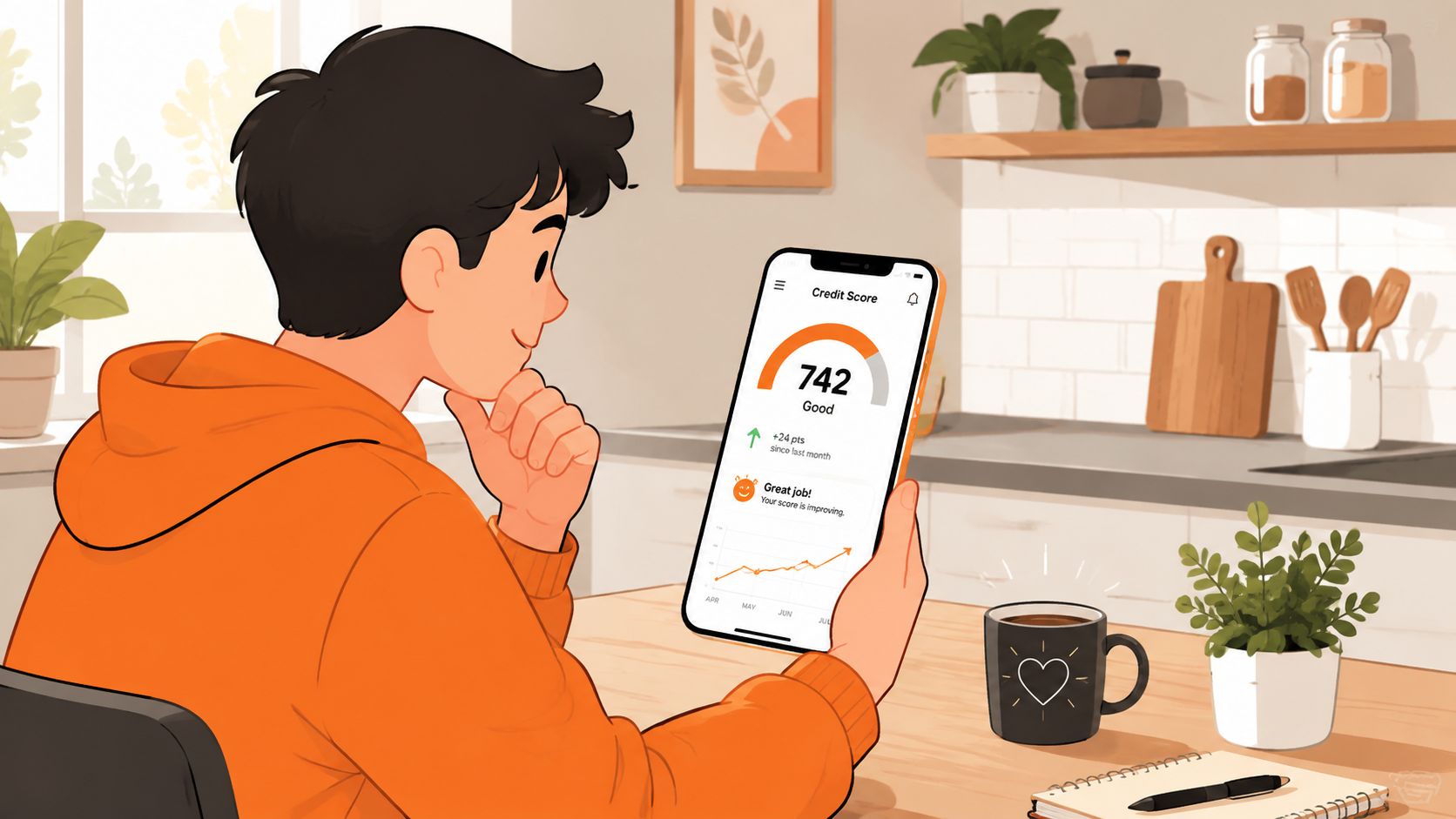
Credit utilization is a ratio. A calculator compares revolving balances with total revolving credit limits, so a $2,500 balance on a $10,000 limit equals 25% utilization Bankrate's calculator example. That number matters because it shows how much of your available revolving credit is being used, which is a different question from how much cash you have in the bank or how carefully you planned your monthly spending.
A useful way to picture it is a parking lot. If ten spaces are open and six are filled, the lot is more crowded than if only two are taken. Credit utilization works the same way, because lenders and scoring models look at how much of your available credit is already occupied. A lower ratio usually leaves more room before the picture starts to look crowded.
The timing issue is where people get tripped up. A payment made before the statement closes can reduce what gets reported, while a payment made after the close date may still leave a higher balance on the report. If you want to see how payment timing affects the reported balance, this guide to credit card payment timing helps connect the dots.
That timing is why a calculator matters, but it is also why the calculator alone is not the whole story. The ratio can be simple to measure and still confusing to manage if you do not know which balance the bureaus are likely to see.
If you want a plain-language overview of how credit scores fit into the bigger picture, the explanation from credit score explained by Freedom Cars gives useful context. And if you are working through missed payments or old debt, the broader process in what credit recovery means can help you understand what comes next.
How to Calculate Your Credit Utilization
A credit utilization calculator starts with a simple ratio. Take your revolving balance, divide it by your total revolving credit limit, then multiply by 100 to turn it into a percentage. That same basic method appears in FinanceCruncher's formula example.
A single-card example makes the math easier to follow. If a card has a $2,500 balance and a $10,000 limit, you divide 2,500 by 10,000 to get 0.25, then multiply by 100 to get 25% utilization. That means one quarter of the card's available revolving credit is already in use.
With more than one card, add all balances together and add all limits together, then divide the first total by the second. That combined view matters because a low balance on one card can sit next to a high balance on another card, and the overall ratio is what many people track to understand their credit profile LazySmirk's calculator notes.
| Card | Balance | Credit Limit | Utilization % |
|---|---|---|---|
| Card 1 | $2,500 | $10,000 | 25% |
| Card 2 | $750 | $5,000 | 15% |
| Card 3 | $0 | $2,000 | 0% |
The calculator is only as useful as the numbers you put in. If the balance or limit is off, the percentage will mislead you.
The result becomes easier to interpret once you separate the calculation from the timing. A balance that looks high today can drop before the statement closes, and a payment made too late can still leave a larger amount for the bureaus to see. That is why a calculator helps, but it does not tell the whole story by itself.
A practical way to keep the timing clear is to check your balance before the statement close date, then compare it with what posts after the payment clears. If you want a plain explanation of how timing changes what reports, this credit card payment guide connects the steps in a simple way.
If you want a broader credit context while you learn the numbers, the explanation from credit score explained by Freedom Cars is a useful companion read.
How Credit Utilization Affects Your Score
A credit score does not react to a balance in a vacuum. It reacts to the balance that lands on your credit report, which is why timing can matter as much as the size of the payment itself. A card that looks heavily used on a random weekday may report very differently if you pay it down before the statement closes.
Credit utilization matters because scoring models treat it as a meaningful sign of revolving debt load. Experian reported that the average overall credit utilization in the U.S. was 29% in Q3 2024 Experian via FinToolsuite. That gives you a real-world reference point, but it is not a target to copy blindly.
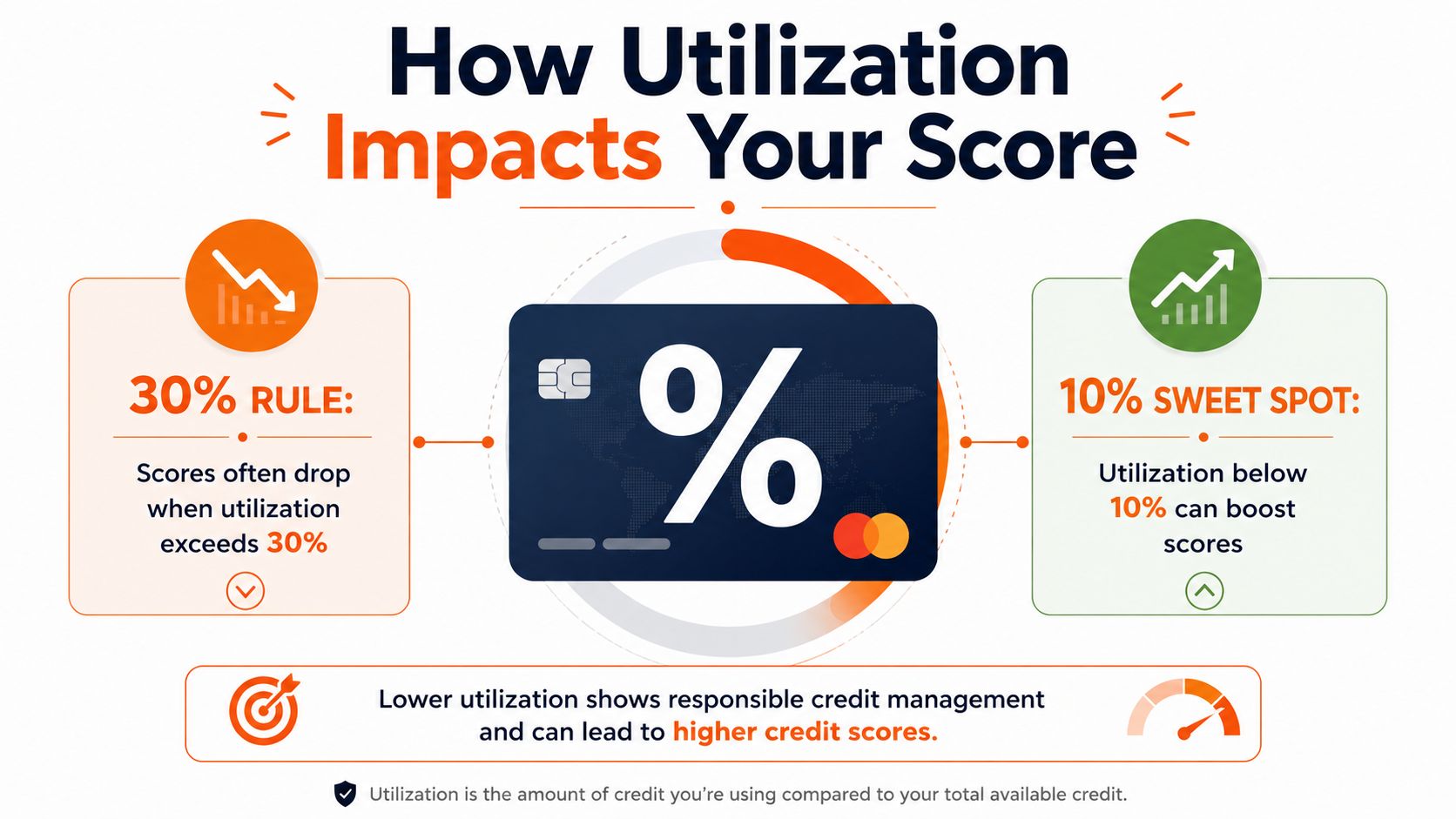
Many education tools still talk about 30% and 10% as familiar thresholds, because lower utilization is generally viewed as less risky than higher revolving usage. The point is not that one number is magical. It is that lower reported utilization usually looks better to scoring models than higher reported utilization.
The timing gap most calculators miss
A live calculator can show what your balance is today, but credit scoring models look at what gets reported on your credit report Experian. Issuers generally report balances at the end of the statement period, so a payment made after the statement closes may help next month, not this one Experian.
That timing gap is where a lot of confusion starts. You can pay your card down, feel responsible, and still see a higher reported utilization if the balance was captured before the payment posted to the statement cycle. On the other hand, a payment made before statement close can lower the reported balance that bureaus receive.
For a broader explanation of how a credit file gets back on track after trouble, what is credit recovery gives useful context. The key takeaway here is simple. Low live utilization and low reported utilization are not always the same thing.
If you want to keep the numbers in perspective, the explanation from credit score explained by Freedom Cars helps show where utilization fits inside the wider scoring picture.
Practical Strategies to Lower Your Utilization
The quickest gains usually come from timing, not from doing something dramatic. If you pay a balance before the statement closes, the lower amount is more likely to be the one that gets reported. One calculator can help you estimate the numbers, but the timing of your payment is what decides which balance shows up on the report.
That timing gap explains why two people can look very different on paper even when they are both paying responsibly. A payment made on the due date can leave a higher balance on the statement, while a payment made before the close date can lower what the bureaus receive. A cardholder who pays early may look better to scoring models even if the overall spending pattern has not changed much.
A few ways people lower the ratio
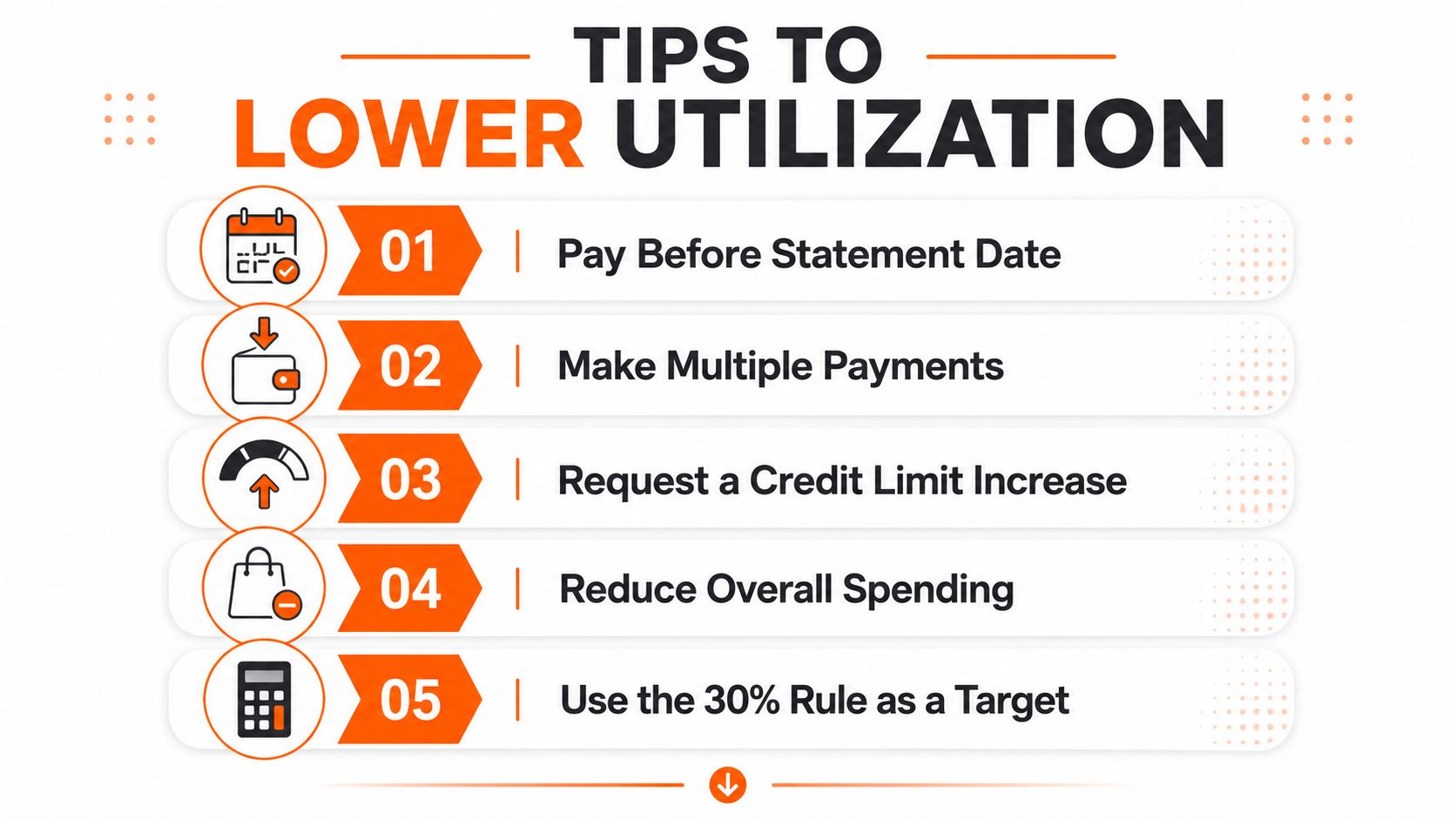
- Pay before the statement date: A payment timed before close can lower the balance that gets reported, which is the version that usually matters most for scoring.
- Split payments across the month: Smaller payments throughout the cycle can keep the running balance from climbing too high before the statement closes.
- Ask for a limit increase carefully: If your balance stays the same and your limit rises, utilization can fall, though the credit inquiry treatment depends on the issuer.
- Cut back on new charges temporarily: Less spending on the card means less balance to report at close.
- Use the ratio as a ceiling, not a goal: Keeping the number below a target matters more than chasing a specific “perfect” balance.
A credit card that carries a balance all month is not automatically a problem. The issue is the amount that gets reported relative to the limit, not the fact that the card was used at all. If you are trying to understand minimum payment behavior alongside utilization, the finance calculator by thecalcs can help you think through how payment choices affect the balance that remains.
You do not need to carry a balance to improve your score, and you do not need to leave a tiny balance behind as a strategy. Paying what you owe on time and keeping reported utilization manageable is the cleaner approach. If balance transfers are part of your plan, this guide to transferring a credit card balance can help you think through the trade-offs before you act.
How Fintrack Helps You Monitor and Manage Utilization
The hard part isn't learning the formula, it's keeping an eye on it without checking five different places. Fintrack gives you one dashboard for your balances, limits, and spending patterns, so you don't have to piece together the picture manually. That's useful when your goal is to see the ratio before it surprises you.

Make the number easier to check
Fintrack's AI assistant lets you ask natural questions about your money, so you can check what's happening without digging through statements one by one. That kind of conversational view is helpful when you want to understand whether balances are rising, falling, or sitting too close to your comfort zone Fintrack's personal finance assistant. It's the difference between scanning data and understanding what the data means.
Real-time spending alerts also help you catch the purchases that can push a card higher before statement close. Subscription detection can surface recurring charges that add to the monthly total. The Benefits Wallet can also help you spot cashback, unused credits, loyalty points, and similar value that might be put to better use elsewhere in your budget.
If your goal is to keep utilization under control, visibility matters more than willpower alone.
That's especially true for people who don't want to log into every bank portal separately or keep a spreadsheet updated by hand. The best system is the one you'll use every week, not the one that looks impressive once and gets abandoned. A clear dashboard makes the ratio easier to watch, and alerts make it easier to act before the statement closes.
Your Next Steps Toward a Healthier Credit Profile
A credit utilization calculator gives you the ratio, but the reported balance is what usually matters most for score impact. Pay attention to the statement close date, keep your revolving balances moving down, and use timing to your advantage when you can. If you're also cleaning up deeper credit issues, the guidance in how to remove collection items from a credit report can be useful alongside utilization work.
The simplest next move is to check your balances, calculate your ratio, and decide which card needs attention before the next statement closes. That's where consistent tracking starts to pay off.
If you want a clearer view of your balances, limits, and spending in one place, Fintrack can help you keep utilisation from drifting up between statement dates. Visit Fintrack to set up a simple dashboard that makes your credit picture easier to follow month by month.