Two days before payday, the car makes a grinding noise you cannot ignore. The shop quotes $600. Rent is already spoken for, groceries are thin, and the only instant cash that feels available is a credit card you will still be paying in the spring. That repair should be stressful. It should not knock the whole month over.
These emergency fund tips are for that week, whether you are paid in Canada or the United States. A full reserve of several months is a later milestone. The first job is a starter buffer you can finish, then a habit that keeps filling it without a fresh decision every Friday.
Eight moves follow. Each one ends with something you can do on the next paycheque. You do not need a perfect budget before you start.
1. Calculate Your Monthly Essential Expenses First
A savings target built on take-home pay is usually too vague, and often too big to start. The number that matters is what you must pay to keep the household running.
Add rent or mortgage, utilities, groceries, transportation, insurance, minimum debt payments, and phone or internet. Skip dining out, streaming upgrades, and the gift budget. That essentials total is the baseline.

The Financial Consumer Agency of Canada generally recommends three to six months of regular living expenses, and notes that some people use three to six months of income instead. Either method can work. Multiplying essential monthly costs is the more practical one, and FCAC says it is fine to start with an amount that feels manageable, even $50, $20, $5, or spare change each week.
Turn the bills into one number
A renter whose essentials come to $2,400 a month has a three-month target of $7,200. That is a destination, not this month's assignment. A household that reviews bills each January should update the target after a rent increase, because last year's figure goes stale.
Pull the last three months of statements and use a list of expenses so you are averaging real categories, not guessing.
- Essentials only: Housing, utilities, food, transport, insurance, minimum debt payments, phone, and internet.
- Irregular bills: Divide annual costs, such as car insurance, by twelve and add that line.
- Recheck yearly: A raise, a move, or a new childcare bill changes the target.
Next action: Tonight, total last month's must-pay bills and write that number at the top of a note labelled Emergency baseline.
2. Build a Starter Buffer Before Aiming for the Full Target
The full target is what people quit on. A starter buffer is the amount that stops the next ordinary shock from becoming credit-card debt.
About two in ten California adults would find a $1,000 emergency expense very difficult or nearly impossible to pay, while roughly two-thirds of California households have enough liquid assets to cover basic needs for one month without income, according to the Public Policy Institute of California. That gap is why the first milestone should be small and finished, not impressive and unfinished. Many US coaches, including Dave Ramsey's Baby Step 1, point people to a $1,000 starter before extra debt payments. One month of your own essentials is a sound alternative if $1,000 would not cover a typical repair where you live.
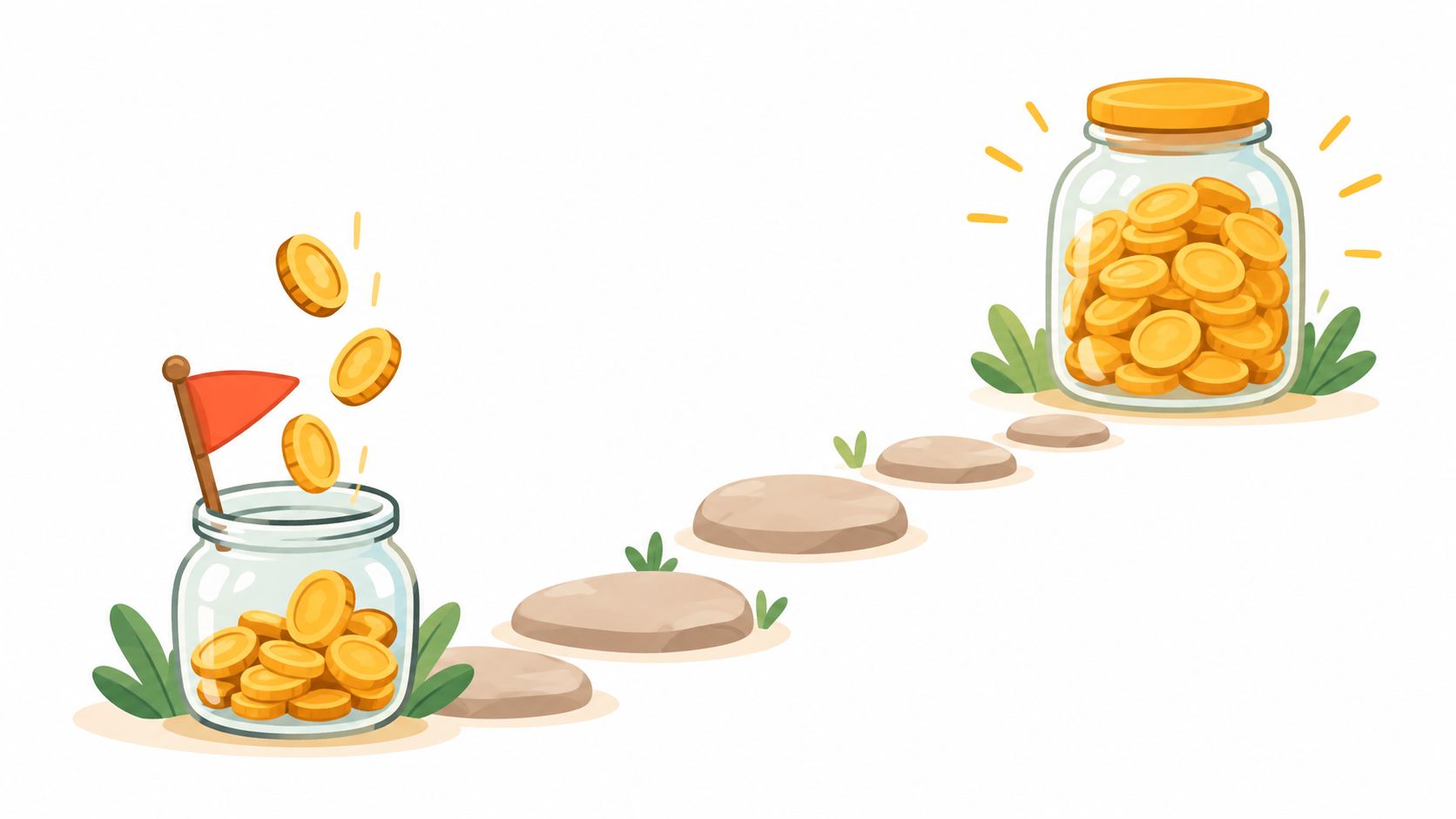
A household that saves $1,000 in four months has not "only" saved $1,000. It has a place for the brake job. After that, the same transfer keeps going toward three months.
Practical rule: Name the starter goal and the full goal separately. One visible finish line beats a single number you will not hit this year.
What does not work is parking the starter inside everyday chequing and calling it saved. It gets spent on a planned bill. Use the first buffer for a real shock, or for a known upcoming cost such as annual insurance, then celebrate once and set the next target.
Next action: Open a savings goal called Starter buffer, set it to $1,000 or one month of essentials, and ignore the three-month number until that first goal is full.
3. Keep the Fund in a Separate High-Yield Savings Account
Money that sits in the account you tap for groceries will not stay an emergency fund. Separation is the behaviour trick. Yield is the bonus.
A high-yield or high-interest savings account usually pays more than a standard savings account and still lets you move cash in a day or two. In the United States, look for an FDIC-insured bank. In Canada, look for a CDIC-member institution. Check the current protection limits with the regulator before you rely on them. Limits change, and a blog post should not be your compliance source.
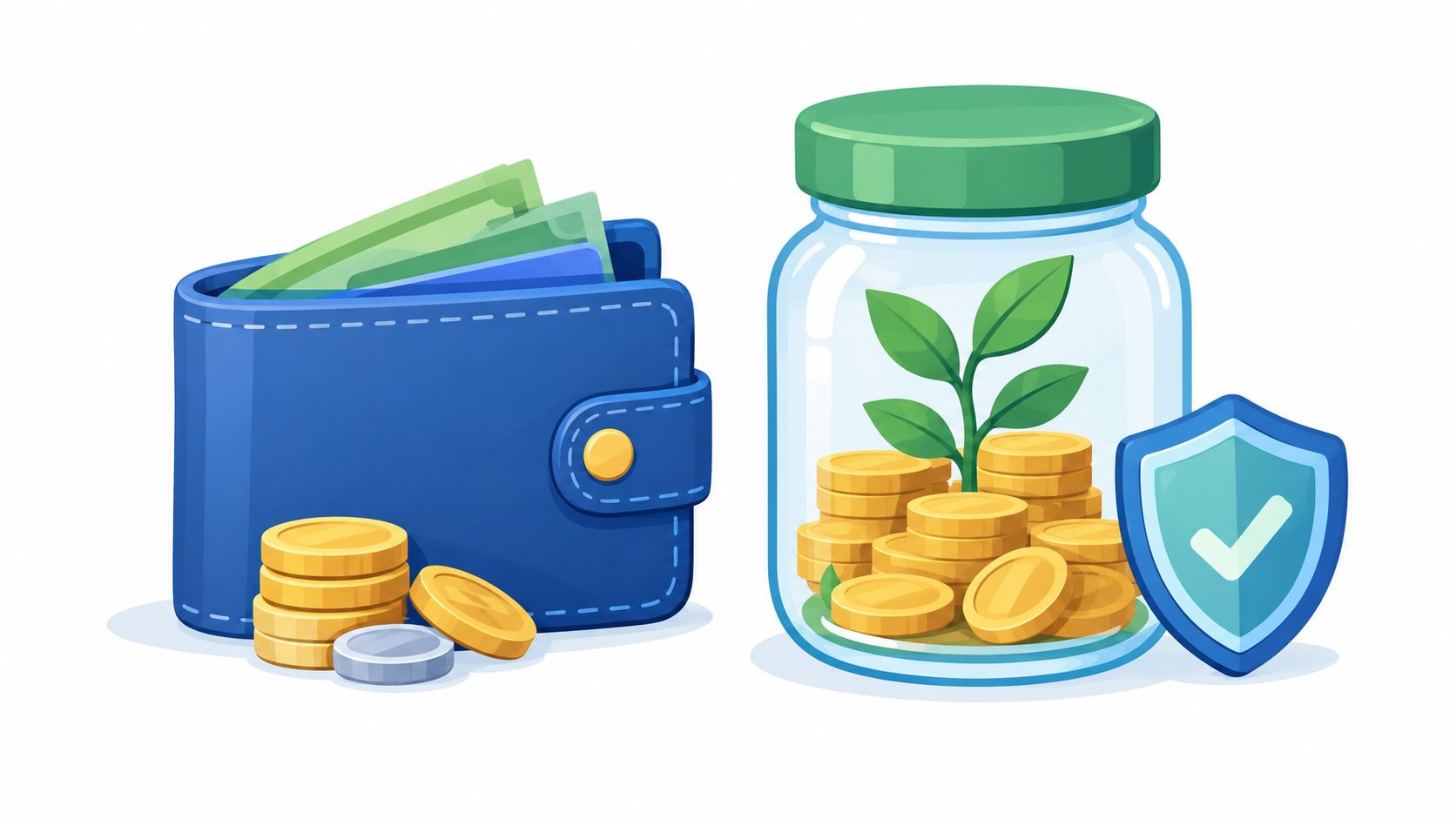
A Canadian saver might keep the fund at a CDIC-member online bank and glance at the rate each quarter. A US saver might use a separate online savings account named Emergency Fund. The label matters. "Savings 2" gets raided for concert tickets. "Emergency Fund" makes you pause.
Access versus a slightly better rate
Chasing the last fraction of a percent is a poor trade if transfers take a week or the account charges a fee that eats the interest. If you want the mechanics of how that interest compounds, it helps to see how interest works on a savings account before you move the balance.
- Name it: Use Emergency Fund, not a generic savings label.
- Confirm insurance: FDIC in the US, CDIC in Canada, checked on the regulator's site.
- Skip lockups for the first layer: The starter buffer has to be spendable this week.
Next action: Open or rename one insured savings account today, and move the starter buffer there before the next grocery run.
4. Automate a Fixed Transfer on Each Payday
Willpower is a bad savings plan. A transfer that leaves on payday, before you can negotiate with yourself, is the plan that survives a busy month.
In July 2022, FCAC research found that 41% of Canadians did not have emergency funds set aside for unexpected expenses, broadly stable versus 39% in August 2020. Low-income Canadians, Indigenous peoples, recent immigrants, and women were overrepresented. Waiting until the month "feels easier" is how that gap stays open. The research also does not define a fund by a fixed number of months, so a small automated balance still counts as a start.
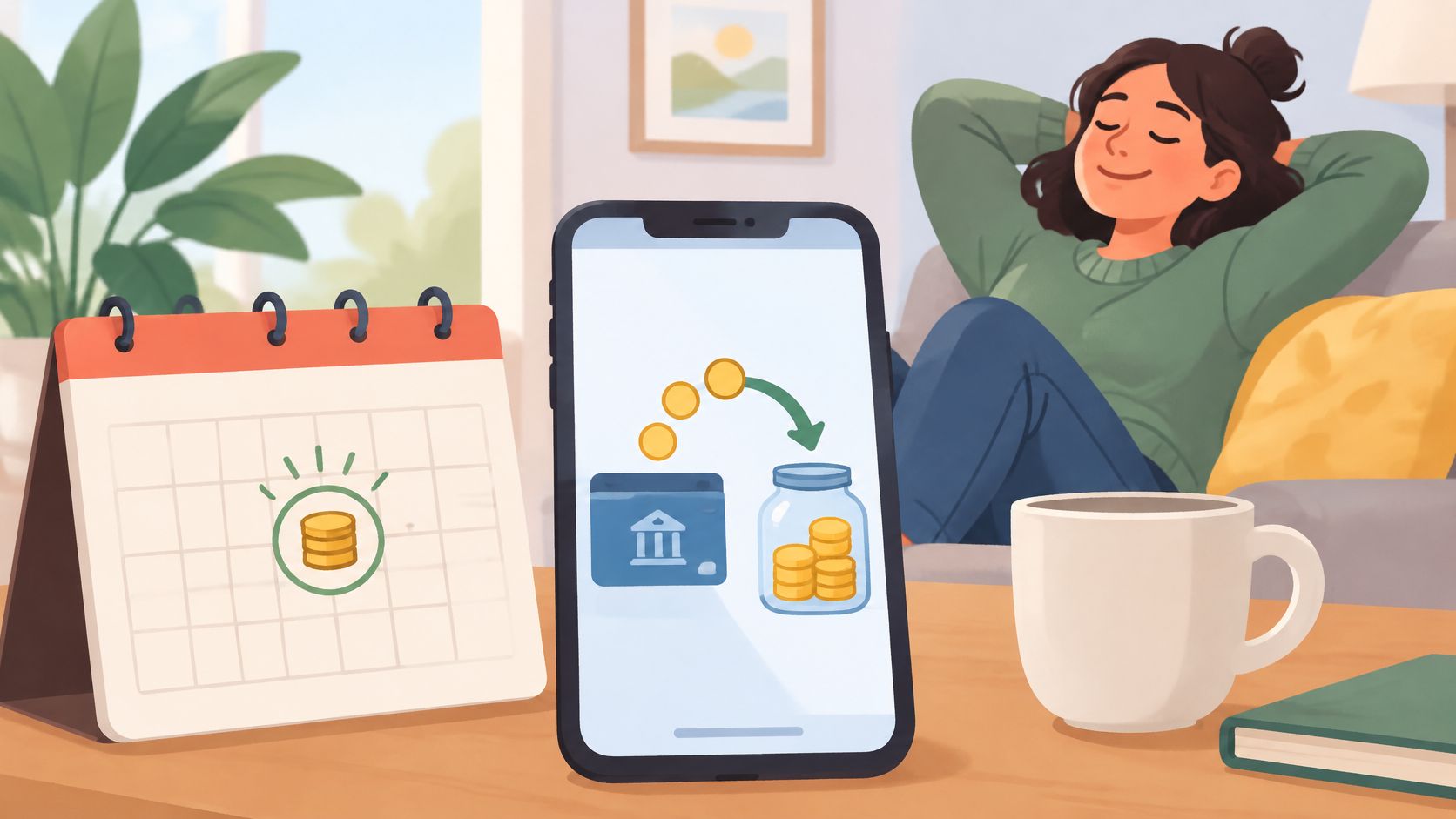
A couple might set a $200 transfer on each payday and revisit it after a raise. A freelancer with uneven invoices does better with a percentage after each payment lands, because a flat amount will bounce in a quiet month. Schedule the move for one or two days after payday so the deposit has cleared.
A transfer you can keep for three months beats a heroic amount you cancel in week two.
This is the same idea as the pay yourself first method: the emergency fund is a bill you pay to yourself, not whatever is left on Sunday.
Next action: In your banking app, schedule a transfer you could sustain for three months, dated one day after your next pay.
5. Fund the Emergency Pot From Unused Subscriptions and Recurring Charges
A bigger paycheque is not the only way to fund the pot. Money you are already losing to forgotten charges is often the fastest first deposit.
Cancelling three streaming services you rarely open might free $35 a month. That is $420 a year aimed at the buffer, without touching rent. A household that finds two duplicate cloud-storage charges can redirect that total the same day. The failure mode is cancelling and then letting the freed cash dissolve into takeout. The transfer has to be created on the day the subscription ends, for the same amount, into the emergency account.
Make the review a calendar item
Once a quarter, scroll every recurring charge: apps, gyms, cloud storage, boxes, memberships. If you have not used it in 30 days, cancel or downgrade it. A budgeting app that flags repeats saves you from hunting through three cards. How to manage subscriptions is the cleanup pass. The emergency fund is where the dollars go next.
- Quarterly audit: Bank, card, and app-store charges, not memory.
- Match the transfer: Cancelled amount goes to savings the same day.
- Small extras: Unused credits, cashback, or loyalty points can follow the same path.
Next action: Cancel one unused subscription this week and set an automatic transfer for that exact amount into the emergency account.
6. Use Windfalls and Tax Refunds to Top Up the Fund
Payday transfers build the fund slowly. A refund, bonus, or cash gift can move the target by months in one deposit, if you decide the split before the money hits.
A couple that sends a $1,800 tax refund entirely to the emergency fund may finish a starter buffer in an afternoon. A worker who sends 75% of a year-end bonus to savings and keeps 25% for a trip they already planned is less likely to blow the whole cheque and feel punished. Write the split down. "I'll be good when it arrives" is not a plan. It is how the refund becomes a new couch.
In the California Work and Health Survey, 29% of working-age Californians said they could not sustain an unexpected $400 expense. Even among households earning $65,000 to $100,000, 14% could not sustain that $400 shock. Income does not protect you if the extra cash never becomes a reserve.
Decide the percentage before the deposit notification. Afterwards, you are shopping.
Keep windfall money in the emergency account until the written target is met. Track it as its own savings goal so you can see what that one deposit did, instead of watching it vanish into the general balance.
Next action: Write one sentence now: "When the next refund or bonus arrives, X% goes to the emergency fund the same day."
7. Split the Fund Across Accounts to Balance Access and Growth
One account is simpler. Two accounts can earn a bit more, if the first layer stays instantly usable. The mistake is locking up money you might need on a Thursday night.
Keep at least one month of essentials fully liquid in the high-interest savings account. Anything beyond that can sit in a slightly slower option. A Canadian saver might hold one month in a high-interest account and the rest in a short-term GIC. A US saver might keep two months in high-yield savings and the rest in a money market fund. Read the withdrawal rules, minimum terms, and fees before you move a dollar. A penalty that traps cash during a job loss defeats the point.
Where a TFSA fits, and where it does not
In Canada, a Tax-Free Savings Account can hold emergency savings that grow tax-free. Contribution room and withdrawal timing have rules. Confirm your current room with the Canada Revenue Agency or a qualified advisor before you treat the TFSA as the only pot. If you withdraw and recontribute in the same year without room, you can create a tax problem that costs more than the interest you earned.
People who already juggle chequing, savings, and a registered account often lose track of which balance is the emergency fund. A simple map of how to manage multiple bank accounts keeps the liquid month separate from the slower layer.
Next action: Leave one month of essentials in the everyday savings account, and only then ask whether a GIC or money market fund is worth the extra step.
8. Review and Reset the Fund Every Quarter
A target from last year can be wrong by spring. Rent rises, a job changes, a child arrives, or you spent the fund on a real emergency and never refilled it.
Put a 20-minute review on the calendar every three months. Compare the balance with your essentials baseline. Confirm the payday transfer still fits. If you withdrew, set a refill goal the same week. A worker who used the fund for an urgent car repair and refilled it within three months kept the habit. A household whose rent jumped should raise the target and the transfer together, not hope the old number still covers a bad month.
Cash is not your only layer. California generally requires employers to provide at least five days or 40 hours of paid sick leave a year, which can shrink the cash you need for a short illness, though state guidance is about leave, not about replacing every kind of income loss. People who are too sick or injured to work are generally not eligible for unemployment benefits for those days, while disability benefits may apply instead. Know which door you would use.
The 2025 Real Cost Measure report found that 35% of California households, more than 3.8 million, do not earn enough to cover basic living expenses. For those households, a huge three-month target can make this month harder. A small liquid balance, a benefits check, and a list of bills you could pause is more honest than an unreachable goal.
Write five lines: job loss, urgent medical costs, essential car or home repair, and two items that are not emergencies. Planned trips do not qualify.
If you want a second set of eyes, ask a budgeting assistant to summarize three months of spending and flag when the target no longer matches the bills.
Next action: Block 20 minutes this quarter, rewrite what counts as an emergency, and set a refill amount if the balance is below your starter goal.
8 Emergency Fund Tips Compared
| Strategy | Implementation Complexity | Resource Requirements | Expected Outcome | Ideal Use Case | Key Advantage |
|---|---|---|---|---|---|
| Calculate monthly essential expenses | Low | Recent bills and spending records | A measurable emergency-fund target | Setting or updating a savings goal | Bases the target on actual essential costs |
| Build a starter buffer | Low | Small, regular contributions | A first reserve for common minor emergencies | Starting from little or no savings | Creates an achievable early milestone |
| Keep the fund in a separate high-yield savings account | Low | Eligible savings account; account research | Accessible savings that may earn interest | Keeping emergency money separate from daily spending | Combines accessibility with reduced accidental spending |
| Automate a fixed transfer on each payday | Low | Checking and savings accounts; sustainable transfer amount | Consistent, recurring contributions | People who want saving to happen routinely | Reduces reliance on willpower |
| Redirect unused subscriptions and recurring charges | Medium | Review of recurring charges; cancellation and transfer setup | Savings from reduced existing expenses | Finding ways to save without increasing income | Turns spending cuts into fund contributions |
| Use windfalls and tax refunds to top up the fund | Low | A plan for allocating irregular income | Faster progress when one-time money arrives | People who receive bonuses, refunds, or gifts | Can add larger amounts without changing monthly contributions |
| Split the fund across accounts | Medium | Multiple accounts and review of access rules | Balance between liquidity and potential returns | Savers comfortable managing different account types | Matches access and growth needs across portions of the fund |
| Review and reset the fund quarterly | Low | Scheduled reviews and updated expense information | A target and contribution plan that stay current | Households with changing costs or fund withdrawals | Helps identify shortfalls and clarify withdrawal rules |
Start With This Paycheque, Not Someday
You do not need all eight moves before the next surprise bill. You need one that changes this pay period. Calculate the essentials total, schedule a transfer you will not cancel, or cancel one subscription and send that amount to savings the same day. A $25 automatic transfer is a real start if $200 would bounce.
Pick the order that matches your cash, not a generic chart. If you cannot cover a $400 repair without a card, the starter buffer comes before a GIC, a TFSA shuffle, or a six-month fantasy number. If the starter buffer is already sitting in a named, insured account, the next gain is usually automation plus a quarterly reset, not a new app category.
Track both goals where you can see them: starter buffer, then the multi-month reserve based on essentials. Savings goals in Fintrack let you set a target and a deadline, tie the goal to an account, and watch the milestone instead of guessing from a bank balance. That is useful on both sides of the border, including if you enter transactions yourself and do not want to connect a bank.
Review the number every quarter. Costs move. So should the target. The fund works when it is separate, automatic, and reserved for the short list you wrote down, then refilled after you use it.
Fintrack is an AI budget planner with emergency-fund goal templates, payday transfer tracking, and subscription detection so cancelled charges can move into savings instead of disappearing. You can set a starter buffer and a full reserve, link them to accounts, and check progress without a spreadsheet. If you want that safety net tied to your real bills, visit Fintrack.