
You move money into savings. You leave it there. A month later, the bank pays interest, and the amount looks tiny.
That moment throws a lot of people off. You did the responsible thing, but the result can feel underwhelming enough to make you wonder whether savings interest even matters.
It does matter. But to understand whether your money is really growing, you need to know more than the headline rate. You need to know how interest is calculated, how often it compounds, and in Canada, what happens after tax and inflation take their share.
Why Your Savings Account Isn't Growing as Fast as You'd Hoped
A common scenario goes like this. You build the habit, move part of each paycheque into savings, and try not to touch it. Then you open your banking app and see a small interest deposit that barely feels noticeable.
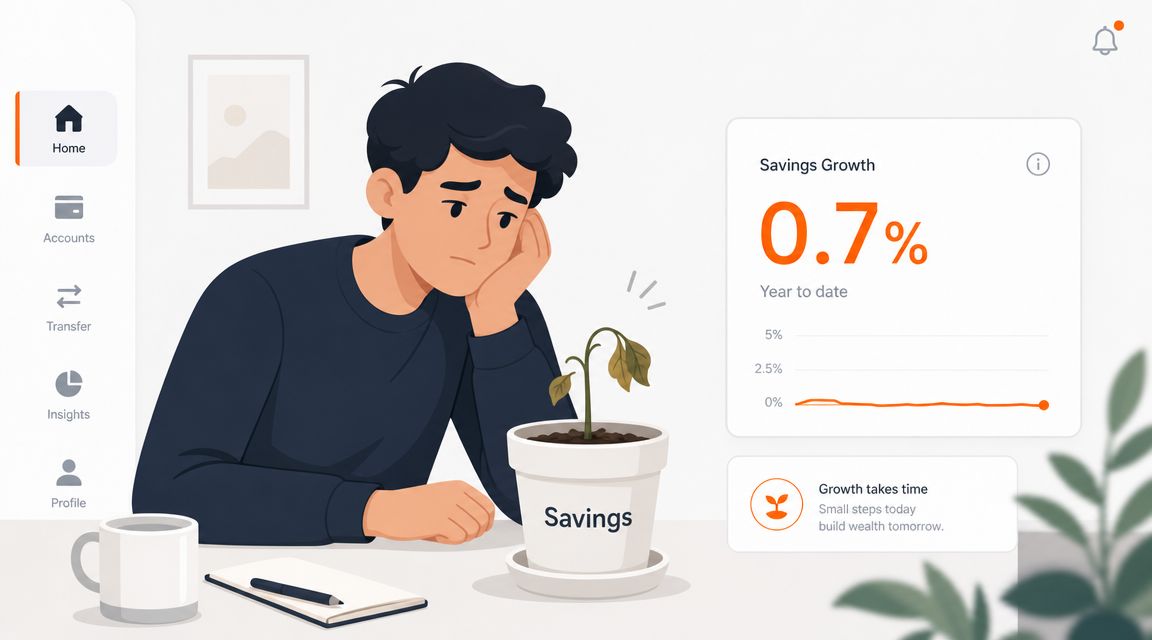
That reaction is reasonable. Savings interest is often pictured as a steady reward for being disciplined. In real life, the visible payoff often starts slowly, especially when your balance is still modest or you're adding money gradually.
What people expect versus what they see
People usually expect one of two things:
- A bigger monthly deposit: They assume the bank will add a meaningful amount every month.
- A simple straight-line return: They expect the posted annual rate to translate neatly into an obvious monthly gain.
- Immediate momentum: They think growth should feel fast right away, not gradual.
Instead, savings tends to feel quiet. It works in the background. That can make it seem ineffective, even when it's doing exactly what the account terms say it will do.
The small early deposits don't mean savings interest is broken. They usually mean the balance, the rate, or the compounding timeline hasn't had enough room to work yet.
The real question behind the frustration
When people ask how does interest work on a savings account, they're usually asking something more practical:
- Why is the amount so small?
- How is the bank calculating it?
- Does compounding make a difference?
- Am I earning enough to stay ahead of rising prices?
Those are the questions that matter.
If you're building cash reserves for short-term goals or trying to protect yourself from surprise expenses, it helps to understand what your account is doing and what it isn't. If you're still setting up that foundation, this guide to an emergency fund in Canada is a useful next read.
Simple Interest vs Compound Interest The Real Engine of Growth
The biggest idea to understand is the difference between simple interest and compound interest. They sound similar, but they behave very differently over time.
Simple interest stays flat
With simple interest, the bank calculates earnings only on your original deposit. If your balance never changes, the interest amount stays the same each period.
That makes simple interest easy to understand. It also means growth is limited. You're earning on the starting amount, not on the interest that has already been added.
Compound interest builds on itself
Compound interest is where savings becomes more interesting. Once interest is added to your account, future interest can be calculated on that larger balance.
A good way to picture it is a snowball rolling downhill. At first it looks small and unimpressive. As it keeps moving, it gathers more snow, and that larger snowball can gather even more.
Practical rule: Simple interest pays you on your starting money. Compound interest pays you on your starting money and the interest it has already earned.
Simple vs. Compound Interest at a Glance
| Feature | Simple Interest | Compound Interest |
|---|---|---|
| What it's calculated on | Your original deposit only | Your deposit plus previously earned interest |
| Growth pattern | Straight and steady | Gradually accelerates |
| Best way to think about it | A flat repeat payment | Interest earning interest |
| Longer-term effect | More limited growth | Stronger growth potential |
| Why savers care | Easy to predict | More rewarding if money stays put |
Why this difference matters in real life
If you only remember one thing, remember this. Compounding is the part that gives savings momentum.
That's why the annual rate by itself doesn't tell the full story. To compare returns properly, you need to know whether the account compounds and how often. If you want a broader explanation of how growth is measured across different kinds of savings and investing, this article on rate of return helps put the term into plain language.
How Banks Actually Calculate Your Interest Earnings
Banks often present savings interest as an annual rate. That's useful, but it can hide the mechanics that determine what you receive.
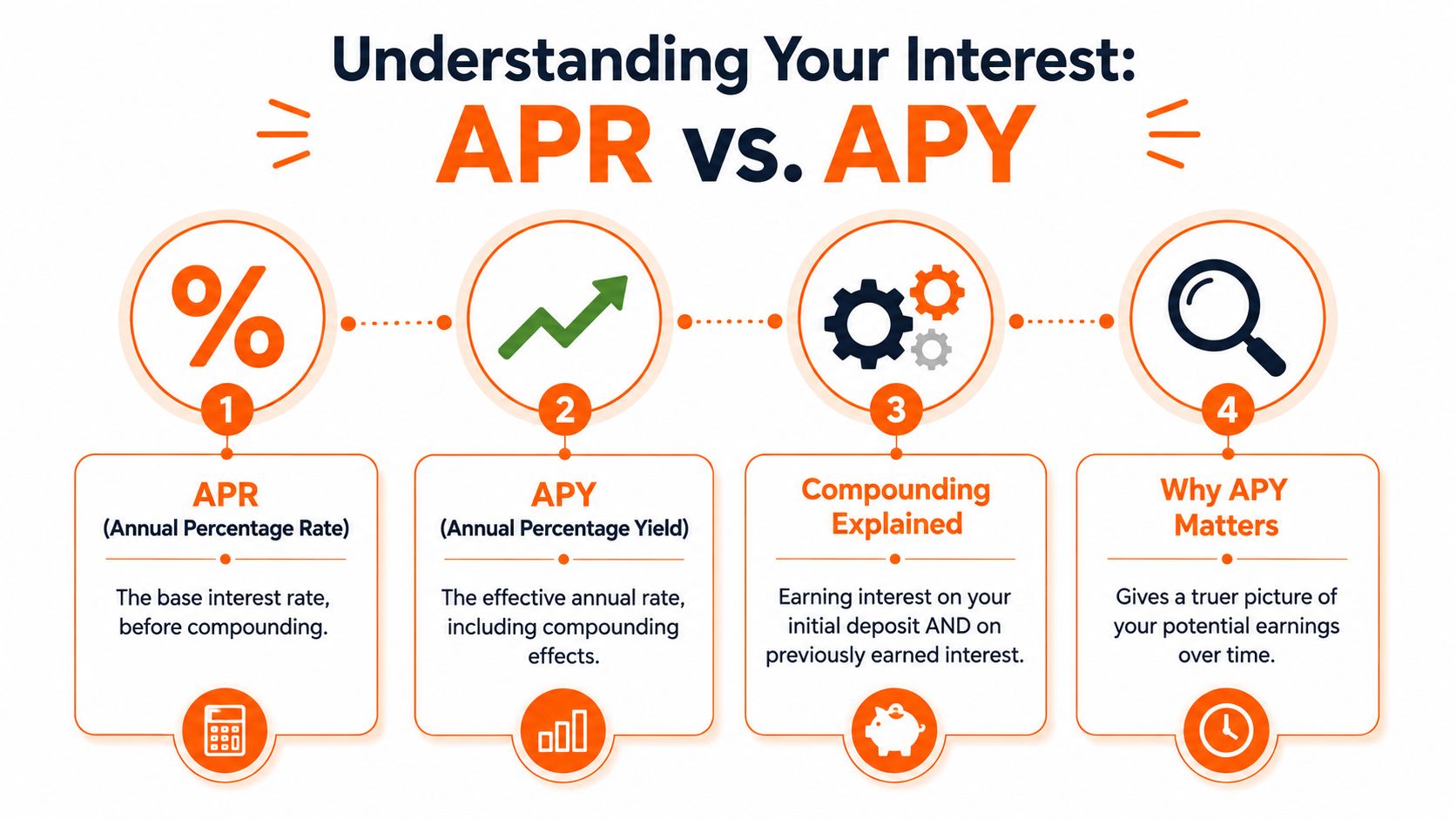
APR and APY are not the same thing
APR is the base annual rate. It tells you the stated interest rate before compounding effects are folded in.
APY goes a step further. It reflects the impact of compounding, which makes it the more useful number when you want to understand what your savings may earn over time.
If you're comparing accounts, APY usually gives you a clearer apples-to-apples view. Two accounts can look similar at first glance, but the one with more favourable compounding can produce a better effective return.
How compounding works inside a savings account
In Canada, savings-account interest is often shown as an annual rate, but the actual growth depends on compounding. TD Canada Trust explains that savings interest can be calculated on the initial deposit and then compounded so that later periods also earn interest on previously credited interest, while RBC notes that many personal savings accounts calculate interest daily and pay it monthly. You can read TD's explanation in its guide to calculating savings interest rates.
That daily calculation and monthly payment pattern matters. Even if you only see one interest deposit land each month, the bank may be tracking your balance day by day in the background.
What to look for when comparing accounts
When you review a savings account, check these details:
- The advertised annual rate: This tells you the headline number, but not the whole story.
- Whether the account compounds: Compounding changes the effective return.
- How often interest is calculated and paid: Daily calculation and monthly payment are common features worth noticing.
- Any conditions attached to the rate: A high posted rate may not apply in every situation.
If you ever compare this with borrowing products, the logic flips. With savings, compounding helps you. With debt, it can work against you. That's why a guide to understanding small business loan rates can be useful if you want to see how interest mechanics affect the borrower side instead.
A Step-by-Step Calculation of Savings Growth
It's easier to trust compounding when you can see it.
Experian gives a clear example: a $10,000 deposit in a high-yield savings account at 5% APY compounded monthly would earn $511.62 after one year, which is more than the $500 you'd earn with simple interest. The example appears in Experian's explainer on how interest works on a savings account.
What happens in the first few months
Start with $10,000.
In the first month, interest is calculated on that full balance. Once that first interest amount is added, your balance is slightly higher.
In the second month, the bank calculates interest on the new balance, not just the original $10,000. That means you're now earning a little interest on the first month's interest.
By the third month, the same thing happens again. The balance keeps inching upward, and each new interest calculation uses that updated amount.
The shift is small at first. That's why compounding can feel invisible early on. Its value shows up when money stays in the account long enough for those extra layers to stack.
Why the total beats simple interest
With simple interest, the math would stay tied to the original deposit the whole year. In that example, that would produce $500.
With monthly compounding, the final interest comes to $511.62 instead. The gap isn't magic. It's the result of earning interest on previously earned interest.
What this means for your own savings
You don't need a huge balance to benefit from compounding. What you need is consistency and time.
That's one reason many people keep separate pools of money for upcoming costs. If you use savings for planned expenses like car repairs, annual bills, or holidays, a sinking fund can help you stay organised while still letting your money keep earning in the background.
The Real Growth What Your Savings Earn After Taxes and Inflation
A savings account can show growth on paper while your real spending power barely moves, or even slips backward.
That's the part many beginners never get told. The bank posts interest to your account, but the number you see is not always the number that improves your financial position in a meaningful way.
Taxes reduce what you keep
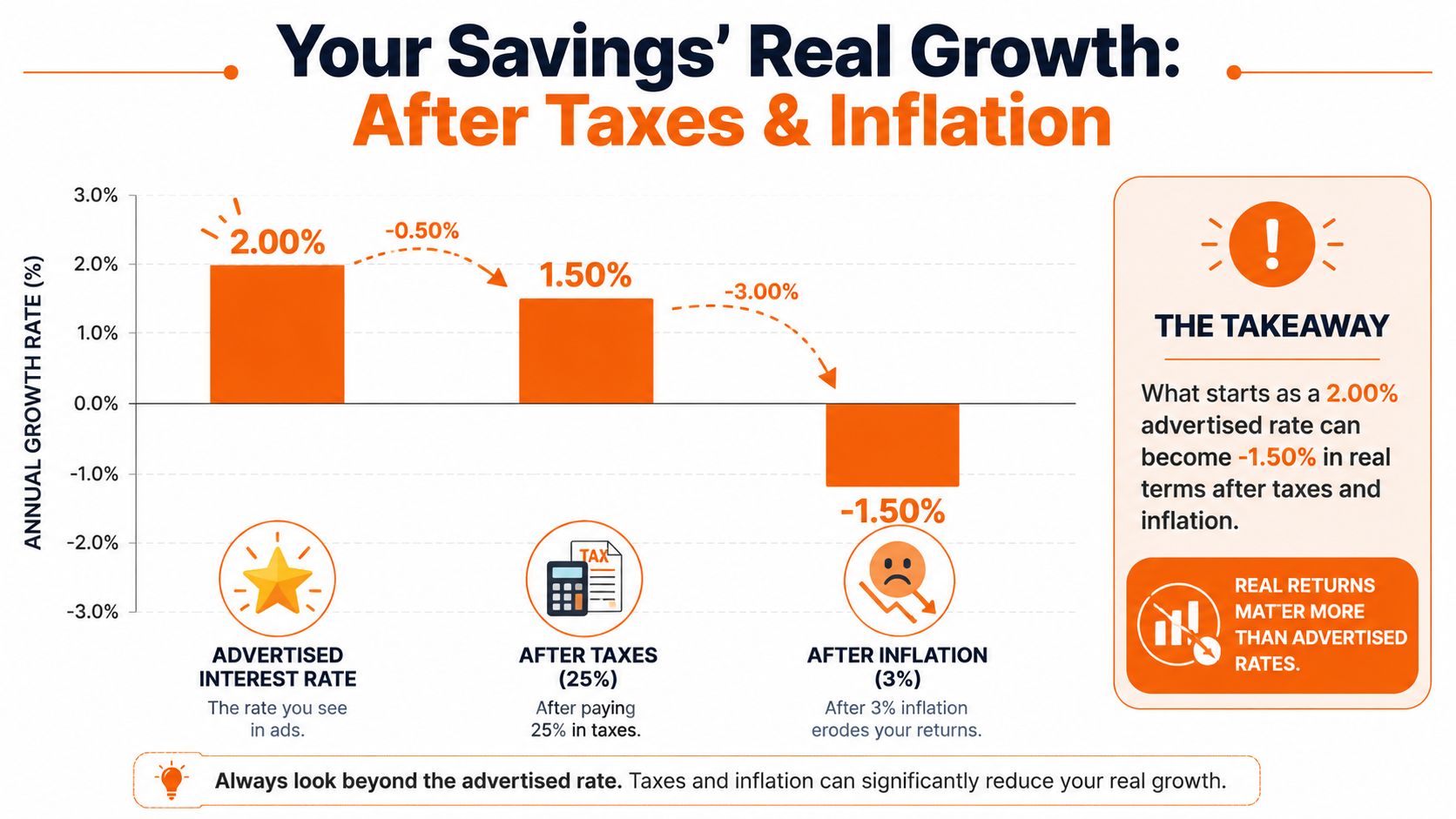
In Canada, interest earned in a regular savings account is taxable. RBC also notes that tax treatment differs depending on whether interest is earned in a regular taxable account or in registered accounts such as a TFSA or RRSP, and that inflation can reduce the purchasing power of your savings even while the balance grows. That context appears in RBC's article on how savings account interest works.
That means the posted return isn't always your keep-in-your-pocket return. If the account is non-registered, part of the interest may eventually go to tax.
Inflation changes what your money can buy
Inflation is quieter than a fee, but it can be just as important. Your account balance may rise while everyday prices rise too.
If prices increase faster than your savings purchasing power, your statement can look healthier even though your money buys less than you expected.
A growing balance and a growing buying power are not the same thing.
A simple way to think about your real return
You can think about your savings result in three layers:
- Headline return: What the bank advertises.
- After-tax return: What remains if the interest is taxable.
- After-inflation return: What your money is worth in real purchasing terms.
You don't need a complicated spreadsheet to use this idea. Ask yourself:
- Is this account taxable or sheltered?
- Is the interest rate strong enough to matter after tax?
- If prices keep rising, is my cash still preserving value?
Where registered accounts fit in
A TFSA can be especially useful for savings because eligible interest earned inside it doesn't create the same tax drag as interest in a regular taxable account. An RRSP changes the tax timing in a different way, which can also matter depending on the goal.
If you want to understand why delaying tax can change your long-term result, this plain-English guide to tax deferral is worth reading.
Simple Ways to Earn More Interest on Your Savings
Once you understand how does interest work on a savings account, the next step is practical. You want more of your cash in the right place, earning the best return available for the job.
A short checklist that actually helps
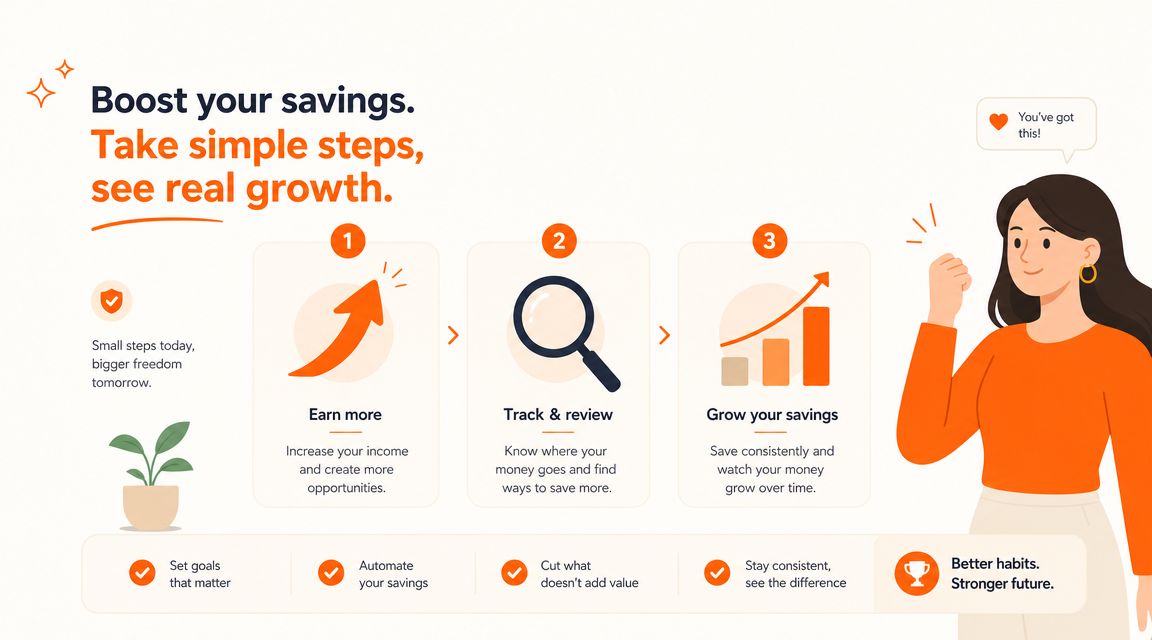
- Compare account details: Don't stop at the big rate on the product page. Look at how the account handles interest and whether the offer has conditions.
- Use the right account for the right goal: Emergency cash, short-term bills, and money you'll need soon often belong in savings. Longer-term goals may need a different home.
- Automate contributions: Even small automatic deposits help because they keep the balance moving upward without relying on willpower.
- Leave the money untouched when you can: Compounding works best when the balance stays in place and keeps building.
- Watch out for taxes: If a TFSA fits your situation, it can help protect more of your interest from tax.
- Review promotional rates carefully: A high intro rate can still be useful, but only if you know what happens after the promo ends.
One habit that makes all of this easier
Separate your savings by purpose. When money has a job, you're less likely to pull from it casually.
That could mean one pool for emergencies, one for annual expenses, and one for near-term goals. If you're comparing options for where to park cash, this breakdown of a Renaissance High Interest Savings Account may help you think through what to check.
Savings works best when you pair a decent rate with a clear reason for the money to stay put.
The result is usually less dramatic than social media makes it sound. But it's real, dependable, and useful. That's exactly what most savings money is supposed to be.
If you want an easier way to put this into practice, Fintrack can help you organise savings goals, see your cash position clearly, and keep your progress visible without relying on spreadsheets.