
Your credit card bill is due tomorrow. Your chequing account is low. Another card still has room on it, so the obvious question hits fast: can you use one credit card to pay another and buy yourself some time?
That question comes up more often than people admit. Canadians lean heavily on cards for day-to-day spending. In the Bank of Canada's 2023 Method of Payment Survey, credit cards were used for 67% of in-person transactions and 56% of online transactions, which helps explain why so many households end up juggling multiple card balances (consumer payment statistics in Canada).
The short answer is that direct credit card-to-credit card bill payment usually isn't how the system works in Canada. But there are a few workarounds. Some are structured and reasonable for a short-term fix. Others are expensive enough that they can make a bad month worse.
Can You Pay a Credit Card with Another Credit Card
Those asking how to credit card to credit card payment aren't looking for a finance hack. They're trying to avoid a missed due date, extra interest, or a hit to their credit.
In practice, Canadian card issuers generally want your payment to come through approved channels such as bank bill payment, pre-authorised debit, phone, mail, or branch service. They don't usually let you log in and submit Card A as the payment source for Card B. That's why a direct card-to-card payment option is usually missing.
That can feel strange because cards are everywhere. You can tap for groceries, pay online in seconds, and move through checkout with almost no friction. But credit card bill payments run on a different set of rules than ordinary purchases.
Why the direct method usually doesn't exist
A credit card purchase and a credit card bill payment aren't the same thing.
When you buy something, the card network routes an approved purchase through merchants, acquirers, and issuers. A bill payment to another credit card account is different. Issuers typically don't treat another credit card as a normal funding source for that debt.
Practical rule: If you're trying to make one credit card behave like a chequing account, you're usually outside the standard payment flow.
So if the answer isn't a simple yes, what works?
The workarounds people use
The main workarounds are:
- Balance transfer: Move debt from one card issuer to another through an approved transfer process.
- Cash advance: Pull cash from one card, deposit it, then use that money to pay the other card.
- Third-party app route: Try to send money indirectly through an app or intermediary, then pay the card from your bank account.
Of those, balance transfers are usually the cleanest option when available. The others are much riskier.
If you're also trying to sort out posting dates and payment timing, Fintrack has a useful guide on how credit card payments work.
Using a Balance Transfer to Pay Down a Card
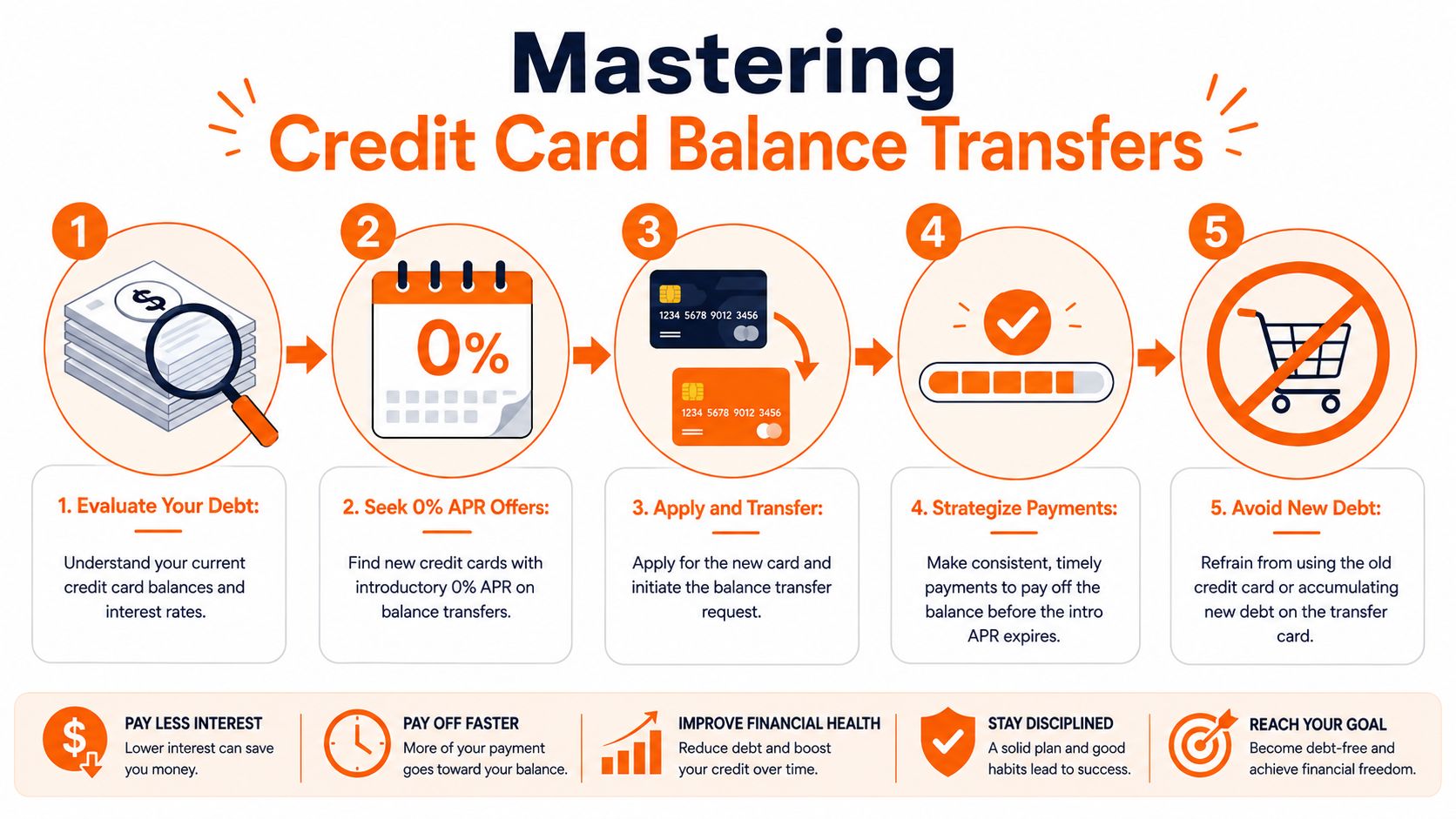
A balance transfer is the closest thing to a legitimate credit card-to-credit card payment. It isn't a direct bill pay feature. It's a debt transfer arranged by the new card issuer.
That distinction matters because the timing, fees, and interest treatment are different from what is commonly expected.
How a balance transfer works
The basic flow looks like this:
Check whether your card offers balance transfers
Some cards promote them heavily. Others allow them only in limited cases, or not at all.Confirm the receiving card's rules
Look for the transfer window, the promotional rate terms, and what kinds of balances qualify. Some issuers exclude certain fee types or cash-advance-like balances from promotional treatment.Submit the exact account details
You'll usually need the old card account number and the amount you want transferred. Accuracy matters. A wrong digit can delay everything.Wait for the transfer to settle
This stage is a common pitfall. A balance transfer isn't instant.Keep paying attention to both accounts
Don't assume the old balance is cleared until you can verify it on the old card statement or account activity.
A more detailed walkthrough helps if you're comparing issuers or trying to avoid common mistakes with transfer requests. This guide on how to transfer a balance on a credit card is a useful companion.
The timing risk most people miss
Here's the key fact: a balance transfer isn't a direct payment. The issuer posts the request, and the funds are used to pay down the old card through settlement rails. In Canada, that process commonly takes 1 to 3 business days, and interest can continue to accrue on the old card during that gap (balance transfer settlement timing).
That means you shouldn't treat approval as completion.
If your due date is very close, a balance transfer can still leave you exposed during the posting gap.
If the old card still shows a minimum payment due and the transfer hasn't settled, you may need to make that minimum payment anyway. It's annoying, but it's often safer than assuming the transfer will land in time.
When a balance transfer is a reasonable move
A balance transfer can make sense when:
- You have a clear payoff plan: You're not just moving debt. You're creating a window to reduce it.
- The fee is acceptable relative to the interest you're avoiding: The math matters here. You need to compare the transfer cost against what you'd otherwise pay by leaving the balance where it is.
- You can stop adding new purchases: A transfer helps most when it reduces existing debt, not when it frees up room to spend again.
When it's a bad idea
A balance transfer is usually a poor choice if:
- You're already missing payments regularly: The transfer may solve one deadline but not the broader cash-flow problem.
- You plan to use the old card again right away: That turns one balance problem into two.
- You haven't read the promotional terms carefully: The headline offer matters less than what happens if you miss a payment or carry the balance too long.
A simple checklist before you apply
| Check | Why it matters |
|---|---|
| Promo terms | Tells you how long the lower rate applies |
| Transfer fee | Changes whether the move actually saves money |
| Posting time | Helps you decide whether to make a backup payment |
| Old card status | Confirms when the transferred balance is really gone |
| Repayment plan | Prevents the transfer from becoming a reset button |
Used properly, a balance transfer is a tool. Used casually, it's just debt relocation.
The High Cost of Using a Cash Advance
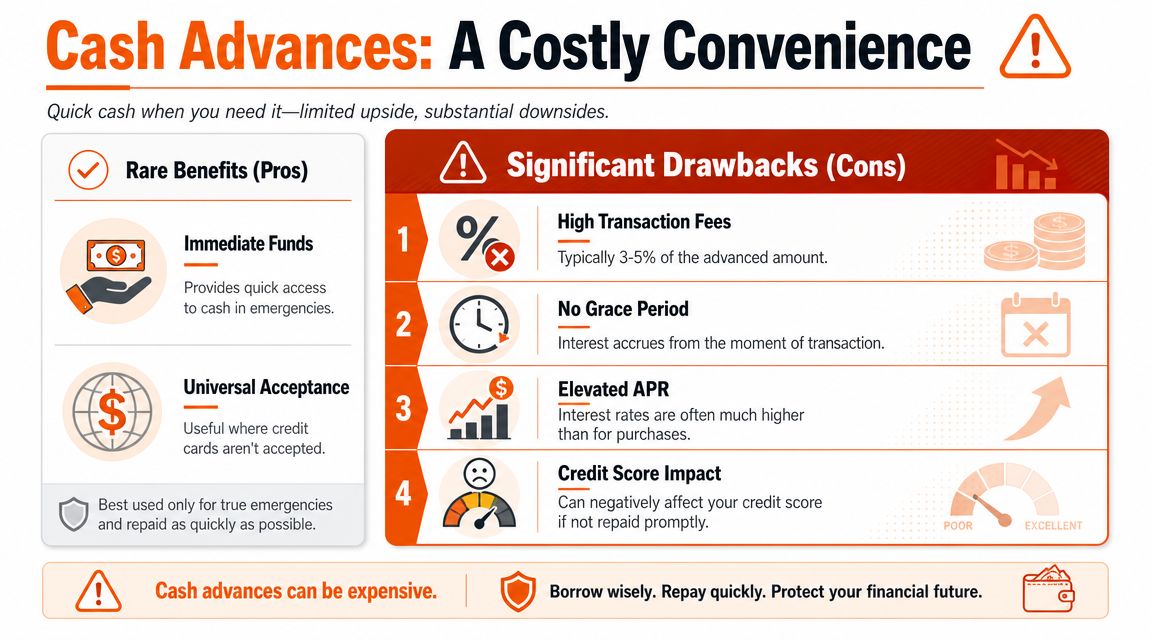
A cash advance is what people reach for when they can't get a balance transfer or they're too close to the due date to wait. Mechanically, it can work. Financially, it's often the ugliest option on the list.
The process is simple enough. You take a cash advance from Card A, move that money into your bank account, and then use your bank account to pay Card B. Some people do the same thing with convenience cheques tied to a credit card account.
Why this method gets expensive fast
Cash advances are not treated like ordinary purchases. The major problem is that interest usually starts accruing immediately, and these transactions can come with substantial fees. With credit card interest on outstanding balances remaining high in Canada, that cost can erase any short-term relief very quickly (cash advance cost risks).
So the question isn't “can I do it?” It's “what am I paying for the privilege of doing it?”
A cash advance can prevent one immediate problem while creating a more expensive one the same day.
Situations where people still use it
There are only a few scenarios where a cash advance might be defensible:
- You need to avoid a severe immediate consequence: For example, a payment issue that could trigger broader account problems.
- You know exactly how you'll repay it very quickly: Not “I hope next month is better.” A real plan.
- You don't qualify for a balance transfer and have exhausted safer options: This makes it a last resort, not a strategy.
Risks beyond the obvious fee
The danger isn't just cost. It's behaviour.
A cash advance can make it feel like you've solved the payment problem because Card B gets paid. But Card A now carries a costlier balance, often under worse terms. If your income doesn't improve, you've effectively shifted pressure to a different spot.
That pattern shows up a lot in floating-debt situations, where one card keeps covering another until the whole stack becomes hard to track. If that sounds familiar, this breakdown of floating credit card debt can help you spot the cycle earlier.
A blunt rule for cash advances
Use a cash advance only if all of these are true:
- You understand the fee and interest treatment
- You have no practical lower-cost option
- You can clear the new balance quickly
- You're treating it as damage control, not a normal payment method
If any of those are missing, step back before you turn a tight month into a longer debt spiral.
Using Third-Party Apps as an Intermediary
This is the workaround that sounds clever in theory. In practice, it's fragile.
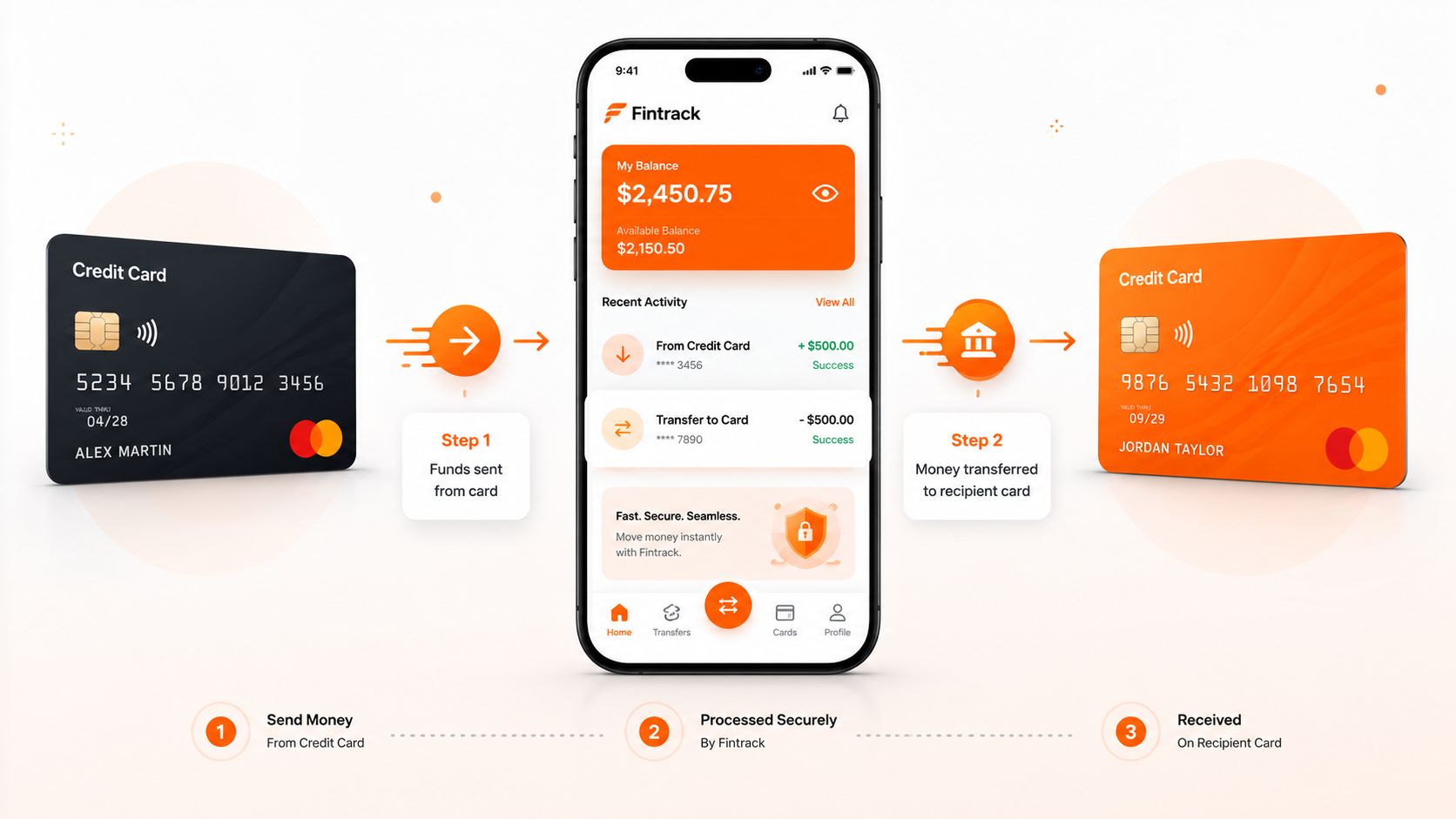
The usual version goes like this: you use Card A through a payment app or money-transfer service, the money lands with a trusted person or intermediary account, then it comes back to your bank account, and finally you use your bank account to pay Card B. Sometimes people try to do it entirely inside an app ecosystem.
Why this route often fails at the worst time
Canadian issuers generally accept card payments through specific channels such as online banking or pre-authorised debit, not direct card-to-card bill pay. That matters because app-based workarounds can fail, be delayed, or be treated differently than you expected, which can lead to late fees and possible credit-score damage (credit card payment channel limits in Canada).
The timing risk is the biggest issue. A transfer can look complete in one app while your credit card issuer still hasn't received or posted the payment.
The hidden problems people overlook
Third-party app methods come with several weak points:
- Service restrictions: Some platforms don't like transactions that resemble cash-equivalent activity or circular funding.
- Holds and reviews: Funds can get delayed while the platform checks the transaction.
- Partial loss to fees: Even if the transfer works, fees can reduce the amount that finally reaches your bank account.
- Relationship risk: If you're routing money through a friend or family member, one small delay can create personal stress on top of financial stress.
If a payment absolutely must post by a due date, don't rely on a workaround that has multiple handoffs.
When this method is especially risky
Avoid this route if:
- your due date is very close
- you haven't tested that exact workflow before
- you need every dollar to arrive intact
- the receiving card issuer is strict about payment posting cut-offs
If you're comparing apps for legitimate transfers between accounts or people, a review of the best money transferring apps can help you separate normal transfer tools from risky credit-card workarounds.
For many, this isn't a reliable answer to how to credit card to credit card payment. It's an emergency improvisation with too many failure points.
Smarter Alternatives for Managing Card Debt
If you're looking at one of these workarounds, the immediate issue probably isn't technology. It's pressure. The bill is due, cash is tight, and you're trying to keep things from slipping.
That's exactly why it's worth pausing before you move debt around at high cost.
Better options than shifting one card onto another
A few alternatives are usually safer:
Ask your issuer about hardship or payment arrangements
Issuers won't always change terms, but it's often better to ask early than after you've missed payments.Use a lower-interest borrowing option if you qualify
A line of credit or consolidation loan can be less chaotic than patching payments together with revolving credit.Work with a non-profit credit counsellor
If you're falling behind on several accounts, outside structure can help.Cut spending where the leak is biggest
This sounds obvious, but it only works when you can see the pattern clearly.
Fix the cash-flow issue, not just the deadline
A one-time workaround doesn't solve repeating shortfalls. If card payments keep colliding with rent, groceries, or other essentials, you need a system that shows where the pressure starts.
That's where a budgeting and transaction review tool can help. Fintrack's planning resources are useful if you need to map out due dates, recurring charges, and spending patterns before they turn into another scramble. For ongoing day-to-day use, Fintrack can also help you track spending, spot duplicate charges, and organise a payoff plan in one place.
Know when the problem is bigger than one card
If the debt is already hard to manage, general budgeting advice may not be enough. In that situation, practical legal and debt-relief reading can help you understand your options. This overview of solutions for credit card debt is a reasonable starting point for readers trying to understand broader paths to regain control.
A good rule is simple. If you're borrowing from one revolving account to keep another current more than once, you're no longer fixing a timing issue. You're managing a structural debt problem.
Key Takeaways for Paying Off Credit Cards
You usually can't pay one Canadian credit card directly with another the way you'd pay a normal bill. The most structured workaround is a balance transfer. Cash advances and app-based intermediaries are possible in some cases, but they carry more cost, more timing risk, and more ways to go wrong.
If you're feeling buried, look beyond the next due date. A broader resource on understanding overwhelming debt in Wisconsin can still be useful for recognising when debt has moved from stressful to unmanageable, even if you're just trying to understand the warning signs. A lasting fix is a repayment plan, cleaner cash flow, and fewer emergency moves between accounts.
If you want a clearer picture of where your card debt pressure is coming from, Fintrack can help you review spending, organise due dates, and build a repayment plan based on your actual transactions.