Payday was two weeks ago, and you're already doing mental math at the grocery checkout. Wondering how to make a household budget that survives real life, don't start with someone else's percentage rule. Start with your actual pay, your actual bills, and the irregular costs that keep catching you off guard.
Why Most Budgets Break Before the Month Ends
You're halfway through the month, rent cleared fine, and then car insurance renews, a prescription comes due, and the utility bill is higher than you guessed. The spreadsheet you made on the first now has no resemblance to your bank balance. People often blame their discipline at that point. I don't. The plan was wrong.
Copied templates assume stable income, average rent, and tidy monthly bills. Your household probably has none of those. Income might shift with overtime, shifts, or side work. Rent in your city doesn't care what a national rule says should fit. And the bills that land quarterly or once a year are exactly the ones generic templates leave out, so they blow a hole in whichever month they arrive.
Practical rule: If your budget only works in a perfect month, it's not a budget. It's a wish.
What You'll Do Instead
You'll build from observed cash flow. First you'll look back at three months of real money in and real money out. Then you'll sort that spending into fixed costs, flexible essentials, wants, and shock costs, the irregular bills most guides skip. Then you'll set dollar limits from those real averages, fund a starter emergency cushion, and check the plan weekly so small drift doesn't become a month-end surprise.
That order matters. Discovery before limits, limits before tracking. Do not set a grocery cap until you know what groceries cost you. Do not promise extra debt payments until you know what remains after rent, food, and transport clear.
Treat the finished budget as a working document, not a poster on the fridge. It should change when rent changes, when a child starts school, when work slows down. A budget you update beats a beautiful one you ignore, every time.
Pull Your Real Income and Last Three Months of Spending
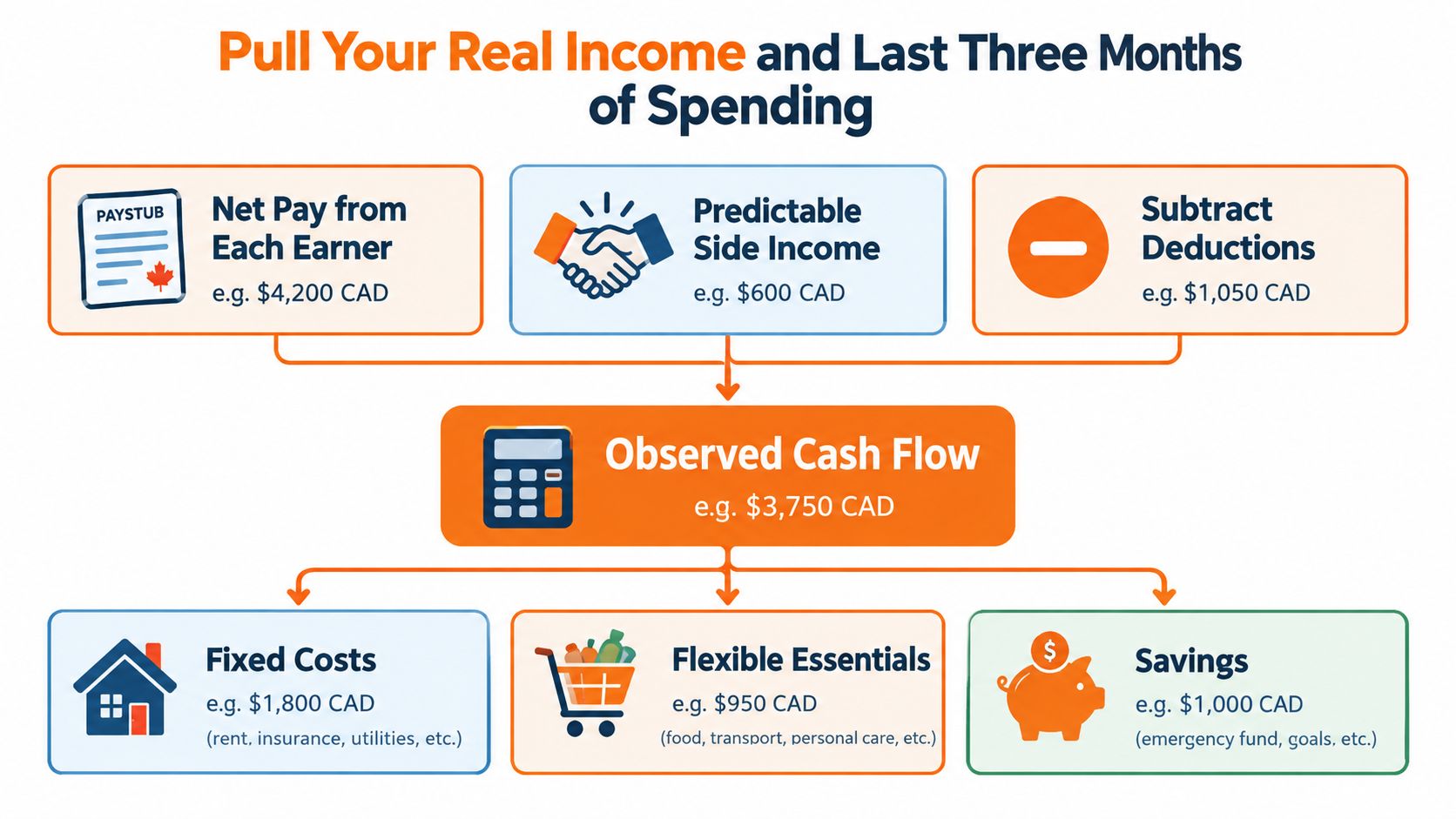
Start with money that lands in your account. That's net pay, after tax and payroll deductions, not your salary figure. Using gross pay is the fastest way to build a budget that's short from day one.
Step One Is True Take-Home Pay
List each earner's regular take-home amount. Add predictable side income only if it arrives reliably. If it fluctuates, use a low, conservative figure you can count on, and treat anything above it as a bonus you assign on purpose later.
For example, a two-earner household might clear $8,000 a month combined. A single earner might clear $4,200. Neither number is good or bad. It's just the ceiling everything else has to fit under. If automatic savings or benefit costs come off before pay hits your account, note them separately so you don't double-count them.
Step Two Is Three Months of Evidence
Export or download the last three months from every bank account and card your household uses. Going through your past bank and card statements in detail shows you the charges you'd otherwise forget, including annual renewals and duplicate payments. Then sort every transaction into three rough piles for now.
- Recurring fixed costs: Rent or mortgage, insurance, minimum debt payments, child care
- Variable essentials: Groceries, fuel, utilities, prescriptions, transit
- Wants: Restaurants, streaming, shopping, delivery, entertainment
Average each category across the three months. A rolling three-month average beats any single month, because one month might include a holiday, a repair, or an unusually cheap grocery run. You're looking for your normal, not your best behaviour.
Use national figures only as a sanity check. Statistics Canada reported average household spending of $76,750 in 2023, with shelter at 32.1%, transportation at 15.8%, and food at 15.7%. If your shelter share is higher, that tells you where your pressure sits. It doesn't mean you failed a rule.
If you rent out a room or a property, track that income separately from wages, the same way landlords use an INTELLI rent roll template to keep tenant payments organised by unit and date. And if bank feeds are unreliable, log things manually. Fintrack lets you enter income and expenses without connecting a bank, which suits Canadian households that would rather not link accounts.
Sort Expenses Into Fixed, Flexible, and Shock Categories
Three piles got you started. Now give the budget a spine with four buckets, because the fourth one, shock costs, is where most household budgets fall apart.
| Bucket | What Goes Here | Monthly Behaviour |
|---|---|---|
| Fixed | Rent, insurance premiums, minimum debt payments, child care | Same amount, known date |
| Flexible essentials | Groceries, fuel, utilities, prescriptions | Necessary, but amount moves |
| Wants | Dining out, streaming, shopping, hobbies | First place to trim or pause |
| Shock and annual | Car registration, property tax, insurance renewals, school fees, gifts | Predictable timing, lumpy amount |
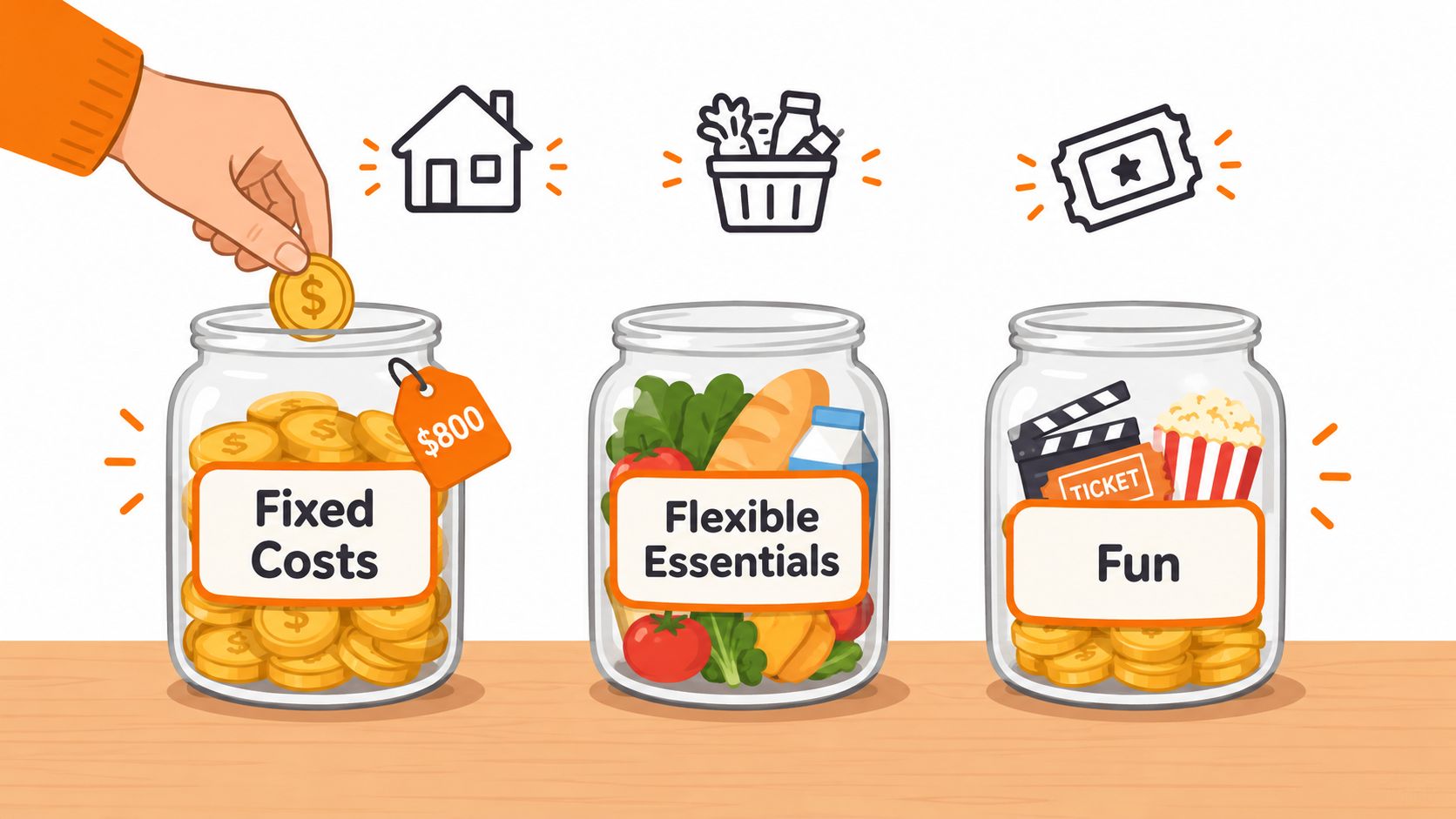
Fixed costs are non-negotiable in the short term. You can renegotiate or move later, but this month you pay them. Flexible essentials are where your real choices live. You can't skip groceries, but you can change where you shop, how often you order in instead, and how much food gets wasted. Wants are honest spending, not moral failures. They just get funded last. Getting clear on how expense categories actually differ stops you from filing dining out under groceries and wondering why food looks so expensive.
Turn Annual Bills Into Monthly Sinking Funds
Shock costs aren't emergencies. They're known bills on a slow schedule. Add them up for the year, divide by twelve, and set that amount aside monthly in a sinking fund.
Say your annual list totals $4,800 across insurance, registration, school costs, and gifts. That's $400 a month reserved before you spend on wants. A $1,200 insurance premium becomes $100 a month, boring and manageable, instead of a crisis every renewal.
An annual bill you fund monthly stops being a surprise. That's the entire point of a sinking fund.
This sorting also tells you whether your problem is spending or structure. The Public Policy Institute of California reports that food, housing, transportation, and healthcare together consume 80% of expenses for lower-income Californians. When essentials already take four-fifths of your money, cancelling a streaming service won't close the gap. You need a different conversation, about housing costs, commuting, income, or benefits, not tighter rules on coffee. Averages like that are diagnostic benchmarks, not targets. Use them to locate pressure, then act on your own numbers.
Allocate Your Limits and Start a Starter Emergency Fund
Now put dollar limits on the buckets, in a fixed order. Don't spread money evenly and hope. Fund in sequence, because sequence is what protects you when the month gets tight.
Set Limits in This Order
- Fixed costs first: Write down the exact amounts due. These aren't estimates.
- Flexible essentials second: Cap each one near your three-month average. If groceries averaged a certain amount, budget close to that, then trim gradually.
- Sinking funds third: Fund the monthly slice of your annual bills before wants get anything.
- Savings and extra debt fourth: Assign a specific amount, even a small one.
- Wants last: Whatever's left is your honest discretionary money.
Here's how that feels at two income levels. On $5,000 take-home, if essentials run near that 80% mark discussed earlier, you're looking at roughly $4,000 for core needs and $1,000 for savings, debt reduction, irregular costs, and wants combined. Tight, so every category needs a real limit. On $8,000, the same fixed bills leave more room, and that room should go to goals on purpose, not drift into lifestyle creep because nobody assigned it.
Make the Emergency Fund a Line Item
Don't save what's left over. There won't be any. The Financial Consumer Agency of Canada recommends an emergency fund equal to three to six months of regular living expenses, and calculating it from expenses gives you a truer target than using income. Add housing, utilities, groceries, transportation, insurance, minimum debt payments, and necessary medication. Multiply that monthly essentials total by three, then by six. That's your range.
That full range can feel far away, so start smaller. Follow a staged approach to building your emergency fund milestone by milestone, beginning with a starter cushion of $1,000 to $2,000 before scaling toward the full target. Automate a small weekly transfer on payday. Automation beats willpower because the money moves before you can spend it, and you learn to live on what remains. Revise the target whenever rent, dependants, or other essentials change.
Run Weekly Check-Ins and a Monthly Variance Review
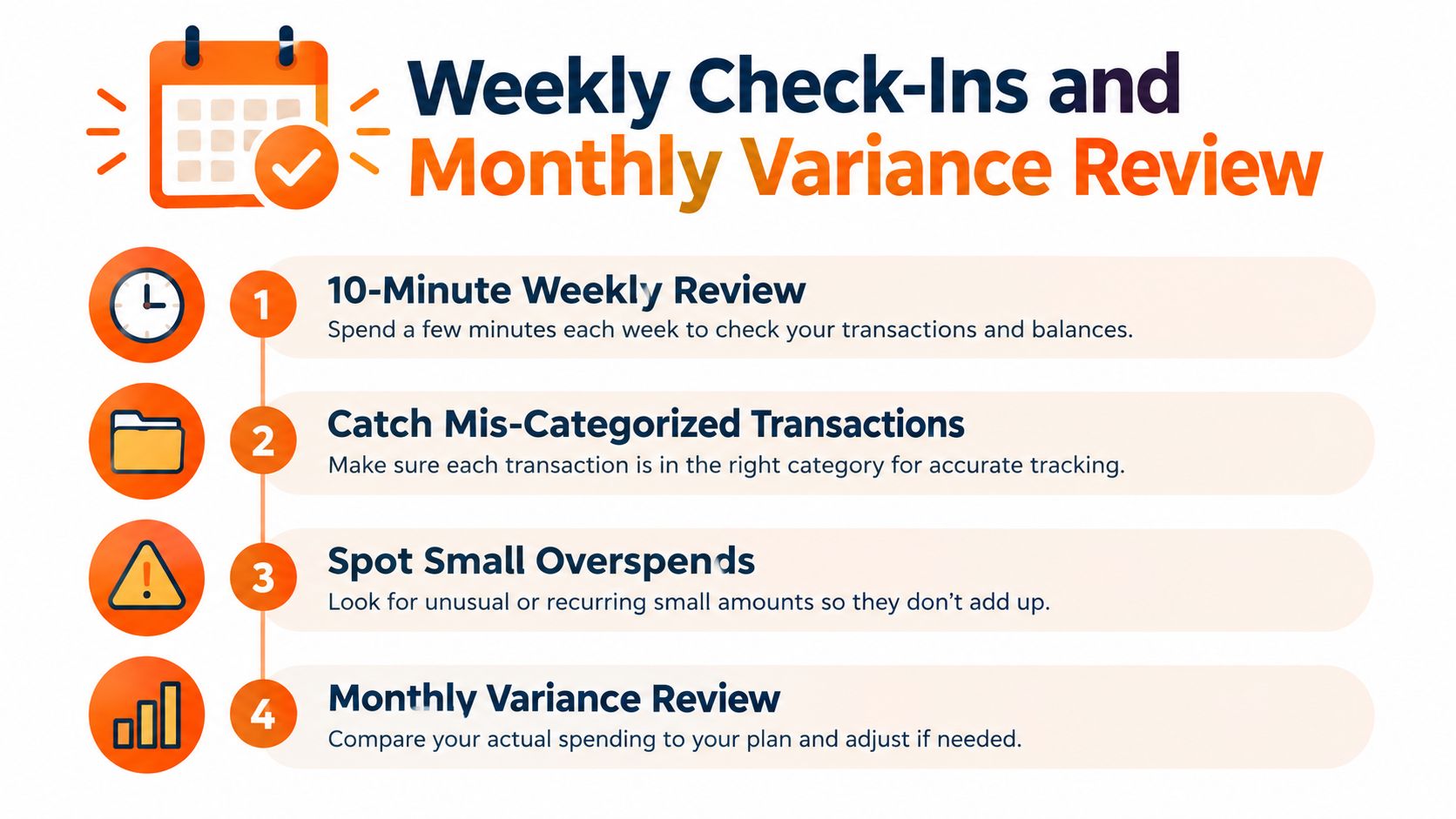
A budget you set once and never look at again is just a guess with formatting. I tell every household the same thing. Ten minutes weekly, thirty minutes monthly. That's the maintenance cost of knowing where you stand.
Pick the same day each week. In that short check, you're classifying transactions, catching anything miscategorised, and watching whether a flexible category is drifting early. Catching grocery overspend in week two gives you options. Finding it on the thirtieth gives you regrets.
What the Monthly Review Actually Decides
Compare actual spending to plan, bucket by bucket, using a budget versus actual view of your month so variance is visible at a glance. Flag any category running 10% or more over plan. Then make one of two calls. Either the spending needs a tighter cap, or your original assumption was wrong and the limit needs revising. Don't hide the overage in an uncategorised bucket. That just guarantees the same surprise next month.
Benchmarks help you judge whether a variance is personal or structural. In the Los Angeles metropolitan area, housing represented 36.6% of household expenditure, transportation 16.0%, and food 13.1%, together consuming 65.7% of the budget in 2023–24. If your three biggest categories eat a similar share, small trims elsewhere won't fix a deficit. Households that also run a side business can borrow the same review discipline from a step-by-step QuickBooks budget setup, since comparing planned against actual amounts works the same way for business and household books.
Some signals mean the budget needs adjusting, not your behaviour. Watch for these.
- A rent or mortgage increase: Rebuild limits around the new fixed cost
- A job or hours change: Recalculate from sustainable take-home pay
- A new dependant: Expect food, transport, and shock costs to shift
Audit Recurring Charges and Bank Fees
Fixed costs feel permanent. Many aren't. They're just unreviewed, renewing each cycle while you pay for things you stopped using months ago.
List every recurring charge across your accounts and cards. Note the amount, the billing frequency, and whether it's essential, negotiable, or unused. Convert anything annual or quarterly into a monthly figure so it lands in the right bucket, usually your sinking fund list. Working through a structured review of your subscriptions once a quarter keeps this list honest without much effort.
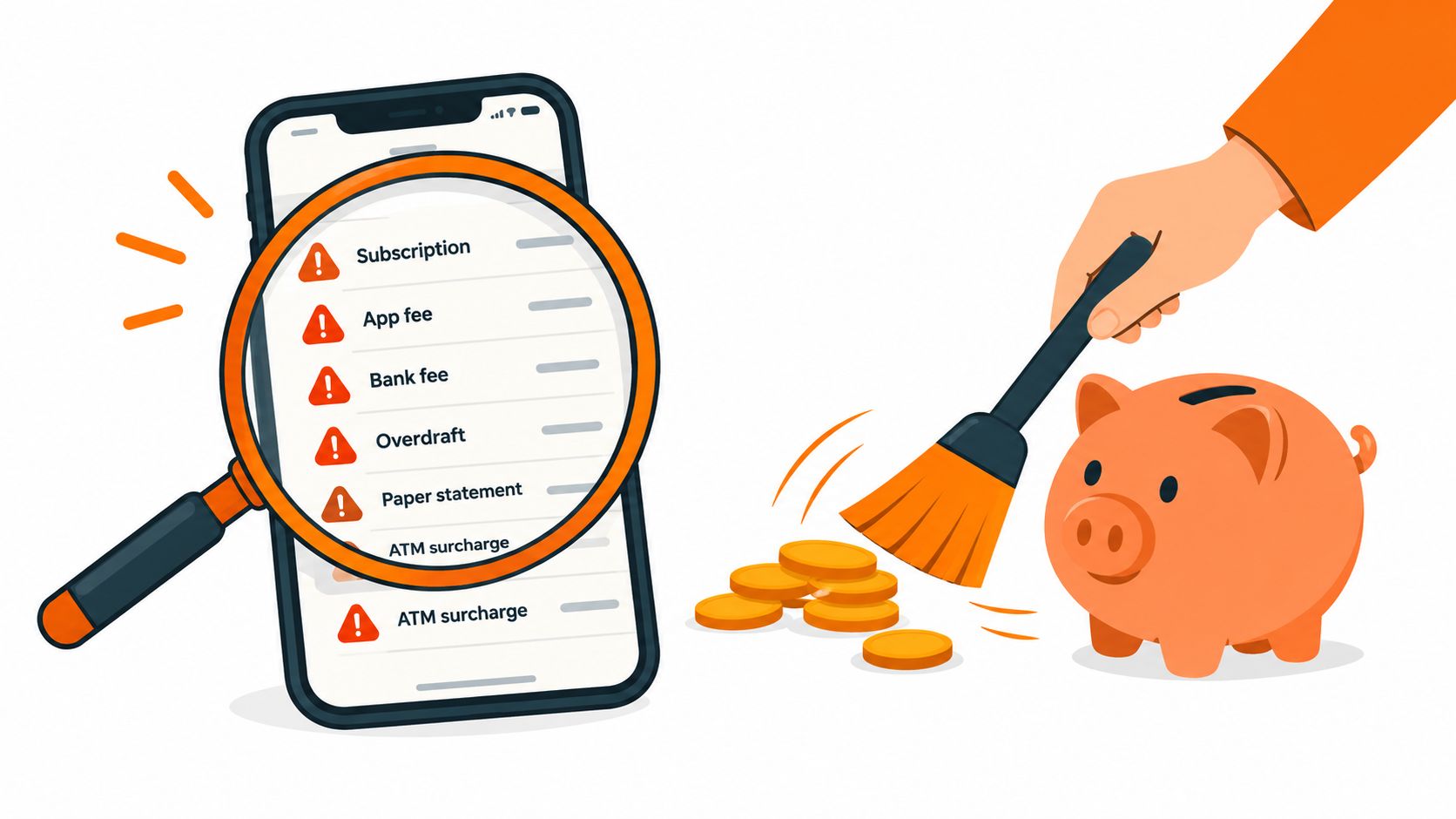
The Financial Consumer Agency of Canada advises reviewing phone, internet, cable, and streaming services, cancelling unused subscriptions, and checking bank accounts for maintenance, overdraft, and ATM fees. Practical moves include switching to a cheaper plan or bundle, using your own institution's ATMs, choosing electronic statements if paper ones cost extra, and keeping a minimum balance only when it actually waives a fee.
Seasonal bills deserve the same treatment. If winter heating spikes wreck your cold months, you can find a heating oil payment plan that spreads those costs evenly across the year, turning a shock expense into a predictable fixed one.
A household that cancels two forgotten subscriptions and drops a fee-heavy account can recover roughly $40 to $60 a month without changing its lifestyle at all. Recovered money needs a job immediately. Redirect it to a sinking fund, your starter emergency cushion, or a specific goal. If you leave it floating in chequing, it'll get spent and the audit changed nothing.
Your 30-Day Budget Launch Plan
Don't try to perfect this in one sitting. Roll it out over a month, one layer per week, and you'll finish with a budget built on evidence instead of optimism.
Week one is collection. Gather three months of bank, card, and bill records, and write down each earner's true net pay. No limits yet, just the raw picture.
Week two is sorting. Put every expense into fixed, flexible, wants, or shock buckets. Total your annual and seasonal bills, divide by twelve, and create your monthly sinking funds.
Week three is allocation. Set dollar limits starting with fixed costs and ending with wants. Open a separate spot for your starter emergency fund and automate one small transfer on payday. Small and automatic beats large and aspirational.
Week four is review. Run your first weekly check-in, do your first monthly variance review, and complete the recurring charge audit. Adjust one or two limits based on what you learned. That's the budget working as intended.
Expect the first version to be roughly right, not exactly right. Each monthly review sharpens it. Within a few cycles, you'll know your real grocery number, your real fuel pattern, and exactly which month your big bills land.
When you're ready to put it together, use a budget planning flow that holds fixed costs, sinking funds, and goals in one place so you can see the whole month take shape before it starts, instead of reconstructing it after it ends.
Lay out your fixed costs, flexible limits, and sinking funds in one clear monthly plan, then track actual spending against it week by week without wrestling a spreadsheet. Visit Fintrack to set up your household budget from your real numbers and see exactly where this month's money is going.