
Meta description: Learn income and expense tracking with a simple system that fits real life, helps you spot leaks, and turns monthly money stress into clarity.
You get paid. You cover rent or the mortgage, utilities, groceries, maybe a credit card bill. A few days later, your account balance is lower than you expected, and you can't fully explain why.
That feeling usually isn't about laziness or lack of discipline. It's what happens when money moves faster than your attention does. Card taps, renewals, takeout, e-transfers, reimbursements, and odd one-off purchases create a blur. Income and expense tracking clears that blur so you can see what your money is doing.
A good tracking system doesn't need to be complicated. It needs to be sustainable. The best setup is the one you'll still use when work gets busy, when life gets messy, and when you're not in the mood to stare at a spreadsheet.
Why Your Money Seems to Vanish Each Month
You get paid, cover the obvious bills, swipe for a few normal things during the week, and then check your balance with that familiar question: where did the rest go?
The answer is usually less dramatic than people expect. Money rarely disappears because of one reckless purchase. It slips away through a combination of fixed costs, bad timing, small repeat spending, and transactions that never got recorded closely enough to mean anything later.
High costs leave less room for error
In high-cost regions, even a decent income can feel tight. Households in the Los Angeles metropolitan area spent an average of $90,594 per year in 2023–24, nearly $13,000 more than the national average, and essentials such as housing, food, and transport took up 65.7% of the budget, according to the U.S. Bureau of Labor Statistics data for Los Angeles. When that much is already spoken for, a handful of missed charges and convenience spending can throw off the month.
The same pressure shows up in other countries in different ways. Statistics Canada tracks how much households save and spend, and the picture is clear. Many Canadians are working with limited margin once regular costs are covered, as shown in the Statistics Canada household sector accounts and saving data. In practical terms, that means forgotten renewals, seasonal bills, and casual card spending matter more than people want to admit.
Here is the rule I give clients early: if your money feels like it vanishes, treat it as a visibility problem first.
That shift matters. People who assume they are “bad with money” usually jump straight to cutting spending. People who can see the flow of money make better decisions because they know which problem they are solving.
Clarity changes behaviour
Once tracking starts, a few patterns show up fast:
- Timing distorts reality: A heavy bill week can make you feel broke even when the month is manageable. A quiet week can make you feel safe when larger payments are still coming.
- Small spending is easy to defend: Coffee, delivery fees, add-on purchases, app renewals, and convenience stops all sound reasonable on their own.
- Memory fills in gaps badly: People usually remember rent, car payments, and groceries. They are much less accurate on everything in between.
That middle ground is where progress usually starts. A sustainable tracking system gives those “in-between” transactions a place to go, which is why the habit works better than another round of guilt. If you want help identifying spending patterns that keep repeating, this guide on how to stop overspending pairs well with tracking because it focuses on the behaviour behind the charge.
Tool choice matters later. If you also manage side income or freelance work, a review of accounting software options can help you judge how much manual effort you want to keep.
Money does not vanish. It moves quickly, often in ways that are boring, fragmented, and easy to ignore. The goal is to build a tracking system that shows that movement clearly enough to change your decisions, without asking you to treat personal finance like a part-time job.
Choosing Your Tools and Setting Up Categories
A tracking system fails in one of two ways. It asks too much of you, so you stop using it. Or it stays so vague that you keep entering transactions without learning anything useful.
Pick a tool you'll still use in three months
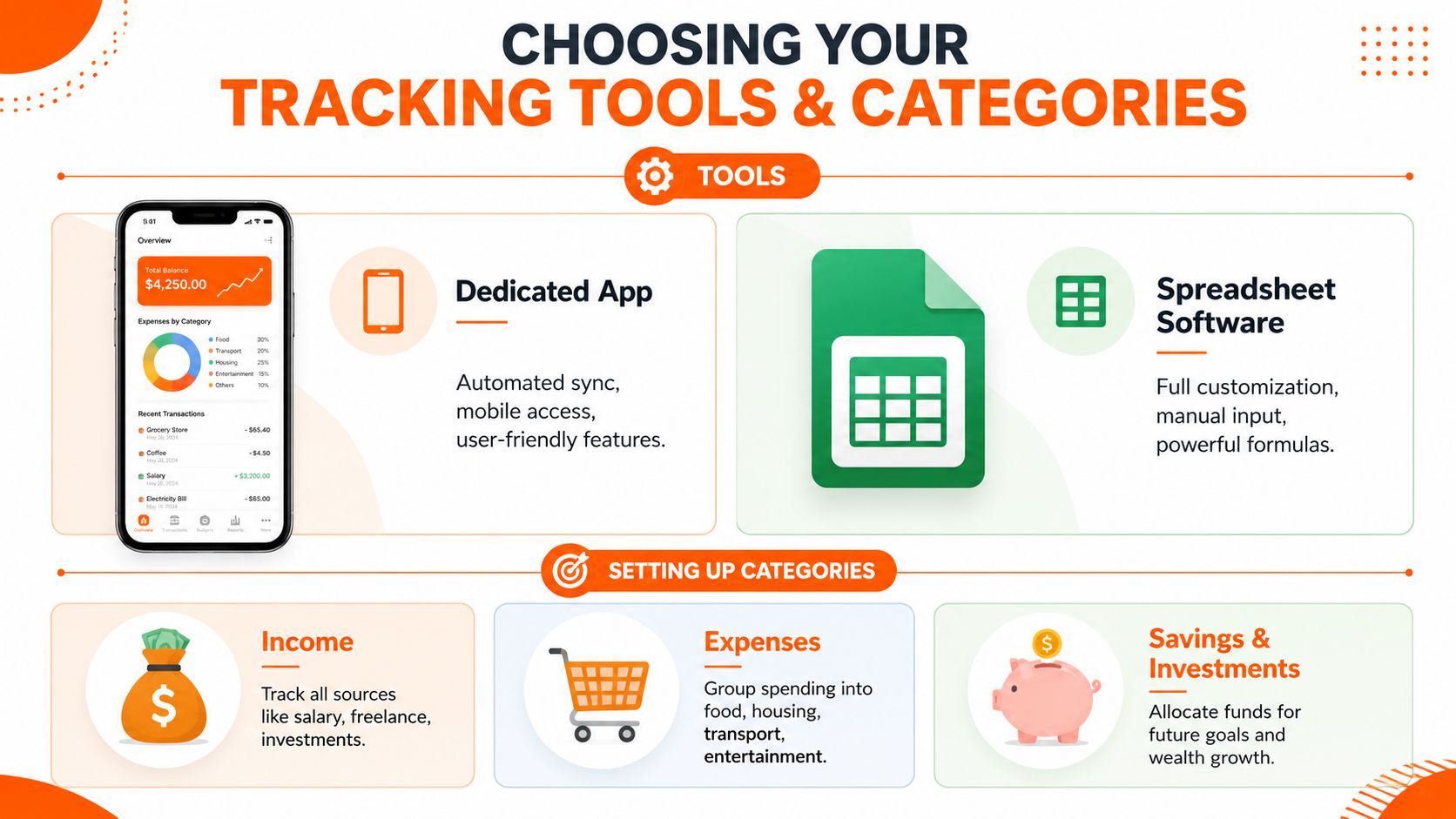
The right tool is the one you will keep opening after the motivation wears off. That usually means choosing based on effort, not features.
A dedicated app and a spreadsheet can both work well. The trade-off is convenience versus control.
| Tool | What works well | Where it tends to break |
|---|---|---|
| Dedicated app | Faster entry, easier review, mobile use, often better for daily consistency | Can feel too automated if you want total control |
| Spreadsheet | Flexible, customisable, familiar to many people | More setup, more manual work, easier to abandon |
For side income or a small business, software choices can get more technical. A useful starting point is this review of accounting software options, especially if you're comparing how much manual work you want to keep versus delegate to software.
I usually tell people to choose the lightest system that still answers their real questions. If your finances are straightforward, a simple app or spreadsheet is enough. If you juggle freelance income, shared household bills, and tax set-asides, you need more structure from the start.
Manual entry versus automation
Manual entry creates a small pause between spending and recording. That pause can be useful. People often notice habits faster when they have to type "takeout" three times in one week.
Automation reduces the chance that transactions pile up unrecorded. That matters if consistency is your weak spot or if you are managing several accounts. If you want help sorting purchases into usable groups, automatic expense categorisation can cut down the cleanup work that usually happens after a busy week.
One practical option in this category is Fintrack, which supports manual entry and AI-assisted categorisation. That matters for people who want a bank-free workflow or need something workable across Canadian and U.S. routines.
The best setup usually mixes both. Use automation to catch the bulk of your spending. Use manual review to correct mistakes and stay aware of what your money is doing.
Build categories around your real life
Category templates are fine for week one. They are often a poor fit by month two.
A durable system reflects the decisions you need to make. If your biggest pressure point is food spending, separate groceries from restaurants and delivery. If irregular bills keep knocking you off track, give home repairs, annual fees, gifts, and car maintenance their own place. If you are trying to make freelancing less stressful, split business income, business expenses, and tax savings instead of burying them under "miscellaneous."
A useful category set often includes:
- Income: Salary, freelance work, contract payments, side gigs, reimbursements that affect cash flow
- Core living costs: Housing, groceries, transport, insurance, debt payments, utilities
- Flexible spending: Dining out, shopping, hobbies, gifts, entertainment
- Future money: Savings, investing, sinking funds, extra debt payments
The point is not neatness. The point is visibility. If your categories do not separate fixed obligations from flexible choices, you cannot see where an adjustment is realistic.
Keep categories simple enough to survive real life
Overbuilt systems die fast. If you freeze every time a purchase could fit into two or three labels, your setup is too detailed.
Start with categories that help you act:
- Needs you must cover
- Spending you chose
- Money you set aside
- One-off or irregular costs
Sub-categories can come later. Broad categories, used consistently, beat detailed categories you quit after two weeks.
A sustainable tracking system should feel clear, not impressive. If it matches your routines and answers your own money questions, you are far more likely to keep it running long enough for the patterns to matter.
The Core Workflow Capturing Every Dollar
A tracking system works when it captures money close to the moment it moves. Not at the end of the month, when your memory is already patchy.
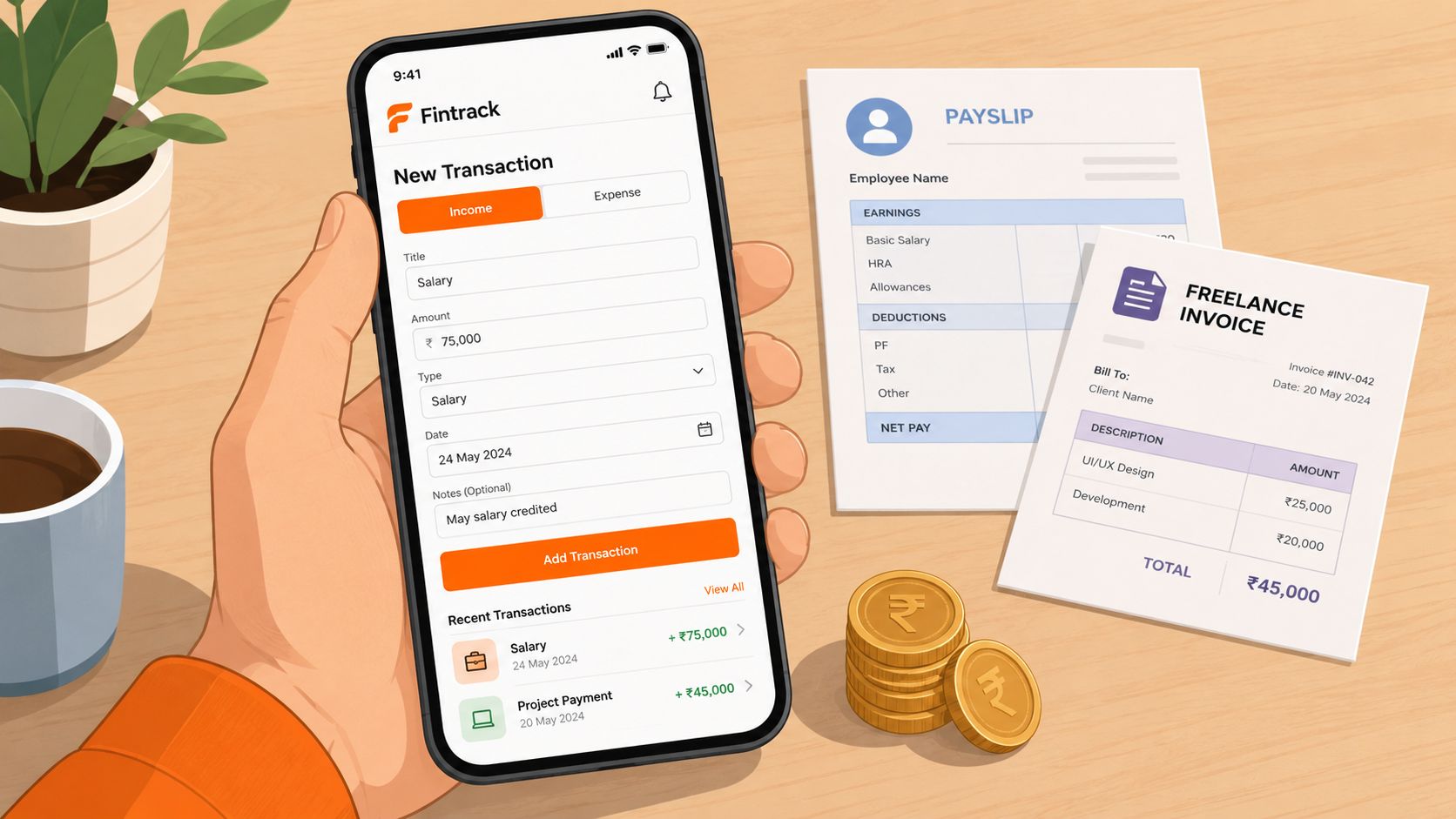
The goal isn't perfection. The goal is a repeatable workflow that catches almost everything without eating your time.
What to record for income
Income sounds simple until you have more than one source. A salary is easy. Freelance payments, refunds, cash work, reimbursements, or side hustles are where people get sloppy.
For each income entry, record:
- Date received: Not just invoiced or expected.
- Source: Employer, client, platform, tenant, family support, whatever applies.
- Amount received: The amount that hit your account.
- Notes if needed: Whether it's recurring, delayed, or tied to future tax obligations.
Cash flow lives on timing, not theory. Money you expect next week doesn't pay today's bills.
What to record for expenses
For every expense, capture enough detail that future-you understands it without guessing:
- Merchant or payee
- Final amount paid
- Category
- Date
- Notes for anything unusual, such as split bills, reimbursable purchases, or work-related costs
Canadian users should be strict about receipts if expenses relate to business activity. The CRA requires taxpayers to keep itemised receipts, not just bank statements, for a minimum of six years to validate business expenses, as outlined in this CRA expense tracking guide for Canada. A bank line that says a charge happened isn't the same thing as proof of what you bought.
Keep the transaction and the proof together. If those two get separated, cleanup becomes harder and tax time gets uglier.
If you need a simple structure for regular reviews, this monthly budget template helps because it gives your transaction log a place to land.
Two workable routines
Some people do better with live capture. Others need a batch routine. Both are fine if they're honest about human behaviour.
Option one is immediate entry. You log the purchase or income as it happens. This works well if you're often on your phone and want the strongest awareness of your spending.
Option two is scheduled entry. You collect receipts and check accounts, then update everything at the same time each day or every few days. This works well if you hate interruption but can stay consistent with a short routine.
A practical weekly rhythm looks like this:
- Scan account activity
- Add missing cash or e-transfer items
- Attach or note receipts
- Fix any uncategorised entries
- Mark reimbursements separately
Don't forget the awkward transactions
These are the ones that distort your picture if you ignore them:
- Cash spending: Easy to forget, which is exactly why it needs logging.
- Shared purchases: Record your full outlay and note what portion should be repaid.
- Refunds and returns: Log them so spending totals stay honest.
- Annual or irregular charges: Insurance, renewals, school fees, gifts.
- Transfers between your own accounts: Don't count them as spending.
Most failed tracking systems don't fail because the person didn't care. They fail because the routine didn't account for real life. Build your workflow around the transactions you're most likely to miss.
From Raw Data to Real Financial Insights
Collecting transactions is bookkeeping. Learning from them is where the value shows up.
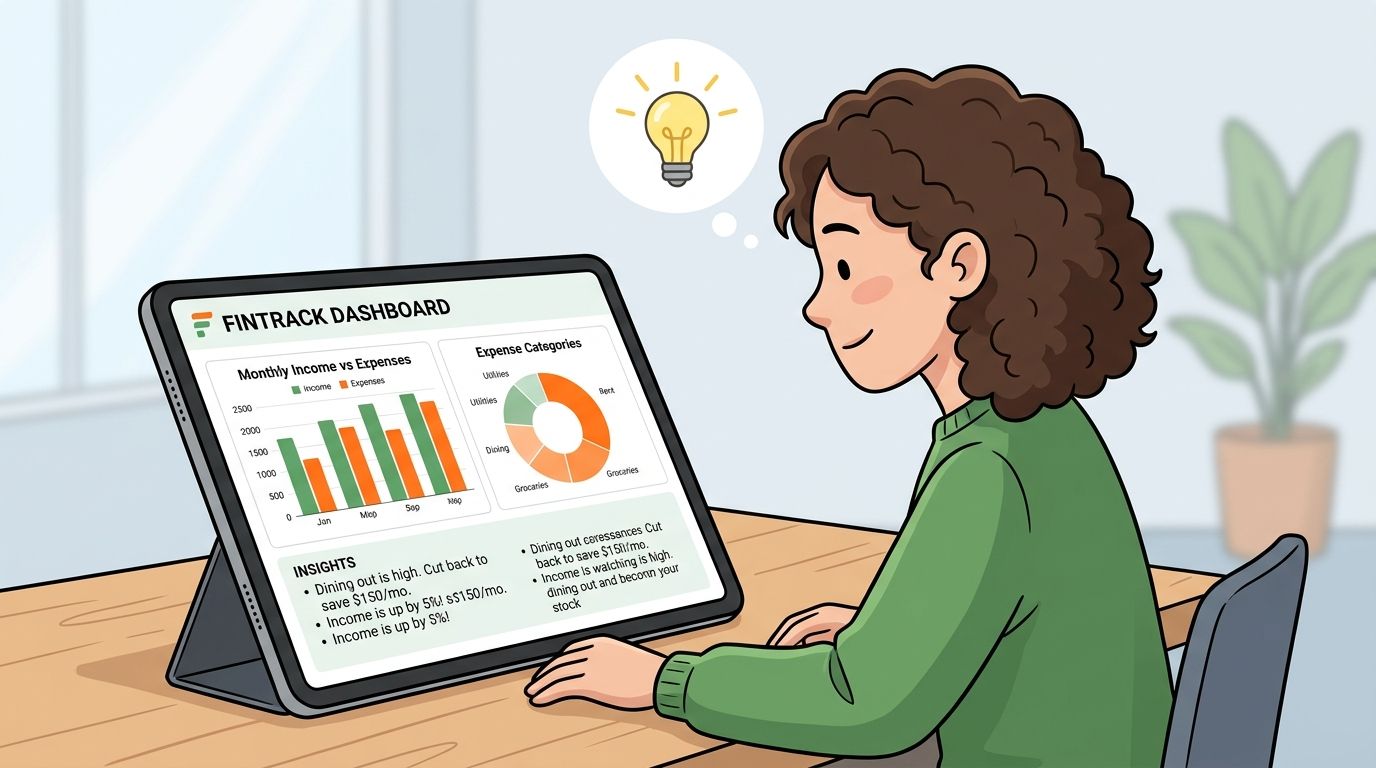
A money review doesn't need to be long. It needs to be regular and honest. If you only look when you're already worried, you'll treat your numbers like bad news instead of feedback.
Run a weekly and monthly review
Your weekly review is for cleanup. Your monthly review is for decisions.
A solid weekly review includes:
- Matching transactions to your accounts
- Filling in any missing merchants or notes
- Checking for duplicate charges or odd subscriptions
- Correcting categories while the purchase is still familiar
A monthly review asks bigger questions. Did income cover expenses? Which categories ran high? Which costs were one-time and which are becoming patterns?
Reconcile before you analyse
If your data is messy, your conclusions will be shaky. Reconciliation sounds formal, but it means checking that your tracking matches what happened in your accounts.
Look for:
| Check | What you're verifying |
|---|---|
| Missing entries | Cash, transfers, e-transfers, or manual purchases not logged |
| Wrong category | Groceries coded as dining, household items coded as shopping |
| Duplicate records | One real transaction counted twice |
| Net effect | Refunds and reimbursements handled properly |
For Canadian expense tracking, enter the final amount paid, including GST, HST, or PST. That's the simplest way to reflect the true cost across provinces, as explained in this Canadian expense tracker guide on total amount paid. If you strip tax out for personal spending records, your category totals stop matching reality.
Numbers don't need to be impressive to be useful. They need to be accurate enough to support a decision.
Use the data to answer real questions
Once the records are clean, look for answers, not just totals.
Ask yourself:
What did my life cost this month?
This is different from what you planned to spend.Which expenses were fixed and which were flexible?
Flexible spending is where short-term adjustments usually happen.What surprised me?
Surprises often expose weak categories or forgotten renewals.Am I solving the right problem? You might think groceries are the issue when dining out, delivery, and convenience spending are the main drain.
If you want to get better at projecting what happens next, not just reviewing what already happened, Toya AI's forecasting tips are a practical follow-up because forecasting builds on the transaction history you've already cleaned up.
For a cleaner review process, a visual personal finance dashboard can help you see trends faster than a long transaction list ever will. That's often the moment when tracking stops feeling like admin and starts feeling useful.
Advanced Tracking for Subscriptions and Households
The basics usually catch obvious spending. Advanced tracking catches the quiet stuff. That's where subscriptions and shared money tend to sit.
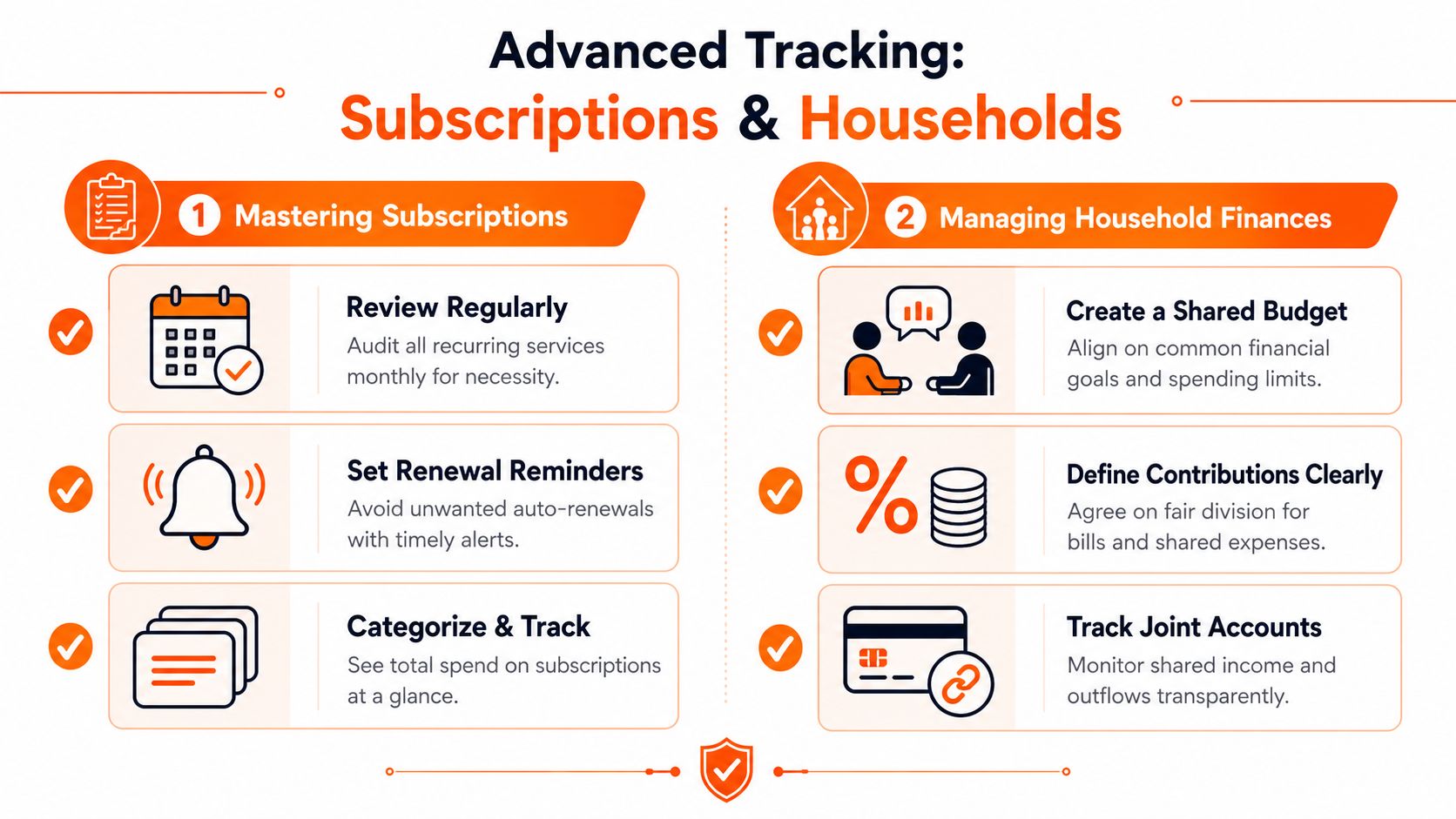
These categories cause trouble for the same reason. They feel routine, so people stop examining them.
Audit subscriptions with intent
Recurring charges become invisible fast. A streaming service you rarely use, a yearly app renewal, a storage upgrade, a trial that rolled into a paid plan. None of them look dramatic alone.
Use this quick audit:
- List every recurring charge: Bank statements and card statements are better than memory.
- Mark each one as active, seasonal, shared, or unnecessary: Be honest about usage.
- Add renewal dates to your calendar: Especially for annual plans.
- Group subscriptions into one category: That makes creep obvious.
- Decide on a rule: Keep, downgrade, pause, or cancel.
A subscription isn't affordable just because the monthly amount looks small. It's affordable if it still earns its place after review.
If recurring charges are one of your weak spots, a dedicated guide to a subscription management app can help you turn those renewals into something visible and manageable.
Track household money without creating resentment
Shared finances fail when the system feels unfair or vague. The tracking method should reduce tension, not create it.
That starts with agreeing on three things:
- Which expenses are shared
- How each person contributes
- Where those transactions get recorded
Three common approaches work well for households:
Equal split
Simple and fast. Best when incomes and financial obligations are similar.
Proportional split
Each person contributes based on income. This often feels fairer when earnings are different.
Hybrid model
Core bills are shared one way, and personal spending stays separate. This works well for couples who want transparency without fully merging everything.
Give big shared costs their own visibility
In California, the average cost of living is $64,835 per year, and housing and utilities alone cost over $12,000 annually, according to this California cost of living breakdown. For households, that means shared essentials deserve their own clear tracking, not vague labels like "bills" or "miscellaneous."
A useful household setup often includes:
- Joint essentials: Housing, utilities, groceries, transport for the household
- Joint goals: Travel, emergency fund, home repairs, gifts
- Personal spending: Separate categories for each person
- Reimbursements and true-ups: So no one has to reconstruct who covered what later
When couples struggle with money tracking, the problem usually isn't maths. It's ambiguity. Clear labels and a shared routine solve more than people expect.
Making It Stick Best Practices and Next Steps
Individuals often don't quit income and expense tracking because it doesn't work. They quit because they miss a few entries, feel behind, and decide they've failed.
That's the wrong standard. A useful money system isn't one you execute perfectly. It's one that recovers quickly after disruption.
Fix the common failure points
If tracking keeps falling apart, the cause is usually one of these:
- The system takes too long: Too many categories, too many decisions, too much cleanup.
- You rely on memory: End-of-month reconstruction is tedious and inaccurate.
- You treat missed days like a moral failure: Then avoidance kicks in.
- You collect data but never review it: So the habit feels pointless.
A better approach is to reduce friction at each step.
Shorten the routine. Capture transactions sooner. Use broader categories. Schedule one weekly review that resets the system before the backlog grows.
Make the habit lighter, not stricter
The people who stay consistent usually follow a few simple rules:
Never aim for perfect detail at the start
Clean enough beats ideal and abandoned.Use recurring reminders
A short calendar reminder works better than waiting for motivation.Review with curiosity, not judgement
You are looking for patterns, not evidence that you were "good" or "bad."Adjust the system when life changes
A move, a new baby, freelance income, travel, or shared finances all require a system update.
Missed a week? Restart from today, then backfill only what's easy to recover. Momentum matters more than completeness.
For many people, software helps most at the exact points where habits usually break. Automatic categorisation reduces sorting fatigue. Subscription detection helps surface recurring charges you stopped noticing. A simple dashboard makes reviews shorter, which makes reviews more likely to happen.
If your current setup is a mix of notes, memory, and half-finished spreadsheets, the next useful step is to try a tool that keeps income, expenses, and categories in one place without adding more admin.
If you want a simpler way to apply this system, Fintrack gives you one place to record spending, categorise transactions, review trends, and keep your money visible enough to act on.