
You open your laptop, check your calendar, and feel that drop in your stomach. The tax deadline has already passed.
If that's where you are right now, take a breath. A late tax filing penalty in Canada is serious, but it's also manageable. What matters most is what you do next.
A lot of people freeze because they assume they need to solve the whole problem at once. You don't. Start with damage control, then move to a plan. That's how you stop a stressful tax issue from turning into a bigger money problem.
What to Do When You Miss the Tax Deadline
Most late filers don't miss the deadline because they're careless. They miss it because life gets messy. A slip arrives late, work gets hectic, a family issue takes over, or the thought of owing money makes them avoid opening the tax software at all.
That last one is common. You think, “I can't pay yet, so what's the point of filing?” But waiting usually makes the situation harder.
Start with one calm decision
The first move is simple. Don't delay because you feel embarrassed or overwhelmed. The Canada Revenue Agency cares more about whether you act now than how stressed you felt last week.
If your paperwork is scattered, get it into one place today. That might mean gathering slips from your email, bank records, receipts, and prior returns. If you're behind on recordkeeping, some people use outside help such as catchup bookkeeping services to organise missing financial records before filing.
Practical rule: Late is fixable. Waiting longer is what gets expensive.
Focus on control, not perfection
You do not need a perfect financial reset tonight. You need a short list:
- Find your documents so you can file
- Estimate whether you owe tax so you know the stakes
- Submit the return as soon as possible
- Make a plan for any balance you can't pay right away
If this missed deadline is part of a bigger cash flow problem, it can help to shore up your basics too. A simple guide to building an emergency fund in Ontario can be useful if tax time tends to hit when your savings are already thin.
People often treat missed taxes like a financial disaster. Usually, it's more like a neglected leak. Not pleasant, but repairable if you deal with it before more damage spreads.
Filing Late vs Paying Late Two Different Problems
One of the biggest points of confusion is this: filing late and paying late are not the same thing.
This situation is comparable to a library book. One problem is returning the book after the due date. Another problem is still owing fees you haven't paid. They're related, but they're not identical.
Filing answers the CRA's reporting question
When you file, you're telling the CRA what your income was, what deductions or credits apply, and whether you owe tax or should receive a refund. Filing is about compliance. It says, “Here is my return.”
If you miss that deadline and you owe tax, that's when the late-filing penalty becomes an issue.
Paying answers the money question
Payment is separate. Once your return shows a balance owing, the CRA expects that amount to be paid. If it isn't, the unpaid balance can lead to added costs over time.
That's why waiting to file because you can't pay is usually the wrong move. You end up combining two problems when you might have limited yourself to one.
File first. Then deal with the balance.
Why this distinction matters in real life
Let's say two people both owe tax.
The first person files on time but can't pay the full balance yet. The second person waits to file until they have enough cash. The second person may trigger a late-filing penalty that the first person could avoid.
That's the key idea behind most CRA damage control. If you can only do one thing today, file.
Here's a simple comparison:
| Situation | Main issue |
|---|---|
| Return filed on time, balance unpaid | Payment problem |
| Return filed after deadline, tax owing | Filing problem and payment problem |
| Return filed late, no tax owing | Filing is still late, but the basic late-filing penalty discussed below applies when tax is owed |
The mistake to avoid
People often think silence buys time. It usually doesn't.
A better approach is to separate the tasks:
- Task one: get the return submitted
- Task two: pay as much as you reasonably can
- Task three: arrange the rest if needed
Once you see these as separate moving parts, the situation gets less intimidating. You're not facing one giant tax monster. You're handling a paperwork issue and a cash flow issue, one at a time.
How the Late-Filing Penalty Is Calculated
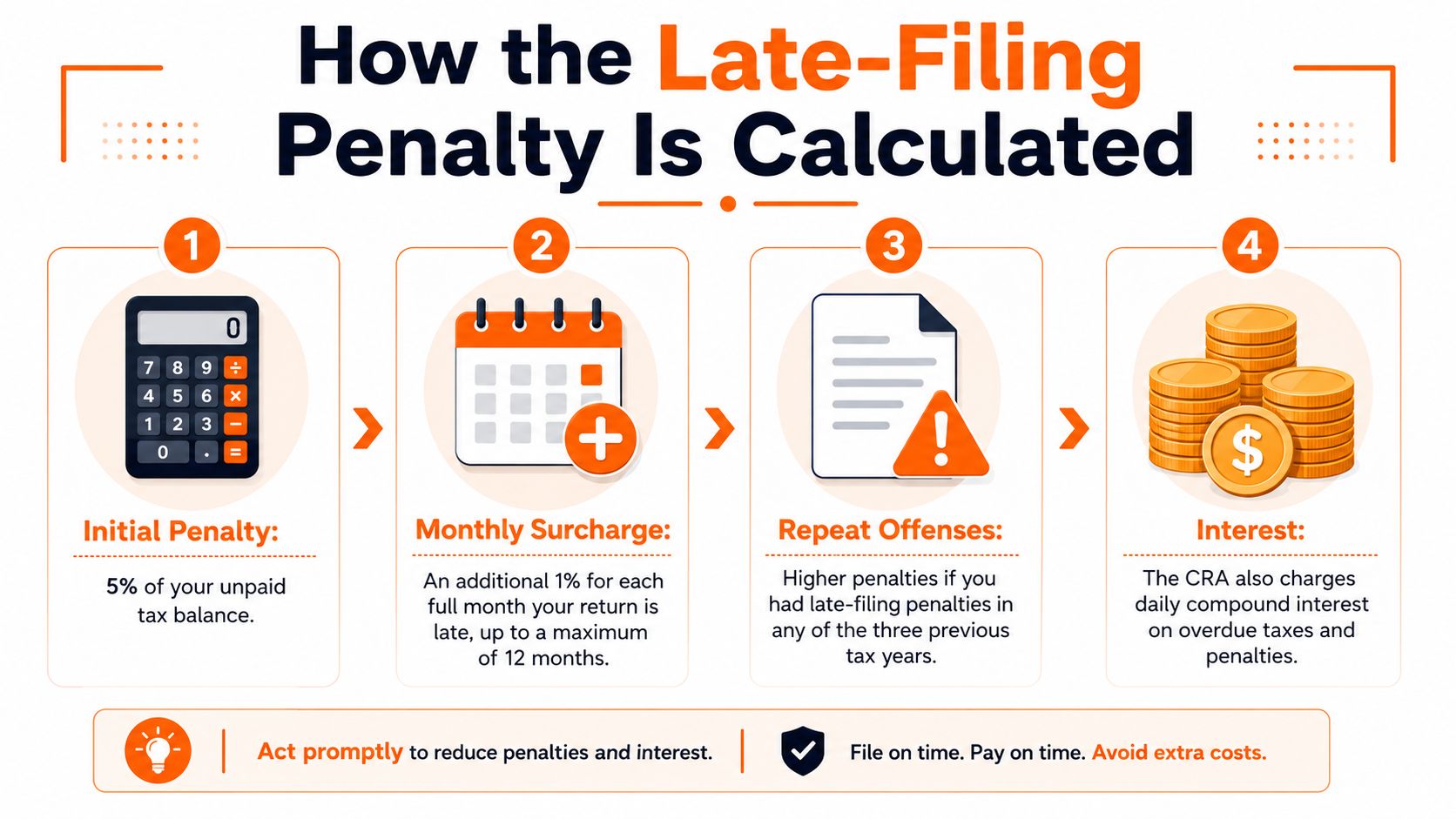
The late-filing penalty is easier to handle once you break it into parts.
If you owe tax and file after the deadline, the CRA generally charges a basic late-filing penalty of 5% of your balance owing, plus 1% of that balance for each full month your return is late, up to 12 months, as explained in the CRA's late-filing penalty rules.
The basic formula in plain language
A simple way to read the formula is to treat it like an upfront fee plus a monthly meter.
- Upfront part: 5% of the unpaid balance
- Monthly part: 1% of that same unpaid balance for each full month late
- Time cap on the monthly part: up to 12 months
So if you are looking only at the basic late-filing penalty, the maximum reaches 17% of the unpaid balance.
A simple example with round numbers
Suppose your unpaid tax balance is $10,000 when the filing deadline passes.
The penalty starts with $500. That is the 5% upfront charge. Then the monthly portion adds $100 for each full month late. If the return stays late long enough for the full basic penalty period to apply, that would reach $1,700 in total.
Here is the same example in a quick table:
| Unpaid balance | Immediate penalty | Monthly add-on | Maximum basic penalty |
|---|---|---|---|
| $10,000 | $500 | $100 per full month late | $1,700 |
That is why speed matters. Filing a few weeks earlier can mean one less full month counted in the formula.
What trips people up
The monthly late-filing piece does not keep growing forever under the basic rule. It stops after 12 months.
People also mix up “late” with “unpaid.” They overlap, but they are not the same thing. The late-filing penalty is based on the balance owing and the number of full months the return is late. Separate charges can still affect what you owe after that, which is why waiting rarely saves money.
A useful way to look at it is this: the penalty is a bill for delay, not a payment plan.
Tax stress usually gets smaller once you label each piece clearly. What is the filing penalty? What is the unpaid balance? What can you reduce today?
If you are wondering whether waiting to pay can ever be a smart choice, this guide to what a tax deferral actually means helps separate a legal timing strategy from simply filing late.
Your Immediate 3-Step Action Plan
When people panic, they either do nothing or try to solve everything in one night. A better approach is a short checklist in order. You're aiming to stop extra damage first.
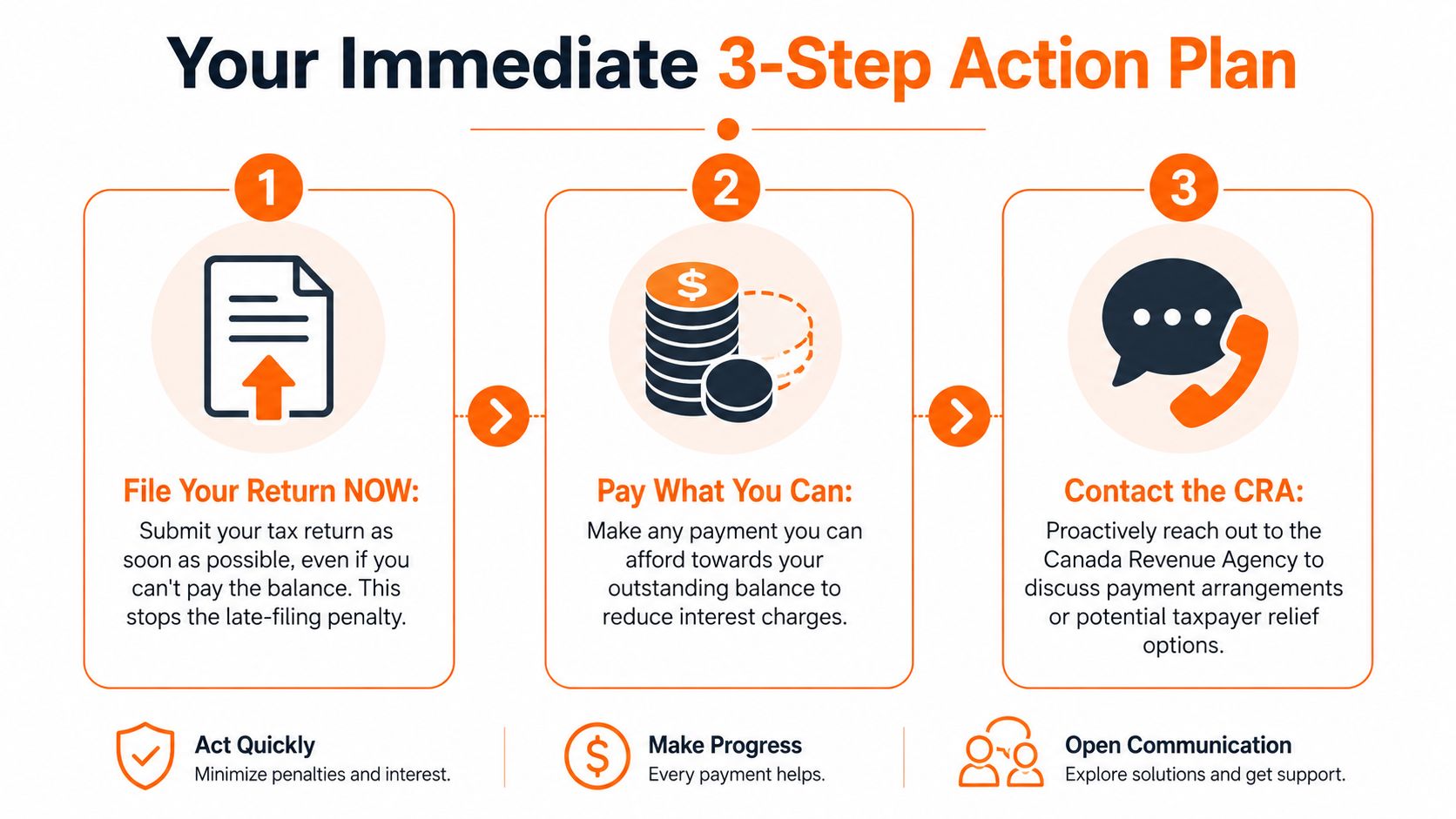
Step 1 File your return now
This is the urgent one.
Even if you can't pay the full amount, submit the return as soon as you can. Filing gets you out of the “still unfiled” zone, which is usually the most expensive place to stay when you owe tax.
If you're missing a small piece of information, don't use that as a reason to disappear for weeks. Get help, estimate carefully where appropriate, or speak with a qualified tax professional if your return is more complicated than usual.
Step 2 Pay what you can
After filing, send whatever amount you can reasonably afford toward the balance. It does not have to be all or nothing.
A partial payment still helps because it reduces the unpaid amount hanging over you. For many households, the practical move is to review cash on hand, upcoming bills, and available room in the budget before choosing a payment amount.
Here's a simple perspective:
- Use available cash first if it won't disrupt essentials like housing, food, or utilities
- Avoid denial-based budgeting where you promise yourself you'll “deal with it later”
- Track the payment clearly so you know what remains
If you're deciding whether to borrow to cover part of the balance, be careful. A guide to using a credit card for payments can help you think through convenience, cost, and risk before you choose that route.
Step 3 Contact the CRA
Silence makes tax debt feel more chaotic than it is. Reaching out can make the problem concrete and manageable.
Ask about payment arrangements if you can't pay the full amount now. Be ready to explain your situation clearly and truthfully. Keep notes from the conversation, including what was discussed and what you agreed to do next.
A same-day checklist
If you want a practical script for today, use this:
- Open your tax documents
- Finish and submit the return
- Make a payment, even if it's partial
- Call or contact the CRA if the remaining balance will take time
- Save confirmations and notes in one folder
The point isn't to feel calm before you act. The point is to act so you can start feeling calm again.
Can You Get Penalties Waived Understanding Taxpayer Relief
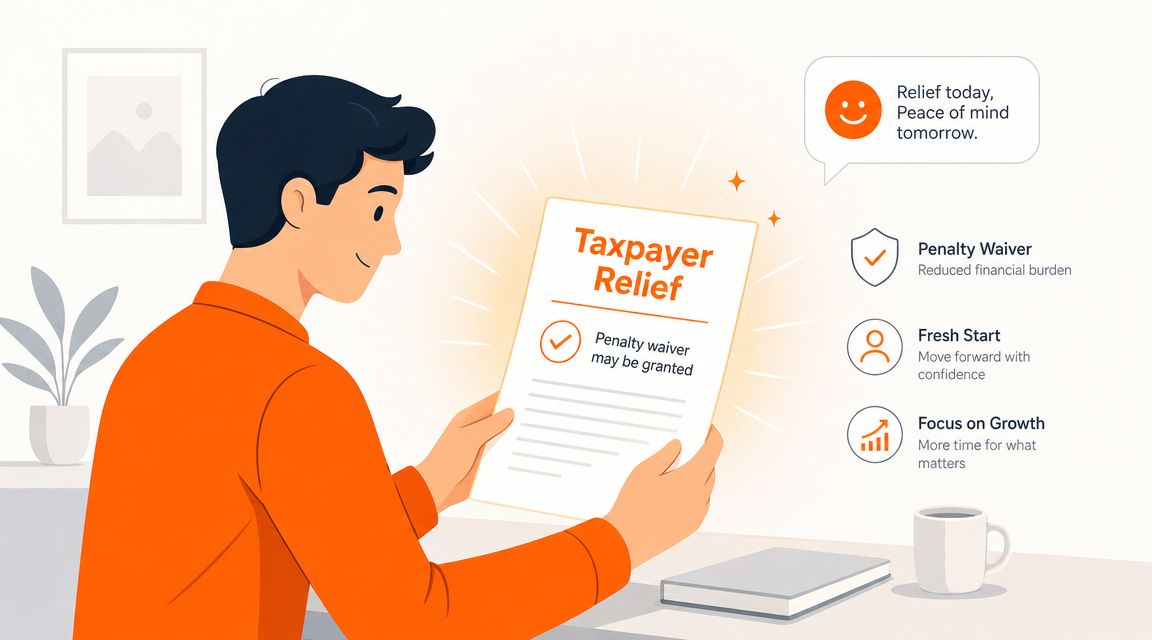
Some late filers qualify for relief when something serious got in the way. This is often called Taxpayer Relief.
That doesn't mean every request is approved. It does mean there may be a legitimate path if your delay happened because of circumstances outside your control.
Situations that may support a request
Common examples include:
- Serious illness or accident that made it hard to manage your affairs
- A death in the family that disrupted your ability to file or pay
- Financial hardship where paying penalties or interest would make basic living costs difficult
- Extraordinary events such as a disaster or major disruption affecting your records or your ability to act
These are not shortcuts. They are meant for situations where a person faced a real barrier, not simple procrastination.
If your delay came from a genuine hardship, it's worth asking about relief instead of assuming you have no options.
How to approach the request
The CRA uses Form RC4288 for taxpayer relief requests. The strongest requests are usually the clearest ones.
Keep your explanation focused:
- What happened
- When it happened
- How it affected your ability to file or pay
- What documents support your story
Supporting documents matter. Depending on the situation, that might include medical records, insurance documents, letters, notices, or other proof showing why you could not meet your tax obligations.
Manage expectations
Relief can reduce stress, but it's not automatic. The CRA reviews the details, and approval depends on your circumstances.
If tax debt has already started affecting the rest of your finances, it may also help to understand how collections can spill into your broader credit picture. This article on removing collection items from a credit report gives useful context if you're trying to stabilise more than one money problem at once.
How to Make Sure This Never Happens Again
Once you've handled the immediate problem, the next job is prevention. The goal is not to become a tax expert. It's to build a simple system that makes tax season less dramatic.
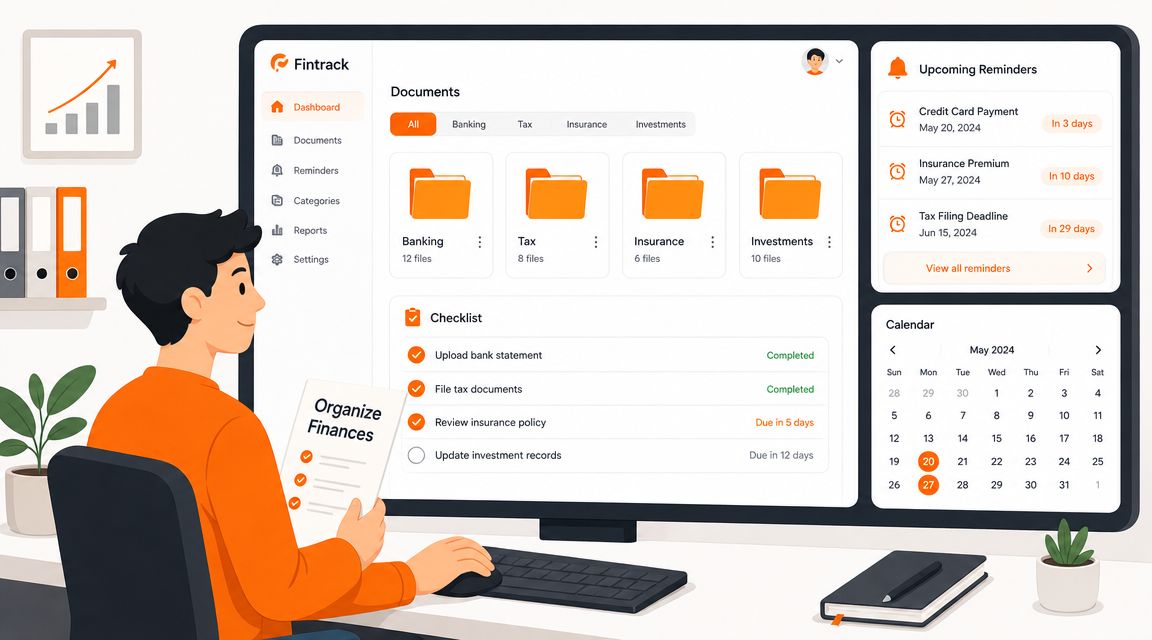
Build a boring system
Boring is good here. Boring systems save money.
Try this framework:
- One folder for tax documents so slips, receipts, and notices don't disappear across email, drawers, and downloads
- One reminder system using your calendar for filing deadlines and follow-ups
- One review habit each month to check income, deductions, and whether you may owe money
If your income is unpredictable, this matters even more. Self-employed workers, freelancers, contractors, and side-hustle earners often get into trouble because tax money sits in the same account as spendable cash.
Treat tax savings like a bill you owe yourself
The best prevention strategy is simple. Set aside money throughout the year instead of hoping future you will handle it.
That could mean moving money into a separate savings account whenever income comes in, or doing a regular monthly transfer if your income is steadier. The exact amount will depend on your situation, but the habit matters more than perfection at the start.
Watch for early warning signs
Late filing rarely appears out of nowhere. There are usually clues first:
- You avoid opening tax mail
- You're unsure where your slips are
- You don't know whether you owe
- You've mixed personal spending and tax money
- You're relying on memory instead of records
A straightforward monthly bill tracker can help you build the routine of checking deadlines before they become emergencies.
The actual win is not just avoiding penalties. It's removing the dread. Once your documents are organised, your reminders are set, and you're putting money aside regularly, tax season becomes another financial task instead of a yearly crisis.
If you want help turning this into a repeatable system, Fintrack can help you organise your money in one place, review spending patterns, and spot cash flow room for future tax payments before deadlines sneak up on you.