You've decided to save for a holiday, an emergency fund, or a down payment. Then the money ends up spread across a chequing account, a savings account, and perhaps a cash envelope. A notebook gets misplaced, the spreadsheet stops being updated, and mental arithmetic becomes unreliable as soon as an unexpected bill arrives.
A savings goal tracker app can replace that scattered system with one clear view of your target, contributions, remaining balance, and pace. The useful apps don't just display a progress bar. They help you choose a realistic amount, record what transpired, and keep the goal visible without making saving feel like another administrative job.
Why You Need a Savings Goal Tracker App
Saving often fails because the intention is vague. “Save more” gives you no amount to enter, no date to work towards, and no way to tell whether a missed contribution is a small delay or a serious problem. A specific tracker turns that intention into a working plan.
A state-backed example from California shows why this structure matters. In the 2023–24 CalMoneySmart program year, 4,693 participants created a budget and 4,180 set a financial goal. The same California DFPI annual report recorded that 62% met their savings goal on time, with average increased savings of $590 per participant and total participant savings of $111,599.

Those results don't prove that every app will produce the same outcome. They do show the practical value of moving from financial awareness to budgeting, goal-setting, and visible progress. The CalMoneySmart app was designed to break financial skills into manageable tasks and support ongoing habits, which is the same principle a good tracker should follow.
Visibility beats mental maths
Suppose you want to save for a trip. Without a tracker, you may check your account balance and assume you're progressing. But that balance can include money needed for rent, upcoming bills, or everyday spending. A dedicated goal separates the amount you're protecting from the rest of your cash flow.
You can then answer useful questions quickly:
- Where am I now? The current balance is tied to a named objective.
- What remains? The app shows the gap instead of making you calculate it.
- Am I on pace? Contributions are compared with the target date.
- What needs changing? You can reduce the amount, extend the timeline, or reprioritise.
For a practical explanation of why specific targets change saving behaviour, see why goal-setting is important. The key lesson is simple: progress you can see is easier to review and adjust than progress you only hope is happening.
Feature Checklist for Choosing the Right App
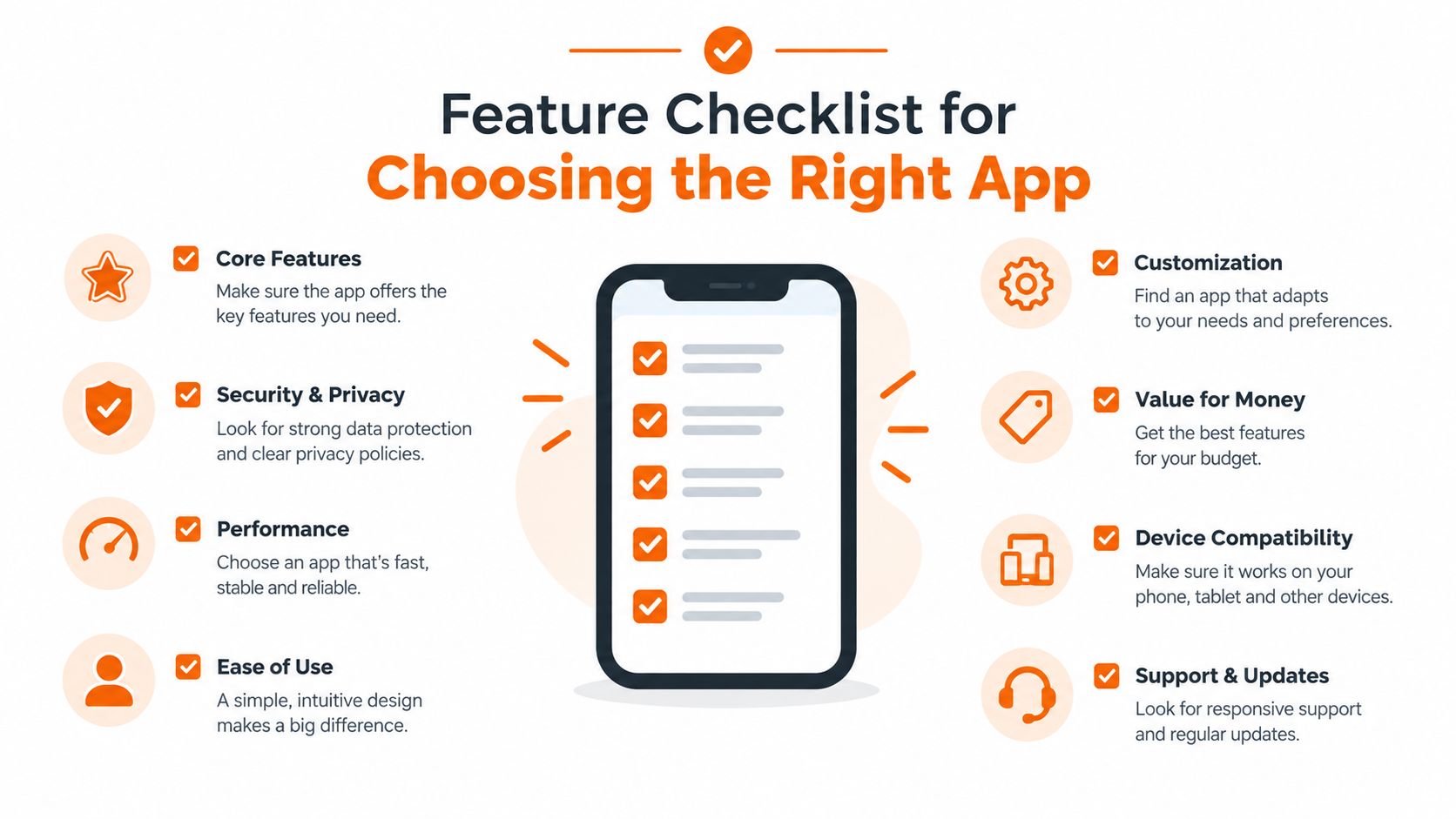
A tracker should fit the way you already manage money. An app with impressive charts won't help if connecting your accounts is unreliable, updating the goal takes too long, or the reminders make you ignore the tool altogether.
Use this checklist before committing.
Start with the data entry method
Manual entry matters, particularly for Canadians whose bank connection may be unavailable or who don't want to link every account. You should be able to record a deposit directly and keep moving. Manual tracking can also make each contribution more intentional because you actively acknowledge the transfer.
Automatic syncing can save time, but it needs clear controls. Look for the ability to correct categories, exclude irrelevant transactions, and understand which activity counts towards a goal.
Check the progress experience
A useful dashboard should show more than a static target. Look for:
- A visible progress indicator, such as a bar or balance remaining.
- Milestones, so a large objective can be divided into meaningful checkpoints.
- A target-date forecast, which helps expose an unrealistic monthly amount.
- Contribution history, so you can see whether your pattern is steady or irregular.
- Adjustable reminders, because encouragement should support your routine, not interrupt it.
A $5,000 objective can feel less distant when it has five $1,000 checkpoints. Those milestones don't change the total, but they give you smaller decisions to make and review.
The app should also help uncover money you can redirect. Subscription detection, cashback tracking, unused credits, and loyalty rewards can turn overlooked value into a contribution, provided the tool explains what it found rather than encouraging unnecessary spending.
For another perspective on comparing goal-focused tools, Peaceful Mindful Pocket LLC's review of savings goal apps is useful because it puts usability and motivation alongside feature lists. Fintrack's Strategies and Goals feature supports deadlines, target amounts, milestones, and manual tracking, so it can suit people who want a bank-free starting point as well as users who prefer connected data.
Setting Up Your First Savings Goal
The first goal should be specific enough to guide a decision. “Savings” is too broad. “Emergency Fund, $3,000” or “Vacation to Banff, $1,500” tells you what the money is for, how much you need, and why the target deserves priority.
Fintrack can be set up without a bank connection, which means you can begin with manual entries rather than waiting for an account link. That matters when you want to start immediately or keep certain accounts private.
Build the goal in a few deliberate steps
Create the account and open the goals area. Choose the option to add a new goal rather than trying to monitor everything through a general balance.
Name the outcome clearly. Include the purpose and amount in the name. A concrete label gives every later contribution context.
Enter the target and date. If the target is $3,000 over six months, the basic plan is $500 per month. Treat that calculation as a starting point, not a promise that your cash flow can support it.
Choose a contribution rhythm. Daily, weekly, and monthly schedules all work differently. Weekly contributions may suit variable income, while monthly transfers can be simpler for salaried pay.
Pick connected or manual tracking. If your bank connection works for you, automatic transfers or tagged transactions can reduce repetition. If not, record deposits as they happen.
Turn on useful reminders. Set alerts around contribution dates and milestones. Avoid notifications so frequent that you start dismissing them automatically.
A good setup should leave you with a live view of the amount saved, the remaining balance, and the projected completion date. The process reflects the manageable-task approach described in the California DFPI report on CalMoneySmart, which also reported that the share of participants not saving for a long-term goal fell from 45% before the programme to 17% after completion. It recorded more than 100 MyMAF users setting goals between $5,000 and $10,000, while 681 users created action items supporting financial goals.
Before choosing a date, test the contribution against your actual budget. The financial goals calculator guide can help you think through the relationship between the target, deadline, and recurring contribution.
Connecting Accounts and Monitoring Progress
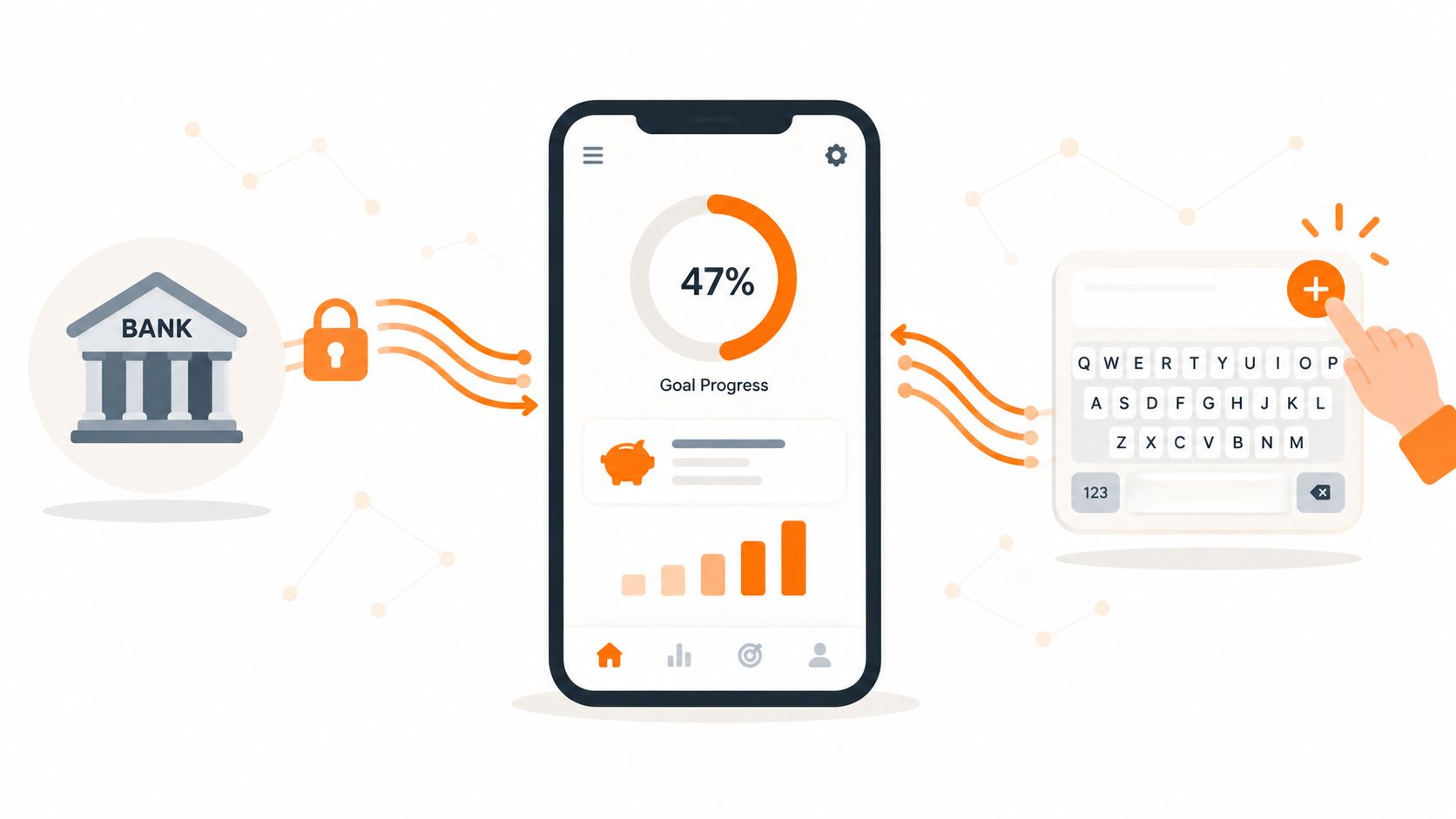
Once the goal exists, you need a dependable way to feed it information. There are two sensible approaches: connect eligible accounts for automatic updates, or enter contributions manually.
Connected accounts can reduce the work of reviewing transactions. You can see deposits and spending in context, correct misclassified activity, and identify whether discretionary spending is interfering with the plan. You should still review the connection rather than assuming every transaction has been interpreted perfectly.
Manual entry has a different advantage. It gives you control and creates a deliberate checkpoint each time money moves. For Canadian users, a bank-free approach can be particularly practical when an institution isn't supported, a connection breaks, or you don't want to share account access.
Review progress without creating anxiety
A useful weekly review takes only a few questions:
- Did the planned contribution happen?
- Did an unusual expense reduce the amount available?
- Is the target date still realistic?
- Can a forgotten recurring charge or unused reward be redirected?
Subscription detection can flag recurring charges that no longer deserve a place in your budget. A Benefits Wallet can also help organise cashback, unused credits, loyalty points, discounts, and expiring offers. These features are most useful when they support a decision, such as sending recovered money to the emergency fund, rather than just displaying another list.
The bank account aggregation guide explains the connected-account side in more detail. Whatever method you use, review weekly rather than reacting to every daily balance change. A tracker should create accountability and clarity, not turn normal fluctuations into a source of stress.
Tips to Hit Your Savings Goals Faster
Faster progress usually comes from removing friction, not demanding constant discipline. Set the contribution to happen before discretionary spending, then use the tracker to identify where the plan needs support.
Make the contribution automatic
If your bank allows it, schedule a recurring transfer around payday. Daily, weekly, or monthly cadences can all work, but the right choice is the one that matches your income timing and leaves enough room for essential bills. Manual users can create the same rhythm by logging the deposit immediately after making it.
The Canadian Financial Consumer Agency found that a mobile budgeting intervention increased budgeting among non-budgeters by 14 percentage points, while budgeting knowledge rose 10 points and confidence rose 15 points. In follow-up research, 54% of participants who began budgeting during the pilot were still budgeting 18 months later. The Financial Consumer Agency of Canada research supports a practical conclusion: a simple routine is more valuable than a complicated setup you abandon.
Find money without squeezing the plan
Round-up transfers can direct small amounts towards a goal, but they shouldn't replace a realistic core contribution. Review recurring subscriptions and cancel services you haven't used. Then send cashback, credits, or other recovered value to the goal instead of letting it disappear into general spending.
If you're unsure what a sustainable target looks like, this guide to realistic monthly savings targets offers a useful planning reference. Keep the target flexible. If an unexpected expense arrives, moving the deadline is better than deleting the goal and losing the habit.
Use milestones as feedback
A milestone at 25%, 50%, or 75% can reinforce the behaviour without requiring a costly reward. Acknowledge the progress, then return to the next contribution. Pair this with the pay-yourself-first method, which places saving earlier in the cash-flow sequence rather than leaving it to whatever remains at month-end.
Practical rule: Reduce the amount or extend the timeline before you abandon the goal.
Start Tracking Your Goals Today
The best tracker is the one you can update consistently. A polished dashboard won't fix a target that ignores rent, debt payments, groceries, or irregular costs. It can, however, make the trade-offs visible early enough for you to adjust.
Start with one goal, one amount, and one contribution rhythm. Name the purpose, choose a date that fits your cash flow, and decide whether connected tracking or manual entry will be easier to maintain. Then schedule a weekly review to record progress and revise the plan when life changes.
Fintrack's Strategies and Goals feature gives you a place to set target amounts and deadlines, use milestones, and monitor contributions without requiring a bank connection. Explore the Strategies and Goals feature when you're ready to turn your first savings intention into a trackable plan.
Fintrack brings goals, spending, budgets, and overlooked value into one clear workspace, with manual entry available for Canadian users who prefer not to connect a bank account. Visit Fintrack to create a specific goal, choose a realistic contribution rhythm, and start reviewing your progress with less guesswork.