
Payday arrives, rent and transit come out, groceries cost more than expected, and an annual subscription renews before the second week begins. Nothing dramatic happened, yet the remaining money feels as if it disappeared. If you're asking what short term goals should look like, the practical answer starts with cash flow, not wishful thinking.
A useful goal might be a $500 buffer, a credit card minimum payment plus $100 extra, or a capped fund for meals out and entertainment. Each target gives your money a job and creates a clear point to review. The aim isn't to optimise every dollar at once. It's to stabilise what leaves your account, then build goals in an order your bank balance can support.
When This Month's Money Feels Like It Disappears
By the time the second week begins, the pattern is familiar. Your paycheque has covered rent, transit, groceries, utilities, and a subscription renewal, but the month still has plenty of days left. You check the balance and try to remember which purchases caused the damage, but the answer is usually a blur of ordinary spending.
That fog can make saving feel unrealistic. A large future target seems disconnected from the small transactions competing for money today, especially if you're already living paycheque to paycheque.
Now compare that month with a budget that begins with three named short term goals:
- A $500 buffer: money set aside for an unexpected repair or urgent bill.
- Debt progress: the required credit card payment, plus $100 extra toward the balance.
- A capped fun fund: a defined amount for restaurants, entertainment, or small treats.
The difference isn't that the second person earns more. Their budget makes the next decisions visible. Once the fun fund is empty, discretionary spending pauses. Once the debt transfer happens, the extra payment isn't absorbed by groceries or online shopping.
Practical rule: Give each important dollar a destination before the month starts, then check whether the destination still matches reality after bills clear.
Cash-flow planning also applies to irregular income and self-employment. The 2026 cash flow playbook offers useful context on identifying timing problems before they become shortages, a principle households can adapt to their own bill calendar.
What Short Term Goals Actually Mean
A short-term money goal is a specific result you plan to reach within roughly the next year. It should include a deadline, a dollar amount or measurable behaviour, and a place in your budget. “Be better with money” is an intention. “Set aside money for a starter emergency fund by a chosen date” is a goal you can track.
The time horizon matters because different goals need different systems. The Financial Consumer Agency of Canada asks people to consider what they want to do within the next year that will cost money, then sort goals by time horizon in its financial planning tool.
| Horizon | Typical Timeframe | Example Money Goals | How You Measure Progress |
|---|---|---|---|
| Short | Within roughly 12 months | Build a buffer, reduce a card balance, cap weekly spending | Contributions, balance changes, spending limits |
| Medium | One to five years | Save for a car, education, or a major move | Account balance and completed milestones |
| Long | Five years or more | Retirement, a home down payment, or broader wealth building | Investment or savings progress over time |
Short term goals usually answer, “What needs attention soon?” Medium-term goals organise larger purchases that need patience. Long-term goals give direction, but they shouldn't compete with an unpaid bill or unstable monthly cash flow.
A common mistake is to treat every goal as if it belongs in the same account. An emergency buffer needs accessibility, a debt goal needs payment tracking, and a retirement goal needs a much longer view. Separating them makes progress easier to interpret and reduces the temptation to judge a near-term target by long-term standards.
A goal becomes useful when you can tell what to do this week, what to review next month, and what completion looks like.
Why Cash Flow Comes Before Dream Savings
Short term financial planning often begins with liquidity because households face immediate obligations before they can pursue ambitious savings targets. In Canada, 57% of people surveyed said they were more concerned with meeting current needs than saving for the future, while 53% said contributing to a TFSA made more sense because the money can be withdrawn tax-free at any time, according to a 2024 CIBC poll.
Everyday costs can displace a well-intentioned transfer. An RBC poll found that 79% of Canadians cited everyday costs as the biggest barrier to financial goals, with the figure reaching 84% in Atlantic Canada, 83% in Alberta, and 82% in British Columbia. Those results support a cash-flow-first approach, because a goal that ignores rent, food, transport, and debt payments will keep losing money to the next urgent expense. See the pay-yourself-first method for a way to place a realistic transfer into your plan without pretending the rest of the budget doesn't exist.
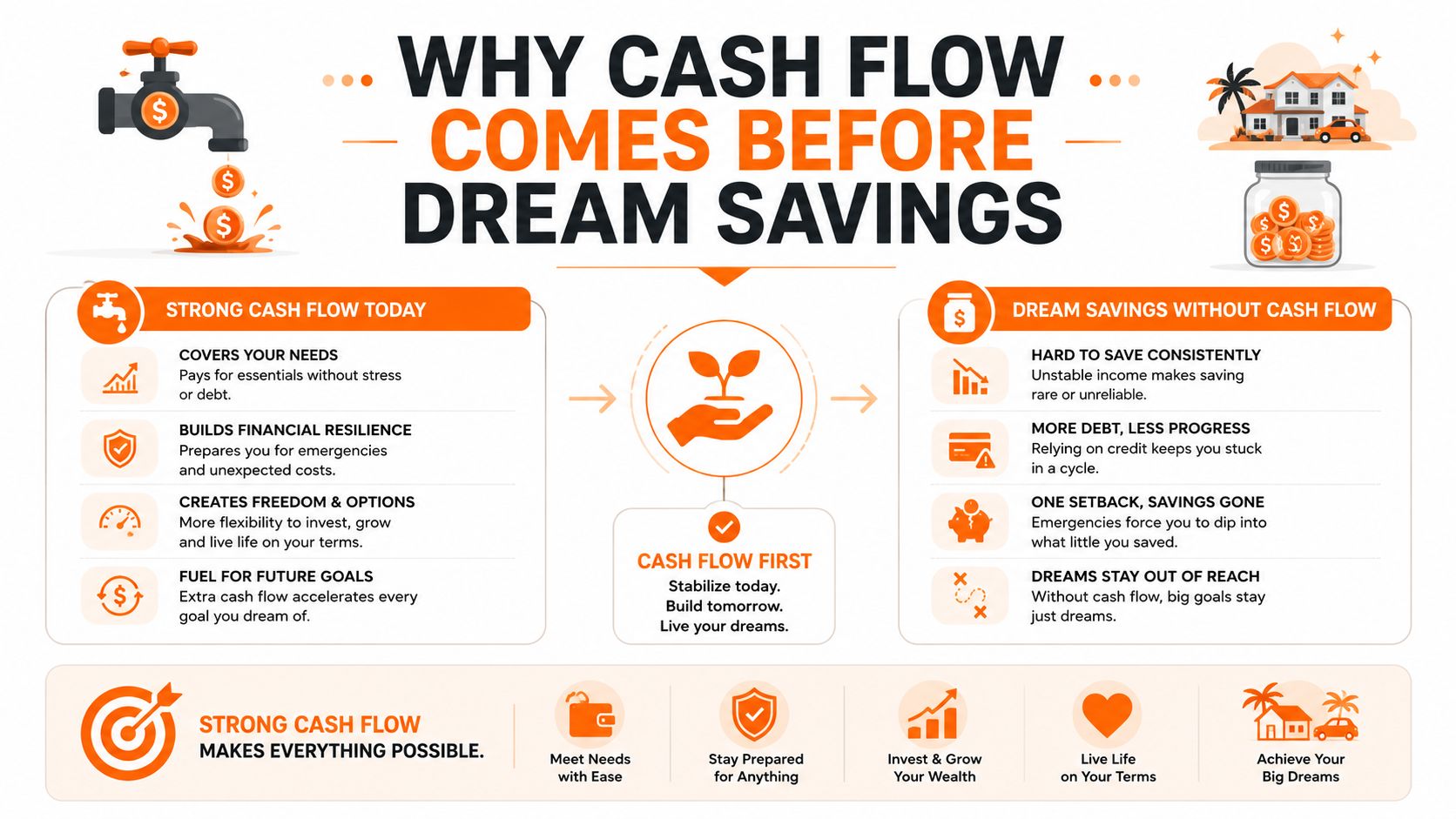
The Canadian picture is also uneven. One survey found that 73% of employees identified paying day-to-day expenses as their top financial priority, ahead of mortgage or rent at 60%, personal non-mortgage debt at 50%, retirement savings at 42%, emergency funds at 39%, and purpose-based savings at 36%. These figures appear in the Canadian employee savings survey.
The sequence is therefore practical:
- Make recurring inflows and outflows visible.
- Protect required bills and minimum debt payments.
- Reduce expensive debt where possible.
- Build accessible savings.
- Add optional goals once the base can carry them.
This isn't an argument against long-term saving. It's an argument for building the conditions that let long-term saving continue.
A Simple Framework for Setting Money Goals
Use SMART as a writing exercise, then test the result against your actual cash flow. The letters become more useful when each one answers a money question:
- Specific: Name the exact account, bill, debt, or spending category. “Save more” becomes “add money to the emergency fund.”
- Measurable: Attach an amount and a deadline. A target without either is difficult to review.
- Achievable: Compare the proposed contribution with last month's actual income and expenses. Don't base it on an ideal month.
- Relevant: Connect the goal to a real pressure, such as an irregular bill, high card balance, or unpredictable grocery spending.
- Time-bound: Keep the target within a defined period, generally no longer than 12 months for a short-term objective.
Next, apply a simple 90-day sequence. First stabilise cash flow. Then direct extra money toward high-interest debt. Build a starter buffer after required obligations are covered, and add optional savings only when those earlier steps fit comfortably.
Canada's FCAC provides a 3-to-6-month living-expenses benchmark for an emergency fund and notes that building it may take time depending on debt and expenses in its emergency fund guidance. You can treat that as a longer destination while choosing a smaller, immediate milestone for the next few months.
FCAC's planning materials also suggest saving at least 10% of income where possible and treating an emergency fund as 5% to 10% of a monthly budget, as explained in its financial planning materials. Use those percentages as a reference point, not a test you fail. A lower sustainable amount is more useful than an aggressive transfer that forces you to borrow again.
Sequencing check: If a goal makes next month's bills uncertain, reduce the contribution before abandoning the whole plan.
The same logic works for business subscriptions and household services. Anyone organising recurring costs can borrow the idea behind a roadmap to optimise SaaS costs, identify essential commitments first, and then decide which expenses can be reduced.
Three Short Term Goals You Can Start This Week
The examples below are templates, not promises that every household can use the same contribution. Adjust the dates and weekly amounts to your take-home pay, required costs, and existing debt.
A starter emergency fund
Suppose your current emergency savings balance is $0, and you choose a $1,000 target for a date within the next year. Divide the remaining amount by the number of weeks until that date, then create a recurring transfer labelled “Emergency fund.” In the budget planner, place it under Savings, not Groceries or Transport, so you can see whether the contribution is funded.
Auto-transfer script: “On payday, transfer the planned weekly amount to my emergency savings account before discretionary spending begins.”
A credit card payoff
Suppose a credit card has an opening balance of $1,000 and an interest rate below 18% APR. Set a target date, record the required minimum payment, and add a separate extra-payment amount under Debt. The important workflow is to track the balance after interest and payments, rather than treating the transfer itself as proof that the balance is falling quickly.
Auto-transfer script: “Pay the required minimum, then send the planned extra amount to the card on payday.”
A capped discretionary fund
Start with a $500 opening balance for a fun fund, choose a target date within the next year, and set a weekly spending limit. Put it in a category such as Dining and entertainment, rather than allowing restaurant purchases to blend into Groceries. When the category reaches its limit, pause the spending or move money from another category deliberately.
Auto-transfer script: “Move the planned weekly amount into my fun fund, and stop adding to it when the cap is reached.”
| Goal | Target Amount | Time Horizon | Weekly Contribution | Budget Category |
|---|---|---|---|---|
| Starter emergency fund | $1,000 | Within 12 months | Calculate from the remaining balance and weeks available | Savings |
| Credit card payoff | Opening balance of $1,000 | Within 12 months | Minimum payment plus planned extra | Debt |
| Capped fun fund | $500 | Within 12 months | Planned weekly allowance until the cap | Dining and entertainment |
These three goals can coexist if you subtract required bills and regular living costs first. If the remaining take-home pay cannot support all three, fund the cash-flow stabiliser and required debt payment before optional spending. A weekly planning habit can also help you organise smaller actions, and Kohru's productivity approach provides a useful reference for turning intentions into recurring weekly tasks.
Tracking Progress Without Spreadsheet Burnout
A goal tracker only needs a few fields to become useful:
- Start date: When you made the first contribution.
- Target date: When you want the goal completed.
- Current balance: What you have saved or what remains on the debt.
- Target amount: The finish line.
- Percent complete: The current balance divided by the target, adjusted for whether you're saving or paying down debt.
Review the tracker for 10 minutes each week. Mark the next milestone at 25%, 50%, 75%, and 100%, then compare the current position with the planned pace. Percentages are often easier to understand than raw dollars when paycheques vary, because the same progress scale works across different targets.
Set an alert only when the goal falls more than 15% behind its planned pace. A gentle flag is enough. The purpose isn't to create anxiety after one expensive week, but to prompt a decision while there's still time to adjust the next contribution.
Fintrack can put a savings or debt target beside its deadline, funding commitment, and milestone progress, while its broader dashboard brings income, expenses, budgets, and goals into one view. For a wider review of balances and spending, use this personal finance dashboard guide.
Schedule the check-in on the same day you pay bills. That timing turns the review into a habit anchor: bills are handled, the account balance is current, and you can decide whether the next transfer still fits. If your income changes, update the contribution rather than letting the goal drift.
Misconceptions That Quietly Kill Short Term Goals
Myth one, small goals don't matter. A modest buffer can still create room between an unexpected cost and a new balance on your credit card. California's 2023–24 CalMoneySmart report found that 64% of participants increased their savings, 62% met their savings goal on time, and the average participant increased savings by $590 in the program year, according to the CalMoneySmart annual report. The lesson is not that every person will achieve the same result. Structured, time-bound targets can turn an intention into measurable behaviour.
Myth two, motivation will carry the plan. Motivation changes with stress, travel, overtime, and unexpected bills. Automatic transfers, named categories, and weekly reviews reduce the number of decisions you need to make.
Myth three, aggressive targets always work faster. A contribution that leaves you short for groceries or minimum payments isn't efficient. A sustainable pace, including the 10% reference point in FCAC's planning materials, can be more practical than a crash approach that must be reversed.
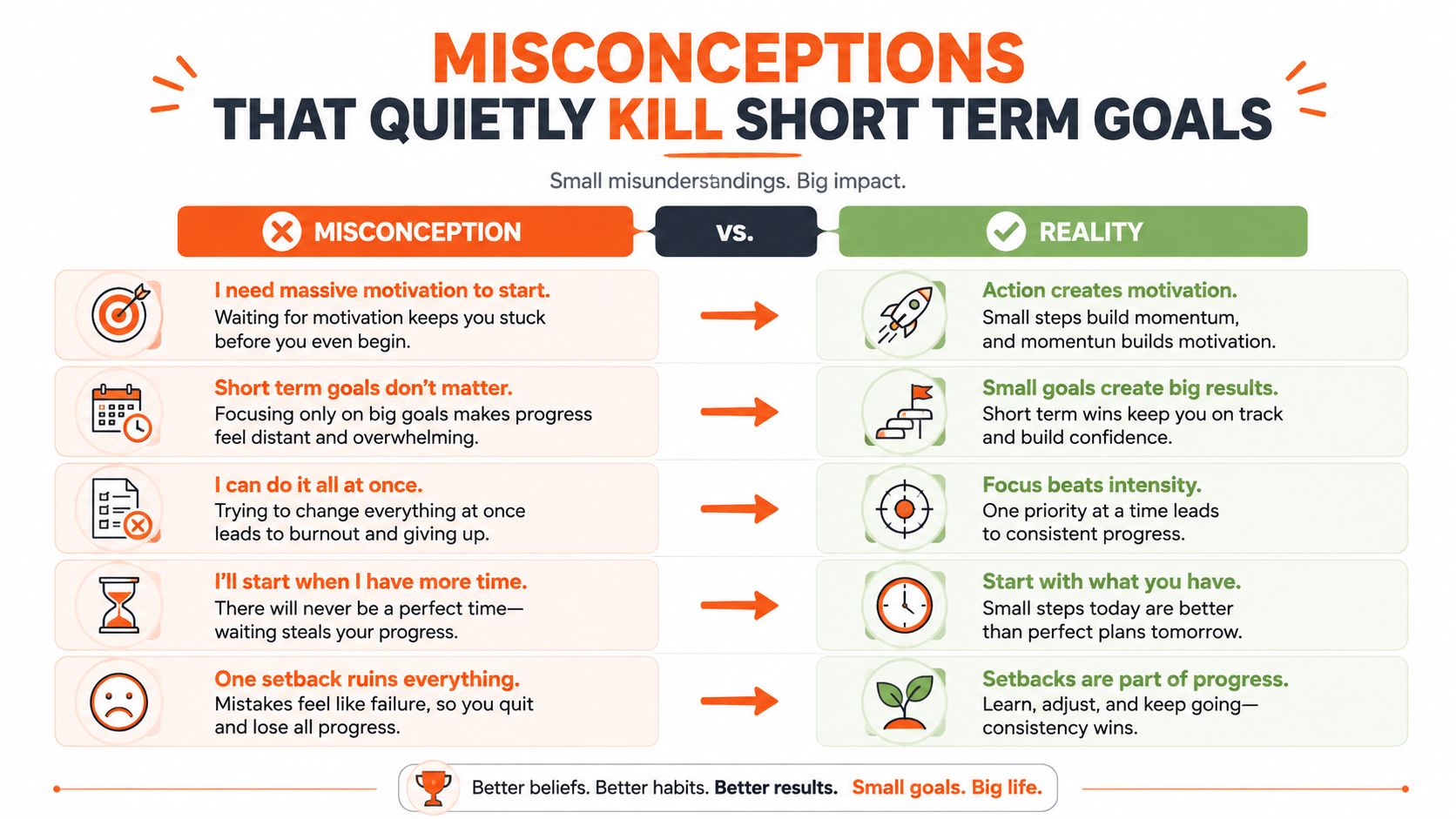
Use the corrected sequence: stabilise cash flow, build toward a one-month buffer, then layer in discretionary goals. Audit one current goal today. If it has no deadline, category, or realistic contribution, rewrite it before adding another target.
Your First 30 Days and One Quiet Next Step
The first month should produce clarity, not a perfect financial system. Use one action each week.
Week one
List income, fixed bills, debt minimums, and ordinary spending. Choose one goal that addresses the most immediate cash-flow pressure, then give it a budget category.
Week two
Rewrite the goal using SMART criteria. Add its target amount, deadline, current balance, and a contribution based on actual income. Use the 10% allocation reference only if it fits after required costs, and lower it when the budget can't support it.
Week three
Schedule a weekly check-in on bill-pay day. Add milestone markers at 25%, 50%, 75%, and 100%, then decide what action you'll take if the goal begins falling behind.
Week four
Compare the planned contribution with what happened. Keep the target if it worked, reduce it if it created pressure, or redirect money from a category you knowingly choose to change. A simple money-saving box approach can also help separate a small goal from everyday spending.
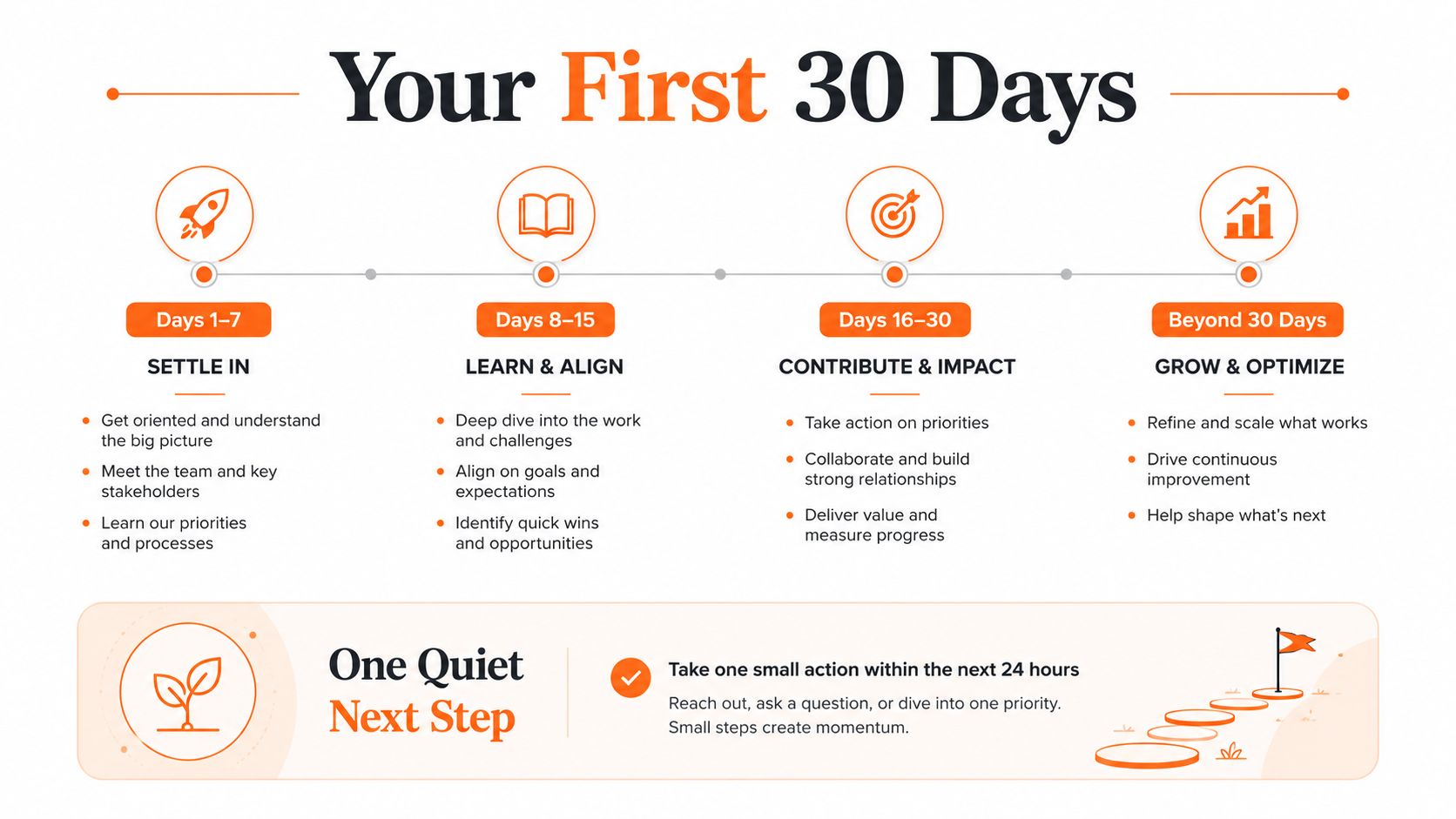
The quiet next step is to make the system repeatable. A goal should show where the money goes, when you'll review it, and what happens when the month doesn't follow the plan.
Fintrack lets you organise expenses, budgets, and savings targets in one dashboard, with goal deadlines and progress tracking that fit this cash-flow-first approach. Visit Fintrack to set up one realistic short term goal and review it alongside your everyday spending.