
A 24-year-old in Toronto gets paid twice a month, pays rent and a phone bill, buys a few coffees, and somehow can't explain where the money went by the 20th. The problem usually isn't difficult maths. It's starting with guesses instead of real numbers.
These budgeting tips for young adults begin with awareness, then add simple systems for allocating income, saving automatically, and protecting progress as income grows. Each tip includes a first action, a worked example, and a trade-off to consider, whether you're building your first budget in Canada or the US.
Your starting point is your take-home pay, not your salary before deductions. If you're unsure what reaches your account, use this salary breakdown guide to estimate your after-tax income. Then work through the list in order, starting with the step that gives you the clearest view of your current money habits.
1. Track every expense to understand your spending patterns
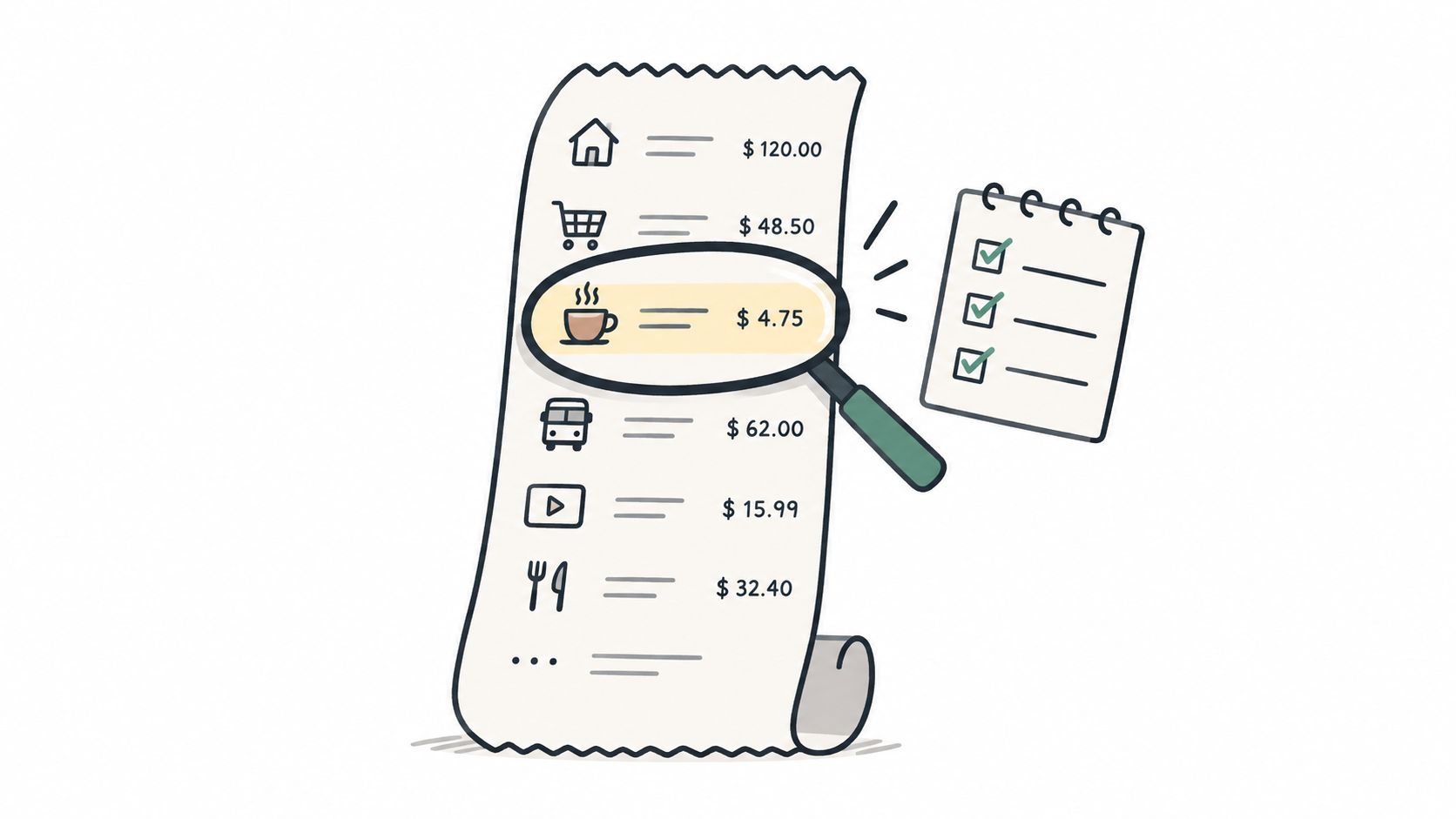
A budget built from memory will miss the small purchases that shape your month. Record groceries, subscriptions, coffee, fuel, dining out, delivery fees, and irregular expenses until you can see what happens between paydays.
A 24-year-old might discover that coffee and forgotten subscriptions total $180 a month. Cancelling three unused services could free $45 a month. Someone else may call restaurant meals “occasional” until two weeks of tracking reveal four or five visits each week. A student might also find duplicate streaming and gym charges worth $25 a month.
Use a tool that reduces manual work, but don't let automation replace review. Fintrack can categorise transactions and show spending patterns, while manual entry remains useful when you don't want to connect a bank account.
How to track monthly spending explains a practical way to organise this first month.
Start with a complete month
Record transactions for a full month so you capture regular bills, pay-cycle differences, and less frequent purchases. Review categories weekly rather than waiting until month-end. A weekly check can show that dining out is consuming the category before there's no money left for groceries.
Look for triggers rather than only totals:
- Social spending: Check whether spending rises after nights out or group events.
- Timing patterns: Compare weekday, weekend, and payday purchases.
- Stress purchases: Notice whether convenience food, shopping, or delivery appears after difficult days.
- Duplicate charges: Check statements for repeated memberships or services.
- Early warnings: Set alerts for categories that regularly run over plan.
Practical rule: Track first, judge later. You need an accurate picture before deciding what to cut.
The trade-off is time. Manual tracking can feel tedious, while automatic categorisation can mislabel transactions. Review the categories often enough to keep the data useful, then compare each month to spot changes and seasonal patterns.
2. Cut subscriptions and recurring expenses that don't add value
Recurring charges deserve their own review because they continue after you've stopped thinking about them. Streaming services, gym memberships, cloud storage, food delivery plans, gaming apps, and software can compete with savings and debt payments.
Start by listing every recurring payment, its cost, and the last time you used it. A 25-year-old paying $45 a month for three streaming services might watch only one. Cancelling two would save $30 a month, or $360 over a year. A $50 monthly gym membership that hasn't been used in six months costs $600 over a year if it remains active.
The right question isn't whether a service is cheap. Ask whether you'd buy it again today if you had to make the payment upfront. If the answer is no, cancel it, pause it, or replace it with a free option.
Use a recurring-payment audit
Review your account and card statements. Then make one decision for each charge:
- Keep it: You use it often and it supports a real priority.
- Reduce it: Choose a lower tier, shared plan, or bundled option.
- Pause it: Stop payment for a season or while your cash flow is tight.
- Cancel it: Remove a service that no longer earns its place.
- Correct it: Challenge duplicate charges or billing errors.
A recent graduate might find two cloud-storage charges at $10 each per month. Correcting the duplicate saves $120 over a year. That money could instead support an emergency buffer, debt payment, or specific savings goal.
Set a recurring reminder to review subscriptions. Check new charges early, because a spending alert is more useful before several payments have accumulated. You can also explore second hand smartphones for less before adding a new device payment to your monthly commitments.
The trade-off is convenience. A shared streaming plan or paid fitness service may well improve your life. Cutting every enjoyable recurring expense can make a budget too restrictive, so keep the charges that deliver clear value and remove the ones operating on autopilot.
3. Use the 50/30/20 budget rule to allocate your income
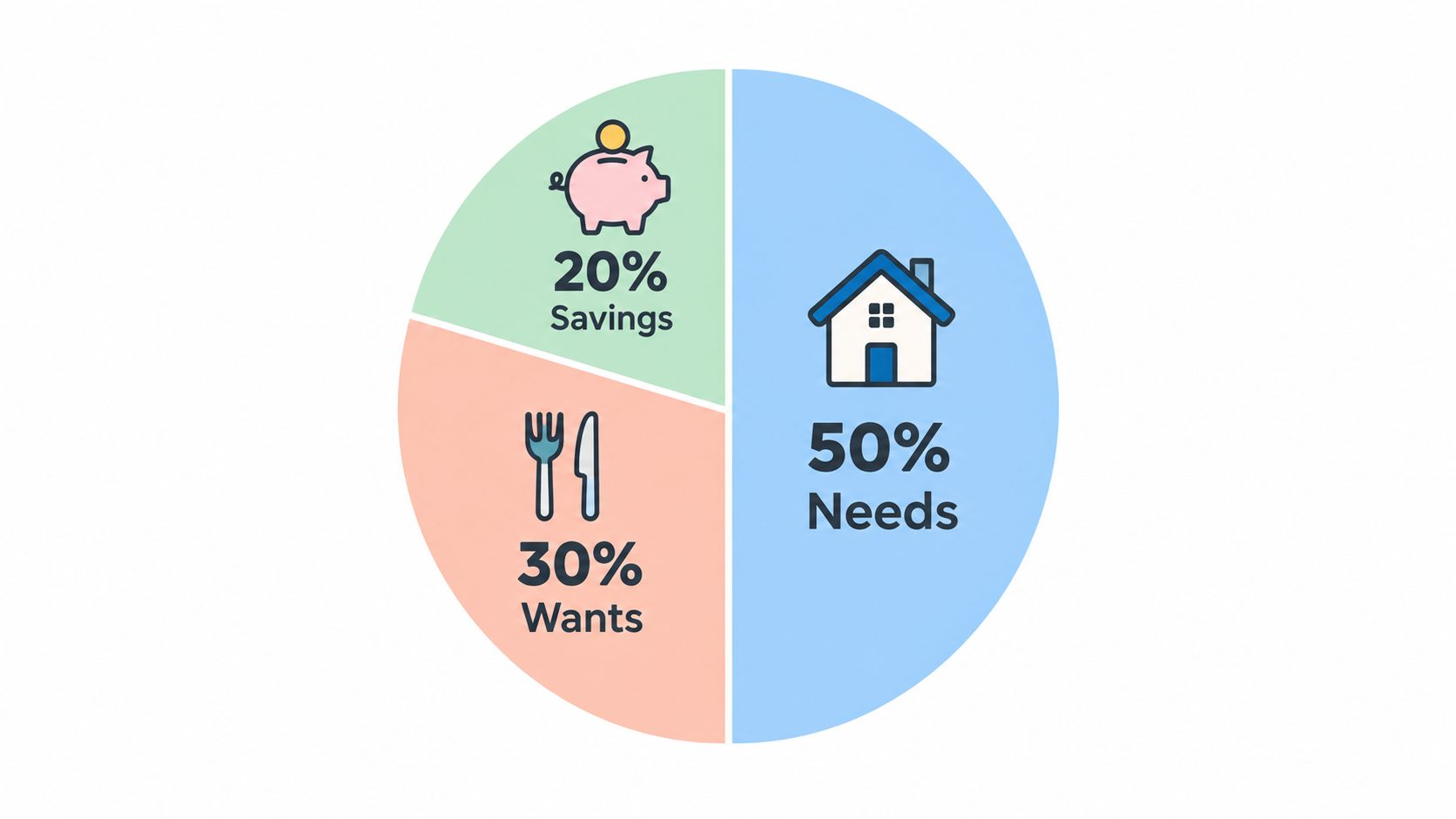
A simple split helps once you can see where your money goes. Put 50% toward needs, 30% toward wants, and 20% toward savings and debt repayment. Needs cover housing, groceries, utilities, insurance, and transport. Wants cover dining out, entertainment, hobbies, and optional purchases.
For a 25-year-old earning $50,000 annually with $3,125 in monthly after-tax income, that means $1,562 for needs, $937 for wants, and $625 for savings or debt repayment. Start there, then compare those amounts with what your bank statement shows.
The first action is to sort recent spending into the three buckets. If dining out keeps pushing the wants category too high, use budget meal planning for families to keep food costs from spilling into impulse spending. One category can distort the whole month.
Real life often breaks the neat ratio. A young professional in Toronto may need more room for housing, so a 55/25/20 split can be more realistic. That trade-off is flexibility versus consistency. The standard rule is easy to remember, but forcing it when rent is high can make the budget useless.
Treat the rule as a guide
Calculate your take-home pay first. Then check where your money already goes. If needs are above 50%, cut flexible wants before you cut groceries or necessary transport. After that, examine bigger decisions such as housing, commuting, or insurance.
Review the split every few months with four questions:
- Needs: Which required costs changed?
- Wants: Which purchases were worth it, and which were habit?
- Savings and debt: Did money go there before discretionary spending?
- Income: Has a raise, job change, or irregular payment changed the plan?
If you want a closer explanation of how the percentages work, read a deeper look at the 50/30/20 budget rule in practice.
The trade-off is simplicity versus precision. Broad buckets are easy to use, but they can hide a problem. A large food category might mix groceries with restaurant spending, so split those when the summary stops being useful.
4. Use zero-based budgeting to account for every dollar
Zero-based budgeting assigns your expected income to spending, saving, and debt until the planned balance reaches zero. It doesn't mean you should spend everything. It means every dollar has a destination, including money held for future bills and emergencies.
A 22-year-old earning $2,500 a month might plan:
- Rent: $800
- Food: $300
- Utilities: $150
- Transport: $200
- Debt repayment: $400
- Savings: $300
- Wants: $350
The allocations total $2,500. Nothing remains unassigned, so the person can see whether the plan supports essentials, debt reduction, savings, and enjoyment.
Give irregular income a cautious job
Freelancers and gig workers shouldn't allocate money based on their best month. Use a conservative expected income figure, cover essentials first, and direct income above that baseline toward savings, taxes, debt, or upcoming irregular costs.
A reusable template makes the method easier. Start with four broad groups, needs, wants, savings, and debt. Add a buffer category for unexpected costs, but don't invent a percentage if your income is already tight. The buffer can be a fixed amount that reflects what you can afford.
Review the plan weekly. If groceries run higher than expected, move money from a flexible category rather than overspending. Pairing the method with a zero-based budgeting app can help you compare planned amounts with actual transactions.
The trade-off is control versus effort. Zero-based budgeting catches gaps that broad rules miss, but it requires more regular decisions. It can also feel restrictive if you refuse to adjust the plan when real costs change. A budget should be assigned in advance, not defended after it stops matching reality.
5. Automate your savings before you spend
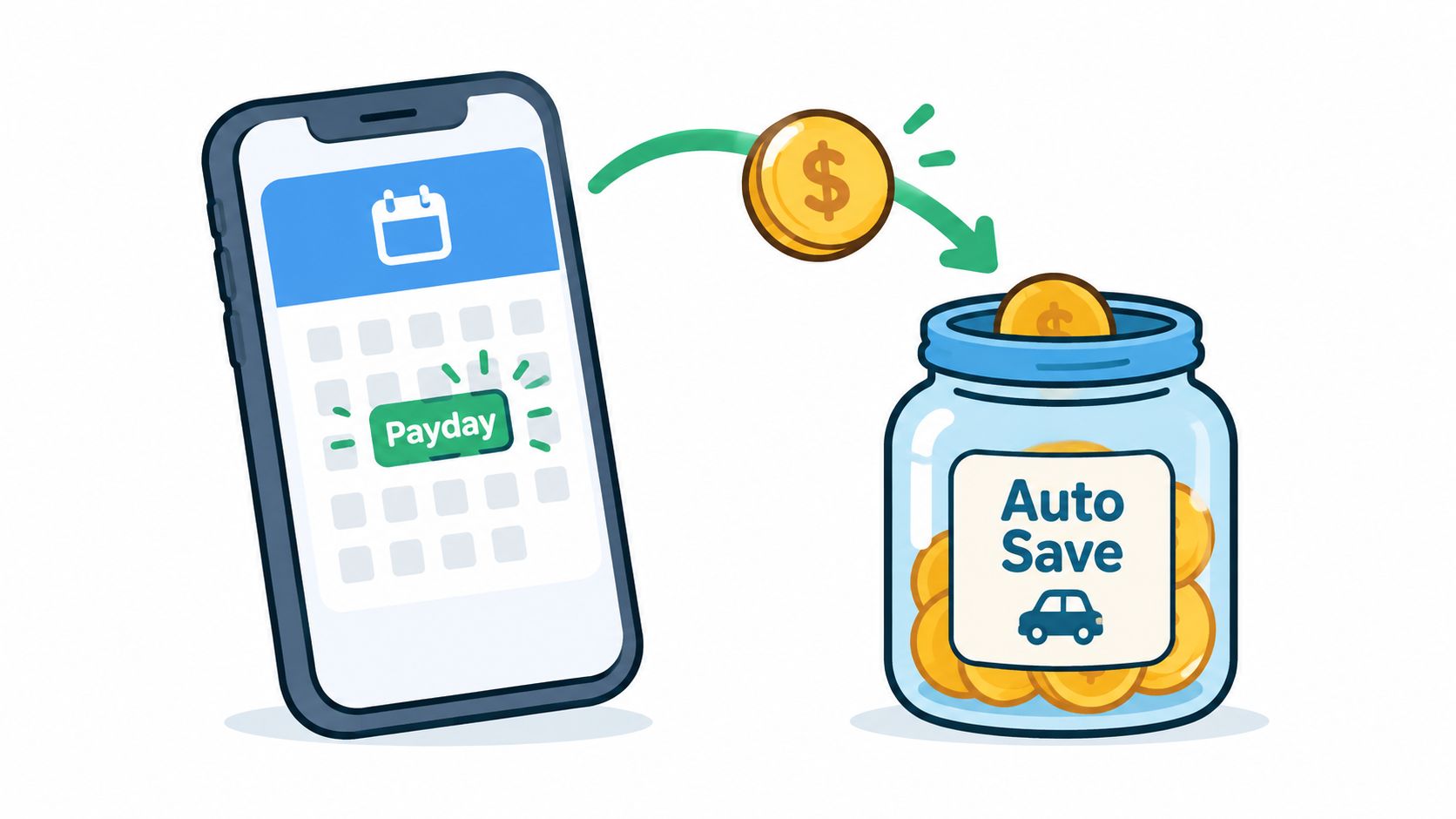
Saving manually leaves the decision until after bills, shopping, and social plans. A payday transfer reverses that order. Schedule money to move into a separate savings account shortly after each paycheque, before your available balance encourages extra spending.
A 23-year-old who transfers $200 after each monthly payday would build $2,400 over a year, assuming the transfer continues. Another person may begin with $50 a month, keep that amount for three months, and then raise it to $100 once the budget feels stable.
Start with an amount you can maintain. An ambitious transfer that causes overdrafts is not progress. The system should make saving predictable without forcing you to borrow for essentials later in the pay cycle.
Put the transfer on a schedule
Use separate transfers when you have different priorities, such as an emergency fund, a planned move, or travel. Keep emergency money accessible, but make it less visible than your daily spending account.
When income rises, increase the transfer before your lifestyle adjusts. You can also direct irregular income, such as a bonus or tax refund, toward the goal instead of treating it as ordinary spending.
Saving works better when it happens by calendar rule, not by leftover money.
The trade-off is flexibility versus consistency. Automatic savings create a strong routine, but an amount that worked before a rent increase may no longer be realistic. Check the transfer whenever your income or essential bills change, and reduce it temporarily rather than letting the account fall short.
6. Build an emergency fund in stages
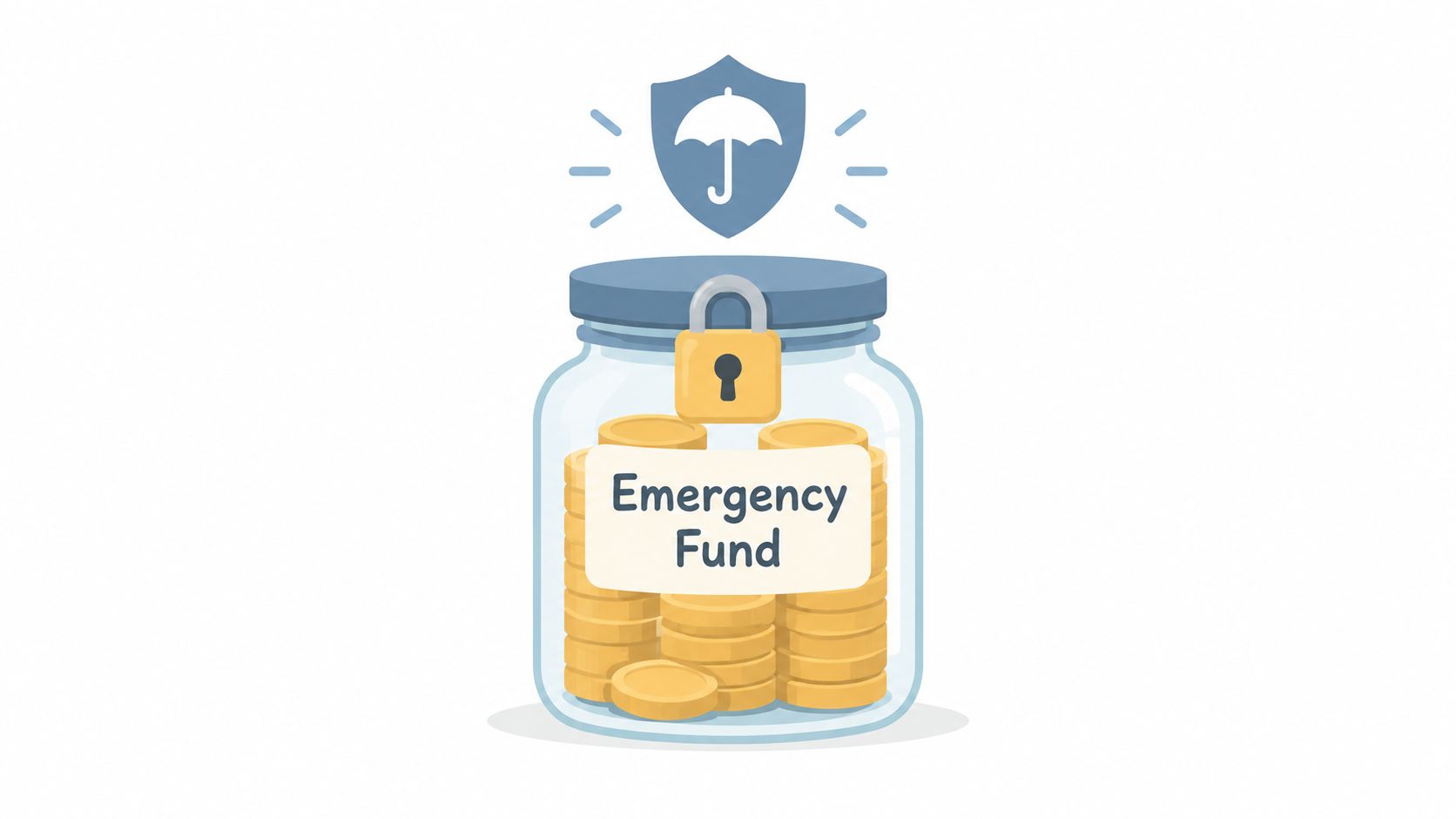
An emergency fund protects cash flow when a car needs repair, income stops, or a medical expense arrives. The long-term target is often described as three to six months of living expenses, but treating that as the first milestone can discourage someone who has no reserve.
California data shows why a staged approach matters. Approximately two-thirds of California families have at least one month of reserve funds, while 58% have three months, according to PPIC research on assets, debts, and wealth in California. The same source reports that 95% of California households hold checking or savings assets, which supports tracking accessible cash separately from investments, home equity, or retirement accounts.
Begin with a small shock buffer, then work toward one month of essential expenses and later three months. A target of $1,000 can be a practical first milestone for a young adult, especially when an unexpected repair or bill would otherwise go on a credit card.
Decide what the fund can cover
Emergency money is for essential, unplanned costs. That can include urgent medical care, a necessary car repair, a sudden loss of work, or essential home repairs. A holiday, upgrade, or routine shopping purchase belongs in a separate goal.
California households also face revolving-debt pressure. A PPIC survey found that 41% of California households reported credit-card or retail-store debt, with a median balance of about $6,000 according to the survey data. A starter reserve can reduce the need to add a modest shock to an expensive revolving balance.
For Canadians, the Financial Consumer Agency of Canada's budgeting guidance also recommends building toward three to six months while starting with a small amount saved regularly.
The trade-off is liquidity versus debt reduction. If you have high-cost debt, saving a large reserve immediately may slow repayment. Keep minimum payments current, build a small accessible buffer, and increase the reserve as your income becomes more stable. Fintrack's emergency-fund guide can help turn the stages into tracked milestones.
7. Set specific savings goals with target dates
“Save more” is too vague to guide a transfer or a spending decision. A useful goal names the amount, purpose, and deadline. For example, $5,000 for a summer trip by July 31 tells you what the money is for and when the plan must be complete.
Break the target into regular contributions. A $5,000 goal divided into monthly payments of $625 creates a clear path, while a $10,000 emergency-fund target can be split into milestones of $2,500, $5,000, $7,500, and $10,000. A $25,000 house deposit goal over three years requires planned monthly contributions of $695 under the example in this workflow.
The mathematics only helps if the goal fits your cash flow. If the required contribution makes rent, food, or debt payments unreliable, change the date or amount rather than abandoning the goal.
Keep the number of goals manageable
Use the SMART structure: specific, measurable, achievable, relevant, and time-bound. Keep a short list of priorities so money doesn't get divided into tiny transfers that produce little visible progress.
Attach each goal to an automatic contribution and review it monthly. Mark progress at 25%, 50%, 75%, and 100%. If you fall behind, make one decision: increase the timeline, reduce the target, or redirect money from a lower-priority goal.
A goal also needs a reason. “Move into a better flat,” “replace a failing car,” or “create a work-break buffer” gives the target meaning beyond a number. That reason makes it easier to reject a purchase that would delay the deadline.
The trade-off is motivation versus flexibility. A deadline can create useful focus, but income changes and unexpected costs may require a new date. A savings-goal tracker should make adjustments visible, not make you feel as though a changed plan has failed. The savings goal tracker app approach is useful when you want contributions and progress in one place.
8. Avoid lifestyle inflation as your income grows
A raise improves your options only if some of it remains available for future priorities. Lifestyle inflation happens when higher income immediately becomes a more expensive flat, newer car, more delivery meals, or larger shopping habits.
Suppose you avoid upgrading a paid-off car after a 10% raise. Keeping the old transport cost and directing $250 a month to savings would add $3,000 over a year. That's a deliberate trade-off. You give up an immediate upgrade in exchange for stronger cash reserves or faster progress toward another goal.
You don't need to reject every improvement. Focus on upgrades that improve daily life without creating a permanent monthly obligation. A better mattress or running shoes may cost money once, while a larger apartment or new car can raise rent, insurance, fuel, and maintenance costs.
Make raises automatic
Decide in writing what happens when income increases. Direct a defined share, even the entire increase if your current lifestyle is workable, to savings, debt, or retirement before the extra money reaches your spending account.
Delay major lifestyle changes for three to six months. During that period, observe whether the higher income is stable and whether other costs have changed. Then compare the one-time enjoyment of an upgrade with the long-term value of keeping the contribution.
Track your baseline spending after every pay increase. If wants expand without an intentional decision, move the difference back toward a goal. Celebrating a completed emergency-fund milestone with a modest planned reward is different from turning every financial win into a new recurring bill.
The trade-off is present comfort versus future flexibility. A budget that never allows improvement can become unrealistic, but automatic upgrades can leave you in the same cash-flow position at a higher salary. Increase lifestyle spending only when it supports a priority you've chosen.
8-Point Comparison of Budgeting Tips for Young Adults
| Strategy | Implementation complexity | Resource requirements | Expected outcomes | Ideal use cases | Key advantages |
|---|---|---|---|---|---|
| Track Every Expense to Understand Your Spending Patterns | Medium, requires regular entry or setup of automation | Time or an app/spreadsheet; optional bank connections | Clear visibility into where money goes; identifies leaks | Beginners who need spending awareness or anyone building a budget | Reveals hidden spending, informs realistic budgets |
| Cut Subscription and Recurring Expenses That Don't Add Value | Low–Medium, audit and periodic reviews | List of subscriptions, account access, occasional cancellation effort | Immediate cash savings; reduced autopay waste | People with multiple recurring charges or tight cash flow | Fast way to free up money with minimal lifestyle impact |
| Use the 50/30/20 Budget Rule to Allocate Your Income | Low, simple percentage-based allocation | Basic calculation of after-tax income; tracking tool recommended | Balanced spending with built-in savings; reduced decision fatigue | Those wanting an easy, repeatable budgeting framework | Simple, memorable structure that prioritizes savings |
| Use the Zero-Based Budgeting Method to Account for Every Dollar | High, detailed monthly planning and adjustments | Time to allocate each dollar, templates or budgeting app | Full control over allocations; reduced unexpected shortfalls | People who want tight control, variable-income earners | Forces intentional decisions and maximizes goal funding |
| Automate Your Savings Before You Spend | Low, one-time setup, ongoing passive transfers | Bank or app with scheduled transfers; separate savings account | Consistent savings growth and habit formation | Anyone who struggles to save manually or has steady income | Removes willpower from saving; ensures consistency |
| Build an Emergency Fund of 3–6 Months of Expenses | Medium, long-term disciplined effort | Regular contributions, separate liquid account (high-yield) | Financial safety net; reduced need for high-interest debt | Those without savings or vulnerable to income shocks | Provides peace of mind and prevents crisis borrowing |
| Set Specific, Measurable Savings Goals with Target Dates | Medium, requires planning and tracking | Defined targets, timeline, tracking tool or automation | Higher goal completion rates; clear monthly targets | Savers with concrete objectives (vacation, down payment) | Increases motivation and measurable progress |
| Avoid Lifestyle Inflation as Your Income Grows | Medium, ongoing behavioral discipline | Commitment plan, automatic increases to savings, tracking | Increased long-term wealth and financial flexibility | People receiving raises or promotions who want to build wealth | Preserves raises for savings and compound growth rather than spending |
Pick one tip and give it four weeks
Start with the tip that addresses your biggest leak. If you can't explain where your money goes, track every expense. If recurring charges are the problem, audit subscriptions. If you already know your spending but save nothing, schedule the transfer for the day after payday.
Use the next four weeks as a test period. Record transactions, review categories weekly, cancel one recurring charge you no longer use, and set one automatic savings transfer. You don't need a perfect system before you begin. You need a system that gives you feedback and survives an ordinary month.
Your housing situation may require a different approach from a friend's. In California, 40% of residents said housing costs placed at least some financial strain on their household, with strain reaching 48% in the Inland Empire, 45% in the Central Valley, and 45% in Los Angeles, according to a 2025 PPIC statewide survey. A 2025 California youth poll found that 87% of people aged 14 to 25 were concerned about housing affordability, ahead of concerns about groceries at 84% and finding a good job at 73%, as reported in PPIC's economic well-being survey. When rent dominates the budget, cutting coffee alone won't solve the main constraint. Compare rent, transport, deposits, shared housing, and family contributions together.
Cash-flow reviews matter in that situation. A 2025 PPIC analysis found that 29% of California adults, including about half of lower-income adults, were making difficult choices to meet expenses; 22% reported reduced work hours and 21% couldn't pay a bill in the analysis. Review weekly when hours or income fluctuate, and flag a projected month where available cash can't absorb a $1,000 emergency.
Canadian households also need to budget debt explicitly. Statistics Canada reported that households under 35 had a household debt-to-income ratio of 165.2% in the third quarter of 2023, while the ratio of interest costs to disposable income for people under 35 rose to 9.7% in 2023 in its household economic account analysis. If you use a Canadian credit card, record the minimum payment, balance, interest, and extra repayment separately. The Financial Consumer Agency of Canada notes that the minimum is generally the greater of a fixed amount, such as $10, or a percentage such as 3%, depending on the card agreement, as explained in its credit-card payment calculator.
Canadian users should also verify account rules before automating investment or savings deposits. The Canada Revenue Agency says TFSA contribution room starts accumulating at 18 for Canadian residents, and the annual limit is $7,000 for each year from 2024 through 2026, including 2026. Unused room carries forward, withdrawals return as room on January 1 of the following year, and over-contributions are subject to a 1% tax per month, according to the CRA's TFSA contribution guidance.
Small, repeated steps hold up better than a perfect budget you abandon after two weeks. If you want one place to record transactions, set categories, and review progress, Fintrack's budget planning works with or without a bank connection, so manual entry is an option when you prefer it.
Fintrack lets you set category limits, monitor progress, record transactions, and connect spending decisions to savings goals in one dashboard. Visit Fintrack to start applying these budgeting tips with a system you can review each week.