
Your offer has been accepted. You've already sent bank statements, pay slips, tax documents, and what feels like your entire financial life to the lender. Then a new document lands in your inbox: the commitment letter for mortgage.
At first glance, it feels like the win you've been waiting for. Then you open it and see conditions, deadlines, and legal wording that makes it sound less like a celebration and more like homework.
That reaction is normal. Most first-time buyers think the mortgage commitment means the loan is done. In practice, it's closer to the final exam. You're near the finish line, but you can still trip if you miss a condition, change jobs, open new credit, or let the timeline drift.
The Final Hurdle Before You Get the Keys
A lot of buyers hit this stage thinking the hard part is over. You found the home, your offer beat the competition, and the lender has been responsive. So when the commitment letter arrives, you assume it means, “Great, see you at closing.”
Sometimes that assumption causes the biggest problems.
A commitment letter often shows that the lender has done serious work already. That's good news. But it can also come with a list of items that still need to be cleared before the loan can fund. If you treat it like a trophy instead of a task list, small issues can turn into closing delays.
Why this moment feels confusing
The wording can make the document sound final, even when it isn't fully final yet. Buyers see “approved” and stop reading carefully. Meanwhile, the lender is still expecting action on insurance, title, appraisal, updated income documents, or other details.
That's why I tell buyers to think of this letter as a checkpoint with consequences.
Practical rule: A commitment letter is good news, but it's also a deadline-driven list of promises you still have to keep.
This is also where people start mixing up related steps. For example, the property itself may still need lender review. If you're trying to understand one piece of that process from a buyer's point of view, this mortgage valuation guide for UK buyers gives a useful plain-English explanation of how lenders look at a home's value.
What buyers should do right away
Before you celebrate too hard, slow down and check three things:
- Read every condition: Don't stop at the headline approval language.
- Check the dates: Expiry dates matter, especially if your closing schedule is tight.
- Avoid money moves: This is not the time to finance furniture, switch jobs, or move cash around without explanation.
If you're also thinking ahead about what happens after closing, it helps to understand bigger repayment decisions early, such as whether paying off your mortgage loan early makes sense.
The buyers who get through this phase smoothly usually aren't the luckiest. They're the most organised, the fastest to respond, and the least likely to make last-minute financial changes.
What Is a Mortgage Commitment Letter?
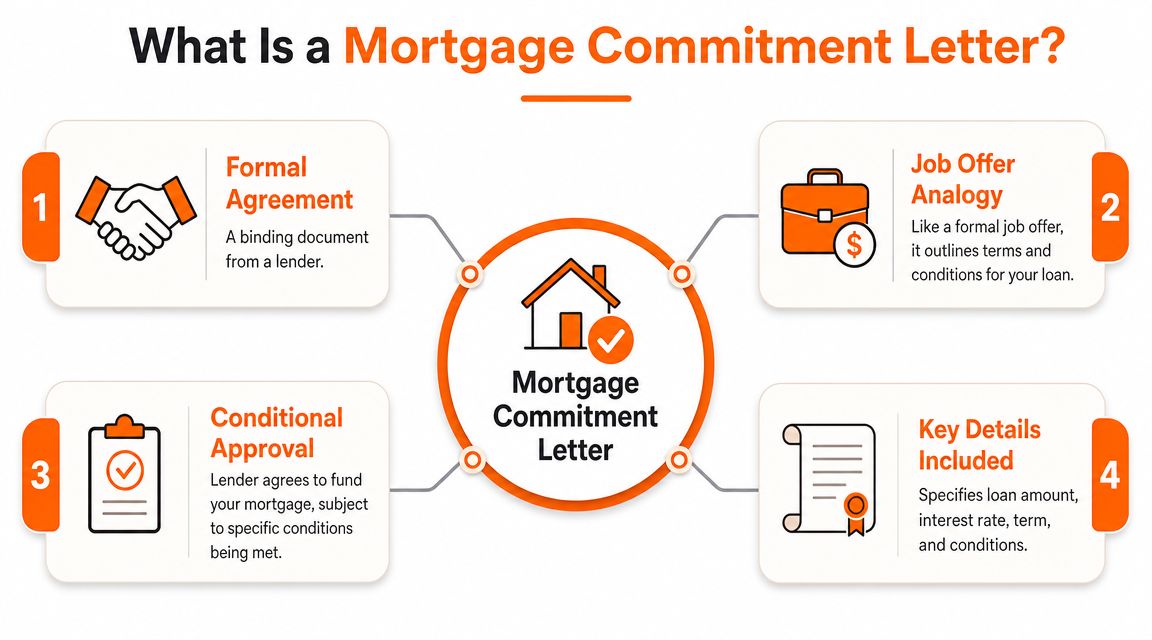
A mortgage commitment letter is the lender's written promise to make your loan on a specific home if you satisfy the remaining conditions. It arrives late in the process, after the lender has reviewed far more than the basic numbers you gave at the start. The Consumer Financial Protection Bureau explains that your lender must also give you a Closing Disclosure before closing, which helps place the commitment letter near the end of the timeline, not at the beginning.
The best way to read this letter is as the mortgage process's final exam. You are close, but you are not done. The lender is saying, in plain terms, “We expect to lend, provided nothing important changes and every condition is cleared.”
A job-offer comparison helps here. An employer may want to hire you, but the offer can still depend on a background check, signed documents, or proof of qualifications. A mortgage commitment works the same way. Your lender may still need updated insurance, title work, verification of assets, or confirmation that your income and debts still match the file. If lender income requests feel confusing, understanding annual gross income can make those follow-up questions easier to interpret.
What the letter usually includes
A commitment letter usually spells out the loan amount, interest rate, loan type, property address, expiration date, and the conditions you still need to meet. Zillow's explanation of mortgage commitment letters also notes that the letter is a strong signal because it follows underwriting review and ties the approval to a particular property, not just a rough price range.
Those conditions matter more than many first-time buyers expect.
Some are routine, such as providing an updated bank statement. Others can hold up closing if you miss them, such as unresolved title issues, proof of homeowners insurance, or a requirement that the property meet the lender's standards. This is why buyers get into trouble when they celebrate the approval headline and skim past the fine print.
Why sellers care about it
To a seller, a commitment letter shows that your financing has moved beyond an early conversation. The lender has reviewed your file in much more detail, and the approval is attached to this home and these loan terms.
That said, sellers and buyers should treat it as strong progress, not a blank check. Your actions still matter. A new debt payment, a job change, missing paperwork, or an expired condition can still put the deal at risk.
If your road to buying has included bankruptcy or a long credit rebuild, a broader 2026 plan for homeownership can help you see how lenders evaluate readiness over time.
A commitment letter means the lender is prepared to lend if you keep meeting the rules all the way to closing.
Commitment Letter vs Pre-Approval What's the Difference?
Buyers often use these terms as if they mean the same thing. They don't.
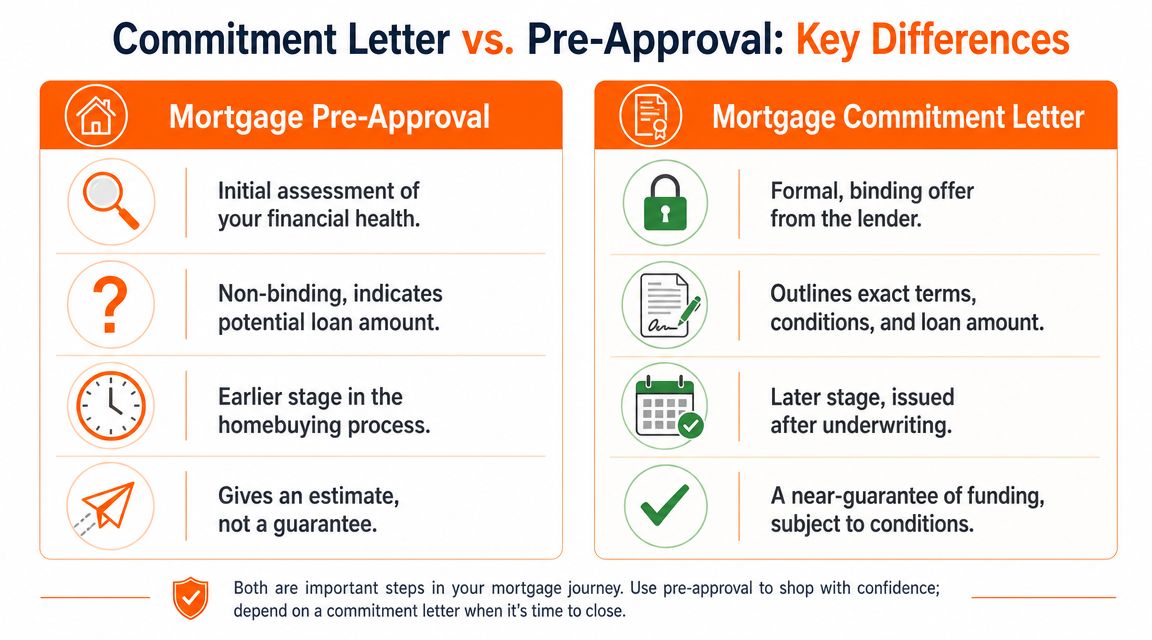
A pre-approval is the early green light that helps you shop. A commitment letter for mortgage is much closer to the lender saying, “We're ready to move forward on this specific home if the final conditions are satisfied.”
That's why I use the practice test and final exam comparison. A pre-approval tells you you're in the right class. A commitment letter tells you you've made it to the final grading stage.
The quick comparison
| Document | What it does | When it shows up | What it's tied to |
|---|---|---|---|
| Pre-approval | Gives an early estimate of what you may be able to borrow | Early in the buying process | Your general financial profile |
| Commitment letter | Shows the lender has gone deeper and is prepared to lend if conditions are met | Later in the process | A specific property and defined loan terms |
Why the difference matters in real life
According to Redfin's mortgage commitment letter overview, the key value of a mortgage commitment letter is that it converts a general preapproval into property-specific credit certainty. Redfin explains that it is stronger because it follows deeper underwriting and attaches to a specific property address, loan amount, and interest rate, reducing financing uncertainty as long as the borrower's financial profile remains stable and all listed conditions are met.
That's the point many buyers miss. The commitment letter is not just “a better pre-approval.” It's a different stage of review.
How to explain it to yourself
Use this simple test:
- If the lender has only reviewed your general finances, you're likely in pre-approval territory.
- If the lender has reviewed the actual property and issued terms tied to that address, you're in commitment-letter territory.
- If conditions still appear in writing, you're not done yet.
Sellers usually trust the buyer with a commitment letter more because the lender has already done more of the hard checking.
A pre-approval gets you in the door. The commitment letter is what tells everyone the deal has real structure behind it.
Anatomy of the Letter Key Clauses and Conditions
You open the commitment letter expecting a green light. Instead, it reads more like the final exam packet for your mortgage. The loan is close to the finish line, but the lender is still checking whether every last requirement is satisfied before funds go out.
That is why this section matters so much.
The parts worth reading slowly
A commitment letter usually includes a few sections that deserve careful attention, especially if this is your first purchase. Start with the terms you probably looked for first, then spend extra time on the parts that create work for you.
Look for these items:
- Loan terms: The approved loan amount, interest rate, loan program, and repayment term.
- Property details: The address and details of the home the lender agreed to finance.
- Expiration date: The date by which the commitment must still be valid.
- Conditions: The documents, repairs, confirmations, or approvals still needed before closing can happen.
The conditions section is often the part that causes confusion. Buyers see "approved" and assume the hard part is over. In practice, approved usually means approved if the remaining items are cleared on time and nothing in your file changes for the worse.
What the conditions are really saying
Conditions are the lender's checklist. Each one is a gate between the letter in your inbox and money at the closing table.
Common examples include:
- Appraisal accepted: The home must support the value the lender is using for the loan.
- Homeowners insurance confirmed: The lender may need proof of an active policy before closing.
- Title cleared: Any ownership or lien problem found during title work has to be resolved.
- Income and assets updated: The lender may ask for recent pay stubs, bank statements, or a fresh employment check.
- Source of funds documented: If money for closing is coming from family, the lender may ask for extra paperwork such as a gift letter for a mortgage.
One small line can create a big delay. "Provide updated bank statements" sounds simple until the statement period has not closed yet, a large deposit needs explaining, or the underwriter wants every page, including the blank ones.
How to read the letter like a buyer who closes on time
A good approach is to translate lender language into plain English. Treat each condition like a test question with a clear answer.
Ask yourself:
- What exactly is the lender asking for?
- Who is responsible for getting it to the lender?
- Is there a deadline tied to the closing date?
- What could hold this item up?
- Has the lender confirmed the condition is cleared, not just received?
That last point matters. Sending a document is not the same as satisfying the condition. If the underwriter needs clarification, the item can stay open and delay funding.
The clause first-time buyers overlook
Many buyers focus on numbers and skim past expiration language, occupancy language, or wording that allows the lender to recheck employment, credit, or assets before closing. Those clauses are not filler. They are the lender's reminder that your commitment still depends on your file staying stable.
So read the letter with one practical question in mind: "What could still stop this loan?"
That mindset helps you catch problems early. It also keeps you involved in the process, which is exactly where you need to be at this stage. The commitment letter is a strong sign of progress, but your job is to help turn each open condition into a cleared one.
From Commitment to Closing Your Action Plan
Once the commitment letter arrives, your job changes. You're no longer trying to prove you might qualify. You're trying to make sure nothing falls apart between now and closing.
That means speed, accuracy, and restraint.
Four steps that keep deals on track
Read the full letter with a second set of eyes
Go through it with your estate agent, conveyancer, or mortgage adviser. You're looking for conditions, deadlines, and anything that doesn't match what you expected.Make a live checklist
Don't rely on memory. Write down each condition, who is handling it, and the date it needs to be completed. If the lender asks for an updated document, submit it quickly and keep proof that you sent it.Respond fast to every lender request
Mortgage delays often come from documents sitting in inboxes. If the lender wants another pay slip, an insurance binder, or a clarification on a bank deposit, same-day replies can save your closing date.Freeze your financial behaviour
Keep spending boring. No new debt, no unusual transfers, no changing jobs unless you've spoken to the lender, and no unexplained large deposits.
A practical routine for the final stretch
Use a short weekly check-in with yourself:
- Ask what's still outstanding
- Confirm what the lender has cleared
- Check whether closing dates have shifted
- Review your accounts for anything a lender might question
A simple money overview helps here. If you want a cleaner way to keep tabs on income, balances, and spending before closing, a personal finance dashboard can help you spot issues before the underwriter does.
What good borrowers do differently
They don't assume silence means everything is fine. They follow up.
They also keep every document easy to find. If an underwriter asks for a newer bank statement or proof of insurance, you don't want to spend half a day searching old emails while the clock is running.
Keep one folder for this stage only. Put the commitment letter, insurance documents, updated income records, title communications, and every lender request in one place.
The buyers who have calm closings usually build that habit early. They don't wait for a crisis to get organised.
When a Mortgage Commitment Can Be Rescinded
You have the commitment letter. The moving boxes are half packed. Then the lender asks for one more bank statement, notices a new credit inquiry, or flags a delay with the property insurance. That is how a loan can feel approved and still come undone.
A mortgage commitment works like the final exam of the home loan process. You are close, but you still have to pass the remaining conditions. If something important changes before closing, the lender can withdraw the commitment or require the file to be reviewed again.
That usually happens for a small group of reasons.
What can cause a lender to pull back the commitment
A lender may reopen or cancel the file if you:
- Add new debt: A car payment, store financing, or a new credit card can change your debt-to-income ratio.
- Change jobs or how you are paid: A new role, commission structure, bonus-heavy income, or self-employment can require fresh review.
- Show unusual bank activity: Large deposits or transfers often need a paper trail.
- Hit a property problem: Appraisal issues, title defects, or insurance complications can stop approval.
- Miss deadlines in the letter: Expiration dates and outstanding conditions still matter after the commitment is issued.
Rocket Mortgage's explanation of mortgage commitment letters notes that expiration dates matter because a commitment does not stay open indefinitely. In a fluctuating rate environment, if an average 30-year fixed rate were around 6.86%, even a short delay past a rate-lock or commitment deadline could lead to updated terms and a higher payment.
The pattern is simple. The lender approved one version of your file. If your income, debt, assets, credit, or the property no longer match that version, the approval can change too.
That is why this stage deserves more attention than many buyers give it.
How to lower the risk of rescission
Treat every lender request like a timed assignment. A missing insurance document or an unexplained deposit is often fixable. A delayed response is what turns a fixable issue into a closing problem.
Keep your financial life boring until the loan funds. No new accounts, no big purchases, no cash shuffling between people, and no job changes without talking to the lender first. If old credit problems are part of your file, reviewing practical steps for removing collection items from a credit report can help you understand what underwriters may question.
A commitment letter is a strong sign of approval, but you still have homework to finish before you get the keys.
If your closing date starts slipping, contact the lender the same day. Early notice gives the team more room to ask for an extension, refresh documents, or solve a condition before the commitment expires.
If you're trying to stay organised through a home purchase, Fintrack can help you keep your finances visible in one place so it's easier to monitor spending, track account activity, and avoid the kind of last-minute surprises that can upset a closing.