
You open the kitchen drawer looking for a receipt and find the savings worksheet you filled in last month. The target still matters. But the transfer never happened, groceries cost more than expected, and nobody remembered the review date.
A useful goal setting handout does more than give you somewhere to write an intention. It helps you work out the cost, choose a deadline, decide what to change, and check whether you followed through. The work starts after you finish the page.
For Canadian households, the best choice depends on the job. Saving for a purchase calls for different prompts than cutting subscriptions, organising overdue paperwork, or agreeing on shared priorities. If you're trying to build a family budget, choose a worksheet that connects your goal to the money available after household expenses.
Start with the problem you need to solve:
- A clear savings target: Choose a worksheet that converts the remaining cost into regular contributions.
- Several competing priorities: Use a chart that makes trade-offs visible.
- Difficulty getting started: Pick an action plan with a small, immediate next step.
- Trouble following through: Look for prompts about barriers, support, and review dates.
These Canadian resources offer different ways to do that. None replaces your budget or transaction record. Each can give you a practical plan to carry into your tracking.
1. Financial Consumer Agency of Canada, S.M.A.R.T. Financial Goals Worksheet
Best for turning a financial intention into a complete plan. The worksheet in the Financial Consumer Agency of Canada's Financial Basics participant handbook connects estimated costs, action steps, milestones, obstacles, and a later review.
Its SMART prompts use Specific, Measurable, Achievable, Realistic, and Timely. That makes it a useful starting point for savings or debt repayment when you know what you want but haven't worked out how to get there.
Put the milestone in your budget
Say you're saving to replace an unreliable appliance. Record the expected purchase cost, subtract money already set aside, and identify what you can contribute without borrowing for ordinary expenses.
Then give each action a place in your tracking:
- Contribution: Record money transferred into the savings account.
- Milestone: Compare the actual balance with the worksheet's planned progress.
- Obstacle: Note what changed, such as an essential repair or reduced work hours.
The strongest feature is the follow-up prompt. It encourages you to revisit the plan rather than treat the completed worksheet as the result.
The drawback is access. This is part of a longer handbook, not a standalone handout, so save or print the relevant pages. It's also firmly financial, which is helpful for budgeting but less suitable for broader personal goals.
If you need help choosing the target before filling it in, use this guide to setting financial goals.
2. Prosper Canada, Setting a Savings Goal
A savings target of $1,200 over a year works out to $100 a month. Setting a Savings Goal, available through Prosper Canada's Financial Coaching Toolkit, helps connect a goal's cost and timeframe to a monthly contribution.
The handout also prompts you to consider your motivation, obstacles, and possible solutions. That can make a target easier to adjust when monthly costs or income change.
Best fit: a near-term purchase, annual expense, or household savings goal with a clear cost.
- What works: Printable and fillable formats let you write by hand or update the file digitally.
- What needs care: A calculated contribution may exceed your budget. Compare it with the money left after regular expenses.
- Use conditions: Prosper Canada's toolkit materials are intended for non-profit use with clients and should not be distributed for a fee.
For a home purchase, work out the savings target without counting assistance you may not qualify for. Readers researching homebuying help for teachers and first responders should check the program's eligibility rules before including support in their plans.
Record each deposit against the goal, rather than counting a planned transfer as progress. A savings goal tracker app can help monitor contributions, but the monthly amount still needs to fit your available income.
3. Canada.ca, Financial Goal-Setting Tool
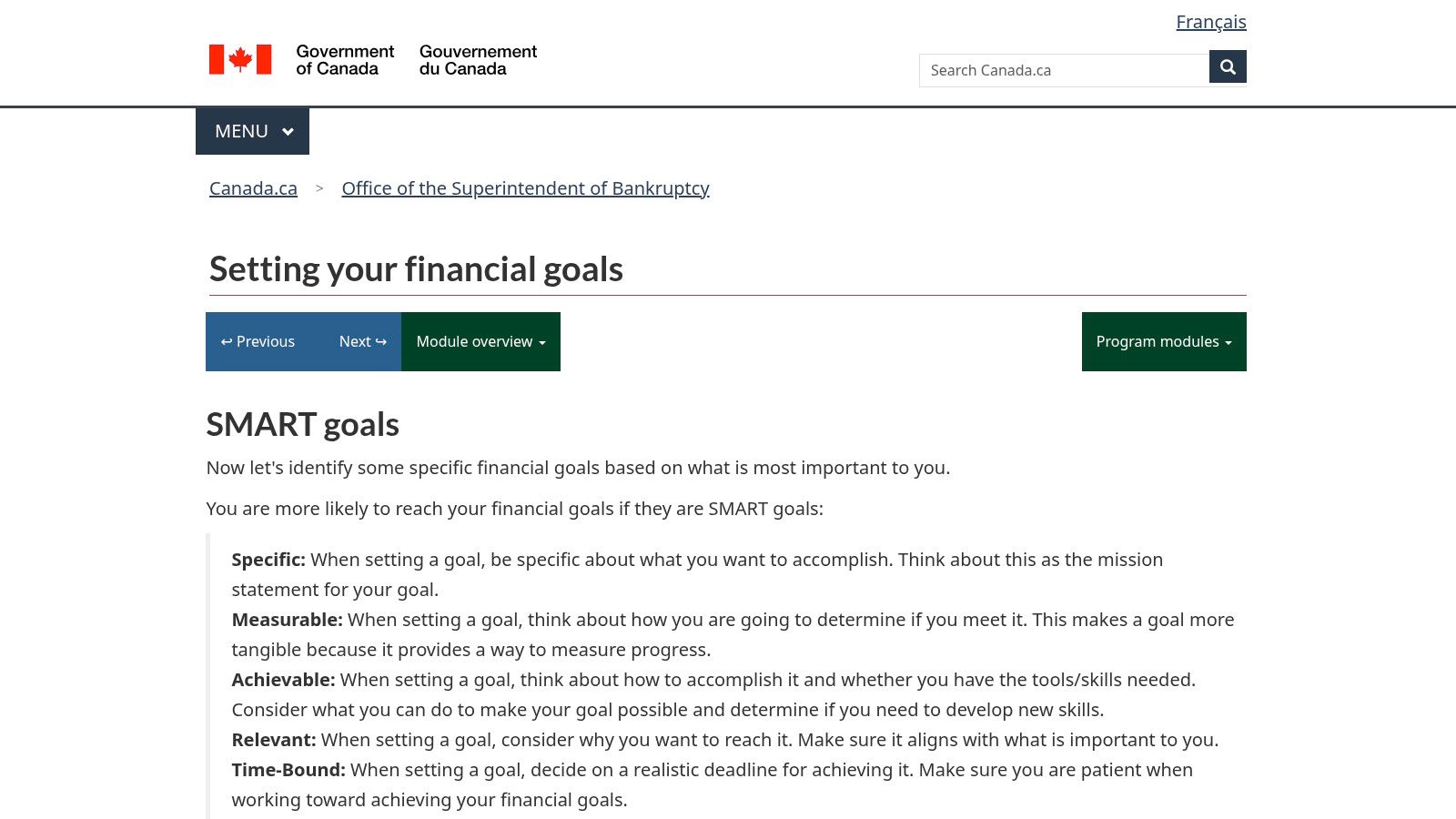
Choose this when your goals compete for the same money. The Office of the Superintendent of Bankruptcy's financial goal-setting tool helps you prioritise financial goals and connect them to actions.
Those actions can include savings transfers, expense reductions, and income increases. That's a useful distinction: not every money problem can be solved by asking yourself to save harder.
The tool is presented in a post-insolvency counselling context. Its prompts can still help with ordinary household planning, but that framing may feel less relevant if you're organising savings.
Separate the target from the funding action
Suppose you want an emergency cushion while also reducing debt. Write down what each goal requires, then decide which action your current cash flow can support.
Cancelling a service is an action. Moving the freed-up money into savings is another action. Don't treat the cancellation itself as proof that your savings balance increased.
Practical rule: Track the behaviour and the balance separately. A completed task can support a goal without completing it.
Word and PDF formats give you options for editing or printing. Neither format replaces a current budget, and you'll still need to calculate whether the proposed contribution fits.
Use a financial goals calculator to test the relationship between your starting balance, contribution, and deadline before committing to the plan.
4. GetSmarterAboutMoney.ca, Financial Goals Worksheet
If you already manage money on a laptop, another printable PDF may create unnecessary copying. The GetSmarterAboutMoney.ca Financial Goals Worksheet is an Excel download focused on financial goals and savings.
Its main advantage is the format. You can keep a digital working copy beside your household budget and update it during the same review.
The trade-off is guidance. The download page offers limited instructions, so this suits someone who understands their goal and wants a place to organise it. It's less appealing if you need help deciding what's realistic.
Keep planned and actual progress separate
If you adapt the spreadsheet, preserve a clean original before changing cells. Add your own tracking fields only where they won't interfere with the worksheet.
Useful additions include:
- Starting balance: Money already allocated to this specific goal.
- Actual contribution: Money you've added since the last review.
- Latest balance: The amount currently available, including withdrawals.
- Revision note: Why you changed the deadline or contribution.
Don't count the same savings toward several goals. An account balance can look reassuring while being mentally assigned to both a holiday and an emergency.
Excel is convenient for keyboard users, but editing a spreadsheet on a phone can be awkward. If that friction means you won't update it, choose a simpler handout and keep the transaction record somewhere easier to access.
5. Prosper Canada, Financial Goals Chart
Some households don't need a more ambitious savings target. They need to sort out banking, debt, tax filing, credit history, and everyday budgeting without treating everything as equally urgent.
Prosper Canada's Financial Goals Chart is the better fit for that wider view. Available in the Financial Coaching Toolkit linked above, the fillable chart includes current status, target dates, action steps, and accountability support.
Unlike a dedicated savings worksheet, it gives non-savings tasks a legitimate place in the plan. Gathering tax documents or resolving an account issue may be the next useful step even when it doesn't immediately increase your balance.
- Household planning: Agree on which priorities need attention first.
- Accountability: Name who will complete the next action and who can help.
- Progress tracking: Record completed actions alongside changes in balances or debt.
Its limitation is depth. A broad chart won't do the detailed work of calculating a savings contribution or examining every SMART criterion.
Don't assign a savings deadline before checking whether essential bills and required payments leave room for the contribution.
The chart is practitioner-oriented, and Prosper Canada's non-profit-use conditions apply. For personal planning, keep the chart focused rather than filling every category just because it's available.
If you're unsure which savings priorities belong near the top, this guide to short-term savings goals can help you narrow the list.
6. Prosper Canada, Action Plan Template
For subscription cutbacks, I'd choose an action plan over a detailed savings worksheet. You need to identify charges, make decisions, cancel services, and verify what happens on the next statement.
Prosper Canada's Action Plan Template, also in its Financial Coaching Toolkit, asks for an immediate first step, later steps, a completion date, available resources, and requested support. It's short enough to use when a longer planning exercise would delay the task.
Turn cutbacks into verified savings
Start by gathering recurring charges from your statements or expense record. Then identify which services to keep, downgrade, or cancel.
Keep the evidence beside your tracking:
- Cancellation confirmation: Save the email or account notice.
- Final charge: Record any remaining payment rather than assuming billing stopped immediately.
- Freed-up money: Reallocate it only when your budget reflects the change.
This template handles execution, not savings calculations. Pair it with a budget if you want the money to fund another goal instead of disappearing into general spending.
Its references to a coach, case worker, or counsellor may feel unnecessary for solo use. You can still identify a partner or trusted support person where that's helpful, while respecting the toolkit's non-profit-use conditions.
The practical reason goal setting matters here is simple: it connects a task you can complete today with a financial outcome you can check later.
7. MyHealth.Alberta.ca, SMART Goal Worksheet
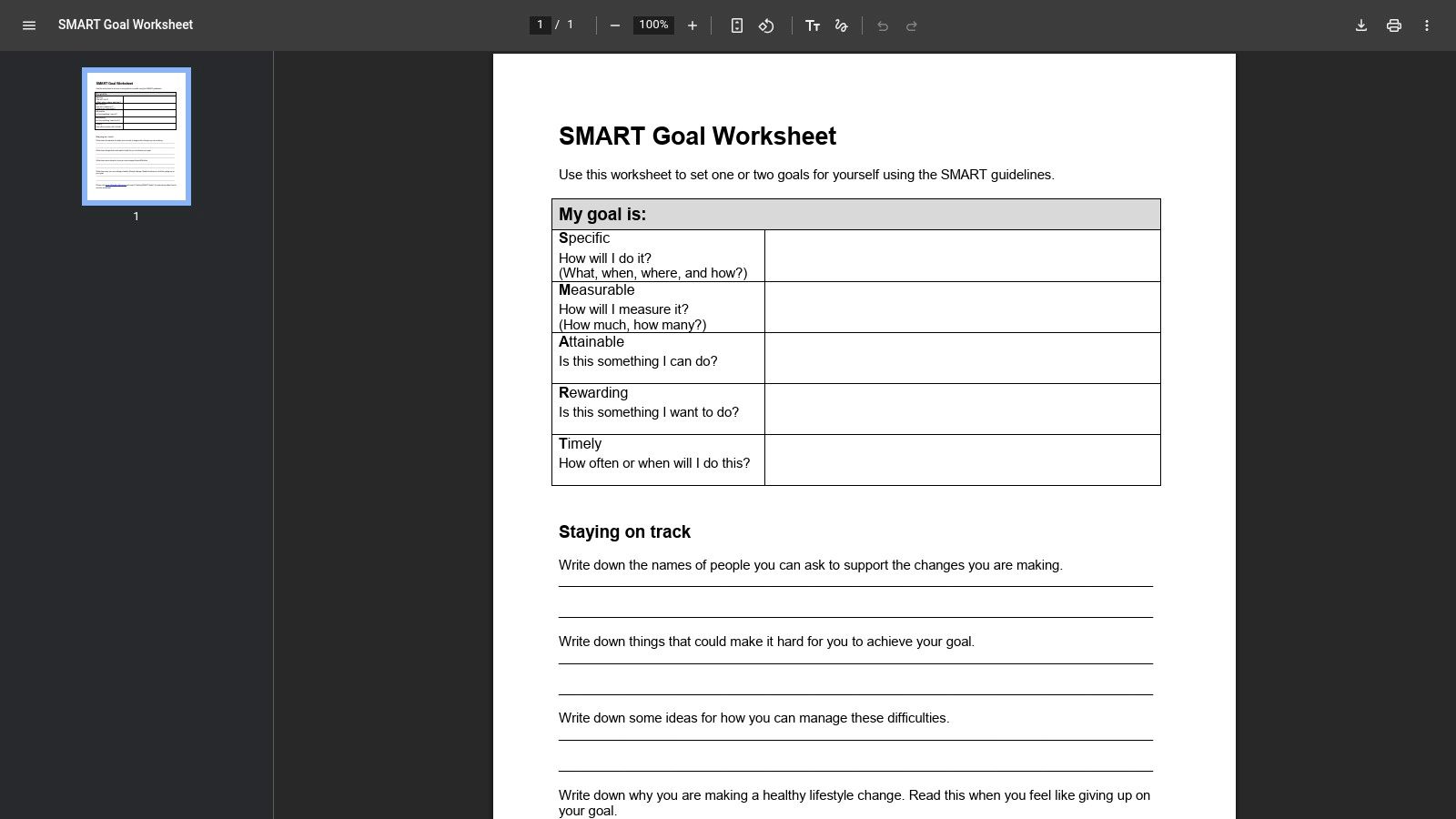
A spending goal can fail because the proposed routine doesn't fit your day. Planning to cook every evening won't help if your work schedule leaves you exhausted and your kitchen is empty.
The Alberta Health Services SMART Goal Worksheet is written for healthy lifestyle changes. Its prompts about motivation, support, barriers, solutions, and timing can also help you design a manageable money habit.
Best for behaviour-linked spending goals, such as bringing lunch, planning groceries, or reducing convenience purchases. It isn't a financial calculator.
Measure the habit and the expense
Choose an action you control, such as preparing lunch before a workday. Then track the relevant spending separately so you can see whether the routine supports your budget.
- Behaviour record: Note whether you completed the planned action.
- Expense record: Record what you spent in the relevant category.
- Barrier note: Identify what interrupted the routine and change the preparation step.
Don't assume every avoided purchase becomes savings. Grocery costs, replacement purchases, and other spending still belong in the budget.
The worksheet's health framing and SMART terminology differ from common financial versions. That's a limitation if you want a ready-made savings schedule, but useful if your main obstacle is an unrealistic routine.
Direct PDF access keeps it straightforward to obtain. The adaptation is yours: use its behavioural prompts, then calculate and track the money elsewhere.
8. SaskMoney, Financial Goals and SMART Goal Worksheets
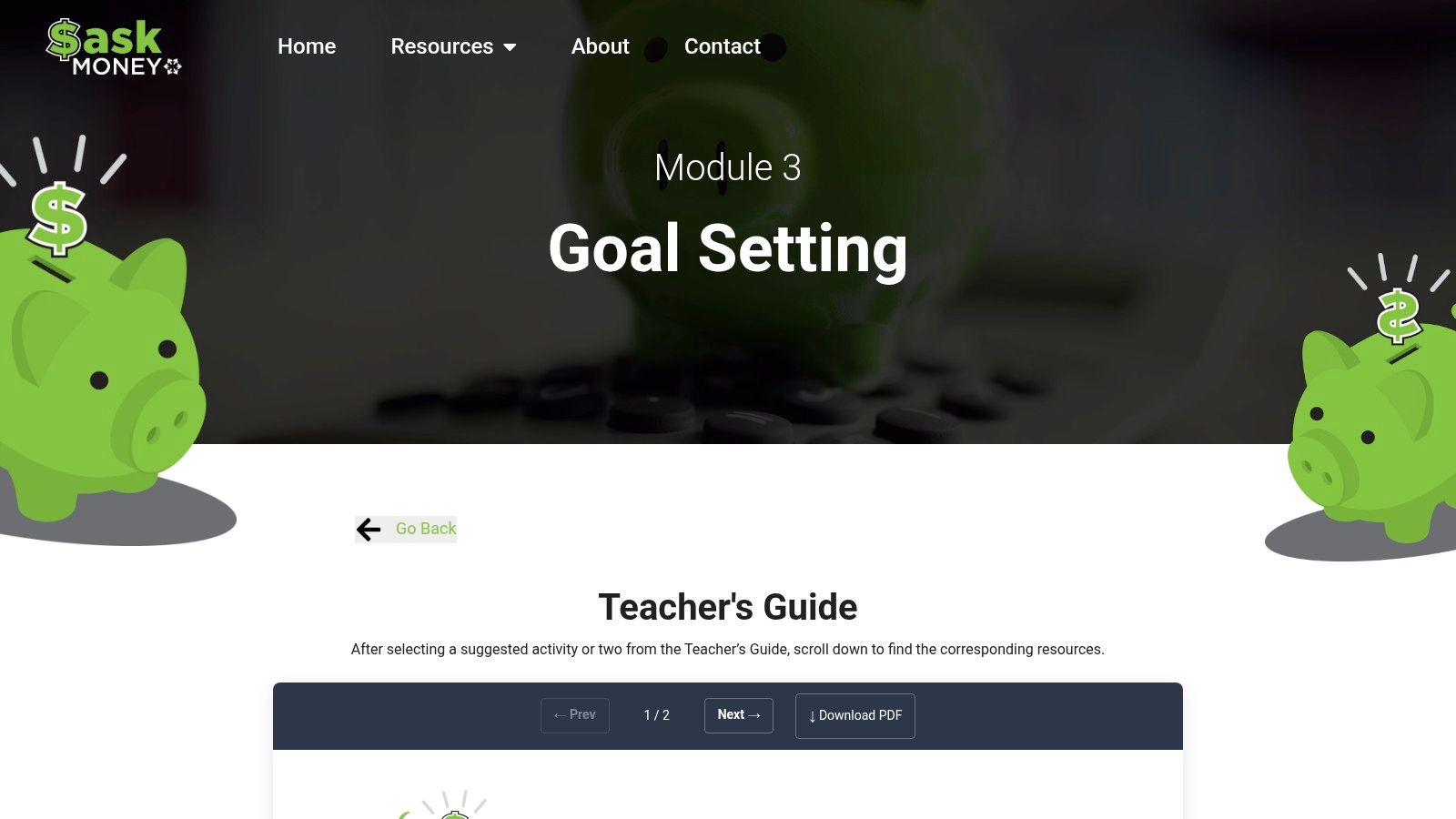
SaskMoney is the teaching option, not the quickest download-and-finish option. Its goal-setting module combines financial-goal and SMART-goal worksheets with videos and teaching resources.
That makes it suitable for a family learning session, workshop, or classroom. Someone who needs an explanation before completing a worksheet has more support than a blank form can provide.
The cost is navigation and time. Adults looking for a direct household planning sheet may find the educational material more than they need, and some resources are aimed at educators or students.
Use learning time to agree on a real goal
For household use, choose an actual shared expense rather than completing the worksheet as a purely theoretical exercise. Discuss what the goal includes, what it excludes, and how you'll decide whether progress is on track.
Keep the follow-through simple:
- Shared target: Record the agreed purpose and expected cost.
- Assigned action: Identify who will research costs, update the budget, or record contributions.
- Visible progress: Use the same balance or expense record when reviewing the plan.
Don't confuse finishing the module with funding the goal. Learning can help you make a clearer plan, but deposits and spending decisions still need recording.
I'd use SaskMoney when the household needs a shared understanding of goal setting. For someone who already knows the process and just needs to calculate a contribution, a dedicated savings worksheet is more direct.
9. University of Toronto Student Life, SMART Goal Worksheet
You may know your savings target perfectly well and still avoid updating your budget. In that case, the useful goal is a repeatable review habit, not another financial calculation.
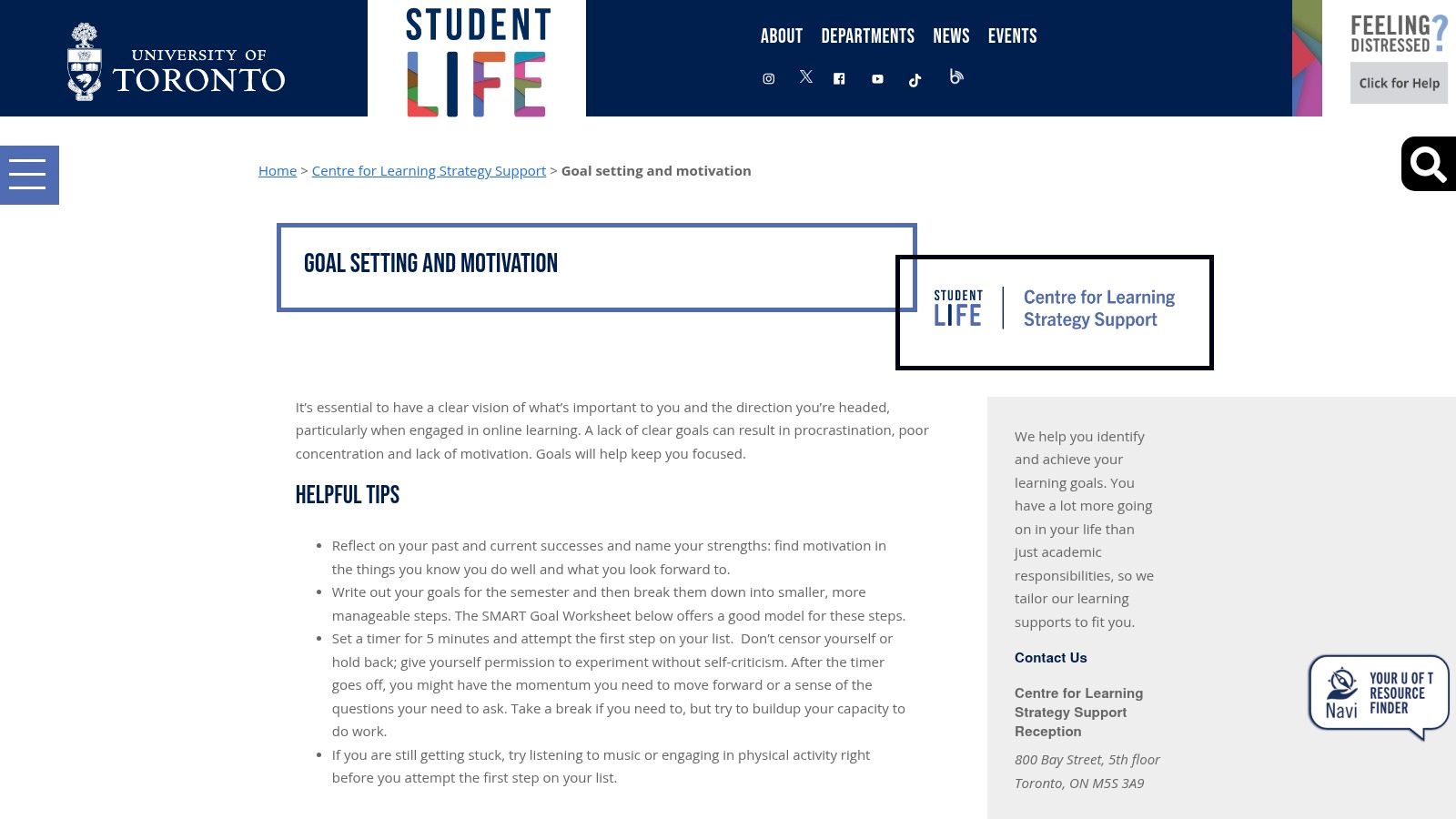
The University of Toronto Student Life goal-setting and motivation resource applies SMART planning to study habits. It explains how to make a broad intention concrete while considering resources, energy, motivation, rewards, and timing.
The academic framing needs translation, but the underlying task is familiar. Replace an intention to study more with a specific routine for reviewing transactions and checking your goal balance.
Keep the routine small: Choose a review you can repeat during a busy week, not an elaborate money meeting you'll keep postponing.
Use a recurring calendar appointment and open the same records each time. Categorise new expenses, compare actual contributions with the plan, and note the next action.
The resource's reward prompt can help you recognise follow-through without creating another spending target. Choose something that doesn't undermine the budget you're reviewing.
Its limit is financial detail. It won't calculate a target balance, debt repayment schedule, or affordable contribution. Use it to establish the habit that keeps another financial worksheet current.
This is a good companion resource for first-time planners who need clear explanations and realistic expectations rather than a dense financial form.
10. The 519, My Money and My Future Self Workbook
Choose this when the goal itself still needs thought. The 519's financial tools collection includes My Money and My Future Self, a workbook that supports financial planning by linking future goals, saving, and practical next steps.
Its broader context is the advantage. You can consider what you want money to support before reducing the decision to a target balance.
The collection also covers money mindset, spending, saving, borrowing, and financial institutions. A budget tracker can complement that reflection by showing the income and expenses behind your choices.
Give reflection a financial next step
Suppose your priority is greater flexibility at work. Don't stop at writing that intention down.
Connect it to practical questions:
- Purpose: What change would the money allow you to make?
- Cost: Which expenses would you need to cover?
- Action: What can you do now without putting essentials at risk?
- Evidence: Which balance, expense category, or completed task will show progress?
The limitation is length and scope. This is a workbook, not a narrowly focused handout, and its programme context won't match every reader's circumstances.
I'd choose it for someone who feels disconnected from conventional savings goals or needs to clarify their priorities. If you already have a firm cost and deadline, a shorter savings worksheet will get you to the calculation faster.
Keep the workbook for reflection. Keep your current contribution and balance in the record you review.
How the Ten Canadian Goal Setting Handouts Compare
These handouts vary in format and purpose. Some help you calculate savings contributions; others organize priorities or turn a goal into actions. The table compares each resource's focus, format, and savings-calculation support.
| Item | Best For | Format | Access | Savings Calculation |
|---|---|---|---|---|
| Financial Consumer Agency of Canada, S.M.A.R.T. Financial Goals Worksheet | Planning financial goals with milestones and follow-up | Worksheet in participant handbook PDF | Participant handbook PDF | Sets milestone amounts; does not specify a monthly savings calculation |
| Prosper Canada, Setting a Savings Goal | Connecting a savings goal's cost and timeframe to a monthly target | Printable or fillable PDF worksheet | PDF worksheet; non-profit use conditions apply | Calculates required monthly savings |
| Canada.ca, Financial Goal-Setting Tool | Prioritizing several financial goals and actions | Word and PDF formats | Word and PDF files | Prompts savings actions; no specific calculation stated |
| GetSmarterAboutMoney.ca, Financial Goals Worksheet | Spreadsheet-based financial goal planning | Excel worksheet | Excel worksheet | Focuses on financial goals and savings; calculation details not specified |
| Prosper Canada, Financial Goals Chart | Organizing multiple household-finance priorities | Fillable chart | Fillable chart; non-profit use conditions apply | Does not specify a savings calculation |
| Prosper Canada, Action Plan Template | Turning a broad goal into practical steps and support | Fillable form | Fillable form; non-profit use conditions apply | Does not calculate savings amounts |
| MyHealth.Alberta.ca, SMART Goal Worksheet | Setting health and lifestyle goals | PDF worksheet | PDF worksheet | Not designed for savings calculations |
| SaskMoney, Financial Goals and SMART Goal Worksheets | Guided financial-literacy learning | Worksheets, videos, and teaching materials | Module and learning materials | Calculation details not specified |
| University of Toronto Student Life, SMART Goal Worksheet | Setting study goals with clear actions and motivation | PDF handout and guidance page | PDF handout and guidance page | Not designed for savings calculations |
| The 519, My Money and My Future Self Workbook | Financial planning, saving, and identifying next steps | Workbook | Financial tools collection | Supports savings planning; no specific calculation stated |
For a savings target, the Prosper Canada worksheet gives you a monthly amount to work toward. The FCAC worksheet helps structure goals around milestones and follow-up, while the Financial Goals Chart is suited to comparing several household priorities. Formats also affect how you use them: a spreadsheet supports ongoing edits, while a printable worksheet may be easier to complete by hand.
Choose One Handout and Connect It to Your Tracking This Week
If your savings goal is clear, use Prosper Canada's savings worksheet to set it out. When several household priorities compete, its Financial Goals Chart can help you compare them. For a detailed financial plan, start with the FCAC worksheet. For subscription cutbacks, use Prosper Canada's Action Plan Template. If your plan is clear but hard to revisit, the University of Toronto resource can help you build a review habit.
An emergency fund needs a destination and a contribution you can manage. The Financial Consumer Agency of Canada's budgeting guidance recommends saving three to six months of living expenses. Treat that as a longer-term aim, then use your worksheet to set a starting contribution that fits your household budget.
Move the plan into your everyday records
Once you complete the handout, carry its details into your budget and tracking:
- Goal name: Use the same name on the worksheet, budget, and savings record.
- Starting position: Record money already set aside, without counting it toward another goal.
- Planned contribution: Add an affordable amount to your budget.
- Review date: Set a recurring calendar reminder.
- Adjustment rule: Decide what to revisit if income falls or essential costs rise.
At each review, compare the planned contribution with the amount contributed. Check the balance too, including withdrawals. A deposit does not mean the full amount remains available for the goal.
If you fall behind, identify the cause before changing the target. An unaffordable contribution may call for a smaller amount. A forgotten transfer or an unexpected essential expense may need a different response.
Protect household essentials before trying to keep the original schedule. Reduce or pause a contribution, or extend the deadline, while keeping the goal in view. Record the change so your next review reflects the current plan.
Fintrack's savings goals and progress tools can help you follow the goal over time. Fintrack consolidates your income, expenses, budgets, and goals in one dashboard, so you can compare your written plan with your actual progress.
Keep the handout as your planning reference, not a second ledger. Update transactions and contributions in your everyday tracking system. Return to the worksheet when your priorities or assumptions change.
Fintrack brings income, expenses, budgets, and goals together for ongoing tracking. Visit Fintrack to bring your chosen handout into ongoing tracking alongside your income, expenses, and budgets.