
A lot of people start thinking about a trust at the same moment life gets busier. You buy a home. You have a child. You finally build up savings, brokerage accounts, maybe some life insurance through work, and then one question shows up fast: if something happens to me, who handles all of this, and how hard will it be for my family?
That's where a trust becomes practical, not abstract. If you're searching for how to set up a trust, the most useful way to think about it is simple: a trust is a legal structure that holds and manages assets under rules you create. It can help the right person manage those assets later, and if it's set up and funded properly, it can also help keep those assets out of probate.
Why You Might Need a Trust
For many families, the trigger isn't wealth. It's responsibility.
A couple buys a house in California, welcomes a new baby, and realises their old estate plan is basically nothing more than a few account passwords and a vague conversation. They don't need complexity. They need order. They want the house handled, the bank accounts accessible, and the child provided for if one parent dies or both become incapacitated.
That's the practical case for a trust.
What a trust actually does
A trust lets you set rules for property management and distribution. Instead of assets sitting only in your individual name, selected assets can be owned by the trust and managed by a trustee under written instructions.
For a busy household, that solves two problems at once:
- Management during incapacity: If you can't handle your affairs, a trustee can step in according to the trust terms.
- Probate avoidance for funded assets: Assets properly transferred to the trust can usually avoid probate.
California makes this especially relevant. Consumer guidance on California estate planning consistently points to one hard truth: a trust only helps avoid probate for assets that are transferred into it, and probate fees in California are based on the gross value of the estate, which can make the process expensive if assets stay outside the trust, as discussed in this overview of California estate planning from Vollmer Law Firm.
Practical rule: A trust is not just a document you sign. It's a system for ownership, control, and handoff.
A trust isn't only for wealthy families
Often, people get stuck. They assume trusts are for ultra-high-net-worth households, family dynasties, or business owners with complicated tax structures.
In practice, a trust often makes sense for people with very ordinary goals:
- Protecting a family home
- Making things easier for a surviving spouse
- Providing for children
- Keeping administration more private than probate
- Creating a clearer plan during incapacity
If you're trying to get organised before meeting an attorney, it helps to first map your accounts, property, debts, and beneficiaries in one place. A broader financial review can make that process easier, and this guide to planning your personal finance is a useful place to start.
Choosing Your Trust Revocable vs Irrevocable
The first real decision is not whether you need a trust at all. It's what kind of trust fits the job.
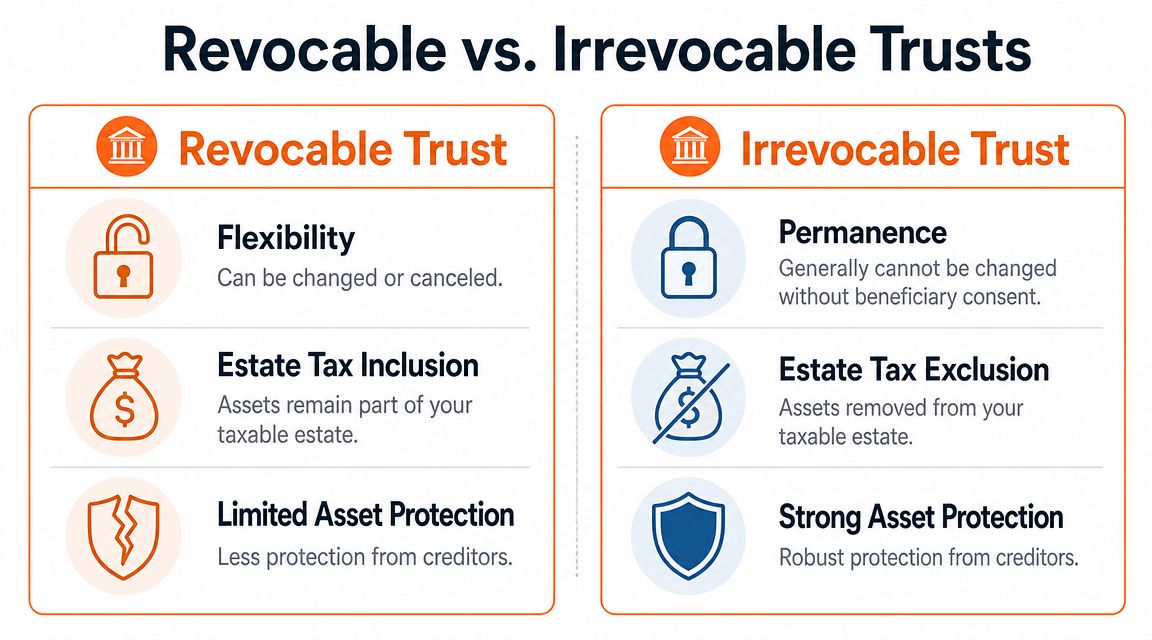
When considering how to set up a trust, the comparison often starts with revocable versus irrevocable. The difference comes down to control. A revocable trust is flexible. An irrevocable trust is more restrictive, but that restriction may create protections a revocable trust usually doesn't.
When a revocable trust usually fits
A revocable living trust is the version most California families consider first. You create it, you can usually change it, and you can generally cancel it while you're alive and competent.
Think of it as a container you still control.
It's often a strong fit when your goals are straightforward:
- Avoiding probate
- Naming who steps in if you become incapacitated
- Keeping control over your assets while alive
- Making administration easier for family later
What it usually does not do is create meaningful creditor protection for your own assets or help with Medi-Cal eligibility planning. That's the trade-off. You keep flexibility, but you don't usually gain those protective benefits.
When an irrevocable trust may be worth discussing
An irrevocable trust is different. Once assets go in, the grantor usually gives up a meaningful level of direct control. That loss of control is the point.
In the right circumstances, a properly designed irrevocable trust may help with asset protection, creditor concerns, or public benefits planning. That matters in California, where long-term care planning is a major concern for many households. U.S. Bank notes that revocable trusts generally do not shield assets from creditors or help with Medi-Cal eligibility, whereas specific irrevocable trusts might, and it also notes that California's 60+ population exceeds 10 million in the context of planning decisions around long-term care and benefits in its trust planning guide.
If your real concern is nursing home costs, Medi-Cal timing, or protecting a vulnerable spouse's cash flow, don't treat the revocable versus irrevocable choice as a formality.
A side-by-side way to think about it
| Trust type | Main advantage | Main trade-off | Best for |
|---|---|---|---|
| Revocable | Flexibility and ongoing control | Limited protection benefits | Probate avoidance and management continuity |
| Irrevocable | Potential protection and planning advantages | Reduced control and harder changes | Asset protection or benefits-related planning |
The right answer depends on the goal. If your goal is convenience and probate avoidance, revocable usually leads the conversation. If your goal is protection, benefit eligibility, or a more specialised planning result, irrevocable may deserve serious review with counsel.
If you're also comparing future income sources and retirement structures while thinking through estate planning, this explainer on what a pension plan is can help frame the bigger picture.
The Key People Involved in Your Trust
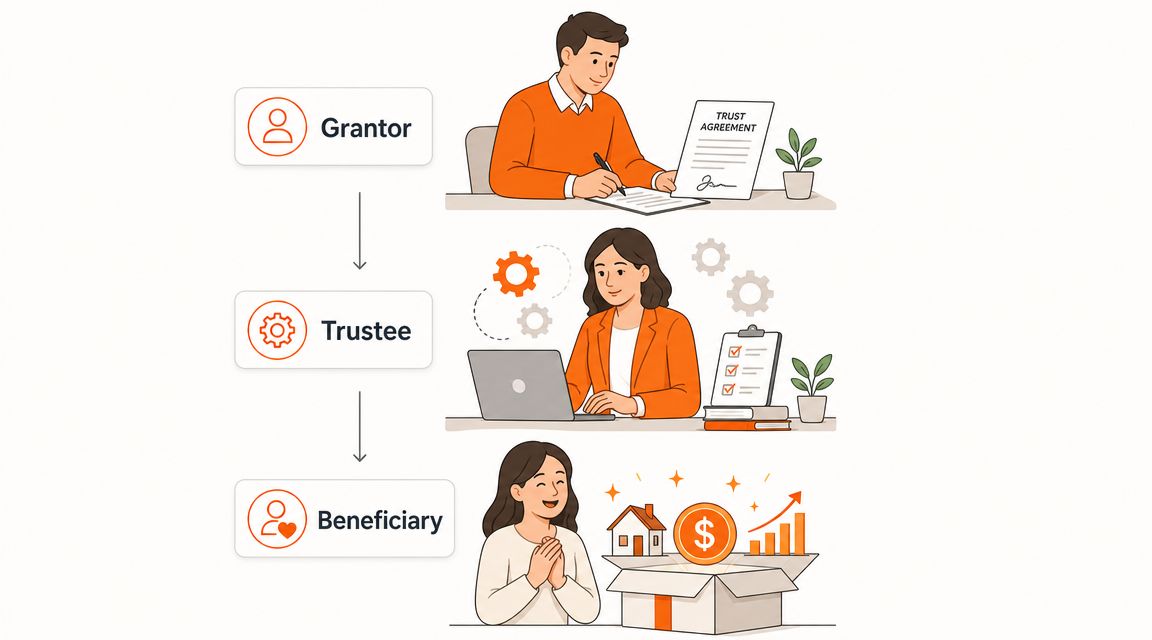
A trust only works if the right people are in the right roles. Legally, every trust centres on three core parties: the grantor, the trustee, and the beneficiary. That framework is described clearly in Guardian's wills and trusts guide.
Grantor trustee beneficiary
The grantor is the person who creates the trust and sets the rules. In many living trust plans, that's you.
The trustee manages the trust property. This role carries a fiduciary duty, which means the trustee must act according to the trust terms and in the beneficiaries' interests, not for personal convenience.
The beneficiary is the person or group that benefits from the trust assets. That might be a spouse, children, other relatives, or even a charity.
How to choose the right trustee
People often focus on who they like most. That's not the best test.
A good trustee is organised, calm under pressure, willing to follow instructions, and capable of dealing with paperwork, deadlines, and family tension. Sometimes that person is a sibling. Sometimes it's the more responsible friend, not the closest relative.
Use this short filter:
- Reliability matters more than warmth: A trustee has to sign forms, manage assets, and keep records.
- Geography can matter: Someone nearby may handle practical tasks more smoothly, especially with property.
- Temperament counts: If one person is likely to inflame conflict, don't hand them the job.
What works: naming a thoughtful primary trustee and a capable successor trustee.
What doesn't: naming the oldest child by default without asking whether they can actually do the work.
Planning for children and dependants
If your beneficiaries are minors, a direct outright distribution usually isn't the result most parents want. Many families prefer a structure that keeps assets managed until a later milestone.
Guardian notes that a common strategy is a pot trust, which holds assets together until the youngest child reaches a specified milestone. That can help avoid one child receiving a full share too early while another still needs support.
Consider these questions before finalising beneficiaries:
- Should distributions happen at a certain age, or for health, education, maintenance, and support?
- Does a beneficiary have special needs, creditor problems, or poor money habits?
- Should assets stay in trust longer rather than pass outright?
These aren't side details. They shape how your plan works in real life.
The Process for Creating a Trust Document
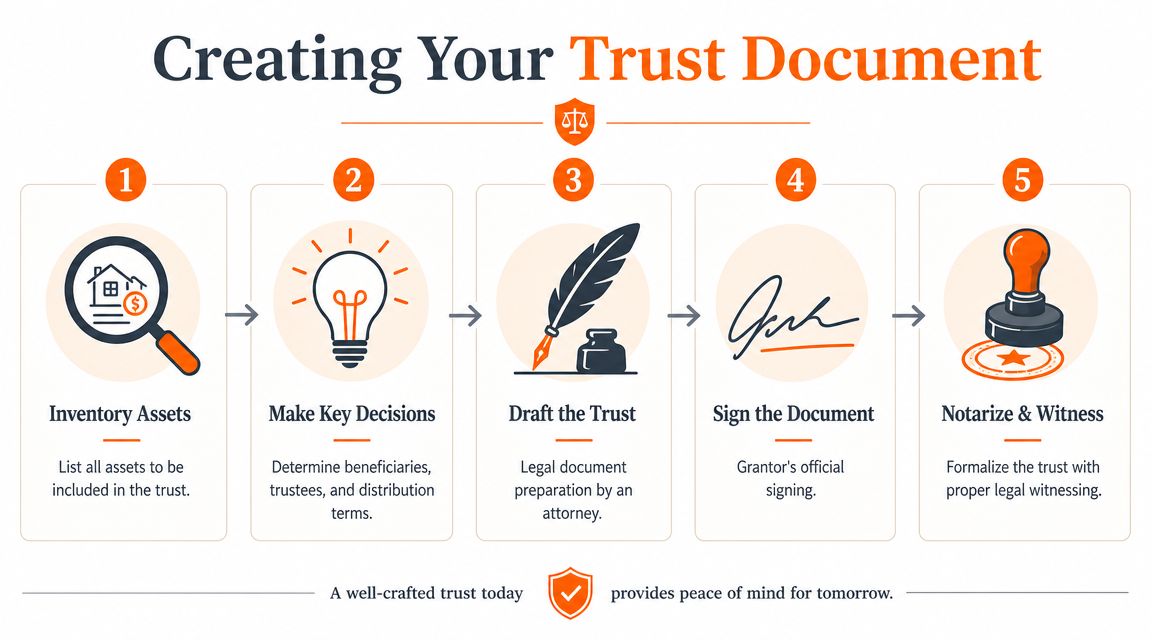
A trust document usually goes off track before the drafting starts. A client says, "I want a trust," but has not decided which assets should be controlled by it, how distributions should work, or what happens if they become incapacitated. The document can only be as clear as the decisions behind it.
The drafting process works best when you treat it like building instructions, not just legal paperwork. Your attorney prepares the language, but you still need to give direction on the property involved, the people affected, and the rules you want followed. That is especially true if part of your estate includes equity compensation or private company interests, which often require extra review beyond ordinary brokerage assets. If you hold employer stock awards, this guide on restricted share units and how they work is a useful reference before the drafting meeting.
Start with the asset inventory
This is the working file your attorney needs from you.
List what you own in plain English first. Legal details can be cleaned up later. Include real estate, bank and brokerage accounts, business interests, valuable personal property, and any account that may pass by beneficiary designation instead of title transfer. Retirement accounts and life insurance belong on the list too, even though they are often handled differently from a house or checking account.
A rough list is enough to begin. Waiting for a perfect spreadsheet slows people down and often delays the entire plan.
Decide the instructions before the draft is written
Clients save time and legal fees when they answer the practical questions early.
Your attorney cannot guess whether one child should receive assets outright at 30, whether a beneficiary should have spending limits, or whether the trustee can sell a family property without getting unanimous consent. Those are judgment calls. They belong to you.
Come prepared to address:
- Who receives what
- When distributions should be made
- Whether any beneficiary needs asset protection or staged distributions
- What powers the trustee should have
- What should happen if you are alive but unable to manage your affairs
These choices shape the document more than the boilerplate does.
Review the draft like an operator, not just a signer
A good draft should read clearly enough that your successor trustee could follow it under stress. I tell clients to review the document with real-life questions in mind: Can the trustee pay for a child's tuition? Can a house be sold without delay? Does the incapacity clause match how your family would handle a medical crisis in practice?
State law affects signing rules, execution formalities, and some drafting choices. For readers comparing process from state to state, this guide to expert Texas trust advice from Bryan Fagan gives a useful example of how another jurisdiction approaches setup.
Sign the trust and finish the supporting documents
Once the language is final, the trust needs to be signed correctly, and related documents often need to be completed at the same time. That may include a certification of trust, deeds, trustee acceptance language, and a pour-over will to catch assets left outside the trust at death. Kalicki Collier also notes the value of pairing the trust with a pour-over will and reviewing the plan after major life events in this estate planning overview.
Signing the trust creates the framework. The results depend on whether the property is lined up with that framework.
Funding Your Trust The Most Critical Step
A client signs a trust, feels relieved, and files the binder away. Then they buy a new house, leave two bank accounts in their individual name, and never update an old brokerage account. At death, the family learns the trust exists, but key assets still have to go through probate.
That is how trust plans fail in practice.
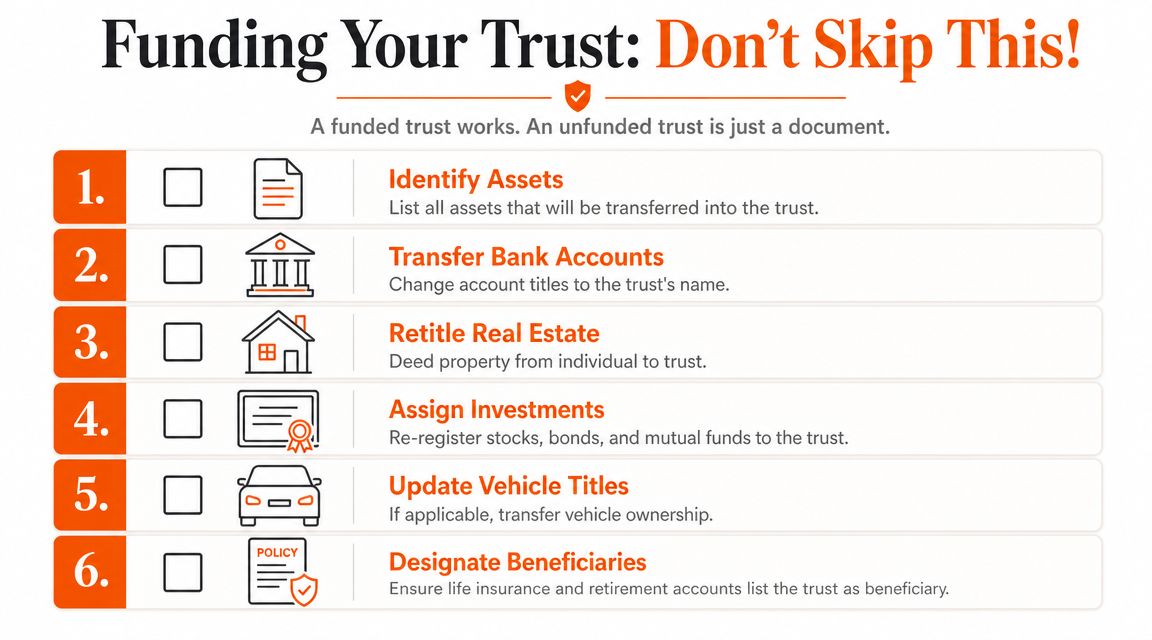
Funding means transferring ownership of the assets the trust is supposed to control, or updating beneficiary designations when title transfer is not the right tool. A signed document sets the rules. Funding puts property under those rules.
Why funding is the make-or-break step
Funding is the point where planning turns into results. If assets stay in your individual name, the trust may do little for probate avoidance no matter how well the document was drafted.
As noted earlier, one commonly cited industry estimate is that a large share of trust failures trace back to assets never being transferred into the trust. I see the same pattern in real files. The trust is signed. The deed was never recorded. The bank account paperwork was started but not finished. A new investment account was opened later and never titled correctly.
The practical goal is simple. Match each important asset to the right ownership or beneficiary setup, then confirm that the change was accepted.
How different assets are usually funded
Each asset class has its own process, and that is where busy families get tripped up.
- Real estate: A new deed is often needed to transfer title from you individually to you as trustee. The deed usually must be signed, notarized, and recorded correctly under state and county rules.
- Bank accounts: Banks often require their own trust certification, signature cards, and retitling forms. Do not assume one branch visit fixes every account.
- Brokerage and investment accounts: Firms usually have separate transfer forms and registration procedures. Follow through until the account statement shows the trust as owner.
- Business interests: An assignment may be required, and the operating agreement, shareholder agreement, or partnership documents may restrict transfers.
- Retirement accounts and life insurance: These are often handled through beneficiary designations, not direct retitling. That choice needs care because the wrong beneficiary setup can create tax or distribution problems.
- Special compensation assets: Employer stock plans, deferred compensation, and equity awards are often overlooked. This guide to restricted share units is a good example of the kinds of assets families forget to include on a funding list.
One missed asset can undo a lot of good planning.
What works in the real world
The best funding process is boring and methodical. Build a master asset list. Mark how each asset should be handled. Send the paperwork. Then verify the result with updated statements, recorded deeds, and confirmation letters.
What causes trouble is split responsibility. The lawyer may prepare the deed, but not submit bank forms. The financial institution may require its own documents. The client may assume the advisor is handling follow-up. Unless one person is tracking the full list, gaps appear fast.
This matters even more when trust planning overlaps with long-term care planning. In that situation, ownership changes and timing need to line up with the family's larger goals. For background on that timing, see this overview of strategic planning for Medicaid eligibility.
A funded trust is the version that works. A signed but unfunded trust is often just a stack of paper.
Costs Timelines and Common Mistakes
The hard part about trust planning isn't usually understanding the idea. It's understanding the workload.
The timeline depends on two moving parts: how complex your estate is, and how quickly you can make decisions and gather documents. A simple plan moves faster when the client has a complete asset list, clear beneficiary choices, and a realistic trustee selection. A more complex estate slows down when there are business interests, blended family issues, or unresolved questions about incapacity and distributions.
The mistakes that create the most trouble
Three problems show up again and again.
- Picking the wrong trustee: A kind person isn't always an effective fiduciary.
- Treating signing as completion: Many people stop before the ownership changes are done.
- Forgetting to review after life changes: Marriage, divorce, a new property purchase, or a new child can make an old plan stale fast.
Special caution for benefits planning
If your trust decision ties into long-term care or public benefits strategy, the planning needs to be careful and timed correctly. That's where generic trust content usually falls short.
For a plain-English overview of timing issues that often affect families thinking about care costs, this resource on strategic planning for Medicaid eligibility gives useful background. It's not a substitute for legal advice, but it helps explain why rushed transfers can create problems.
If you're reviewing how tax treatment and asset location fit into the bigger financial picture, this explainer on tax deferral is a helpful companion read.
Your Trust Setup Checklist and Next Steps
If you want a simpler way to approach how to set up a trust, use this checklist.
- Clarify the goal: probate avoidance, management during incapacity, protection planning, or support for children
- Choose the structure: decide whether revocable or irrevocable better fits that goal
- Identify the people: grantor, trustee, successor trustee, and beneficiaries
- Build the asset list: include real estate, bank accounts, brokerage accounts, business interests, and beneficiary-designated assets
- Set the rules: decide when and how distributions should happen
- Work with an attorney: have the trust instrument drafted for your situation and state
- Sign and notarise: complete the formal execution requirements
- Fund the trust: retitle assets and align designations
- Add a backstop: use related planning documents such as a pour-over will if your attorney recommends one
- Review regularly: revisit the plan after major life events
One last practical point. Keep a record of where original documents are stored and make sure the right person can locate them. This guide on using a bank safety deposit box can help you think through storage and access issues.
A trust is one of those tasks that feels heavy until the plan is in place. Then it becomes what it was supposed to be all along: a way to reduce confusion, protect the people you care about, and make a difficult future a little easier to manage.
If you're getting ready to meet an attorney, start by organising your accounts, property, and recurring obligations in one place. Fintrack can help you pull together a cleaner financial inventory so you know what needs to be reviewed, titled, and updated before the legal work begins.