
You log into your bank, see a gold bar for sale, and think, “Maybe I should put a bit of money into this.” That's a common reaction, especially when cash feels like it's earning little and markets feel noisy.
But buying td precious metal products isn't as simple as clicking “buy” and waiting for your investment to work. You're choosing a product, a storage method, a fee structure, and a buying process with rules that can affect how practical the investment really is.
This guide keeps it plain. If you're considering TD Precious Metals in Canada, the key question isn't just “Can I buy gold or silver from TD?” It's “What will it cost me, how easy will it be to manage, and does it fit the rest of my financial plan?”
What Is TD Precious Metals
A common starting point looks like this. You trust your bank, you see gold or silver listed beside more familiar financial products, and you assume the process will feel similar to buying a GIC or transferring cash between accounts.
TD Precious Metals is TD's retail service for buying physical bullion products, mainly gold and silver, with some offerings connected to platinum. According to this history of TD Precious Metals, the business developed after Toronto-Dominion Bank was formed in 1955 and later expanded through mint partnerships and TD-branded bars and rounds.
The important part for investors is practical, not historical. TD is not giving you broad exposure to precious metals in the way an ETF does. In many cases, you are buying a real metal product with a quoted price, a product size, a spread between buy and sell prices, and rules around delivery or storage.
That difference matters because ownership works more like buying a high-value item through a bank storefront than buying a typical banking product.
What you're actually buying
New buyers often assume “gold investment” means one thing. It does not. TD's lineup can include:
- Bars, which are usually chosen for bullion value rather than collectability
- Rounds, which resemble coins but are generally bullion products, not circulation currency
- Different weights, which change both your upfront cost and your flexibility if you decide to sell only part of your holdings later
Smaller units can look more affordable at first glance. In practice, they often come with higher markups per ounce. That is one of the first total-cost details people miss.
If you are fitting metals into a broader personal finance planning strategy, this point is easy to overlook. The product that feels easiest to buy is not always the one that is cheapest to own over time.
Who it tends to suit
TD's precious metals service usually appeals to buyers who want a familiar brand, direct ownership of bullion, and a purchase experience that feels more controlled than ordering from an unknown dealer online.
It can be a reasonable fit for someone who wants part of their portfolio in a tangible asset and is comfortable with the trade-offs that come with that choice.
Those trade-offs are real. Physical metal can involve minimum purchase sizes, product availability limits, shipping or storage decisions, and resale friction. A stock fund usually does not create those extra steps.
Why that matters before you buy
The main attraction is trust. For many Canadians, buying from a large bank feels safer than buying from a specialty bullion dealer they have never used before.
That comfort has value, but it should not be confused with lower ownership costs. A familiar logo does not reduce premiums, storage charges, insurance costs, or the discount you may face when selling. Those details will do more to shape your return than the branding itself.
So the best way to view TD Precious Metals is simple. It is a bank-based way to buy bullion, not a shortcut around the usual costs and logistics of owning metal.
Your Options for Owning and Storing Metal
Once you decide to buy, the next choice is more important than commonly understood. Where will the metal be stored?
That decision changes your convenience, your costs, and even how easy it is to use the holding inside a registered account.
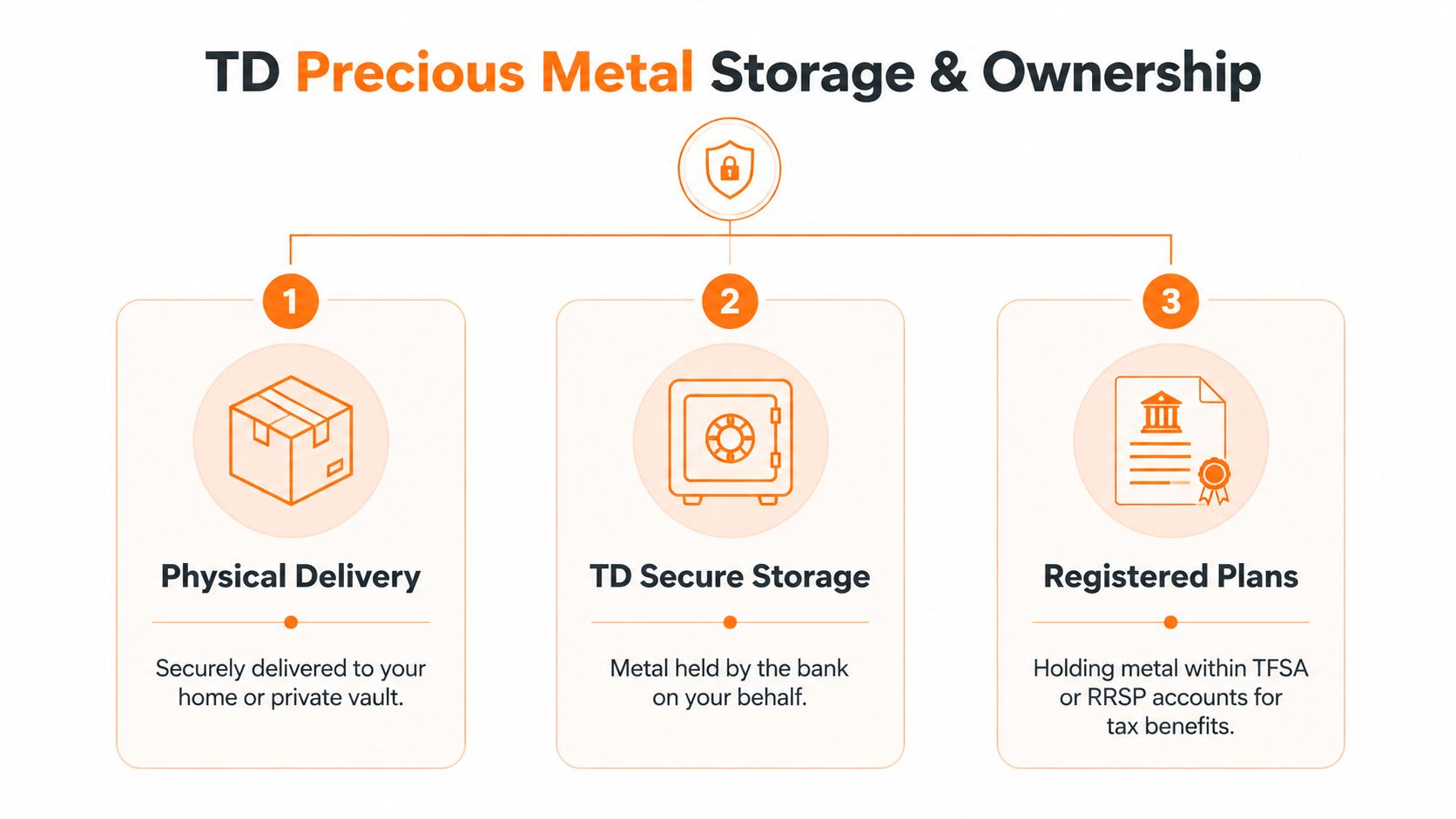
Physical delivery
This is the most straightforward option to understand. You buy the metal, and it's delivered to you.
Some people like this because it feels tangible. You know exactly what you own, and you don't depend on a third party to hold it.
The trade-off is responsibility. Once it's in your possession, you need to think about safe storage, theft risk, and how you'd handle resale later.
TD secure storage
This option is for people who want physical metal but don't want it sitting at home. TD advertises secure storage, which can sound like the neat middle ground.
It may be. But it isn't free.
According to TD's precious metals page, secure storage comes with annual storage and insurance fees, and pricing is not always transparent in marketing materials, which means those costs can affect your long-term return compared with lower-cost digital alternatives, as noted on TD's precious metals information page.
Holding metal in a vault can reduce personal security concerns, but it adds another layer to your cost of ownership.
For readers comparing home storage with bank-managed storage, this overview of a bank safety deposit box can help frame the practical differences between keeping valuables yourself and relying on a financial institution.
Registered plan certificates
Some investors want precious metals inside a TFSA or RRSP. That's where certificates matter.
The basic idea is that you may be able to hold precious metals exposure in a registered structure without taking home delivery of the actual bars or rounds. This can make administration easier if your goal is tax-sheltered or tax-deferred investing rather than personal possession.
A simple comparison
| Option | What you control | Main benefit | Main drawback |
|---|---|---|---|
| Physical delivery | The metal itself | Direct possession | You handle security and storage |
| TD secure storage | Ownership, but not home custody | Professional vaulting and insurance | Ongoing fees |
| Registered certificates | Account-based holding | Better fit for registered plans | Less tangible than taking delivery |
What this means for you
If your main goal is owning metal you can physically access, delivery may feel best.
If your main goal is convenience and security, storage may be more appealing.
If your main goal is tax-efficient account placement, certificates may make more sense.
The key point is simple. The purchase price is only the beginning. With td precious metal products, custody is part of the investment decision.
A Guide to Buying and Selling with TD
A lot of first-time buyers assume the process works like buying a GIC or moving money into a savings account. It doesn't.
The mechanics are closer to placing an order for a regulated physical product, and that means identity checks and transaction limits matter.
How buying usually works
You'll generally have two broad paths:
- Buy online through TD's platform
- Buy in person through a TD Foreign Exchange Centre
Online is usually the first place people look because it's convenient. You browse products, choose the metal and weight, and place the order.
In-person buying can be useful if you prefer human help or run into online restrictions.
The part many people don't expect
TD Precious Metals uses tiered purchasing limits based on customer verification status because of anti-money-laundering requirements. A newer account holder may face lower transaction limits than a long-term customer, which can affect how quickly a larger allocation can be completed, according to this explanation of TD Precious Metals purchasing limits.
That's the sort of detail people often learn only after trying to place an order.
If you're planning a larger purchase, don't assume the system will let you complete it in one shot.
A practical buying checklist
- Confirm your account status early. If your identification or account verification is incomplete, your buying flexibility may be lower.
- Decide your metal before you log in. Gold, silver, and product format choices can change your budget quickly.
- Know your storage plan first. Don't buy physical metal before deciding where it will go.
- Check whether online or branch purchase is better. If timing matters, an in-branch option may be worth considering.
What selling can feel like
Selling is where investors often realise physical precious metals are less frictionless than ordinary securities.
You usually need to think about:
- the form of the product you hold
- whether it's already in TD custody or in your possession
- the price TD is willing to pay at that moment
- the timing of your sale relative to market moves
If you own bars or rounds directly, selling isn't just “tap a button and exit.” It's a transaction process. That doesn't make it bad. It just means liquidity feels different from a stock or ETF.
What to do before your first order
If you're testing the waters, start with process questions instead of market questions:
- Can I complete the purchase online?
- Am I verified enough to buy the amount I want?
- Where will I store it?
- How would I sell it later?
Those questions matter because operational friction can turn a reasonable idea into an annoying one. With td precious metal investing, logistics are part of the product.
Understanding the True Cost Premiums Fees and Taxes
The biggest mistake new buyers make is focusing only on the spot price.
Spot price matters, but it isn't the full price you pay. What affects your real return is the gap between market metal prices and your all-in cost to acquire, hold, and eventually sell.
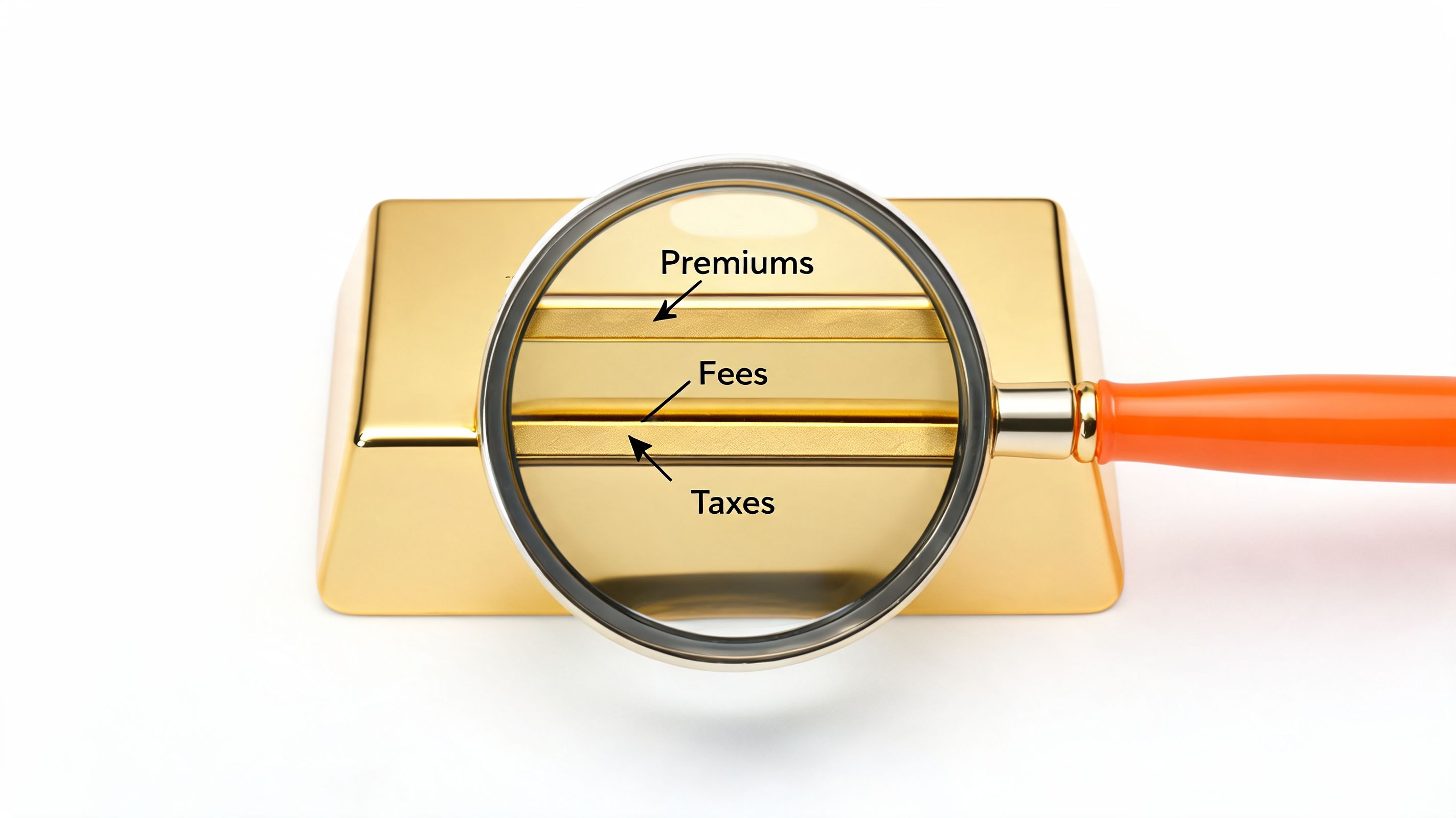
Premiums over spot
A premium is the amount charged above the underlying spot price of the metal. This is one of the clearest areas where TD differs from many private dealers.
According to this analysis of TD Gold pricing, a 1 oz TD Gold bar can be priced $90 to $120 CAD above spot, while private dealers may charge $50 to $70, making TD's premium roughly 40 to 70 per cent higher.
That doesn't automatically mean TD is a bad option. It means you're paying extra for a different buying environment, including bank infrastructure, brand familiarity, and account integration.
Why the premium matters so much
If gold rises after you buy, your investment still has to overcome that entry cost before you're meaningfully ahead.
A simple way to think about it is this:
| Cost layer | What it means |
|---|---|
| Spot price | The market reference price |
| Premium | What you pay above spot to buy the product |
| Storage or insurance | Ongoing holding cost if you don't self-store |
| Selling spread | The difference between buying and resale pricing |
The premium is your first hurdle. Storage and selling conditions are the next ones.
Fees beyond the purchase
If you choose secure storage, annual storage and insurance fees add to the total cost of ownership. If you choose delivery, shipping and handling may also matter depending on the transaction setup.
Those expenses are easy to ignore because they don't feel like part of the “investment thesis.” But in practice, they affect returns just as much as a market move does.
One useful habit: write down your full acquisition cost, not just the metal price. That gives you a much more honest breakeven point.
Taxes in Canada
Profits from selling precious metals can create capital gains implications in Canada. The exact treatment depends on your situation, how you hold the asset, and whether it sits inside a registered structure.
If you're fuzzy on how deferring tax differs from avoiding tax altogether, this plain-language guide to tax deferral is a helpful refresher before you decide where a precious metal holding belongs.
For the market side of the equation, it also helps to understand the broader economic forces shaping gold prices. Gold doesn't move in a vacuum, and knowing what influences pricing can help you judge whether a premium-heavy purchase still makes sense.
The practical takeaway
If you buy td precious metal products, don't ask only, “Is gold going up?” Ask:
- What premium am I paying today?
- Will I have storage costs?
- How easy will resale be?
- Am I holding this in a taxable or registered setup?
Those questions usually matter more than the sales page.
How TD Compares to Other Precious Metal Investments
Suppose you have $5,000 set aside for gold. You could buy a few physical pieces from TD, click into a gold ETF in your brokerage account, or shop around with a specialty bullion dealer. The metal may sound like the main decision, but the bigger difference often shows up in the fine print: premium paid up front, resale flexibility, product selection, and how much work you take on after the purchase.
That practical difference matters more than many first-time buyers expect.
A useful comparison starts inside TD itself
TD's retail precious metals offering sits beside a much larger institutional business. According to TD Securities' overview of its global precious metals business, its Global Precious Metals business was established in December 2010 and serves large-scale market participants through over-the-counter trading and broad institutional distribution.
For a retail buyer, the takeaway is simple. A bank can be a major player in global precious metals and still sell retail products on very different terms. Institutional scale does not automatically flow through to you in the form of lower premiums, wider lot sizes, or easier resale economics.
It helps to picture this like airfare. The same airline sells bulk corporate travel contracts and full-price last-minute tickets. Both are valid. They just are not priced the same way.
Comparing the main alternatives
ETFs
A precious metals ETF gives you exposure to the price of gold or silver without dealing with bars, coins, shipping, or storage.
For many investors, that removes the biggest logistical headache. You can usually buy and sell in seconds during market hours, and position sizing is much easier if you want to add a small amount each month. The trade-off is ownership. You are holding a security tied to the metal, not the metal in your hand or in your personal storage arrangement.
This route often works best for someone who cares more about portfolio exposure than physical possession.
Mining stocks and mining funds
Mining shares behave more like businesses than bullion. Metal prices matter, but so do production costs, debt, management quality, political risk, and stock market sentiment.
That means a gold miner can fall even when gold holds up reasonably well. For investors used to mutual funds, dividend funds, or stock analysis, this can feel more familiar than buying bars. If you want a contrast between hard-asset exposure and income-focused fund investing, this overview of the CI High Income Fund shows how different the role in a portfolio can be.
Specialty bullion dealers
Specialty dealers often compete harder on product range and pricing. If your main goal is to get as much metal as possible for each dollar spent, this category deserves a close look.
The catch is process risk and legwork. You may need to compare shipping policies, buyback terms, authentication standards, and inventory availability. Some buyers are comfortable doing that homework. Others prefer the familiarity of buying through a major bank, even if the all-in cost is higher.
A quick side-by-side view
| Option | Best for | Main strength | Main compromise |
|---|---|---|---|
| TD physical metals | Buyers who value bank familiarity and a straightforward purchase process | Familiar institution and simple retail access | Premiums and product limits can make the total cost less attractive |
| ETF | Investors who want easy portfolio exposure | Fast trading and no storage work | No direct ownership of physical metal |
| Mining shares or funds | Investors comfortable with stock market risk | Easy to hold in a brokerage account | Returns depend on company and market factors, not just metal prices |
| Specialty dealer | Buyers focused on maximizing bullion value | Often better selection and sharper pricing | More comparison shopping and due diligence |
How to choose
A helpful way to sort the choices is by asking what job this investment is supposed to do.
If you want something you can physically own, TD and specialty bullion dealers belong in the same bucket, but cost and resale terms deserve close comparison. If you want price exposure with the least hassle, an ETF is often simpler. If you want a metals-related investment that may behave more like an equity holding, mining stocks or funds fit that role.
Keep a short record of what you were trying to buy and why. A basic trading journal can help you track whether you bought metal ownership, metal exposure, or a mining business, because those are different bets with different costs.
How to Track Your Precious Metal Holdings
Physical assets have a tracking problem. Your chequing account updates itself. Your credit card transactions import automatically. A gold bar in storage doesn't do any of that.
That means you need a simple system. If you don't track it, you can't tell whether the holding still fits your plan, or whether its real cost is drifting away from what you expected.
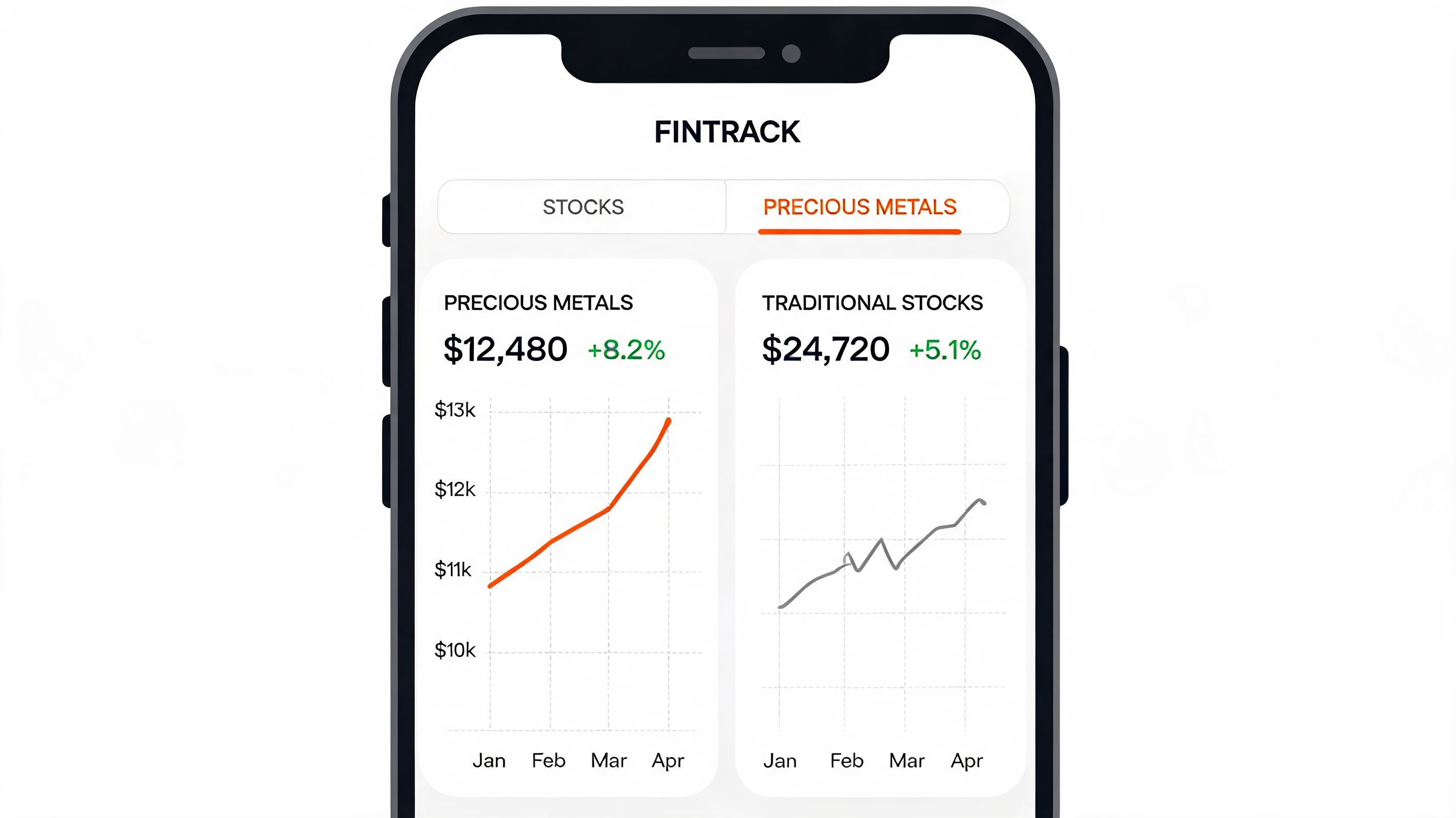
What to record on day one
When you buy, save these details in one place:
- Product type. Bar, round, certificate, or another form
- Purchase date. This helps with later tax records and resale context
- All-in cost. Include premium and any visible transaction-related charges
- Storage method. Home, vault, or registered arrangement
- Reason for purchase. Diversification, long-term hedge, or a specific allocation target
That last point matters more than it seems. If you bought gold for stability but later start treating it like a short-term trade, your decisions can get messy fast.
Build a simple review routine
A practical routine looks like this:
- Log the original cost basis
- Update value periodically using current market reference pricing
- Record any added fees that affect your net return
- Note every additional buy or partial sale
- Review the position as part of your full net worth, not in isolation
Many investors benefit from the discipline of a trading journal, even if they don't see themselves as traders. Writing down the reason for a purchase and the conditions for a sale can reduce emotional decisions later.
A precious metal holding should be tracked like any other asset. If it changes your net worth, it deserves a proper record.
Watch allocation, not just price
A common mistake is checking only whether gold is up or down. The better question is whether your precious metals position has become too large or too small compared with the rest of your finances.
For example, if the metal rises while your cash savings stay flat, your asset mix may shift without you noticing. That can change your risk profile even if you never buy another ounce.
For readers who want a cleaner way to think about investment performance, this guide to rate of return can help you compare a hard asset with your other holdings on a more consistent basis.
Keep the paperwork boring and organised
Save invoices, confirmations, storage records, and sale documents. Boring admin is your friend here.
When tax season arrives, or when you finally decide to sell, you'll want a clear trail showing what you bought, what you paid, and what it cost to hold.
If you want one place to keep that bigger picture organised, Fintrack can help you bring precious metals, cash flow, and the rest of your finances into one view so you can make decisions based on your full financial life, not just one isolated asset.